






Růžová 41 House
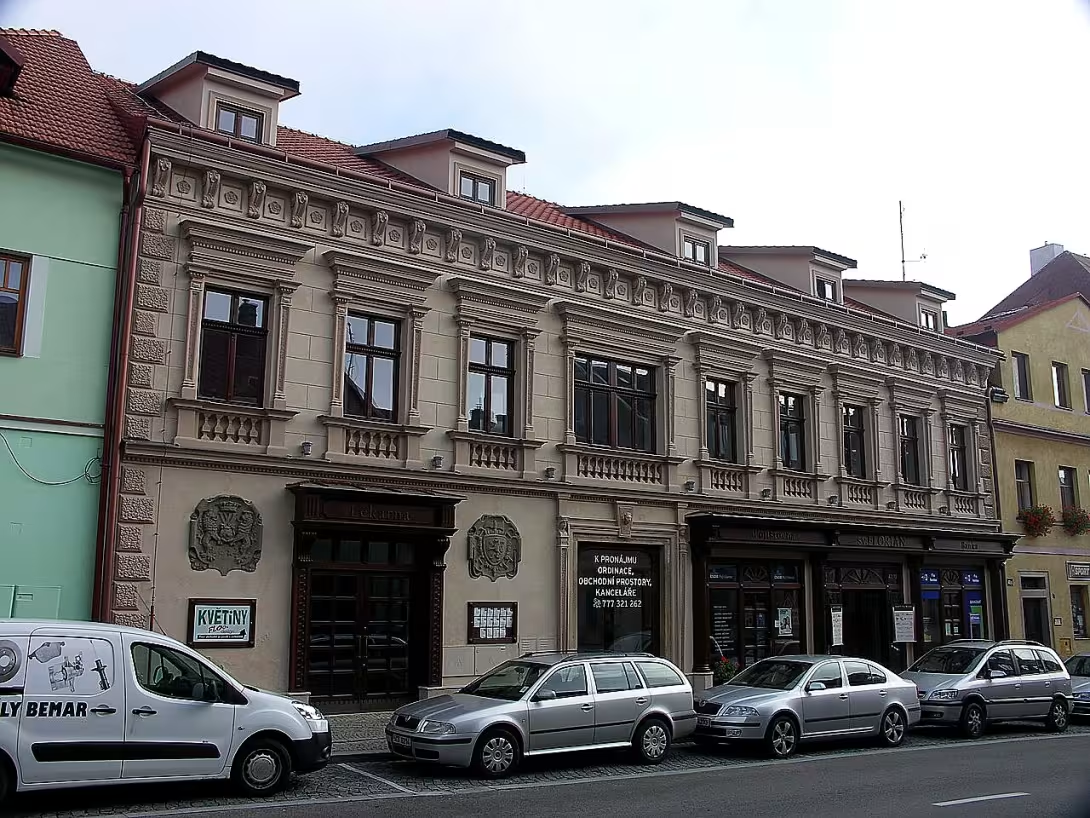
The Palace in Rose Street No. 41 in Jindřichov Hradec is a neo-Renaissance monument from the middle of the 19th century. In the past, there was a firehouse, but today the building hosts a medical center and hotel. The building is located in the protection zone of the city monument reservation and has been officially protected as a cultural monument of the Czech Republic since 3 May 1958.
The house is first written in 1749. At that time, the Emperor Šebestián Schobert bought a broken house from the orphans of Sommer, in which the so-called Pikharta Chapel was located.
In 1853- 1855 the palace underwent a major neo-Renaissance reconstruction. This style was dominated by European and Czech architecture in the context of history. A single-storey building excels with facade with plastic elements. The facade on the ground floor is cut by three gates, one of which has a stone lining. In the interior of the left wing there is a ridge arch, while on the ground floor there are flat arches. The rear part of the floor consists of braids supported by decorative metal consoles; The railing is similarly addressed.
Property ownership has changed over the centuries. After Šebestian Schobert, the town of Henry Hradec took over the house, which sold it to a private investor in 2007.
In the 20th century the building had mainly practical use associated with fire protection. Since 1928, the armory of the volunteer fire brigade was located here and the fire protection department was located in the building between 1970-2000. Thanks to this, the monument is also known as the firehouse or Schobert House.
The Palace currently uses the Trade-Medical Center of St. Florian, which was opened on 16 May 2012 on an area of 2400 square meters. The centre includes Aqua show - multimedia performances combining music, video projection, light effects and patterns made up of falling drops of water. The next part of the house was converted into a five-star hotel in 2016- 2017.
This monument is a valuable example of historical architecture and shows how the historical object can be adapted to modern needs. It is an ideal destination for visitors to Jindřichov Hradec, who want to combine knowledge of urban history with the use of current services.
Historical milestones
- 1749
- purchase of the house by the cinician Šebestian Schobert
- 1853
- the beginning of the neo-renaissance reconstruction
- 1928
- the building becomes the headquarters of the firehouse
- 2012
- opening of Business - St. Florian Medical Center
Architectural development
Originally existing house was rebuilt from 1853 to 1855 into a neo-Renaissance style with plastic elements on the facade. The facade is characterized by three gates and the inner spaces contain a comb and a flat vault. From 2016 to 2017 another extensive rebuilding took place in the hotel.
Historical events
1749: purchase of the house by the cinician Šebestián Schobert; 1853-1855: Neo-Renaissance building reconstruction; 1928: establishment of a firehouse; 2012: opening of the Business - St. Florian Medical Center.
Owners
Orphans of Sommer (before 1749), Šebestián Schobert (1749), town of Jindřich Hradec (until 2007), private investor (since 2007).
Points of interest
- In the past, there was a firehouse in the building, which makes it known as the Schobert House. - In 1749 the house was purchased by the cinematographer Šebestián Schobert, with Pikharta Chapel in the building. - The building underwent a major neo-Renaissance reconstruction in 1853-1855. - In the interior there are crest and flat vaults and mats with decorative metal consoles. - The current centre hosts multimedia performances combining music, video projection, light effects and patterns made up of falling drops of water.
Guide
Show guide text
This text was created by artificial intelligence and has not been editorially reviewed. It may contain inaccuracies.
Welcome to Henry's Hradec, where every stone tells its own story and where history intersects with the present in every corner. Right now, you're standing in Rose Street, and there's a building in front of you that's a real witness to the transformation of this city. Look at her. It is a building which, both in its form and history, makes a significant contribution to the atmosphere of the urban conservation. At first glance, you might be interested in her size or the way she fills the street space. It is a place that has, over the centuries, completely changed its face and purpose, and yet retained its dignity.
Let us now return together in time to understand how this building was created and by whom it was inhabited. Our journey begins in the year seven hundred forty-nine. Imagine Henry's Hradec at the time, calmer, with a different rhythm of life. It was this year that a man named Šebestián Schobert bought the house. Mr. Schobert was a tinker, which was a very important craftsman at the time. Arts required precision and patience, qualities that may be reflected in how this house was approached in later times. It is fascinating that at the time Mr. Schobert settled here, the Pikhart Chapel was located in the building. So imagine that this place originally had a deep spiritual dimension, was the center of prayer and oppression for the locals, before it gradually turned into a space with more worldly character.
Now pay attention to the architecture of the building itself. If you look at its external appearance, you will see the results of a major intervention that took place in the mid-nineteenth century. Between a thousand and eight hundred and fifty-three and a thousand and eight hundred and five and fifty-five, the building went through a deep reconstruction. It was at this time that the Neo-Renaissance style was elected. The Neo-Renaissance was very popular at the time because it sought to restore the nobility and harmony of the Renaissance period, but with the use of modern technologies and materials. Look at the facade and feel its rhythm. Although we do not know the names of the particular architects who proposed this project, it is clear that they wanted to create something representative and dominant. Note how neo-Renaissance elements give the building a sense of stability and elegance. It's an architecture designed to emit the prosperity and taste of its owners.
But if we go further in time, we will find that the fate of the building was very diverse. Let's move to the year one thousand nine hundred twenty-eight. This year, there was one of the most interesting changes in the history of this house. The building has become the headquarters of the firehouse. Imagine the contrast. The place where prayers once sounded in the Pikhart Chapel, and where the gunman Schobert led his business, suddenly became full of noise, the smell of metal and leather hoses. The firemen were heroes in every city at the time, and their armory was a strategic point to protect the entire center. It is from this period that one of the alternative names of the building is the Schobert House, but also the connection with the figure of St. Florian, who is the patron saint of the fire department. That explains why the building began to be referred to as the Florian Palace in later times.
It's a fascinating journey, isn't it? From the spiritual chapel to the artisanal house and the Neo-Renaissance palace to the functional armory. This constancy of history is exactly what makes Henry Hradec so special. The Rose Street building is not just a bunch of rocks and mortars, but it's a record of people's needs changing. First, faith was needed, then housing and trade, then aesthetics and representativeness, and finally, safety and protection of the people from fire.
Now let's stop at the present. If you look at the building today, you'll see that her life is still going on and on. In the year two thousand and twelve there was another major milestone where the St. Florian Medical Center was opened. It is paradoxical and at the same time beautiful that a building that once extinguished fires and saved many lives is now used to care for people's health within the medical center. And to complete this transformation, the building now hosts a five-star hotel. This means that in the areas where firefighters once slept on alert, travelers from all over the world are now resting in the highest possible luxury.
I'm going to give you one interesting thing to do to help you see the building better. If we were trying today to trace back to what was left of the original Pikharta Chapel, we would probably find only traces of it in the foundations and monuments records. It's a reminder of how quickly one location can change. The Schobert house is basically like a book where every generation wrote their own chapter. From Sebestian Schobert to Neo-Renaissance builders to today's health service providers and hotel services.
Now that you're standing in front of this palace, try to imagine all the people who walked through here. Imagine a tinker with his tools, a Neo-Renaissance gentleman in Cylinders, firemen with their armor and today's visitors looking for peace and comfort. All of this happened right here on this little piece of land on Pink Street.
Now, before we say goodbye and you go on to explore the beauty of Henry's Hradec, I suggest you go around the building again slowly and feel the atmosphere. Try to imagine what she looked like in a thousand eight hundred and fifty-three, when she was newly completed and lit a new one in the heart of the city. Feel the contrast between her historical facade and the modern interior equipment that today serves patients and guests.
This palace has proven that the real value is not to never change the building, but to be able to adapt to new needs without losing its identity. The Schobert house, the Florian Palace, the medical center - whatever you call it, remains an unshakeable part of this town's history.
Thank you for accompanying me on this short journey through time. I hope this view of the Rose Street building helped you see her in a new light. I now invite you to continue to discover other hidden treasures of Henry's Hradec. Let yourself be guided by curiosity and enjoy every moment spent in this beautiful city. I wish you a pleasant continuation of your journey and many new, fascinating experiences. Goodbye.
Tips for visitors
The best time to visit Schobert's house or Florian Palace is in the spring and autumn months when vegetation in the surroundings is in full beauty and sunlight especially attractive for photography. These periods offer a quieter atmosphere and fewer visitors, allowing a better understanding of the historical importance of the building.
Parking for visiting Florian Palace can be found near the center of Jindřichov Hradec. For those travelling by public transport, the city offers sufficient connections with buses and trams that provide comfortable access to the centre. We recommend verifying current tracking and times using an online search engine.
When visiting Florian Palace it is advisable to take with you a quality camera or mobile phone for shooting as well as clothes suitable for the conditions outside. It is also important to have water and an umbrella, especially during the summer months.
For shooting the building offers the best light in the morning or in the evening when the light effect on the facade is most pronounced. Also remember to explore the surrounding streets and gardens that can provide interesting prospects.
In the vicinity of the Florian Palace is located the City Monument Reserve Jindřichov Hradec, where other historical and architectural buildings can be explored. A visit to a local museum or park is particularly suitable for families with children, offering interactive programs and activities.
Businesses nearby
Do you run a restaurant, accommodation, shop, museum, rental, wellness or other visitor service near this monument? Show yourself directly to the people heading to it — this is how they will see you in the app and on the web:
Events nearby
Zdroj akcí: otevřená data měst a obcí ČR (Národní katalog otevřených dat) a kalendář akcí Národního památkového ústavu.
Nearby
Jindřich Hradec City Monument Reserve.
Accommodation nearby
Themed route
1. Růžová 41 (palace) , historical object, tour of the main destination and its unique architecture. 2. Exposition in the palace , inner spaces, knowledge of history and culture right in the building area. 3. Tanks palace , area of building, observation of details and historical environment right at the building. 4. City Heritage Reservation Jindřichov Hradece, historical territory, walk within the entire protected zone surrounding the palace.
Seasonal recommendations
In spring, the palace surrounds the awakening green and fresh air that gives new life to the building. The soft spring light beautifully highlights the facade details and creates an optimistic atmosphere. I recommend wearing layers of clothing because the weather is variable, and planning a visit in the morning when it is quieter in the rooms.
The summer season brings a radiant sun and a full bloom of surrounding gardens, creating a rich colorful contrast atmosphere. Expect a larger number of visitors in the season, which is why it is best to come right at the opening to avoid the biggest crowds. Choose light, breathable materials and don't forget enough fluids.
In autumn, the surroundings of the palace turn into golden and red tones, while morning fog gives the place a mysterious and melancholy touch. The atmosphere is calmer and more focused on contemplation. Practical is moisture-resistant shoes and a visit in late afternoon hours when natural light is most dramatic.
In winter, the monument is strenuous and majestic, especially if it is covered by a layer of snow. In Advent time, there is a cosy mood in the surroundings that contrasts with the freezing air. It is necessary to wear warm winter clothes and to verify in advance the opening times which are shortened during this period.
Visualizations and artistic views

The visualisations are generated by artificial intelligence and serve as inspiration.
Photos from the area
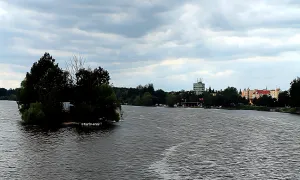
Real photos taken near the monument

Zdroj a licence jsou uvedeny u každého snímku.
Tips from visitors
No tips yet. Be the first!
Log in and add your tip.
Sources and literature
Fotografie: Meresjev / CC BY-SA 3.0 — Wikimedia Commons. The author and licence also appear when you hover over the image.
Faktickým podkladem tohoto textu byl článek na Wikipedii, jehož autory jsou přispěvatelé Wikipedie. Článek je dostupný pod licencí CC BY-SA 4.0.
Location on the map


Příběhy a pověsti
Legendy, pověsti a příběhy spjaté s touto památkou
Fotografie návštěvníků
Zatím žádné fotografie. Buďte první, kdo přidá fotografii z návštěvy!
Přihlaste se a přidejte svou fotografii nebo hodnoťte.
Za ověřenou návštěvu v aplikaci získáte víc bodů — poznáme podle GPS, že jste na místě.
Reviews and comments