



Skočický hrad Hillfort
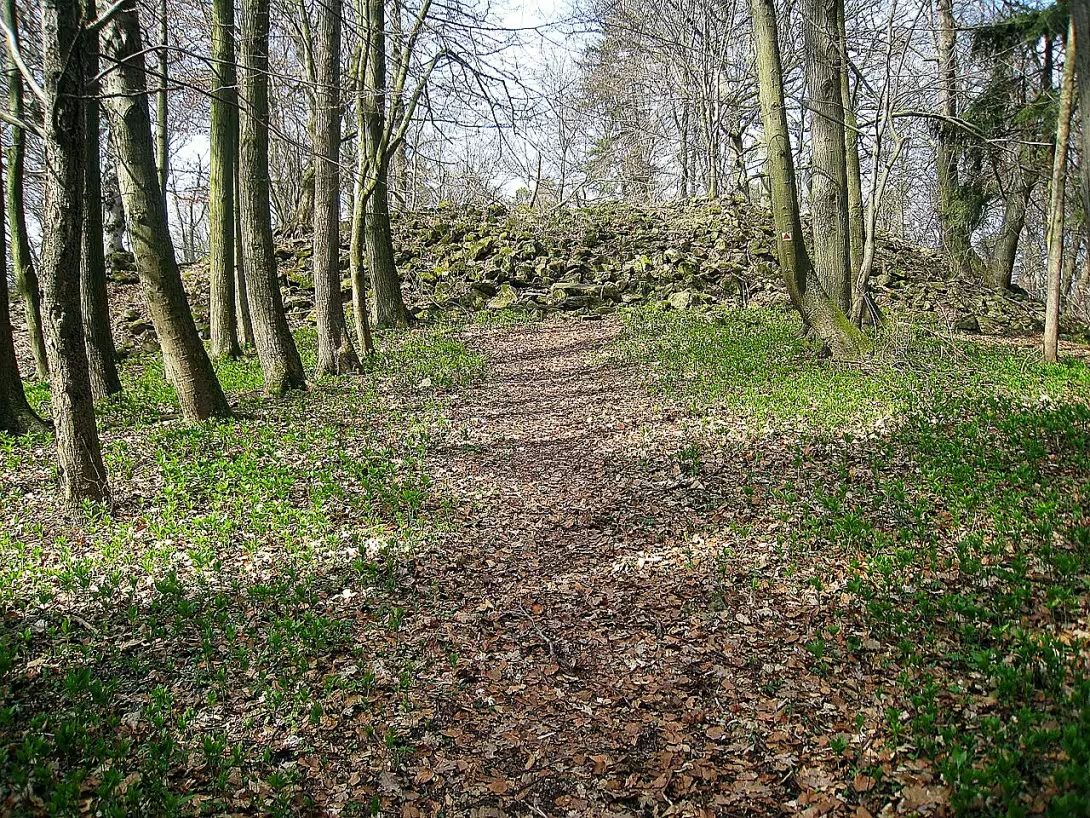
Skočický hrad is an important prehistoric castle situated on the top of the Castle southwest of the village Skočice in Strakonice district. The locality, which is now a protected cultural monument and part of the natural reserve, was already inhabited in paleolithic and mesolite. The castle itself was built at the end of the older Bronze Age and was then used in the period of the Hallatians and the early Middle Ages.
In the period of bronze culture there was metallurgical and textile production. The importance of the site increased in the late period of the Halštats, when the fortification was restored or rebuilt. In the ninth century, the castle was last inhabited; However, it is not entirely clear whether the people at the time only used the existing prehistoric fouls or actively repaired them.
The core of the complex is an acropolis on a rock platform approximately 50 times 20 meters. Since most of the perimeter was protected by steep slopes, artificial fortifications were concentrated mainly on the east side. They were made up of dry-laid stones, which were within four metres wide and reinforced from the inside by a clay slide. The entrance to the space was provided by a 24-metre street gate. Under the acropolis, there is a platform 80 times 100 meters below. The total area of the site is approximately 1.1 hectares and part of the area is also a rocky platform called the Šumava prospect.
The professional interest in the place began in 1878 when Jan Nepomuk Woldřich described them and targeted them. In the first half of the twentieth century research was carried out by Bedřich Dubský, František Sobotka and Josef Malický. Bedřich Dubský was the first to recognize the internal breakdown of the acropolis and the prepayment. The extensive archaeological survey was conducted between 1963 and 1974 by Lumír Poláček, but most of the documentation from this event was not preserved. At the end of the twentieth century, the site was disrupted by the illegal activity of detectors, resulting in a subsequent expert survey and focus between 2008 and 2009.
Archaeological findings include a large number of ceramic shards, including fragments that resemble the Champ culture of middle eneolite. A series of metal artifacts, such as iron spurs, arrow tips, part of August or a fraction of iron feather scissors, come from the early Middle Ages. The most important discoveries include a cast bronze curtain decorated with fine grooves and a three ball grape.
Today the castle is accessible as part of the nature reserve Skočický hrad. For visitors it is a valuable opportunity to see preserved terrain traces of prehistoric fortification in their natural environment. Visiting this place offers a unique insight into the history of the settlement of the South Bohemian region and reminds of significant milestones of prehistoric construction.
Then and now
Drag the slider to compare how the landmark may have looked when it was built with the view today.
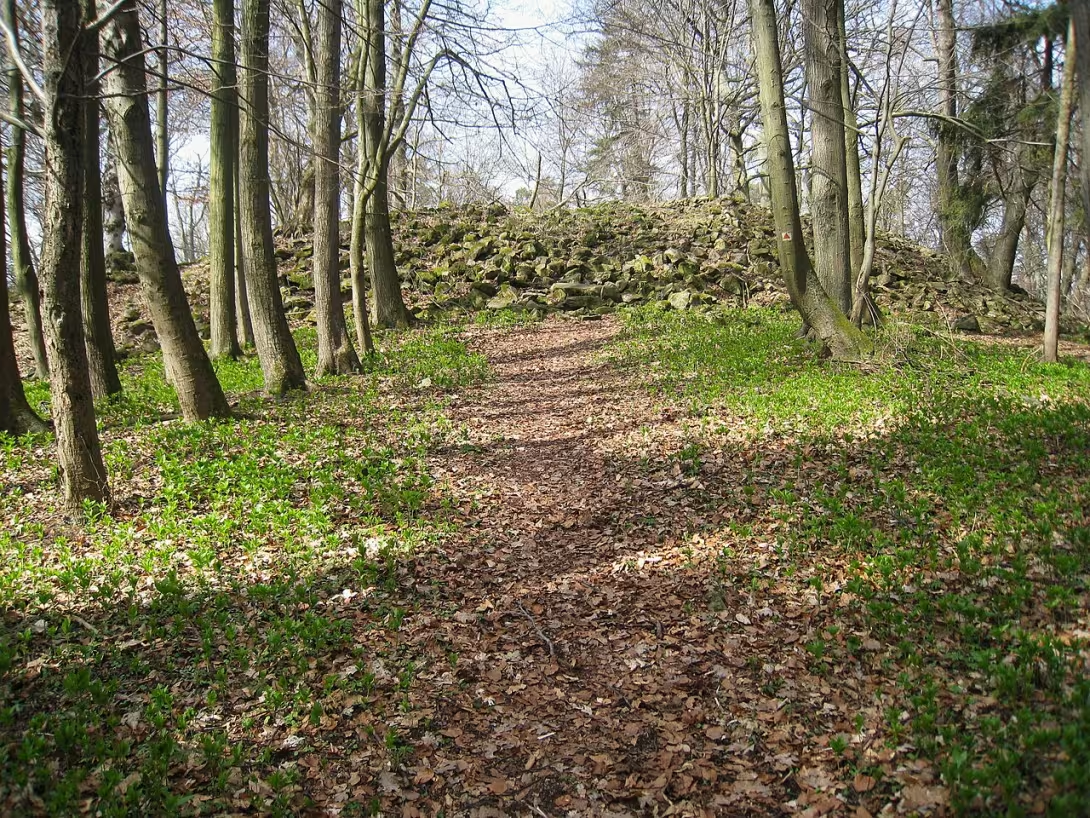

The historical appearance on the left is an AI-generated visualisation and serves as inspiration only.
Historical milestones
- 1878
- Jan Nepomuk Woldřich described the location and outlined the first plan of the castle.
- 1963
- The launch of extensive archaeological research under the leadership of Lumír Poláček.
- 2008
- Start of expert detector survey and location orientation.
Architectural development
The core of the castle is an acropolis on a rock plateau, protected by steep slopes and a stone wall on the east side. The original wall formed a wall of dry-laid stones, reinforced with a clay slide. The entrance to the premises consisted of a street gate of 24 metres long.
Historical events
1878: Discover the site of Jan Nepomuk Woldřich. 1963- 1974: Extensive archaeological research led by Lumír Poláček. 2008-2009: Expert detector survey and location orientation.
Points of interest
- The locality was already inhabited in paleolithic and mesolite, and the castle itself was created at the end of the older Bronze Age. - During the period of bronze culture there was metallurgical and textile production. - The fortification formed a wall of dry laid stones up to four metres wide and a 24 metres long street gate. - The most important archaeological discoveries include a cast bronze curtain decorated with fine grooves and a three-ball grape. - Most of the documentation from extensive archaeological research conducted between 1963 and 1974 was not preserved.
Guide
Show guide text
This text was created by artificial intelligence and has not been editorially reviewed. It may contain inaccuracies.
Welcome to the castle, one of the most important archaeological sites in the Czech landscape. You're standing in front of a vast history stored in rocks and the dust of the millennium. Underneath your feet, there is a stretch of territory that bears witness to the rich past of humanity in this place.
Let's dive into the history of this place. Skočický hrad is an important prehistoric castle that was built on the top of the castle southwest of the village Skočice. This site has already been populated in paleolithic and mesolite, making it one of the oldest residential sites in Central Europe. The castle itself was built at the end of the older Bronze Age when metallurgical and textile production developed. In the late period of Halštátský the fortification was restored and the site was used even in the early Middle Ages.
Look up at the acropolis, which is the heart of this castle. Notice how the rock surface stretches across the territory and how a community was created here looking for protection and security. The fortification was made up of dry-laid stones up to four metres wide and a 24-metre-long street gate, which today stands as a witness of our ancestors' championship.
Key personalities associated with this place include Jan Nepomuk Woldřich, who described the site in 1878 and outlined the first plan of the castle. His work laid the foundations for understanding the historical importance of the castle. Later, in 1963, under the leadership of Lumír Poláček, extensive archaeological research was launched, which revealed much new information about life on this site. Josef Ladislav Píč and Bedřich Dubský also contributed to the knowledge of this place by their work.
The interesting thing is that Skočický hrad was not only a place of defence but also a centre of production. Metallurgy and textile production took place here at the time of the bronze culture, which shows the advanced and specialisation of the then inhabitants.
Now let's go back to the present. Skočický hrad is open today for all who want to discover their roots and appreciate the rich history of our territory. We wish your visit to be fruitful and inspiring.
Thank you for your attention and prepare for further discoveries. If you are interested in more information or want to explore archaeological findings in more detail, visit the local museum or go through available publications. When we meet again in this historic rich place - physically or in spirit through the history we share.
Tips for visitors
The best time to visit is spring or autumn, when vegetation is lower and the terrain of the archaeological site is clearer. You avoid the summer overgrowth of lush green, which may cover the remains of the fortifications.
You can easily walk to the location from the village Skočice. We recommend using our own car as public transport to this area is restricted; Always check the connection in the current search engine.
For a visit, take your fixed shoes suitable for the field, plenty of fluids and snacks, because there are no refreshment stands. Don't forget a loaded phone or a map because you move in the natural terrain.
The golden hour is ideal for photography shortly after sunrise or before sunset, when the oblique light highlights the reliefs of the terrain and the walls of the castle. The best shots can be taken from elevated sites, where there is a nice view of the entire site.
For families with children the trip is suitable as a combination of light tourism and history.
Frequently asked questions
Can the monument be visited?
This is an archaeological site. Often there is little to see on the ground and the land may be private. We have not verified access.
Where is the monument?
Location: Skočice, Jihočeský kraj. The map on this page shows the exact spot.
Why is the monument protected?
It is listed in the Central List of Cultural Monuments of the Czech Republic as a cultural monument (register no. 1000133097).
Businesses nearby
Do you run a restaurant, accommodation, shop, museum, rental, wellness or other visitor service near this monument? Show yourself directly to the people heading to it — this is how they will see you in the app and on the web:
Events nearby

Zdroj akcí: otevřená data měst a obcí ČR (Národní katalog otevřených dat) a kalendář akcí Národního památkového ústavu.
Nearby
The village Skočice, the nature reserve Skočický hrad.
Accommodation nearby
Themed route
1. Municipality of Skočice, municipality. Great place to start your trip and a short rest. 2. Natural Reservations Skočický hrad, Natural Reservations. It offers beautiful nature and paths that lead directly to the goal. 3. Skočický hrad, archaeological site. The main destination of the route where you can explore the historical remains of the castle.
Seasonal recommendations
Spring: In the spring, the archaeological remains of the Skočický castle are awakened along with the surrounding vegetation. Fine sunlight and fresh greenery create a pleasant environment for walking between rocks. It is advisable to prepare more layers of clothing because the morning temperatures may still be low. The best time for a tour is in the morning when nature is the most lively and the roads are not so muddy.
Summer: In the summer season they dominate intense sunlight and long days that allow you to spend a lot of time on the spot. Stone ruins can be very hot in the morning, which is why it is prudent to arrive early in the morning to avoid the biggest crowds and the highest heat. Don't forget the protective hat, plenty of fluids and light summer clothes.
Autumn: Autumn brings a melancholy atmosphere to the castle, underscored by morning fog and the colour of changing leaves. Lighting is lower and softer during this period, which creates ideal conditions for capturing the details of ruins in photographs. Due to the wet surface and slippery leaves, it is necessary to choose footwear with a fixed sole and to bring a warmer layer of clothing.
Winter: Winter visit offers a sense of calm and isolation, especially when the landscape is covered with frost or snow. Given the short day, it's best to plan a visit around noon so that the light doesn't get lost quickly. It is crucial to wear quality winter clothes that protect you from the wind, because it can be unpleasantly cold in an elevated location near an archaeological site.
Visualizations and artistic views


The visualisations are generated by artificial intelligence and serve as inspiration.
Photos from the area
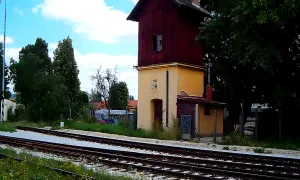
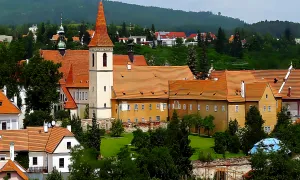
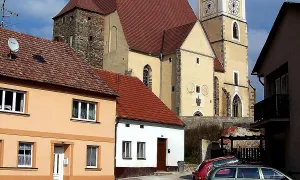
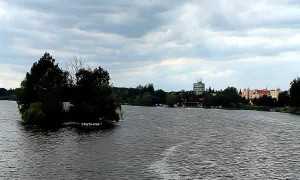
Real photos taken near the monument


Zdroj a licence jsou uvedeny u každého snímku.
Tips from visitors
No tips yet. Be the first!
Log in and add your tip.
Sources and literature
Photos: Anaj7 / CC BY-SA 3.0 — Wikimedia Commons. The author and licence also appear when you hover over the image.
Faktickým podkladem tohoto textu byl článek na Wikipedii, jehož autory jsou přispěvatelé Wikipedie. Článek je dostupný pod licencí CC BY-SA 4.0.
Location on the map
Příběhy a pověsti
Legendy, pověsti a příběhy spjaté s touto památkou

Fotografie návštěvníků
Zatím žádné fotografie. Buďte první, kdo přidá fotografii z návštěvy!
Log in a přidejte svou fotografii nebo hodnoťte.
Za ověřenou návštěvu v aplikaci získáte víc bodů — poznáme podle GPS, že jste na místě.
Reviews and comments