






Kostel Navštívení Panny Marie (Skočice) Church
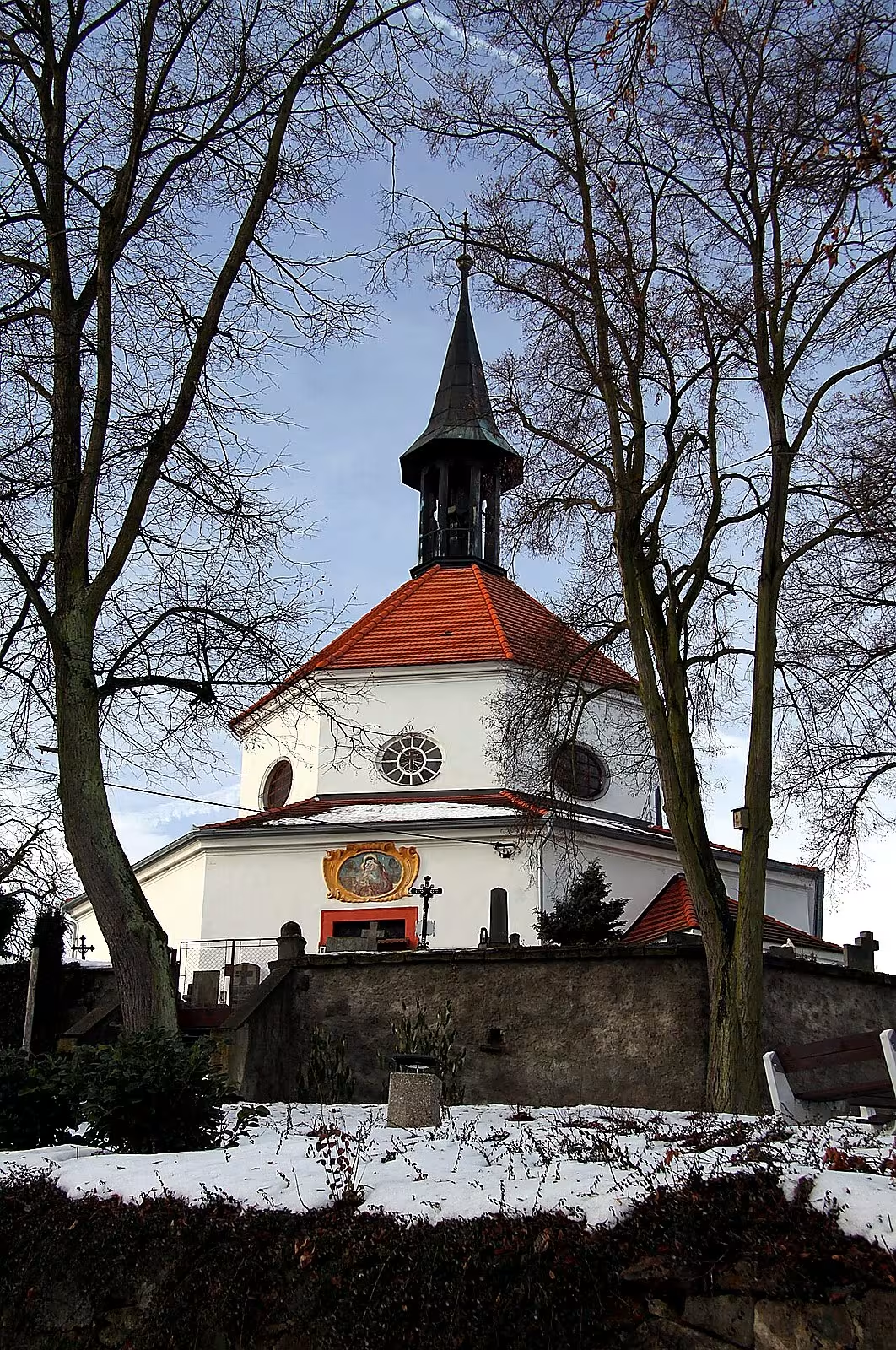
The Church of the Visitation of the Virgin Mary in Skočice is a remarkable early Baroque pilgrimage church located on a hilltop along road I/22 between Vodňany and Strakonice. Constructed between 1677 and 1678, this octagonal structure was built to house a revered image of Our Lady of Help, known for its miraculous survival from fire. The church is notable not only for its architectural significance but also as a cultural heritage site, reflecting the religious fervor of its time.
The origins of the Church of the Visitation date back to the late 17th century when Polyxena Ludmila Eusebie Frebonia hraběnka ze Šternberka commissioned its construction. The primary motivation was to provide a dignified home for a venerated image of Panna Marie Pomocné, which had survived a fire unscathed in the Skočice fortress. This event inspired Polyxena Ludmila and her second husband, Ignáce Karla ze Šternberka, to erect a chapel that would later evolve into this church. The consecration of the original chapel took place on August 21, 1678, by Jan Ignác Dlouhoveský z Dlouhé Vsi.
Architecturally, the Church of the Visitation is an octagonal central structure with a corresponding ambulatory, designed by Pavel Ignác Bayer. The church features a gable roof and a lantern tower, topped with a tašková (tile) covering that replaced its original shingles. Initially constructed as a chapel, it was later expanded into a church with additional chapels planned but only two completed—one of which houses an altar dedicated to Saint John Nepomucene. The structure underwent significant renovations in the early 20th century and again from 2000 to 2002.
Ownership and administration of the church have seen notable transitions over time. After Polyxena Ludmila's death in 1691, her son Jaroslav Florián Švihovský took over the estate until his death in 1716. In 1700, Ferdinand Schwarzenberg acquired the estate and assumed patronage of the church, overseeing its expansion and further development. The church has been under the administration of various patrons, with Josef Prokeš serving as excurrendo administrator for the Vodňany parish since 2017.
Key events in the history of this site include the miraculous survival of the image of Our Lady of Help from a fire at Skočice fortress, which led to the chapel's construction. The church has been a focal point for pilgrimages, particularly on July 2nd, the Feast of the Visitation of the Virgin Mary. Over time, it has undergone multiple renovations and expansions, reflecting its enduring significance.
Today, the Church of the Visitation stands as a testament to early Baroque architecture and religious devotion in Bohemia. It remains an active site for pilgrimages and is accessible to visitors interested in exploring its historical and cultural heritage. The church's proximity to two lime tree avenues planted in the early 18th century adds to its scenic appeal, making it a worthwhile destination for those seeking to experience a piece of Czech history.
The Church of the Visitation of the Virgin Mary in Skočice offers a unique glimpse into the religious and architectural landscape of 17th-century Bohemia. Its historical significance, coupled with its stunning Baroque design, makes it an essential visit for anyone interested in exploring the rich cultural tapestry of the Czech Republic.
Then and now
Drag the slider to compare how the landmark may have looked when it was built with the view today.
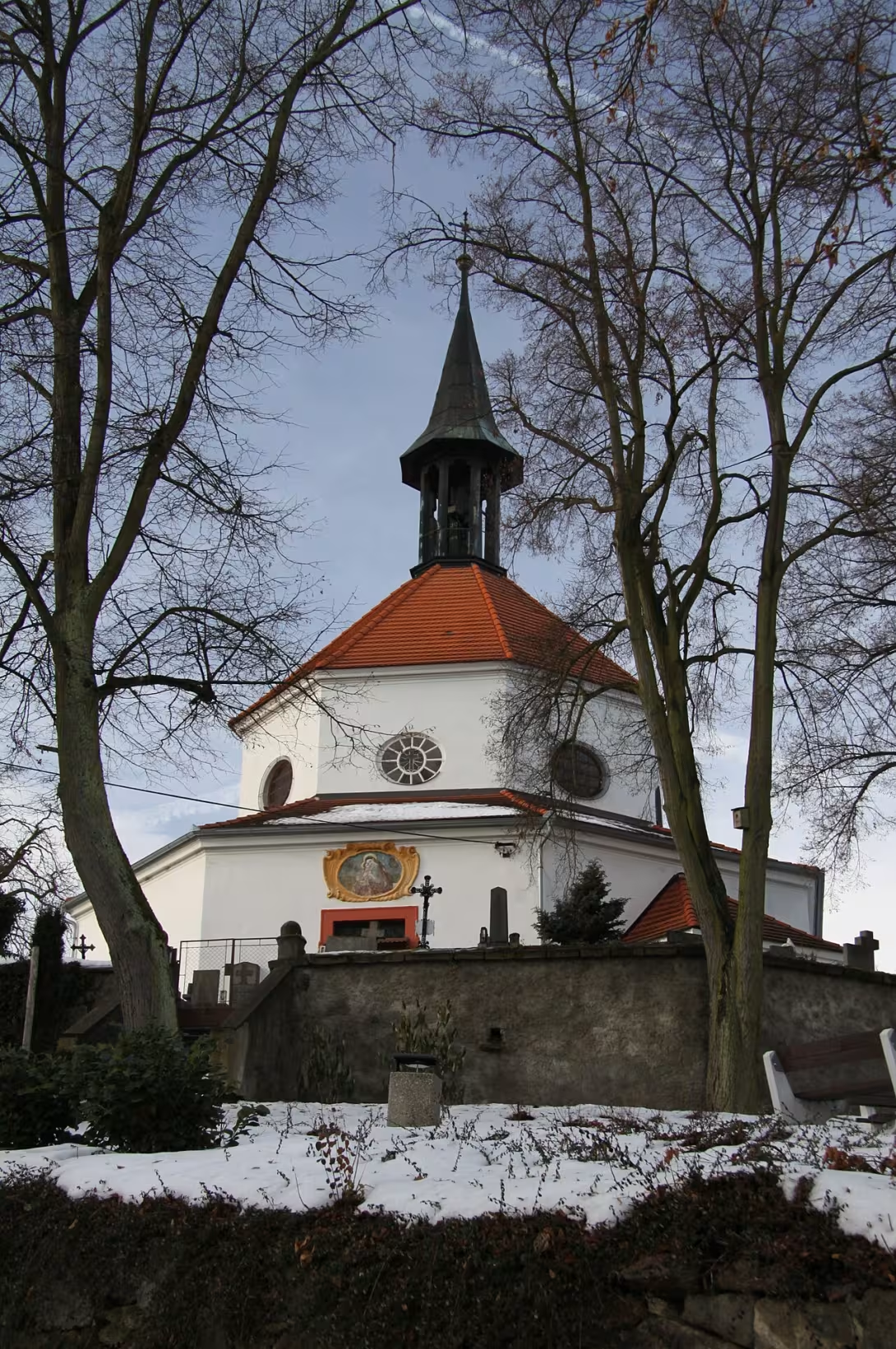

The historical appearance on the left is an AI-generated visualisation and serves as inspiration only.
Historical milestones
- 1678
- The chapel was consecrated by Jan Ignác Dlouhoveský z Dlouhé Vsi.
- 1700
- Ferdinand Schwarzenberg acquired the estate and took over patronage of the church.
Architectural development
Originally constructed as a chapel between 1677 and 1678, it was later expanded into a church. Architect Pavel Ignác Bayer designed an octagonal structure with four planned chapels, though only two were completed. The church underwent significant renovations in the early 20th century and again from 2000 to 2002.
Historical events
Construction of the church between 1677 and 1678 by Polyxena Ludmila Eusebie Frebonia hraběnka ze Šternberka.
Consecration of the chapel on August 21, 1678, by Jan Ignác Dlouhoveský z Dlouhé Vsi.
Renovation and expansion in the early 18th century under Ferdinand Schwarzenberg.
Owners
Polyxena Ludmila Eusebie Frebonia hraběnka ze Šternberka (1677–1691)
Jaroslav Florián Švihovský (1691–1716)
Ferdinand Schwarzenberg (from 1700)
Points of interest
- The Church of the Visitation was initially built as a chapel to honor an image of Our Lady of Help that miraculously survived a fire in the Skočice fortress, highlighting its origins rooted in divine intervention and local folklore.
- Architect Pavel Ignác Bayer designed the church with an octagonal central structure and ambulatory, reflecting innovative architectural styles of the early Baroque period that were less common in Bohemia at the time.
- Although plans existed for additional chapels around the church, only two were completed, including one dedicated to Saint John Nepomucene, showcasing selective expansion based on religious significance rather than mere structural ambition.
- The original shingle roof was replaced with a tašková (tile) covering in later renovations, demonstrating how practical considerations influenced the preservation and adaptation of historical architecture over time.
- In 1700, Ferdinand Schwarzenberg acquired the estate and assumed patronage of the church, overseeing its expansion—a pivotal moment that underscores the influence of noble families on religious sites during this era.
Guide
This guide is narrated by a synthetic voice generated by artificial intelligence.
Show guide text
This text was created by artificial intelligence and has not been editorially reviewed. It may contain inaccuracies.
Welcome to the Church of the Visitation of the Virgin Mary in Skočice, a remarkable testament to early Baroque architecture nestled on this picturesque hilltop. As you stand here, take a moment to soak in the serene atmosphere and the striking silhouette of the church against the sky. The octagonal central structure with its gable roof and lantern tower draws your gaze upwards, inviting contemplation.
The origins of this sacred site are deeply rooted in both history and legend. Built initially as a chapel, it was consecrated in 1678 by Jan Ignác Dlouhoveský z Dlouhé Vsi to honor an image of Our Lady of Help—a revered icon that miraculously survived a devastating fire at the Skočice fortress. This divine intervention sparked the creation of this place of worship, intertwining faith with local folklore.
Architect Pavel Ignác Bayer masterfully designed the church with its distinctive octagonal form and harmonious proportions. As you approach, notice how the architecture seamlessly blends functionality with spiritual symbolism. The ambulatory encircling the central structure creates a sense of unity and continuity, guiding your steps along this sacred path.
Several key figures have left their mark on this site's history. Polyxena Ludmila Eusebie Frebonia hraběnka ze Šternberka played a pivotal role in its early development, while Ignáce Karla ze Šternberka and Jaroslav Florián Švihovský contributed to its enduring legacy. In 1700, the estate—and with it, patronage of the church—was acquired by Ferdinand Schwarzenberg, further cementing its place in history.
One intriguing aspect that captures the imagination is the story of Our Lady of Help and her miraculous survival through fire, which not only inspired the chapel's construction but also continues to draw pilgrims seeking solace and inspiration. This tale of resilience and faith adds a layer of mystique to your visit, inviting you to ponder the intertwining of human history with divine grace.
As we conclude this brief journey, I invite you to explore further, perhaps wandering around the church or simply sitting in quiet reflection on its grounds. The Church of the Visitation offers more than just architectural beauty; it is a place where stories of faith, resilience, and community come alive. Thank you for joining me today, and may your visit be both enlightening and inspiring.
Tips for visitors
The best time to visit the Church of the Visitation of the Virgin Mary in Skočice is during late spring or early autumn. During these seasons, the weather is typically mild and pleasant, making it ideal for exploring both the church and its surrounding historic cemetery. Additionally, the foliage around the lime tree avenues planted in the early 18th century offers a picturesque backdrop that enhances the beauty of the site. Avoid visiting during peak summer months when the area can become quite crowded with tourists.
For those preferring public transport, there are options available that connect major nearby towns; however, specific routes should be checked in advance using a transportation search tool.
When visiting the Church of the Visitation of the Virgin Mary, it's advisable to bring comfortable walking shoes as you'll likely explore both the church and its surrounding cemetery. A camera is recommended to capture the stunning architecture and serene landscape, especially during golden hour when the light enhances the octagonal structure and ambulatory of the church. Additionally, a hat or sunscreen might be useful if visiting in warmer months.
Photography enthusiasts will find several spots around the church ideal for capturing its beauty. The best lighting is often found during early morning or late afternoon when the sun casts soft shadows on the historic structures. Try positioning yourself at the hilltop where the church stands to get a panoramic view of the surrounding area, including the lime tree avenues and cemetery wall with gates.
For families visiting with children, there's plenty to see within a 30-minute drive from Skočice. The nearby towns of Vodňany and Strakonice offer additional historical sites and attractions that can be explored after visiting the church. These areas provide opportunities for educational visits as well as leisure activities suitable for all ages.
Frequently asked questions
Can the monument be visited?
Religious buildings are usually open mainly during services; at other times a visit is normally arranged with the parish or the operator. We have not verified specific times.
Where is the monument?
Location: Skočice, Jihočeský kraj. The map on this page shows the exact spot.
Why is the monument protected?
It is listed in the Central List of Cultural Monuments of the Czech Republic as a cultural monument (register no. 34272/3-4372).
Businesses nearby
Do you run a restaurant, accommodation, shop, museum, rental, wellness or other visitor service near this monument? Show yourself directly to the people heading to it — this is how they will see you in the app and on the web:
Events nearby

Zdroj akcí: otevřená data měst a obcí ČR (Národní katalog otevřených dat) a kalendář akcí Národního památkového ústavu.
Nearby
Located on a hilltop along road I/22 between Vodňany and Strakonice, the church is surrounded by a historic cemetery with an adjoining wall featuring two gates. The area also includes two lime tree avenues planted in the early 18th century.
Accommodation nearby
Themed route
Thematic Walking Tour: Skočice
1. Kostel Navštívení Panny Marie (Skočice) - Type: Church - Why Visit: This historic church, perched atop a hill along road I/22, offers stunning views and architectural beauty. Its serene atmosphere makes it an ideal starting point for exploring the spiritual heritage of Skočice.
2. Historic Cemetery - Type: Cemetery - Why Visit: Surrounding the church is a historic cemetery enclosed by an ancient wall with two gates. This site provides insight into local history and traditions, offering visitors a chance to reflect amidst its peaceful surroundings.
3. Lime Tree Avenues - Type: Natural Feature - Why Visit: Flanking the church are two avenues of lime trees planted in the early 18th century. These tree-lined paths not only enhance the scenic beauty of the area but also connect visitors to centuries-old landscaping traditions.
This tour offers a compact yet enriching experience, allowing you to immerse yourself in the historical and natural charm of Skočice within a short walking distance.
Seasonal recommendations
Spring: Visiting the Church of Our Lady's Visitation in Skočice during spring offers a unique experience as nature awakens around this historic site. The surrounding landscape is adorned with vibrant wildflowers, and the fresh greenery enhances the church’s architectural beauty. This season often brings mild weather, making it comfortable for exploration without heavy clothing. While the early morning light casts a soft glow on the stonework, visitors should be aware of potential mud from recent rains. It's advisable to wear sturdy shoes and plan your visit during weekdays to avoid larger crowds that may gather on weekends.
Summer: Summer is an ideal time to explore the Church of Our Lady's Visitation due to its long daylight hours and generally pleasant weather. The lush greenery surrounding the church provides a picturesque backdrop, while local flora in full bloom adds color to the landscape. This season attracts more visitors, especially during peak tourist times, so arriving early can help avoid crowds. Comfortable walking shoes and light clothing are recommended for navigating both the church grounds and nearby hiking trails. Additionally, carrying water is wise due to the warmer temperatures.
Autumn: Autumn brings a distinctive charm to the Church of Our Lady's Visitation with its rich tapestry of falling leaves in vibrant oranges, reds, and yellows. The cooler weather makes it an excellent time for leisurely walks around the church, allowing visitors to fully appreciate the historical architecture against the backdrop of autumnal hues. As the days shorten, arriving earlier is recommended to make the most of the natural light. Layered clothing is advisable due to fluctuating temperatures, and while visitor numbers are generally lower than in summer, it's still a good idea to check for any seasonal events that might draw larger crowds.
Winter: Winter transforms the Church of Our Lady's Visitation into a serene and tranquil destination. The surrounding landscape is often blanketed with snow, creating a picturesque setting that enhances the church’s historic charm. However, shorter days mean limited daylight hours, so planning an early visit is essential to fully experience the site. Visitors should dress warmly in layers and wear waterproof boots due to potential icy conditions. While fewer people tend to visit during this season, it's important to check opening times as they may be reduced compared to other seasons. The quiet atmosphere of winter can provide a peaceful environment for reflection and appreciation of the church’s history.
Visualizations and artistic views


The visualisations are generated by artificial intelligence and serve as inspiration.
Photos from the area
Real photos taken near the monument

Zdroj a licence jsou uvedeny u každého snímku.
Tips from visitors
No tips yet. Be the first!
Log in and add your tip.
Sources and literature
Photos: Chmee2 / CC BY 3.0 — Wikimedia Commons. The author and licence also appear when you hover over the image.
Faktickým podkladem tohoto textu byl článek na Wikipedii, jehož autory jsou přispěvatelé Wikipedie. Článek je dostupný pod licencí CC BY-SA 4.0.
Location on the map


Příběhy a pověsti
Legendy, pověsti a příběhy spjaté s touto památkou

Příběh: Kostel Navštívení Panny Marie (Skočice)
Bylo to v pondělí ráno, kdy Vilém Střihovský, vyzván na pokání, opustil svůj pohodlný pokoj a sáhl po dlani pro prsten, který byl nyní jenom těžkým připomenu…
Číst příběh
Pověst: Kostel Navštívení Panny Marie (Skočice)
Traduje se, že v skočické tvrzi bývalo kdysi zvláštní ticho. Ne ticho prázdnoty, nýbrž ticho přítomnosti — jako by vzduch v malé místnosti, kde hraběnka Poly…
Číst příběhFotografie návštěvníků
Zatím žádné fotografie. Buďte první, kdo přidá fotografii z návštěvy!
Log in a přidejte svou fotografii nebo hodnoťte.
Za ověřenou návštěvu v aplikaci získáte víc bodů — poznáme podle GPS, že jste na místě.
Reviews and comments