



Slavětice Motte
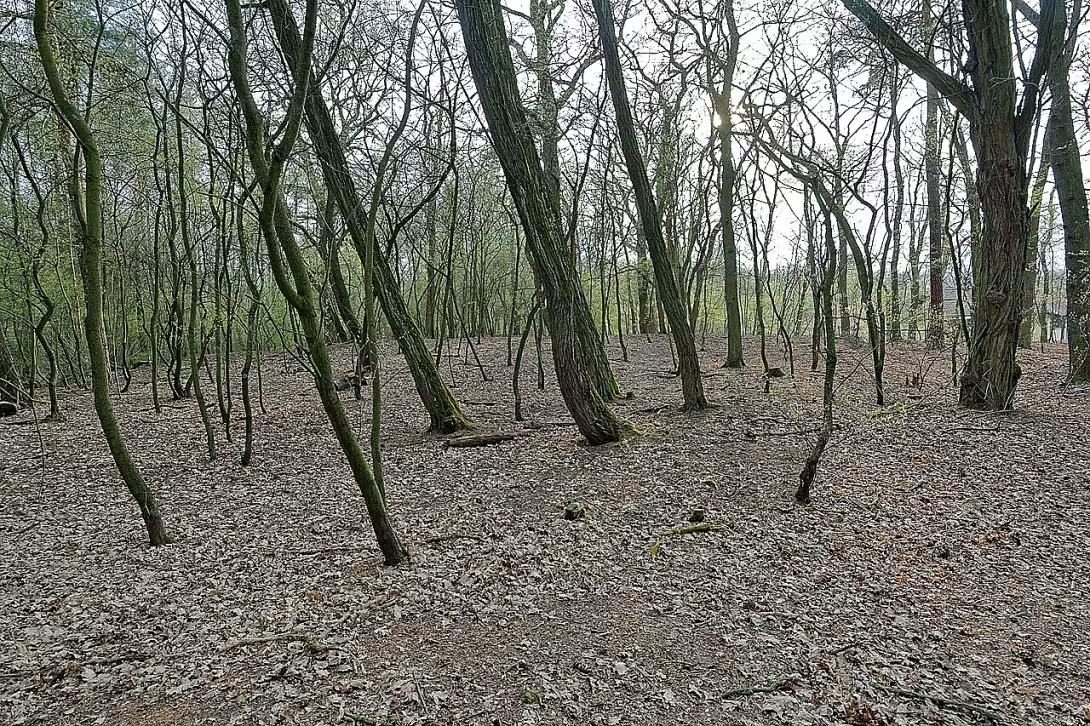
Slavětice is a medieval fortress on the territory of today's Prague Klánovice. This archaeological cultural monument has a rich history. The fortress was established at the turn of the 12th and 13th centuries and served as the centre of the village Slavětice, which was located in the area of today's New Court grove house. Its importance is highlighted by key events and changes in owners, reflecting the dynamics of the medieval feudal system.
The fortress was created during the development of Central European feudalism. Archaeological research from 1957 confirms construction at the turn of the 12th and 13th centuries. This period characterized the settlement of new territories and the development of urban structures in the Czech Republic. The oldest preserved mention of Celebrations dates back to 1227. Then rod Hrabišických dedicated the village to the monastery in Zderaze, Prague. This act was a typical feudal process in which gentlemen donated their land to church institutions.
Architecturally, it was an important building with a large round tower, which was common for medieval strongholds. Although specific details of styles and materials are missing, the findings suggest a robust structure designed to defend and manage the territory. In 1545, there is a mention of the fortress itself without a village. This suggests a possible transformation or abandonment of the residential area.
The history of ownership of Slavetic was complex. After donating the family of the Hrabiski monastery in Zderaze, the village and the fortress became part of his property. The reference to the village and court of 1349 confirms their existence at the time. In 1419 the village with a fortress was stopped by a monastery which subsequently paid it back in 1543 after several changes to the owners. These events reflect common feudal practices and economic strategies at that time.
Among the key events are the donation of the village by the Hrabiski family in 1227. Another important moment was the payment of the fortress back to the monastery in 1543. The fort was gradually abandoned. Already in 1586 it is mentioned as desolate and the last mention of the tower dates back to 1589.
Today, the traces of the fort are visible as a high-rise with a mixed forest. The fortress is protected as a cultural monument and its historical importance has been recognised since 26 May 2003. The current state offers visitors insight into medieval life and architecture. Although the village Slavětice no longer exists, its history and archaeological findings help to understand the past of this area.
Visiting the fortress Slavětice is an opportunity to honor history and to reflect on the variable nature of man and his relationship with the soil. The fortress that once formed the center of rural life today resembles the past and offers a quiet place for reflection. It is a call for the discovery and appreciation of historical monuments that help us understand our heritage.
Then and now
Drag the slider to compare how the landmark may have looked when it was built with the view today.
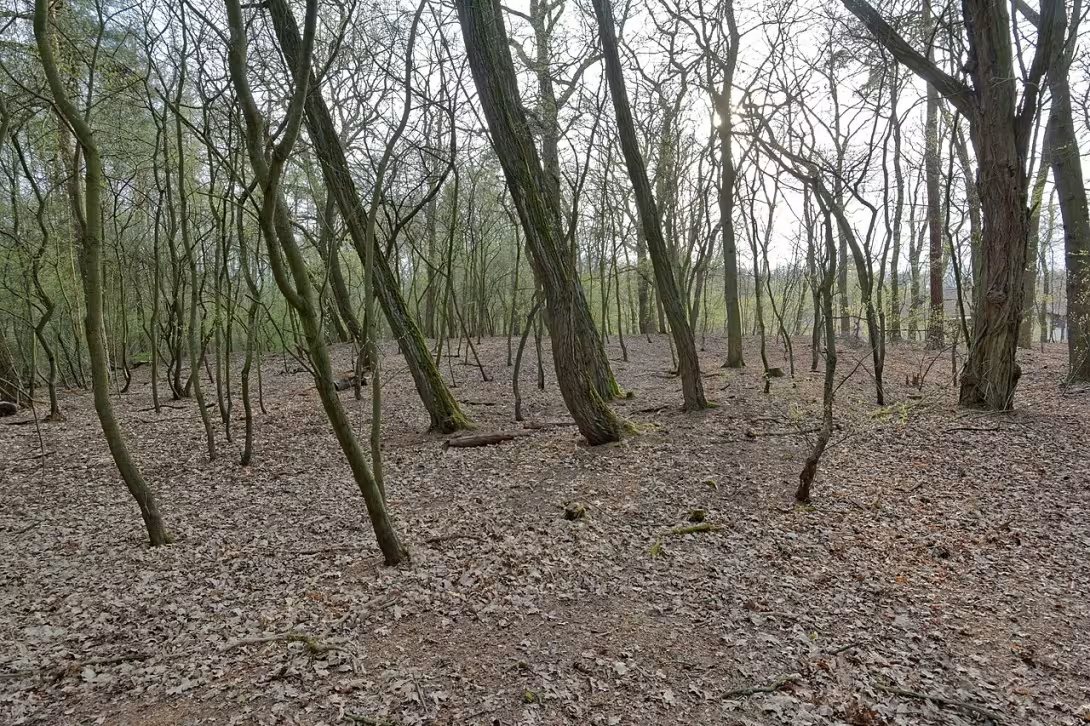

The historical appearance on the left is an AI-generated visualisation and serves as inspiration only.
Historical milestones
- 1227
- The dowry of the House of Hrabisice monastery on Zderaze.
- 1349
- The oldest mention of the village and court.
- 1543
- The fort was paid back after several changes to the owners.
Architectural development
Archaeological research suggests that the fort was built at the turn of the 12th and 13th centuries. In 1545 there is a mention of the fortress itself without a village, which suggests a possible transformation or abandonment of the residential area.
Historical events
- 1227
- Rod Hrabisický dedicated Slavětice monastery to Zderaze.
- 1349
- The oldest mention of the village and court.
- 1543
- The fort was paid back after several changes to the owners.
Points of interest
- Slavětice is a medieval fortress on the territory of today's Prague Klánovice. - The fortress was established at the turn of the 12th and 13th centuries and served as the centre of the village Slavětice. - The oldest preserved mention of the Celebrations dates back to 1227, when rod Hrabišických donated the village to the monastery in Zderaze, Prague. - In 1545, there is a mention of a fortress without a village, which suggests a possible transformation or abandonment of the residential area. - The fortress is protected as a cultural monument and its historical importance has been recognised since 26 May 2003.
Guide
Show guide text
This text was created by artificial intelligence and has not been editorially reviewed. It may contain inaccuracies.
Welcome to the silence and tranquility of the Klánovice Forest. Stop for a moment, take a breath and look around you. You may feel that you are standing in the middle of an ordinary forest country where only the noise of leaves and the singing of birds rule, but you are actually in a place that once beat the heart of the whole neighborhood. You are standing in front of a monument called Slavětice. If you look closely in front of you, you'll see a terrain that isn't exactly straight. Notice the fine but still noticeable elevation that protruding from the surrounding surface. This very place, this fortress, is a silent witness to the centuries of history that have taken place here. In addition to this high rise, you will see a pond that at first sight acts as a natural part of the forest. But in this little water mirror, there's a trail of ancient defense architecture. It is very likely that this pond is the remnant of a moat that once surrounded and protected the fort from its enemies.
Let us now move together far further back in time, to a period where there were not thick forest hooks, but prosperous villages. The fortress in Slavtice was established at the turn of the twelfth and thirteenth centuries. Imagine the early Middle Ages when the landscape was full of small settlements and strategically located fortified settlements. Slavětice was not just an ordinary home, but it served as a centre of the whole village, as an administrative and safe point around which the life of the local people was organised. At that time, the fortress was a symbol of power, stability and protection. It was a time when the foundations of statehood were established in our countries, and noble families began to control the landscape through similar settlements like this.
Now pay attention to what you're seeing right now. Even though you no longer see any masonry, no walls or towers, the architecture of this place is still present, only in a different form. It's carved into the earth itself. What we see today as a mild hill was once a base for wooden or stone construction, which was raised above the surrounding area to have a better view and to be less accessible. Feel the atmosphere of this place and try to reconstruct in your mind what the moat of water must have looked like today representing the pond. The water was the best ally of the fortress builders at the time. A moat full of water created a natural barrier that was difficult to overcome while providing the population with a water source. So look at the shape of the terrain and remember that every metre of this country was once carefully thought out to serve defence and survival.
But who lived in these walls and who made the decisions here? The history of Slavetic is closely linked to important names and institutions. One of the key players was the powerful rod Hrabišických. The first written mention, which brings us back to 1227, tells us that rod Hrabišických donated the village of Slavětice to Zderaze in Prague. Imagine that moment eight centuries ago when property was being taken over and the inner medieval world was changing owners. The monastery at Zderaze was at that time an important spiritual and economic centre in Prague, and the fact that it got to the property of Slavetice points to the strategic value of this place. We know about the later flowering of the village and the local court from the 1349 documents, which was the time when the village was fully functional and integrated into the then social order. However, the owners changed over time. History leads us to 1543, when the fort was paid back after several changes in ownership. It is fascinating to think how many generations of people have lived here, how many property disputes have been resolved here and how many quiet conversations have taken place in premises that are today represented only by grass and trees.
Now I want to invite you to think about one interesting thing that makes this place a real mystery. Slavětice was once a living village with its own centre in the form of a fortress, but today there are almost no traces of it all over the village, except for this fortress. Where did people go? Where are the houses, roads and gardens that had to surround this high ground? Nature took back Slavětice with incredible efficiency. What was once a noisy centre with economic courting and people turned into a quiet refuge of the Klánovice Forest. This transformation from civilization back into the wilderness is fascinating. You are standing in a place that is protected as an archaeological cultural monument precisely because the information that the books may not tell us remains in the given country. Every stone that may lie hidden beneath a layer of leaves, and every crease of the terrain is a piece of a puzzle that archaeologists still slowly compose.
Stop for a moment in complete silence. Try to forget about the modern world, about the noise of the city and everything that employs you today. Imagine you hear the horse-picking, the calling of people in the fields and the sound of water in the ditch. Can you feel the contrast between the activity at the time and today's calm? It is in this contrast that the spell of Slavetic lies. It's a place where history didn't just become a text in the textbook, it became part of the landscape.
Now that you've come to know the story of this forgotten mansion, I suggest you slowly go around the hill. Notice how the view of the pond changes and how the terrain gradually converts. Try to imagine where the roads lead to the area and where the entrance to the fort could have been. Let yourself be guided by your imagination and perceive the energy of this place that once dominated the surrounding landscape.
Thank you for accompanying me on this short trip to the depths of time. I hope you have found some peace in the Celestis and that you are interested in this story about the House of Hrabiski and the monastery of Zderaze. Now you can continue to explore the beauty of Klánovický Forest. Let us guide you through paths, look for further traces of the past and enjoy the clean air and the silence of nature. I wish you a pleasant continued journey and a beautiful day spent in the embrace of history. Goodbye.
Tips for visitors
For the best experience we recommend a visit in the spring or autumn period when vegetation is less dense and archaeological footprints are better seen. The ideal time for observation is morning or late afternoon, when the light is softer and in the forest there is a more pleasant shade.
You can reach the location by car and public transport; Please check the current connection in the traffic controller.
Take with you comfortable hiking shoes, water and repellent, which is necessary in the forest environment. For families with children, this walk is an interesting opportunity to explore history, but it is necessary to count on uneven terrain and heights.
For the best photos, use the height that clearly depicts the contours of the former fortress. After the tour you can explore the Klanovický Forest (Vidrčlka), visit the Hájna Nové Dvory or go to the Slavtice pond.
Frequently asked questions
Can the monument be visited?
This is an archaeological site. Often there is little to see on the ground and the land may be private. We have not verified access.
Where is the monument?
Location: Klánovice, Hlavní město Praha. The map on this page shows the exact spot.
Why is the monument protected?
It is listed in the Central List of Cultural Monuments of the Czech Republic as a cultural monument (register no. 1216303468).
Businesses nearby
Do you run a restaurant, accommodation, shop, museum, rental, wellness or other visitor service near this monument? Show yourself directly to the people heading to it — this is how they will see you in the app and on the web:
Events nearby
Zdroj akcí: otevřená data měst a obcí ČR (Národní katalog otevřených dat) a kalendář akcí Národního památkového ústavu.
Nearby
Clánovice forest (Vidrček)
Hájna Nové Dvory
Celestial pond
Accommodation nearby
Trips and activities nearby
Guided tours, tickets and activities nearby from GetYourGuide
Affiliate link: if you buy from the partner, we may receive a commission. The price for you does not change.
Search tours and activities →Themed route
1. Klánovický forest (Vidrček) Type: Natural area Why to visit: Offers a pleasant walk along forest paths in dense vegetation.
2. The grove of the New Court Type: Forest object Why to visit: Serves as a quiet place to stop during the trip.
3. Celestial pond Type: Water surface Why to visit: It is an ideal place for observing nature and a moment of peace by the water.
4.Slavětice (Fortress) Type: Historical monument Why to visit: The main destination of the trip where you can discover traces of old fortifications.
Seasonal recommendations
In spring, life wakes up around the fortress Slavětice. Young green leaves and flowers create a beautiful contrast with grey stones of ruins. The lighting is fine during this period, which is ideal for shooting details of architecture. We recommend you take layered clothes because morning temperatures can still be low, and choose around noon when the light is most stable.
Summer months bring intense sun and warm atmosphere to Klánovice. Vegetation is in full bloom and shade trees offer a short refuge from heat. Due to the increased attendance in the main summer season, it is best to arrive immediately after opening or in late afternoon hours to avoid the biggest crowds. Remember light, breathable clothes and plenty of fluids.
Autumn visit offers a melancholy view of the ruins surrounded by golden and brown colors. The misty wounds make the place mysterious, and the low sun highlights the texture of old walls. It is advisable to carry waterproof shoes because the soil in the area may be wet. It is best to visit the memory of the morning when the fog gradually dissolves and reveals the overall structure of the fortress.
In winter, the ruin is very raw, which underlines its historical importance. Without leaves, the foundations and shapes of the rest of the building are better visible. Due to the short days and rapid loss of light, plan a visit in the morning.
Visualizations and artistic views


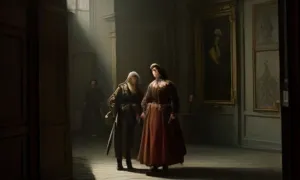
The visualisations are generated by artificial intelligence and serve as inspiration.
Photos from the area
Real photos taken near the monument


Zdroj a licence jsou uvedeny u každého snímku.
Tips from visitors
No tips yet. Be the first!
Log in and add your tip.
Sources and literature
Photos: Gampe / CC BY-SA 4.0 — Wikimedia Commons. The author and licence also appear when you hover over the image.
Faktickým podkladem tohoto textu byl článek na Wikipedii, jehož autory jsou přispěvatelé Wikipedie. Článek je dostupný pod licencí CC BY-SA 4.0.
Location on the map

Příběhy a pověsti
Legendy, pověsti a příběhy spjaté s touto památkou
Fotografie návštěvníků
Zatím žádné fotografie. Buďte první, kdo přidá fotografii z návštěvy!
Log in a přidejte svou fotografii nebo hodnoťte.
Za ověřenou návštěvu v aplikaci získáte víc bodů — poznáme podle GPS, že jste na místě.
Reviews and comments