



Smírčí kámen (Šlapanice) Monument
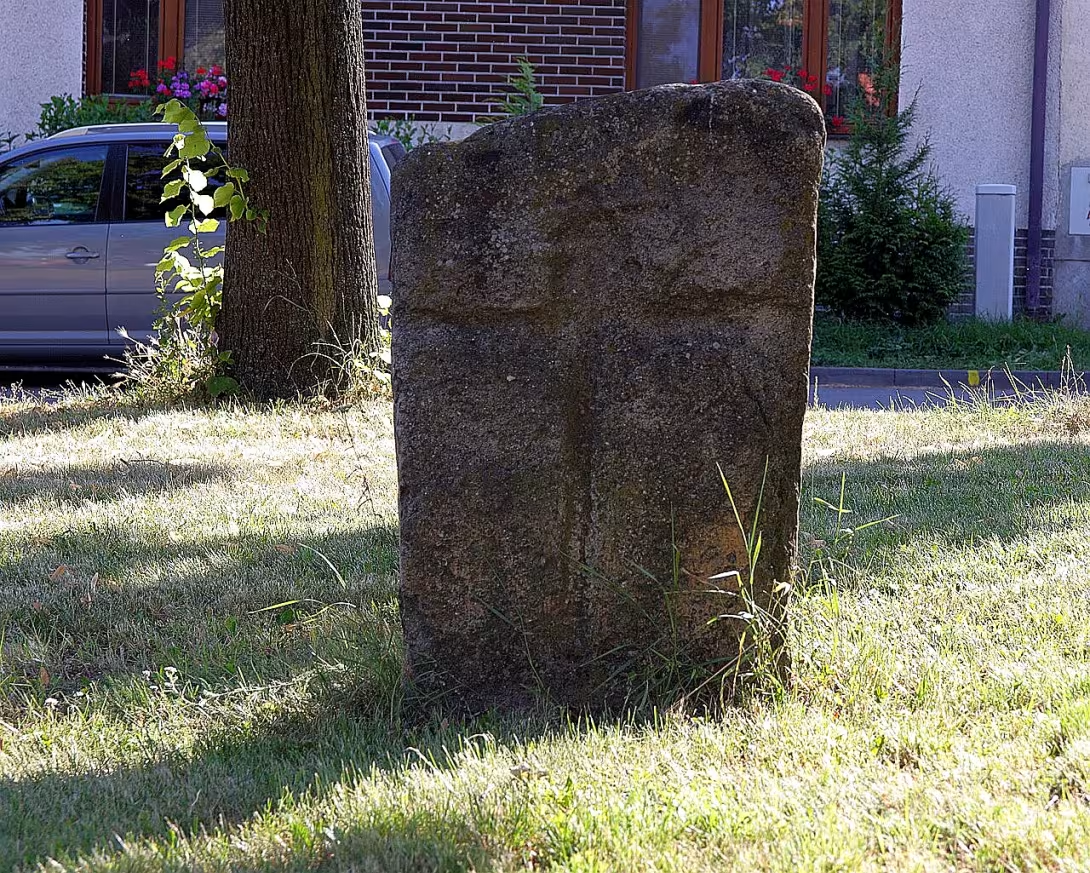
The peace stone, a cultural monument of the Czech Republic, stands in the park at the intersection of the streets of Brno and Bohemia in Šlapanice (the district of Brno-rural). The monument is remarkable in its value; it is assumed to indicate the place of enforcement of the hooligan capital law in the Middle Ages. Its location and appearance reflect the rich history of the city, which came from its strategic position on important business trips.
The fate of the stone is closely linked to the development of the Šlapanice itself. In the 13th century, the village was a rich settlement thanks to the surrounding roads and the later granting of urban rights and privileges. An important milestone was 1531, when Emperor Ferdinand I. Habsburský granted the city the status of a small town and the right to a weekly market and fair. This step has increased the regional importance of Šlapanice, which has also been reflected in the creation of the Conciliation Stone.
From an architectural point of view it is a flat rectangular block with dimensions of 1,07 × 0,66 × 0,15 meters. The upper part is slanted and rounded edges, giving it a unique appearance. The relief of the Latin Cross is carved on the surface, which brings a symbolic dimension to the monument and increases its value.
The position in the city building makes it easy to find. The proximity of old trade routes underlines the role of Šlapanice as an important medieval centre. The Stone of Peace serves not only as a monument, but as a witness to the history of the city and its inhabitants.
Today, the building is freely accessible, which makes it an ideal destination for people interested in the history of Šlapanice. The location at the intersection of the streets of Brno and Bohemia makes it an easy location to find, which attracts both local and tourist. Visit the Peace Stone and you will appreciate its importance as a spokesperson for the past.
The stone is a reminder of the events that shaped the city. His visit offers a unique view of the past and space to reflect on the development of the region. Discover this interesting piece of Czech history, which remains a living part of Šlapanice.
Historical milestones
- 1531
- Emperor Ferdinand I. Habsburský granted the town status and market law to the Slaps.
Architectural development
The object is made of stone and has a rectangular shape. A characteristic is the sloping of the upper part and rounded edges. On its surface is decorated with the relief of the cross.
Historical events
1531: Granting the town rights and status of the town by Emperor Ferdinand I. Habsburg.
Points of interest
- The stone is supposed to mark the place of pursuit of hooliganism in the Middle Ages. - It is a flat rectangular block with dimensions of 1,07 × 0,66 × 0,15 meters. - The upper part of the monument is slanted and has rounded edges. - The relief of the Latin Cross is carved on the surface of the stone. - The monument stands in the park at the intersection of the streets of Brno and Bohemia in Šlapanice.
Guide
Show guide text
This text was created by artificial intelligence and has not been editorially reviewed. It may contain inaccuracies.
Welcome to Hookers. Stop for a moment, take a breath and feel the silence of this place. Right now, you're facing one of the most mysterious and freezing witnesses in local history. A peace stone lies before you. At first glance, it may look like an ordinary, inconspicuous block of stone that has fallen into the landscape and become a natural part of it. But it is in this stealth that his power lies. This stone has been lying here for hundreds of years, bearing a memory of events that have long since sounded, but their echoes are still felt in this place.
Look at him carefully. It's a flat, rectangular block that seems very humble in space. If you wanted to measure it, you would find that its width is one meter and seven centimeters, depth is sixty-six centimeters and thickness is only fifteen centimeters. It is therefore a really flat stone, which rather accompanies the country than to stand out dominant. Notice its shape. The upper part is not quite straight, but it is slanted, which gives it a certain dynamic feel, even though the stone itself remains stationary. Its edges are not sharp, but they are finely rounded, as if time and weather have slowly sharpened them over the centuries, or as if this is how the creator himself wanted to carve them so that the stone does not seem too aggressive.
Now, please pay attention to the front of the stone. You see the carved relief of the Latin cross. This symbol is key here. The cross in this context is not only a declaration of faith, but above all a symbol of hope, forgiveness and pleas for mercy. By the time this stone was created, probably in the sixteenth or seventeenth century, faith in the afterlife and the possibility of redemption of sins was of fundamental importance. The cross carved into hard stone was to remind everyone around it that even where earthly life ended, the path to spiritual peace begins.
To understand why this stone is standing here, we have to go back many centuries in time. Let's transfer to year five hundred thirty-one. At that time, the mighty Habsburg dynasty ruled our countries. It was Emperor Ferdinand who gave the first Habsburg the status of the town to the Slaps and granted them the right to market. That was a huge event for the people back then. The town's status meant greater freedom, the boom of trade and increased social status. Šlapanice became a hub where buyers, craftsmen and locals met. But as the town grew, there was a growing need to maintain order and to exercise justice.
This is where we come to the most fascinating and dark part of the story of this place. Historians and researchers assume that this peace stone marked the place of enforcement of the law. Try to imagine for a moment. The capital right was the right of the town or ruler to decide the life and death of the accused. It meant that death sentences were carried out here or in the immediate vicinity of this stone in ancient times. It was a place where the highest human authority met with the highest price for a crime committed.
The peace stones were built at the time for various reasons. Sometimes it was an agreement between the wine man and the victim's family, when the wine man agreed to build a monument like this so that he could redeem himself from sin and prevent bloody revenge. However, in the case of capital law, the cross stone probably served as a reminder of the tragic end and also as a place where the souls of those who were executed here could pray. The stone thus served as a silent guardian of justice, but also as a request for mercy for those who could no longer correct their mistakes.
Imagine the atmosphere of the then Middle Ages and the early New Ages. People gathered here to watch the execution of the sentence, which at that time served as a warning to others. It was a harsh world where the law paid relentlessly and where death was much closer to everyday life than today. This flat stone with a cross was the only trace left to tell us about these dramatic moments. It is a fascinating contrast between the moderation of the shape of stone and the hardness of the events associated with it.
Whoever carved this stone remains a secret. Architects and craftsmen of that time rarely left their names on such simple monuments. He was probably a local stonemason who knew his craft work and was able to produce in hard material pure relief of crosses and accurately scaled upper surface. His work has endured hundreds of winters and jaren, endured wars, regime changes and the gradual development of Šlapanice, so that he can tell his story to you today.
When you look at a rock, you may notice how much humility is in it. There are no large statues, no flashy inscriptions or expensive materials. It's just a stone, a land and a symbol of faith. It is this simplicity that makes the memory so strong. They make us stop and think about the permeability of human life, the power of law and what remains of us. This stone is a bridge between us, the people of today, and the people who lived in the time of Emperor Ferdinand of Habsburg.
This peace stone is today a silent witness to history, which teaches us that every place has a memory. Even though ordinary life flows around him today, cars and people rush through their affaires, he still lies there, reminding us that justice and forgiveness are values that accompany mankind for millennia. It's a place for a brief reflection, for a moment of silence and respect for those who lived before us.
Now that you've learned the story of this extraordinary stone, I suggest you continue to explore the Šlapanic. The town, which was given its right to market already in the year five hundred thirty-one, has many other attractions in it. Walk down the streets, perceive the atmosphere of this place and look for other traces of the past that may be hiding from your eyes.
Thank you for accompanying this short trip to history. I hope you were interested in the peace stone and thought. I wish you a pleasant further walk and many new discoveries in our beautiful region. Goodbye and enjoy your day.
Tips for visitors
For the best experience we recommend a visit in spring or autumn months when the light is quieter and the surroundings act naturally. At these times the walk around the monument is more pleasant.
The location is available by car and by public transport; Please check the current connection in the search engine. The road to Šlapanice is easy from surrounding cities.
When visiting, bring a drink and comfortable shoes suitable for movement in the city building and by the roads. It's good to be ready for outdoor conditions.
The best time for photography is around sunrise or sunset. Low light will highlight the carved relief of crosses and give it depth.
If you travel with children, you can take advantage of the proximity of the city building Šlapanice and explore the surrounding trade routes. It's a good route for a short family walk.
Frequently asked questions
Can the monument be visited?
This is a structure in a public space that can usually be seen from outside free of charge. We have not verified that this particular one is freely accessible.
Where is the monument?
Location: Šlapanice. The map on this page shows the exact spot.
Why is the monument protected?
It is listed in the Central List of Cultural Monuments of the Czech Republic as a cultural monument (register no. 1000148123).
Businesses nearby
Do you run a restaurant, accommodation, shop, museum, rental, wellness or other visitor service near this monument? Show yourself directly to the people heading to it — this is how they will see you in the app and on the web:
Events nearby


Zdroj akcí: otevřená data měst a obcí ČR (Národní katalog otevřených dat) a kalendář akcí Národního památkového ústavu.
Nearby
Městská zástavba Šlapanic a blízké obchodní cesty.
Accommodation nearby
Trips and activities nearby
Guided tours, tickets and activities nearby from GetYourGuide
Affiliate link: if you buy from the partner, we may receive a commission. The price for you does not change.
Search tours and activities →Themed route
Thematic cruise route from Šlapanice
1.Smírčí kámen (Šlapanice)
Type: Memorial
Why is it worth visiting: The Peace Stone is a historical symbol of peace between Bohemia and the Germans from 1635. It is an important cultural monument that reminds us of an important event in the social history of the region.
2. City development Šlapanice
Type: City / village
Why is it worth a visit: Walk on the streets of the city offers a view of the architectural diversity and history of Šlapanice. Here you can find various modern and older buildings that reflect the development of the village.
3. Close trade routes
Type: Shops / Business Centres
Why is worth a visit: For those looking for the opportunity to buy food or other goods. These trips offer diverse shops and services for local and visitors.
This route will guide you from the historical monument to the modern parts of Šlapanice to the business possibilities, allowing you to take a general look at life in this location.
Seasonal recommendations
In spring, the surrounding landscape slowly comes to life and the stone surrounds a fresh, young greenery. The atmosphere is full of hope and light is delicate, which helps to reflect on the history of the place. I recommend moisture-resistant shoes because grass can still be wet. The best time is this morning's hours when the air is the cleanest.
In the summer months the bright sun and dense leaves of the surrounding trees dominate. The monument is surrounded by warm, calm air and rich colors of nature. It is advisable to choose light clothes and not forget the protection from the sun. To avoid the biggest heat, it is best to start early in the morning or shortly before sunset.
Autumn brings golden and red shades of leaves around that create a melancholy framework for this monument. The frequent morning mist gives the place a mysterious and quiet mood. It is practical to dress in more layers of clothing to protect you from the cold wind. It is ideal to visit in late afternoon hours when the sun paints the landscape in warm tones.
In winter, the stone can cover a layer of snow, highlighting its very appearance and creating a sharp contrast to the white surroundings. The atmosphere is freezing and very quiet, which underlines the nature of the memorial. It is necessary to wear warm, thermal clothes and fixed shoes. Given the short day, it is best to plan your trip in the morning so you have enough daylight left.
Visualizations and artistic views

The visualisations are generated by artificial intelligence and serve as inspiration.
Photos from the area
Real photos taken near the monument

Zdroj a licence jsou uvedeny u každého snímku.
Tips from visitors
No tips yet. Be the first!
Log in and add your tip.
Sources and literature
Photos: RomanM82 / CC BY-SA 3.0 — Wikimedia Commons. The author and licence also appear when you hover over the image.
Faktickým podkladem tohoto textu byl článek na Wikipedii, jehož autory jsou přispěvatelé Wikipedie. Článek je dostupný pod licencí CC BY-SA 4.0.
Location on the map

Příběhy a pověsti
Legendy, pověsti a příběhy spjaté s touto památkou
Fotografie návštěvníků
Zatím žádné fotografie. Buďte první, kdo přidá fotografii z návštěvy!
Log in a přidejte svou fotografii nebo hodnoťte.
Za ověřenou návštěvu v aplikaci získáte víc bodů — poznáme podle GPS, že jste na místě.
Reviews and comments