



socha rudoarmějce (Šlapanice) Memorial
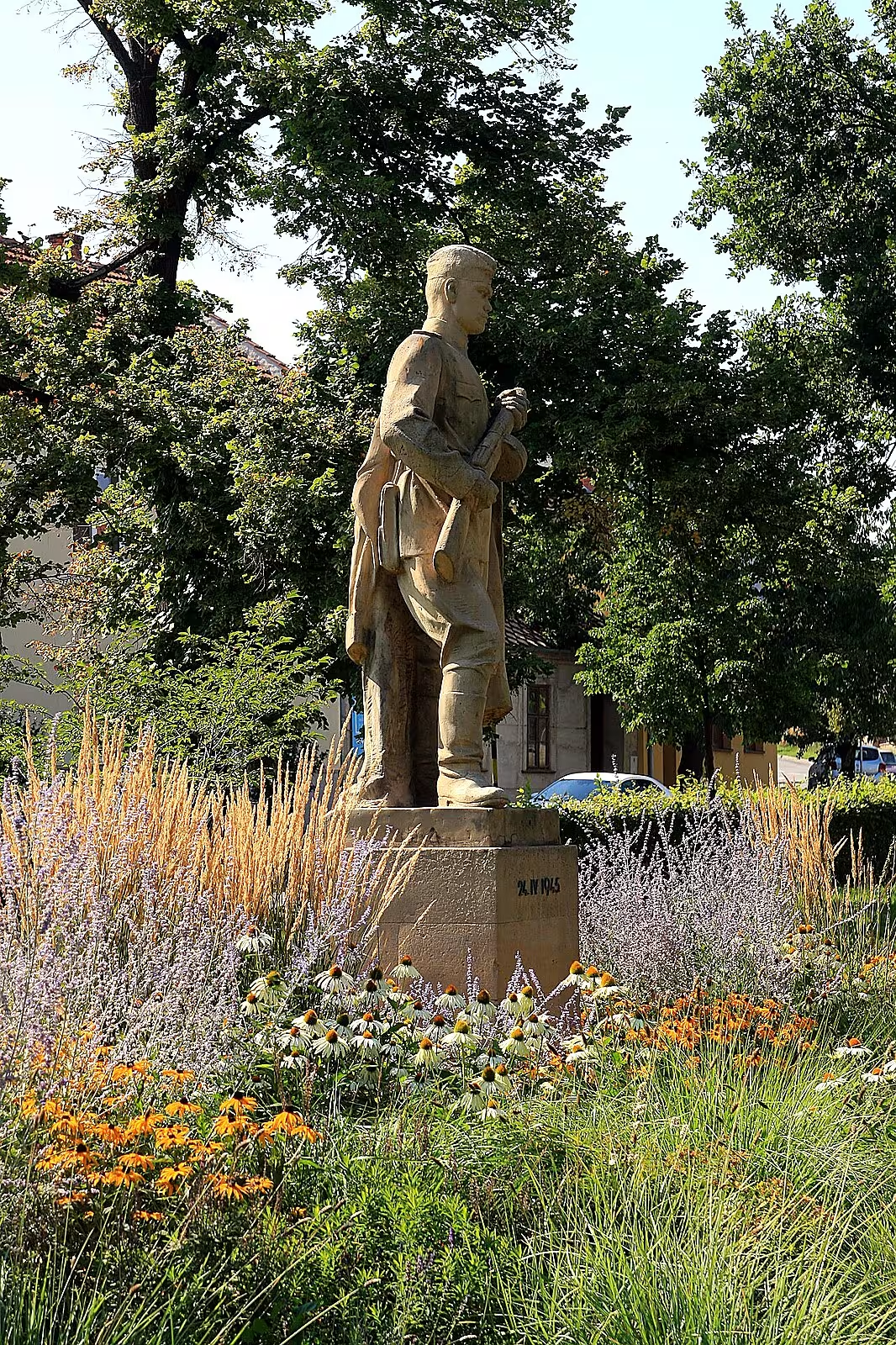
The statue of Red Arm in Šlapanice is a monument at the intersection of the streets of Brno and Bohemia in the district of Brno. This protected cultural monument was built in 1948 as a token of gratitude for the liberation of the village by the Red Army during World War II. Its importance lies not only in the artistic work of local sculptor Stanislav Hanzlo, but also in the historical events which it represents.
The foundation of the monument is closely linked to the liberation of Šlapanice on 24 April 1945, when the Red Army fell 94 Red Armyans and three Romanians, while 28 local citizens died during the struggle. This event was important to the community and led to the status of the monument as a permanent thanks for the liberation. In 1948, at the time of political change in Czechoslovakia, sculptor Stanislav Hanzl participated in his creation from sandstone and bronze.
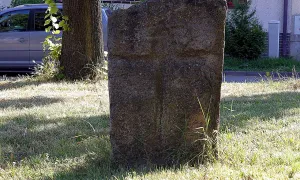
Architecturally, the monument is made up of a prism base with a square ground plan, which bears the sumptuous size of the red-arm statue. The statue is shown in the contour of the right foot, with the cloak blending over the left shoulder and the bag swung over the right shoulder. He's holding a machine gun in his hand and wearing a military hat. This monument is important not only by its artistic design, but also by materials used - sandstone and bronze.
The memorial went through some dramatic events during its existence. In 1968, the statue was insulted by a head, reflecting political tension at the time. A similar incident was repeated in 2018. Despite these attacks, the monument was repaired in 2017, maintaining its historical and cultural value.
Today, the statue of the Red Arm stands as a witness to important historical events and a symbol of gratitude for liberating the village. It is located in an accessible parking lot, making it easily accessible to visitors. Exploring this monument is not only interesting for historians, but also for everyone interested in World War II history and its impact on local communities.
The statue of the Red Artist in Šlapanice is therefore more than a work of art; It's a monument that reminds the victims of war and celebrates heroism. Her visit offers a view of the past and an opportunity to reflect on the historical events that shaped the current society.
Then and now
Drag the slider to compare how the landmark may have looked when it was built with the view today.
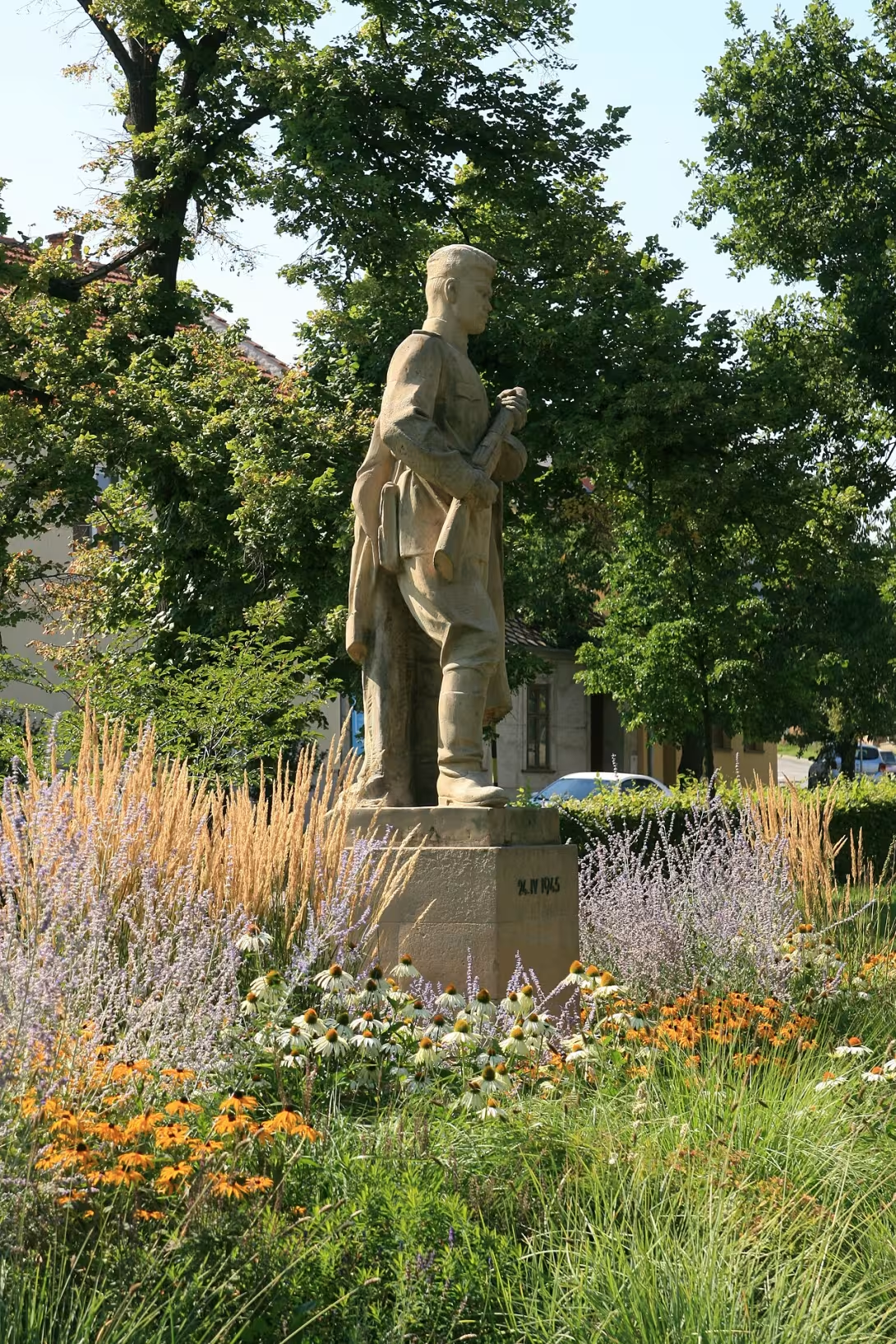
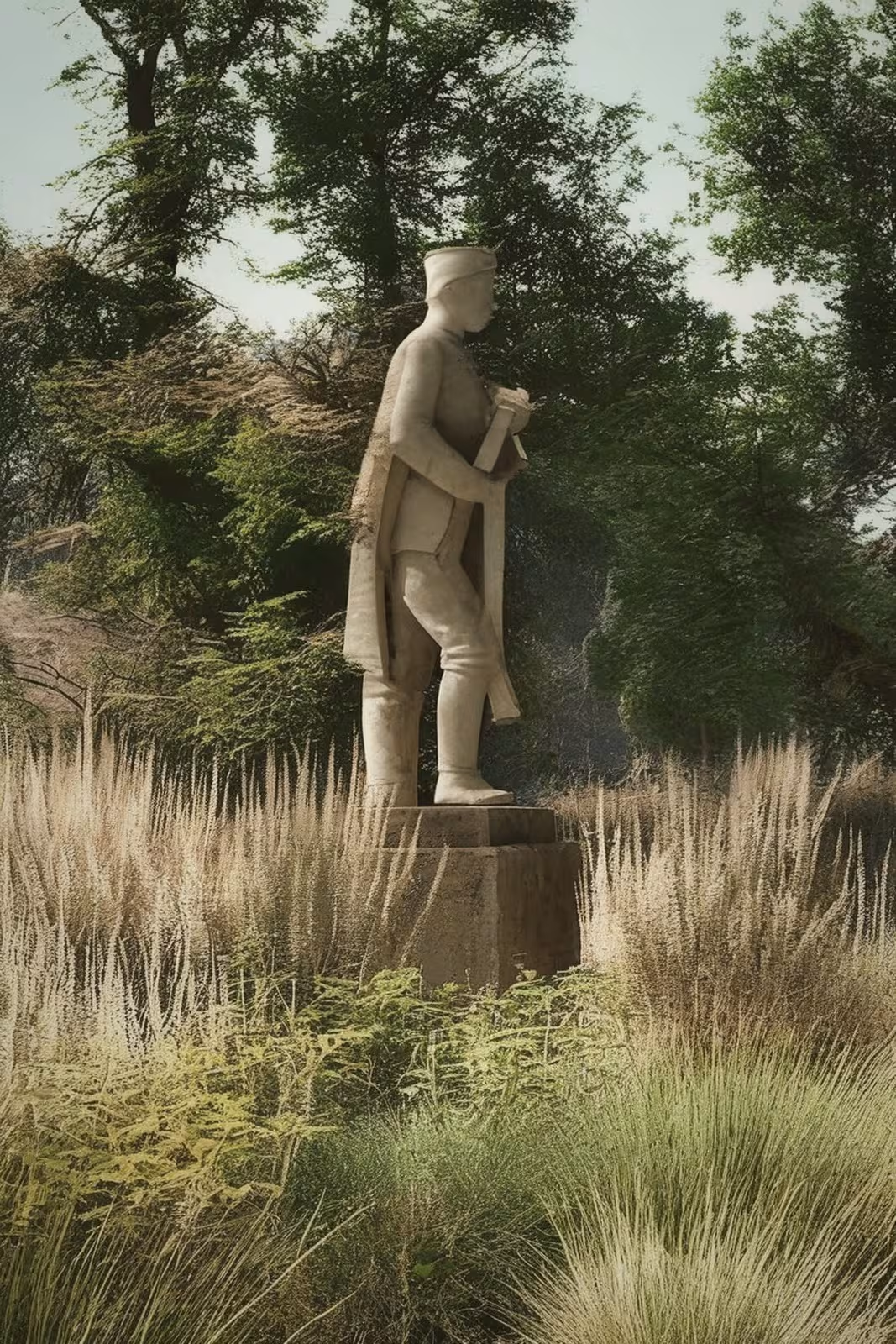
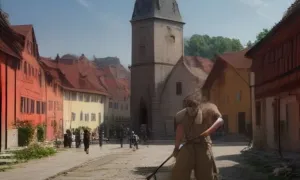
The historical appearance on the left is an AI-generated visualisation and serves as inspiration only.
Historical milestones
- 1948
- The position of the sandstone monument of the Red Arm.
- 1968
- The head of the statue.
- 2017
- Fix the statue.
- 2018
- Re-insult the statue's head.
Architectural development
The monument is made of sandstone prism base and bronze statue. The material includes sandstone and bronze. Over the years, the statue has been repaired.
Historical events
In 1945 there was liberation of the village and fighting, in which many soldiers fell. In 1948, the monument was built. In 1968 and 2018, the statue was insulted by a head.
Points of interest
The statue of the Red Arm in Šlapanice is a monument built as a token of gratitude for the liberation of the Red Army during World War II. - The memorial was created in 1948 by local sculptor Stanislav Hanzlo of sandstone and bronze. - The foundation of the memorial is linked to the liberation of Šlapanice on April 24, 1945, when 94 Red Armyans and three Romanians fell, while 28 local citizens died during the struggle. - The memorial went through some dramatic events, including the head injury of the statue in 1968 and 2018, reflecting political tensions. Today, the statue stands as a witness to important historical events and a symbol of gratitude for liberating the village.
Guide
Show guide text
This text was created by artificial intelligence and has not been editorially reviewed. It may contain inaccuracies.
Welcome to Hookers! You're standing in front of a statue of the redskins, a monument full of history and memories of an important moment from the past. Look up and you'll see a soldier of life size standing with a fortress, his character is carved out of sandstone and bronze. Notice how the statue holds a machine gun, a symbol of courage and protection.
The memorial was created as a token of gratitude for the liberation of the village by the Red Army during World War II. Built in 1948, it is the work of local sculptor Stanislav Hanzlo. This memorial commemorates the liberation of Šlapanice on 24 April 1945, when the Red Army stopped the enemy's domination and restored peace in the region.
Now let's look at the details of this statue. The statue is built on a prism pedestal, which gives it nobility and integrity. Imagine how a soldier stands in contention with full dignity, reminiscent of the time when the witness was a major turn in the war.
Although we don't know much about the personalities associated with this place, the memory itself is witnessing important events. The monument was attacked several times - in 1968 the head of the statue was insulted and then repaired in 2017. Tragically, there was further head damage in 2018. These acts of vandalism point to tensions in society today.
The interesting thing is that the monument is not only a monument to a historical event, but also a witness to the current challenges. Its endurance and repeated repairs are symbols of the determination to preserve the memory of the past.
Let's move closer to the statue. Notice how light falls on her face, creating dramatic shadows and illuminating details of bronze and sandstone. It's like every stone could tell the story of courage and sacrifice.
Let's look at the surrounding environment. The monument is placed in a place that allows you to observe not only the statue itself, but also its interaction with the natural and architectural context. Imagine how this place was seen during the celebrations in 1948.
Now let's get back to the bottom of our guide. This statue of the Red Arm is not only a monument to the past, but also a place for reflection on today's world and its challenges. Invitation to further explore offers different paths - not only physical, but also intellectual.
Thank you for your attention! I hope your visit to Šlapanice was beneficial and inspiring. If you're interested in other historic rooms or monuments, we'd like to look further together. When we meet in another interesting place!
Tips for visitors
The best time to visit the statue of the Red Burmese is early morning or evening when the sun illuminates the monument with a special light. This time also offers a quieter environment for visitors.
When visiting, bring protective clothes and shoes suitable for walking on the street. The site does not offer exhibition space or interactive elements, so it is better to focus on the statue itself.
The perfect places around the intersection of the streets of Brno and Bohemia, especially at noon, are for shooting the red-arm monument. You can also photograph from different angles to capture the overall impression of the statue.
The surrounding area is Park, which can be an interesting addition to visit. It is advisable for families with children to prepare toys or play things outside.
Frequently asked questions
Can the monument be visited?
This is a structure in a public space that can usually be seen from outside free of charge. We have not verified that this particular one is freely accessible.
Where is the monument?
Location: Šlapanice, Jihomoravský kraj. The map on this page shows the exact spot.
Why is the monument protected?
It is listed in the Central List of Cultural Monuments of the Czech Republic as a cultural monument (register no. 1000131035).
Businesses nearby
Do you run a restaurant, accommodation, shop, museum, rental, wellness or other visitor service near this monument? Show yourself directly to the people heading to it — this is how they will see you in the app and on the web:
Events nearby


Zdroj akcí: otevřená data měst a obcí ČR (Národní katalog otevřených dat) a kalendář akcí Národního památkového ústavu.
Nearby
Parčík na křižovatce ulic Brněnská a Čechova ve Šlapanicích.
Accommodation nearby
Trips and activities nearby
Guided tours, tickets and activities nearby from GetYourGuide
Affiliate link: if you buy from the partner, we may receive a commission. The price for you does not change.
Search tours and activities →Themed route
Road trip to Šlapanice
1. Statue of Red Arm (monument) Type: historical monument This monument is revered as a symbol of courage and bravery that resembles the rich past of the village. It is an ideal place to understand the history of the region and to think about the importance of history.
2. Parc Type: cultural monument The park is a unique architectural structure that attracts attention with its unusual form and history. It is a place where you can explore the location at the intersection of the streets of Brno and Bohemia and find out more about its importance.
3. Brno Street Type: historical square Walk on the street of Brno offers a view of ancient houses and architecture, which tells stories of past generations. It is an ideal place for relaxation and limitation in a quiet atmosphere of local life.
4. Chekhov Street Type: historic street This street is another piece into the past of the village where various architectural elements and local traditions can be discovered. It is a place for a short walk and knowledge of history through its buildings.
5. Crossing the streets of Brno and Bohemia Type: central local point The final destination of the route is a crossroads that symbolizes the combination of history and the present. Here you can close your walk by looking at the village from the central point, allowing you an overall overview of its development.
This route offers visitors the opportunity to get acquainted with the historical and cultural richness of Šlapanic through key places in the centre of the village.
Seasonal recommendations
Spring: In the spring season, the statue of the Redormé in Šlapanice is revived by sunlight, which illuminates her faces and significantly increases the attractiveness of the monument. Green meadows around the monument offer peaceful nature for relaxation. During the spring, it is advisable to visit the memory in the early afternoon to avoid the initial increase in temperature and possible doses of tourists. It is recommended that you wear your clothes on variable weather conditions so that you are prepared for both sunny times and sudden rain.
Summer: In the summer period, the statue of the Red Burmese artist in Šlapanice is dazzled by long days and warm evenings. This season attracts the most visitors who enjoy outdoor activities around the monument. The best time for a tour is early morning or late afternoon to avoid heat and crowds. It is advisable to carry protective sun creams, wide-cut hats and plenty of water for medical care.
Autumn: In the autumn period, the statue of the Red Arm in the Šlapanice atmosphere becomes calm and relieved when the leaves are colored in living shades. The sunny morning is the perfect time for a visit when the temperature still allows comfortable walks. It is advisable to wear clothes that protect against cool breeze and possible moisture. This time of year is also ideal for photography due to the colour background of leafy trees.
Winter: In the winter months, the statue of the Red Arm in Šlapanice becomes melancholy but still. The sunny day provides beautiful light effects on marble faces statues, while cold evenings require warm clothes. If you visit the statue during this period, we recommend wearing warm clothes and shoes on a dry surface for comfort during walks.
Visualizations and artistic views


The visualisations are generated by artificial intelligence and serve as inspiration.
Photos from the area
Real photos taken near the monument


Zdroj a licence jsou uvedeny u každého snímku.
Tips from visitors
No tips yet. Be the first!
Log in and add your tip.
Sources and literature
Photos: Martin Strachoň / CC BY-SA 4.0 — Wikimedia Commons. The author and licence also appear when you hover over the image.
Faktickým podkladem tohoto textu byl článek na Wikipedii, jehož autory jsou přispěvatelé Wikipedie. Článek je dostupný pod licencí CC BY-SA 4.0.
Location on the map

Příběhy a pověsti
Legendy, pověsti a příběhy spjaté s touto památkou
Fotografie návštěvníků
Zatím žádné fotografie. Buďte první, kdo přidá fotografii z návštěvy!
Log in a přidejte svou fotografii nebo hodnoťte.
Za ověřenou návštěvu v aplikaci získáte víc bodů — poznáme podle GPS, že jste na místě.
Reviews and comments