






Pomník padlým (Šlapanice) World war i memorial
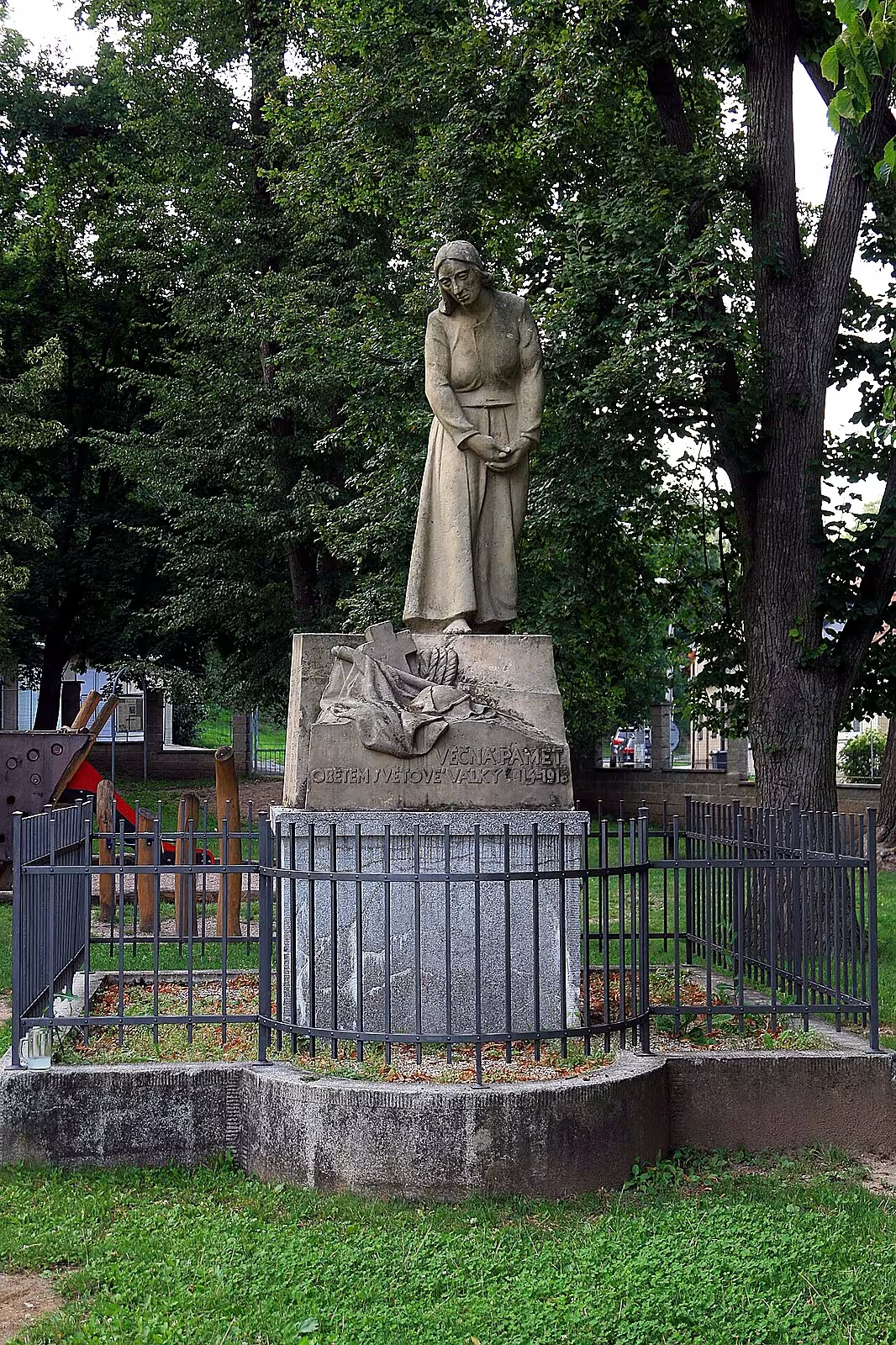
The Plačící matka monument, a World War I memorial, stands in Šlapanice's municipal park, within Brno-venkov district. Established in 1924, it honors local soldiers who died during the conflict. This site is officially recognized as a cultural monument of the Czech Republic.
The monument was created by academic sculptor Josef Kubíček and erected in 1924, during the early years of the First Czechoslovak Republic. This period saw the nation grappling with the social and demographic impacts of World War I. A committee dedicated to fallen Šlapanice citizens, led by Jan Duchan, a Russian legionnaire, managed the monument's construction.
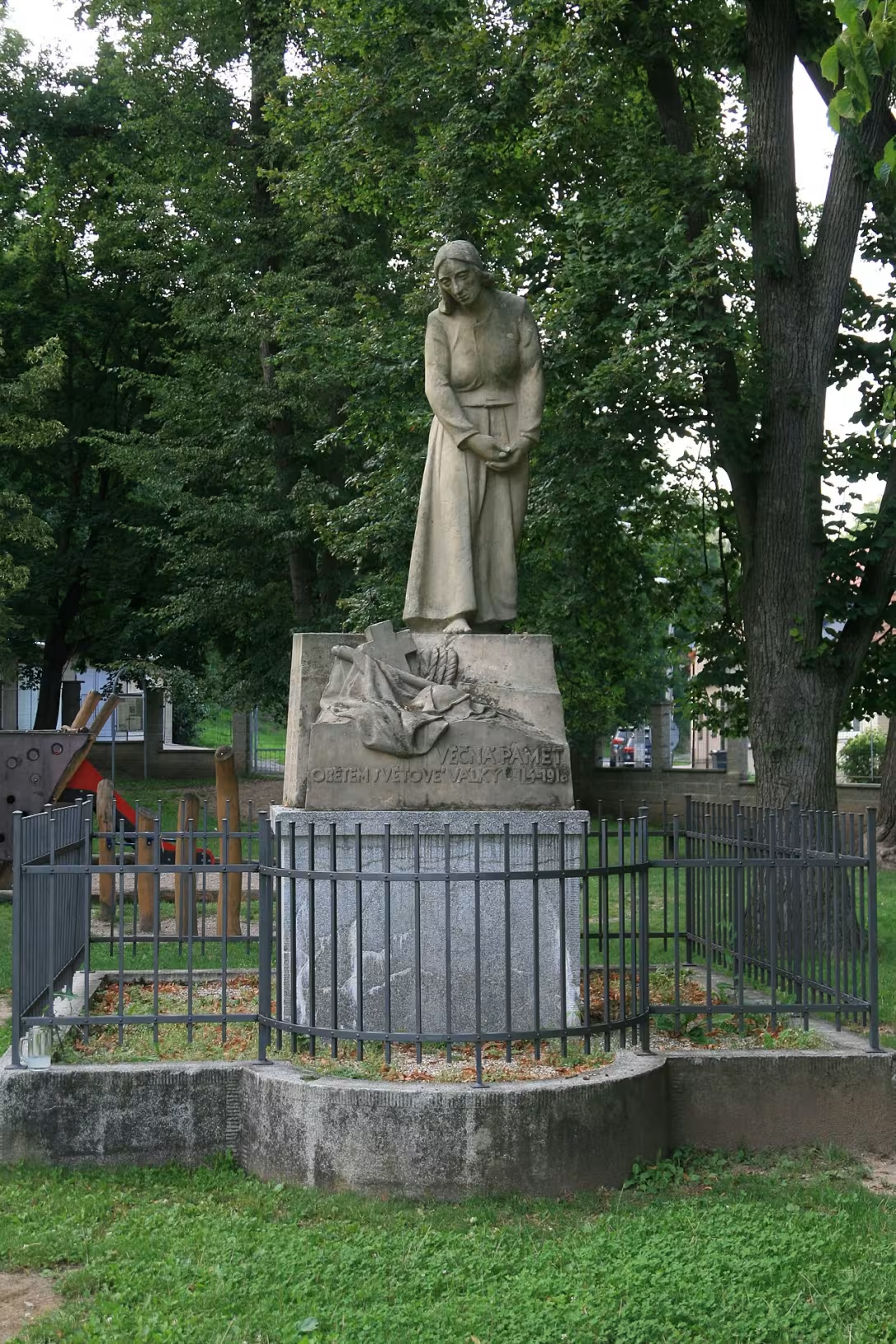
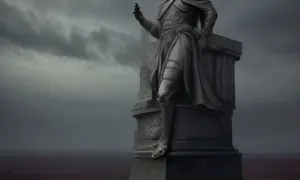
Crafted from sandstone and artificial stone, the structure features a square enclosure with a semi-circular front. At its center stands a larger-than-life figure of a mourning mother searching for her husband's and son's graves. The figure is depicted in contrapposto, leaning forward with clasped hands, wearing a simple blouse and flowing dress.
The pedestal, shaped like a rock to represent stepped terrain, rests on a square base with a simple cornice. This rocky section features plastic representations of crosses, helmets, and piled flags.
Listed in the Central Register of War Graves under CZE-6216-17453, the monument remains a protected cultural monument of the Czech Republic.
Initially, the memorial bore the names of 84 Šlapanice men. Thirty fell on the front, eleven were officially declared dead, eight reported missing, and eight died at home due to battle injuries. Twenty-seven died abroad. A notable detail concerns soldier František Fiala's name, which was later erased from the monument. This change occurred when Fiala returned to Šlapanice with his wife and son 42 years after being released from the USSR.
The monument remains situated in Šlapanice's municipal park, serving as a concrete record of the local human cost of World War I. Visitors can observe the detailed sculptural work and specific list of names documenting the town's history.
This monument provides a tangible link to the early 20th century and the personal tragedies of the local population. It is a significant site for those interested in regional history and war memorials.
Then and now
Drag the slider to compare how the landmark may have looked when it was built with the view today.
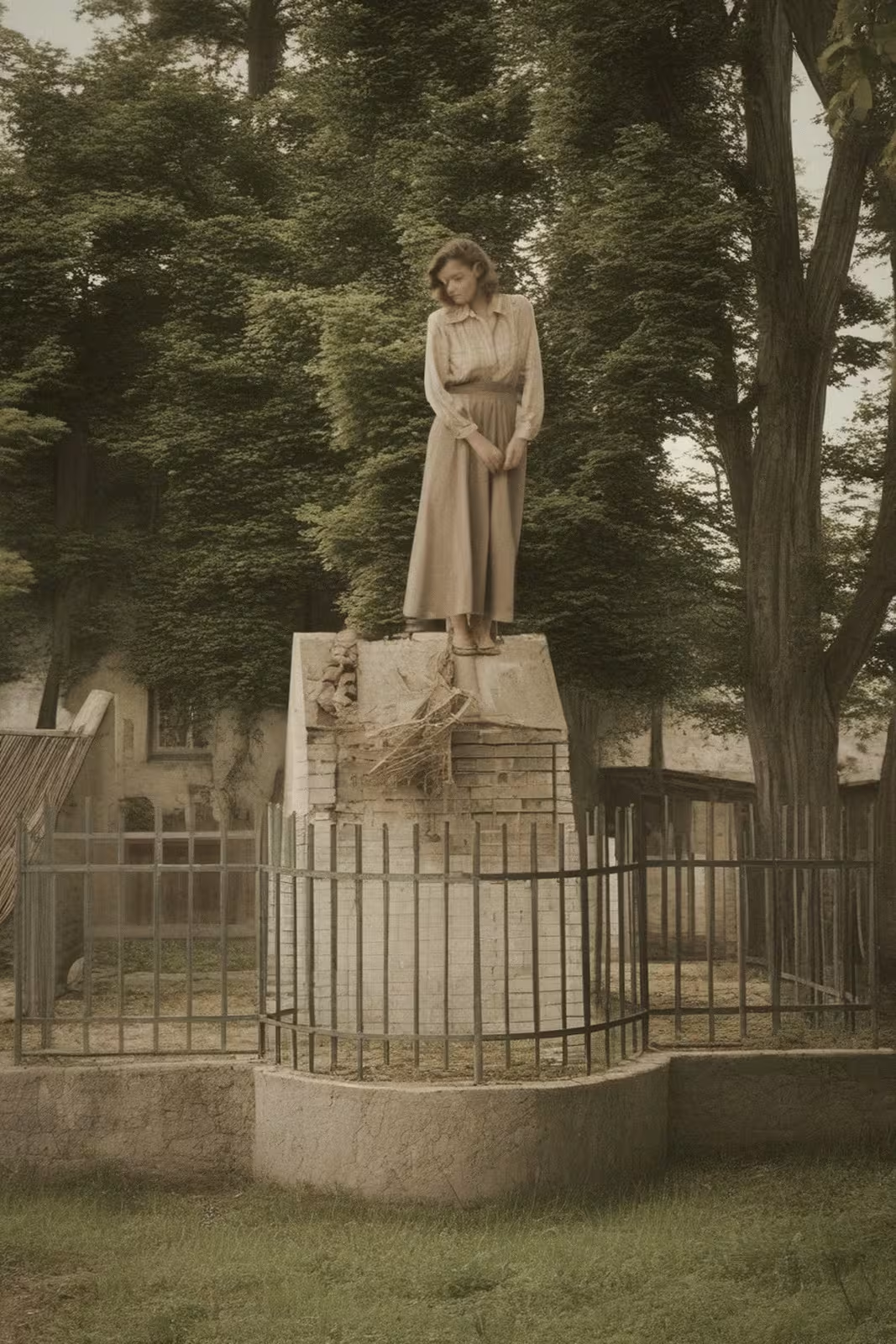
The historical appearance on the left is an AI-generated visualisation and serves as inspiration only.
Historical milestones
- 1914
- Outbreak of World War I
- 1924
- Establishment of the Pomník padlým monument in Šlapanice's municipal park
- 1956
- František Fiala returns to Šlapanice with his wife and son after being released from the USSR
Architectural development
The monument is crafted from sandstone and artificial stone. It consists of a square enclosure with a semi-circular front and a high pedestal designed to resemble a rocky, stepped terrain. The design includes plastic decorations of flags, helmets, and crosses.
Historical events
In 1924, the monument was created by sculptor Josef Kubíček and erected by a committee led by Jan Duchan.
Points of interest
– The Plačící matka monument is a World War I memorial that honors local soldiers who died during the conflict.
– The monument was created by academic sculptor Josef Kubíček and erected in 1924, during the early years of the First Czechoslovak Republic.
– The structure features a square enclosure with a semi-circular front, at its center stands a larger-than-life figure of a mourning mother searching for her husband's and son's graves.
– Initially, the memorial bore the names of 84 Šlapanice men who died during World War I.
Guide
Show guide text
This text was created by artificial intelligence and has not been editorially reviewed. It may contain inaccuracies.
Welcome to the quiet sanctuary of the municipal park here in Šlapanice. Please, take a moment to settle in, adjust your headphones, and simply look ahead of you. You are standing before one of the most emotionally charged landmarks in the town, the Pomník padlým. At first glance, you might feel a sense of profound stillness and solemnity. The air here seems to carry a different weight, a quiet reverence that invites us to slow down and reflect. Before you stands a figure that transcends simple stone and mortar, a representation of grief that has watched over this community for a century. This is the Plačící matka, or the Weeping Mother, a monument that serves as a permanent bridge between the living and those who never returned home.
To understand why this monument exists, we have to travel back in time to the year 1914. The outbreak of World War I was a cataclysm that tore through the fabric of society across Europe, and Šlapanice was not spared. Like so many small towns, this community saw its sons, fathers, and brothers marched away to distant fronts, many of whom would never see the familiar streets of their hometown again. For years, the families here lived in a state of agonizing uncertainty, waiting for letters that stopped coming or receiving news that brought an end to all hope. After the guns finally fell silent and the dust of the Great War settled, the people of Šlapanice felt a deep, collective need to ensure that this sacrifice was never forgotten. They wanted a place where the community could gather to mourn and where the names of the fallen would be etched into the memory of the town. This led to the establishment of the Pomník padlým in 1924, during the early, hopeful years of the First Czechoslovak Republic, a time when the nation was defining its own identity and honoring those who had perished in the struggle for a new beginning.
Now, I invite you to step a little closer and really observe the artistry of the monument. The work was entrusted to the academic sculptor Josef Kubíček, a man who understood that to honor the dead, one must speak to the hearts of the living. Look closely at the central figure of the mourning mother. Notice her posture; she is standing in what artists call contrapposto. This means her weight is shifted onto one leg, creating a natural, fluid curve in her body that makes her feel human and alive, rather than a rigid statue. This subtle detail is intentional. It gives her a sense of fragility and exhaustion, as if the weight of her sorrow is physically pulling her down. She is life-sized, which allows you to stand eye-to-eye with her grief, making the experience intimate and personal.
As you let your gaze drift downward, notice the pedestal she stands upon. It is not a polished, perfect block, but rather a rocky pedestal. This rugged texture symbolizes the harsh, unforgiving terrain of the battlefields where the soldiers fell, and perhaps the rocky, difficult path of grief that the families had to walk. Around the base, you will find several symbolic elements that tell the story of war. Look for the depictions of flags, which represent the duty and patriotism of the fallen; the helmets, which remind us of the brutal reality of combat; and the crosses, the universal symbol of loss and eternal rest. Each of these details was carefully placed by Josef Kubíček to ensure that the viewer understands this is not just a statue of a woman, but a narrative of a generation lost.
While the monument is a testament to the collective loss of the town, it is also tied to the lives of specific individuals. Beyond the sculptor Josef Kubíček, the history of this site is intertwined with figures like Jan Duchan, who played a role in the community's remembrance. But the history of loss in Šlapanice did not end with the First World War. To truly appreciate the atmosphere of this place, one must consider the broader timeline of the town's tragedies. For instance, consider the story of František Fiala. Decades after this monument was erected, in 1956, František Fiala finally returned to Šlapanice with his wife and son after being released from the Soviet Union. While his story belongs to a different era and a different conflict, his return highlights the recurring theme of this town: the long, painful wait for loved ones to come home, and the enduring strength of the family bond. The Plačící matka stands as a silent witness to all such stories, whether they ended in a return or in a permanent absence.
There is something deeply moving about the choice of a mother as the central figure of this memorial. In many war monuments, you will see triumphant soldiers, charging bayonets, or stoic generals. But here, the focus is shifted. The bravery of the soldier is honored not through a depiction of battle, but through the depiction of the void they left behind. The mystery of the monument lies in its universality. The Weeping Mother does not just represent the mothers of Šlapanice from 1924; she represents every parent who has ever lost a child to conflict. She is an archetype of sorrow that speaks a language understood in every corner of the world. When you look at her, you aren't just looking at a piece of local history; you are looking at a mirror of human suffering and the enduring nature of love.
As you spend these last few moments in the presence of the Pomník padlým, I encourage you to simply be still. Listen to the sounds of the park around you and contrast them with the silence of the stone. The contrast between the vibrant, living greenery of the municipal park and the grey, mourning figure of the mother serves as a reminder that life continues, but it does so because of the sacrifices of those who came before us. The monument asks us not only to remember the names of the fallen but to contemplate the cost of war and the value of peace.
Thank you for taking the time to stop and honor the memory of the soldiers of Šlapanice. As you move on from this spot, you may find yourself reflecting on the stories that these stones cannot tell, but which we can feel in our hearts. Please feel free to wander further through the park or explore the other historical corners of the town. May your journey through Šlapanice be one of discovery and reflection. Farewell for now, and enjoy the rest of your visit.
Tips for visitors
The best time to visit the Pomník padlým monument is during spring or autumn, when the weather is mild and sunny. This allows you to fully appreciate the beautiful surroundings of the municipal park in Šlapanice.
Parking is available within the municipal park, making it easily accessible by car. Alternatively, you can take a bus or taxi from nearby cities.
When visiting the monument, be sure to bring comfortable walking shoes and a camera to capture the stunning views.
The best spots for photography are around the monument itself, where you can capture the intricate details of the 'Plačící matka' sculpture. The morning light is particularly ideal for taking photos.
If you're looking to explore more nearby attractions within a 30-minute radius, consider visiting the town center or the local museum.
Businesses nearby
Do you run a restaurant, accommodation, shop, museum, rental, wellness or other visitor service near this monument? Show yourself directly to the people heading to it — this is how they will see you in the app and on the web:
Events nearby


Zdroj akcí: otevřená data měst a obcí ČR (Národní katalog otevřených dat) a kalendář akcí Národního památkového ústavu.
Nearby
The monument is located within the municipal park in Šlapanice.
Accommodation nearby
Trips and activities nearby
Guided tours, tickets and activities nearby from GetYourGuide
Affiliate link: if you buy from the partner, we may receive a commission. The price for you does not change.
Search tours and activities →Themed route
Thematic Tour Route
Main Goal: Pomník padlým (Šlapanice) (monument)
Location: Šlapanice, municipal park
Here's a suggested 4-stop tour route:
1. Municipal Park: Start your journey in the picturesque municipal park where you'll find the main attraction, the Pomník padlým (Šlapanice) monument. Take a stroll around the park and enjoy its serene atmosphere. 2. Šlapanice Village Center: Head to the heart of Šlapanice village, where you can explore the local shops, cafes, and restaurants. Get a feel for the community's daily life and maybe even try some traditional Czech cuisine. 3. Park Landscaping: Take a short walk around the park's landscaping features, which include beautifully manicured lawns, walking paths, and ornamental trees. This is a great spot to relax and take in the surroundings. 4. Monument Reflection: End your tour by reflecting on the significance of the Pomník padlým (Šlapanice) monument. Take a moment to appreciate the history and sacrifices commemorated here.
This route should give you a good sense of Šlapanice's charm and the importance of its main landmark. Enjoy your visit!
Seasonal recommendations
Spring
As you visit the Monument to Fallen Heroes in Šlapanice, spring brings a unique atmosphere with blooming flowers and lush greenery surrounding the monument. The gentle breeze carries the sweet scent of blooming trees, creating a peaceful ambiance.
Practical tips: Arrive early to avoid crowds, and dress comfortably for a pleasant walk around the area. Spring is an ideal time to visit, as the weather is mild and sunny, making it perfect for outdoor exploration.
Summer
During the summer months, the Monument to Fallen Heroes in Šlapanice takes on a lively atmosphere, with warm sunshine and lush greenery providing a picturesque backdrop. The air is filled with the sweet scent of blooming flowers and the sound of birds chirping.
Practical tips: Plan your visit early in the morning or late afternoon to avoid the peak tourist hours. Wear comfortable shoes for walking around the area, and don't forget to bring sunscreen and a hat for protection from the sun.
Autumn
As autumn arrives, the Monument to Fallen Heroes in Šlapanice is surrounded by vibrant foliage, with leaves changing colors and creating a stunning visual display. The crisp air carries the scent of ripe fruits and woodsmoke, adding to the cozy atmosphere.
Practical tips: Visit during the week or early morning to avoid crowds, and dress warmly for the cooler weather. Take your time to appreciate the autumn foliage and enjoy the peaceful atmosphere.
Winter
In the winter months, the Monument to Fallen Heroes in Šlapanice takes on a serene beauty, with snow-covered trees and a quiet atmosphere. The cold air carries the scent of woodsmoke and hot chocolate, inviting visitors to warm up and relax.
Practical tips: Arrive early to avoid the peak tourist hours, and dress warmly for the cold weather. Take your time to appreciate the winter scenery, and enjoy the peaceful atmosphere.
Visualizations and artistic views


The visualisations are generated by artificial intelligence and serve as inspiration.
Photos from the area
Real photos taken near the monument


Zdroj a licence jsou uvedeny u každého snímku.
Tips from visitors
No tips yet. Be the first!
Log in and add your tip.
Sources and literature
Fotografie: Martin Strachoň / CC BY-SA 4.0 — Wikimedia Commons. The author and licence also appear when you hover over the image.
Faktickým podkladem tohoto textu byl článek na Wikipedii, jehož autory jsou přispěvatelé Wikipedie. Článek je dostupný pod licencí CC BY-SA 4.0.
Location on the map

Příběhy a pověsti
Legendy, pověsti a příběhy spjaté s touto památkou
Fotografie návštěvníků
Zatím žádné fotografie. Buďte první, kdo přidá fotografii z návštěvy!
Přihlaste se a přidejte svou fotografii nebo hodnoťte.
Za ověřenou návštěvu v aplikaci získáte víc bodů — poznáme podle GPS, že jste na místě.
Reviews and comments