



Socha Karla IV. (Karlovy Vary, 1739) Statue
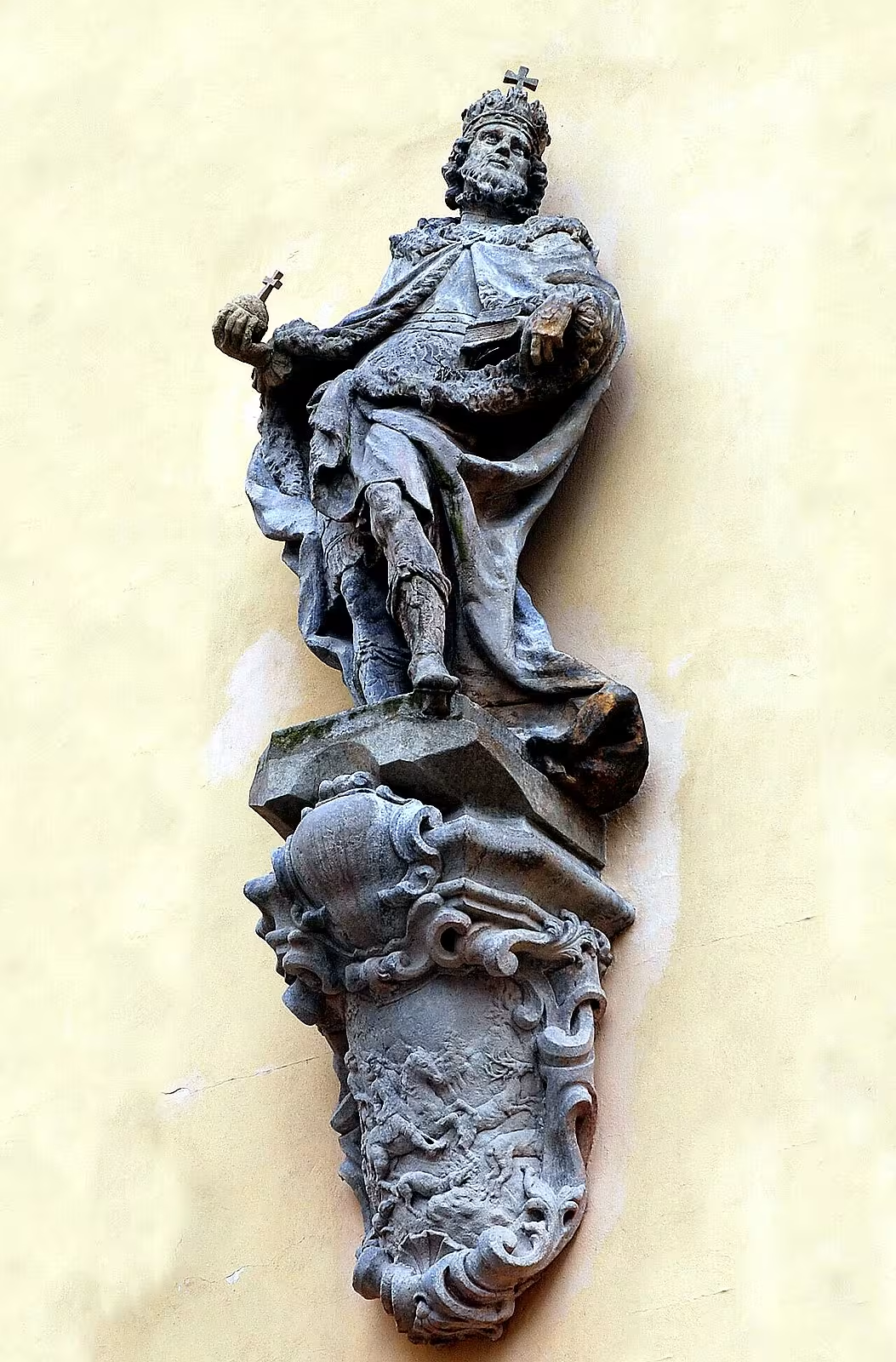
The statue of Charles IV in Karlovy Vary is a Baroque sandstone monument from 1739, which represents the founder of the city. Located on the facade of the building of the Municipal Library in the street I. P. Pavlova and is an important symbol of the spa tradition.
The work was probably made in 1739. Historical records suggest that Oswald J. Wenda from Yellow may have been the author, but some sources question this authorship and refer to the author as unknown. The statue was donated by von Schuppig's appeal board as a token of gratitude for the spa treatment.
The statue is approximately two metres tall and is made of sandstone. The figure of the emperor is captured in Baroque style with attributes of dignity. In his right hand, he holds an empire apple and has a crown on his head. Under his left hand he holds two books that symbolize the legal and statutory foundations of the founding of Karlovy Vary. The whole composition is supplied by the dynamic of a wavy hermeline shell blending from the shoulders. The statue stands on a low irregular prism plinth, on which there is a plastic cartouche with embossed scene showing Charles IV at the discovery of the Karlovy Vary spring during the hunt.
Originally, the statue was placed on a high pedestal on the southern claim of the Renaissance building of the original town hall in the Market. In March 1875, this town hall had to be demolished due to poor construction conditions, but the statue could be saved from demolition. In 1936 it was placed in the current place on the facade of the former district building and later the regional library. In 2006 the Regional Library was moved to Dvory and the building became the seat of the City Library Karlovy Vary. The statue remained in the property of the Karlovy Vary Region until November 2011, when the county transferred it to the property of the city free of charge.
In 1975, the statue had to be restored because of its poor condition. From the point of view of historical precision, it is interesting that according to archive photographs of the statue already before 1875, it had no right arm and cross on the royal crown, which suggests that later reconstruction of these elements may not be quite accurate.
At present the statue is protected as a cultural monument and represents an important historical element in I. P. Pavlova Street. Its presence resembles the deep roots of the city and its spa tradition. This monument is worth the attention of every visitor to Karlovy Vary.
Then and now
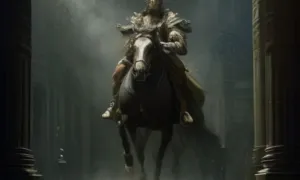
Drag the slider to compare how the landmark may have looked when it was built with the view today.
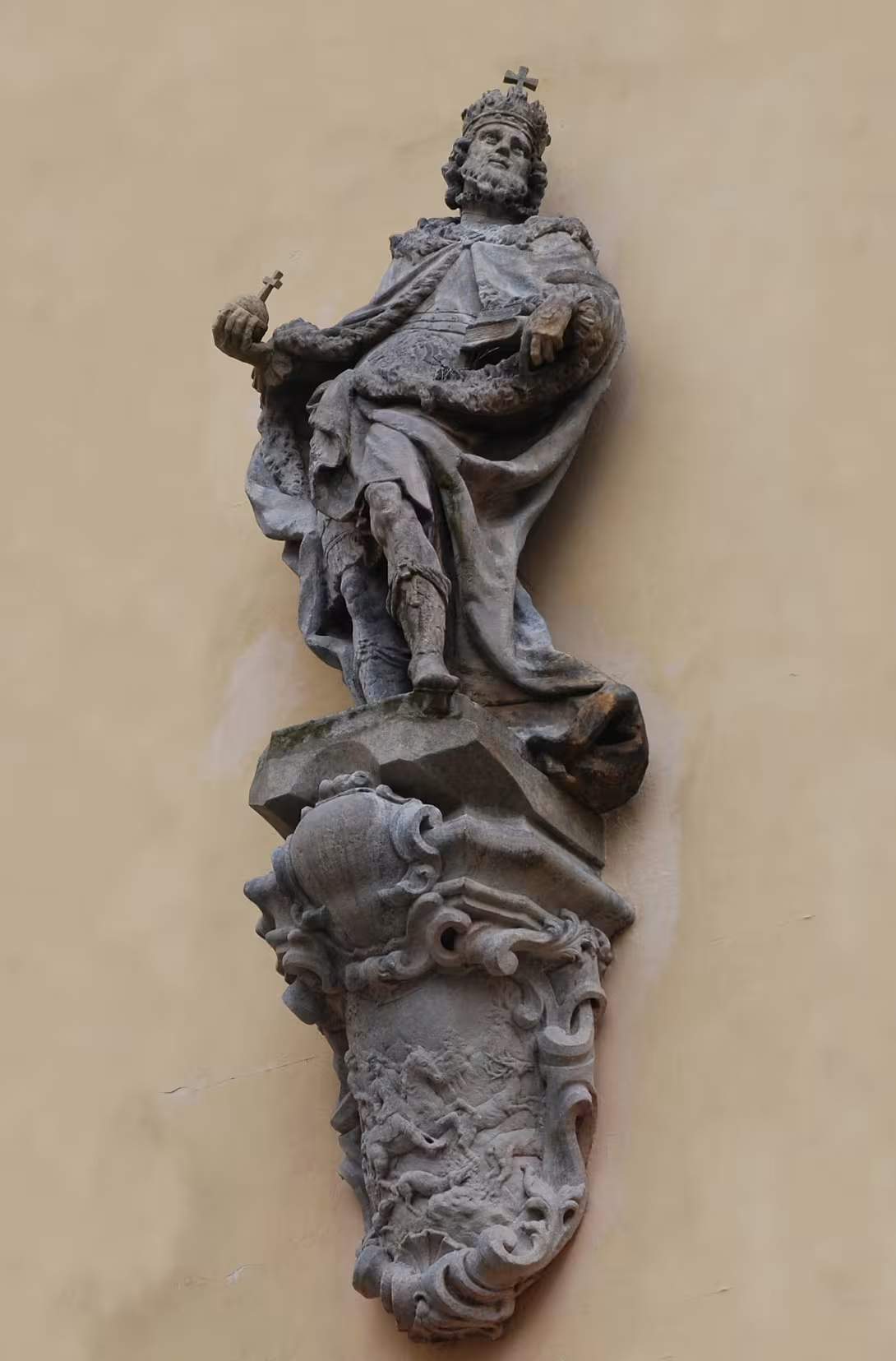
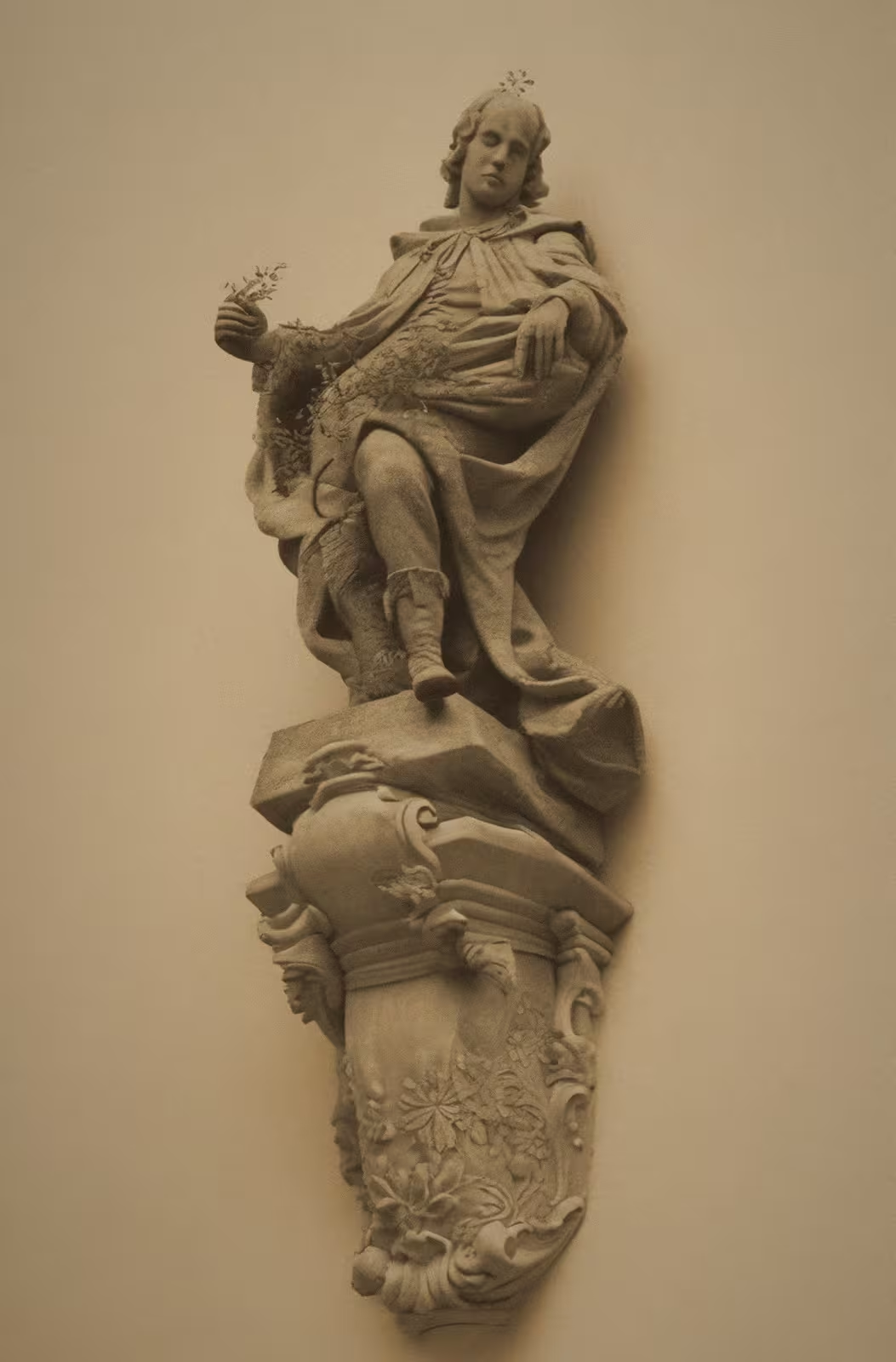
The historical appearance on the left is an AI-generated visualisation and serves as inspiration only.
Historical milestones
- 1739
- Likely year of creation of the statue.
- 1875
- The demolition of the original town hall and the rescue of the statue.
- 1936
- Location of the statue on the facade of the library building.
- 1975
- A statue restaurant because of her bad condition.
- 2011
- Free transfer of the statue to the property of the city Karlovy Vary.
Architectural development
The statue is made of sandstone and stands on a low prism plinth. It was originally placed on a high pedestal near the town hall on the Market. In 1936 it was integrated into the facade of the library building.
Historical events
1875 demolishing the original town hall and moving the statue, 1936 location to the present place, 1975 restaurant statues, 2011 transfer to the property of the city.
Owners
The appeal board von Schuppig (donor), Karlovy Vary Region (until 2011), city Karlovy Vary (since 2011).
Points of interest
The statue of Charles IV is a Baroque sandstone monument from 1739. - It is located on the facade of the building of the Municipal Library in the street I. P. Pavlova and is a symbol of the spa tradition. - The statue was donated by the appeal board von Schuppig to the city as an expression of gratitude for the spa treatment. - In 1936 it was located in the present place and in 2011 transferred to the property of the city of Karlovy Vary. In 1975, the statue had to be restored because of its ill condition.
Guide
Show guide text
This text was created by artificial intelligence and has not been editorially reviewed. It may contain inaccuracies.
Welcome to the heart of Karlovy Vary. You're standing in front of one of the most important and oldest symbols of this city. Before you go on your tour, stop for a moment and pay full attention to this monumental figure who looks at you from a height. Before your eyes is a Baroque statue, which is carved from sandstone and which has been watching over this place for nearly 300 years. Feel the weight of history that radiates from this stone. This statue is not just an artwork, it is a living story about the beginnings of this city, its strength and its constant efforts to restore and maintain.
Let us now look together deeper below the surface of this sandstone work and understand why it is present here. This statue represents the emperor Charles IV, a figure that is absolutely essential to Karlovy Vary, because he is the founder of this spa town. The work that you are now observing dates back to 1739, which means it was created at a time when the Baroque style was in its greatest strength and when artists tried to move, emotion and grandeur. The architect of this work was Oswald J. Wenda, who was able to capture the nobility of the emperor's character and the dynamics of the time. The statue was created as an expression of respect for the founder and as a reminder of his importance for the future flourishing of the whole region.
Now pay attention to the details that you can observe directly in front of you. Look up at the Emperor's face and the objects he holds in his hands. You'll see a crown on his head that symbolizes his power and sovereignty. In one hand, he holds an empire apple, a traditional symbol of rule over the world and the integrity of the empire. But the most interesting thing to understand is the two books the statue carries. These books are not a random supplement; symbolizing the legal foundations of the city, the rules and order on which Charles Vara was built. It is a reminder that the city was not only built on hot springs, but also on solid laws and structures.
Note also how the statue is processed in terms of motion. The whole character is accompanied by a dynamic coat, which is decorated with hermeline. This rich and moving element gives the whole piece a sense of life as if the emperor had just stopped moving. If you look at the base, the base itself, the plinth, you'll see the relief. This carved painting on the pedestal complements the entire composition and gives it another layer of meaning that connects the figure of the emperor directly to the soil on which he stands.
But looking at this statue, we cannot ignore even its incredible journey through time, which was full of dramatic twists. This monument had to fight for its own existence several times. In 1875 there was a big event when the original town hall was demolished. At that time, many historical elements were threatened, but this statue was saved, indicating how much people were aware of its values back then. Another important moment occurred in 1936, when the statue was moved to its present place, to the facade of the building of the local library in the street I. P. Pavlova. Since then, it has served as an inseparable part of this place.
In the history of the statue there are also moments of repair and care. In 1975, the statue had to be restored because its condition deteriorated due to environmental effects. This care for sandstone was necessary so that this symbol could continue to be passed on to other generations. Finally, in 2011, another important step took place when its ownership was transferred directly to the city of Karlovy Vary free of charge, making it definitely part of the common heritage of all residents and visitors.
I want to tell you now one very human and interesting thing that surrounds this statue. You may think that such a great work is always the result of a state decision, but in this case, the story is a little different. This statue was given to the city as a token of deep gratitude. It was donated by a man named von Schuppig, who was part of the appeal board. Why would anyone like to dedicate such a precious memory to the city? The answer is simple and beautiful: it was his way of thanking him for the successful spa treatment he received in Karlovy Vary. This gift links the history of Emperor Charles IV with the tradition of the spa, which is so crucial for this city. The statue is not only a monument to an ancient ruler, but also to the healing power of water that attracts people from all over the world.
Look at her for a while and see the baroque shape of the sandstone mingle with the atmosphere of the modern city. It's a connection between the old world and the new world that makes Karlovy Vary so special. This statue is a silent witness to everything that took place in this town - from the time of the emperors to today's peaceful walks through the spa streets.
I hope this brief view of the history and symbolism of the statue of Charles IV has helped you better understand the soul of this place. Now that you know all that is hidden in these stones, you can continue your journey and discover with new knowledge the other treasures Karlovy Vary offers. I wish you a beautiful and inspiring walk through the city.
Tips for visitors
The best time to visit the statue of Charles IV in Karlovy Vary is an early afternoon when the sun lights up the statue in a special way and fewer people gather here. This time allows better photos without overfilling.
Buses and trams are available and accessible to all visitors; the current connection can be easily found online.
When visiting the statue of Charles IV, it is advisable to take with you protective sunglasses and water, especially during the summer months. It is also important to have a camera or mobile phone with you for a photo of this beautiful monument.
For photography of the statue of Charles IV are the best places in front of the statue itself, especially from the view of I. P. Pavlov street towards the city library. Sunlight in the early afternoon provides ideal conditions for capturing details of the statue.
It is possible to visit the City Library Karlovy Vary near the statue of Charles IV, which offers various educational programs and events for adults and children. For families with children this can be a fun way to learn more about the history of Karlovy Vary.
Frequently asked questions
Can the monument be visited?
This is a structure in a public space that can usually be seen from outside free of charge. We have not verified that this particular one is freely accessible.
Where is the monument?
Location: Karlovy Vary, Karlovarský kraj. The map on this page shows the exact spot.
Why is the monument protected?
It is listed in the Central List of Cultural Monuments of the Czech Republic as a cultural monument (register no. 1000129819).
Businesses nearby
Do you run a restaurant, accommodation, shop, museum, rental, wellness or other visitor service near this monument? Show yourself directly to the people heading to it — this is how they will see you in the app and on the web:
Nearby
Městská knihovna Karlovy Vary, ulice I. P. Pavlova.
Accommodation nearby
Trips and activities nearby
Guided tours, tickets and activities nearby from GetYourGuide
Affiliate link: if you buy from the partner, we may receive a commission. The price for you does not change.
Search tours and activities →Themed route
Thematic cruise route Karlovy Vary
1. Statue of Karl IV. This statue, built in 1739, stands on the square as a monument to the Emperor Charles IV, who founded the city. It is an ideal place to start your walk and a reminder of the historical importance of Karlovy Vary.
2. City Library Karlovy Vary (Public Building) The city library is about 5 minutes' walk from the statue, which offers not only a rich collection of books, but also views of the surrounding streets. It is a place for those who like reading and want to learn more about the history of the city.
3. I. P. Pavlova street (street) After visiting the library, take a walk along I. P. Pavlova, which is famous for its historic buildings and lively atmosphere. This part of town offers views of architecturally interesting houses and an opportunity to explore local shops.
4. Return to the statue of Charles IV. (statue) After walking down the street, we will return to the beginning point of the route, the statue of Charles IV, to enjoy peace and reflect our journey. This place is also suitable for a short break before further activity.
This route will guide you through the historical and cultural sites of Karlovy Vary, allowing you to know their rich past and present.
Seasonal recommendations
Spring: In the spring season, the atmosphere around the Charles IV statue in Karlovy Vary is oddly lively when nature wakes up and blooming trees make the landscape fresh. The sun's rays illuminate the statue in mild light, which highlights its historical details. It is advisable to visit the memory in early afternoons when the shadow is shorter and the presence of people is minimal. When visiting, we recommend wearing clothes that are easily adapted to warm and cold conditions because spring weather can be variable.
Summer: In the summer, the statue of Charles IV is illuminated by long sunny days, which brings ideal conditions for photography and understanding its historical significance. The atmosphere is full of energy, but it can also be more challenging due to warm weather and increased presence of tourists. The best time to visit is in the morning or the evening when the crowd retreats. We recommend wearing light clothes, protective sunglasses and plenty of drinking water.
Autumn: In the autumn period, the statue of Charles IV gains a romantic character with darker colours of leaves and lighter sunlight, which adds touching to the landscape frame. The atmosphere is calmer than in the summer months, which makes the visit a comfortable experience. Visit the memory at noon when the sun is medium high and the presence of people is limited. Clothes should be according to temperature from mild to cold, with the possibility to add layers.
Winter: In winter, the statue of Charles IV is lit by a softer light and can be covered in snow in some days, which gives the figure a mystical impression. The atmosphere is calm and often you meet few people, which allows you to experience intimate experiences. The best time to visit is at noon when the sun lights the statue best. We recommend wearing warm clothes and protective shoes against freezing.
Visualizations and artistic views


The visualisations are generated by artificial intelligence and serve as inspiration.
Photos from the area
Real photos taken near the monument


Zdroj a licence jsou uvedeny u každého snímku.
Tips from visitors
No tips yet. Be the first!
Log in and add your tip.
Sources and literature
Photos: Zorka Sojka / CC BY-SA 4.0 — Wikimedia Commons. The author and licence also appear when you hover over the image.
Faktickým podkladem tohoto textu byl článek na Wikipedii, jehož autory jsou přispěvatelé Wikipedie. Článek je dostupný pod licencí CC BY-SA 4.0.
Location on the map
More monuments – Karlovy Vary
Show all in the municipality
Příběhy a pověsti
Legendy, pověsti a příběhy spjaté s touto památkou
Fotografie návštěvníků
Zatím žádné fotografie. Buďte první, kdo přidá fotografii z návštěvy!
Log in a přidejte svou fotografii nebo hodnoťte.
Za ověřenou návštěvu v aplikaci získáte víc bodů — poznáme podle GPS, že jste na místě.
Reviews and comments