



socha svatého Bernarda z Clairvaux Statue
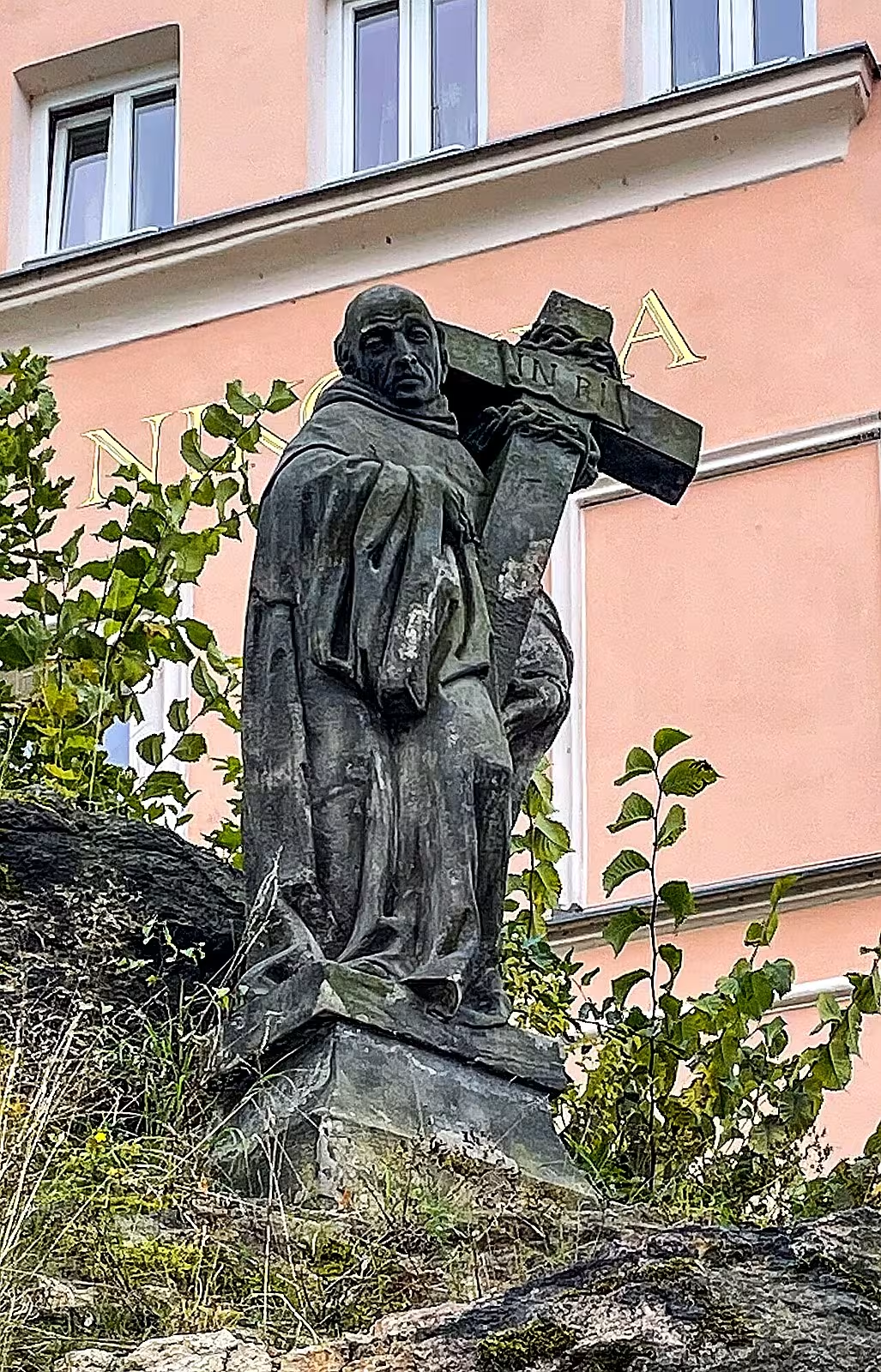
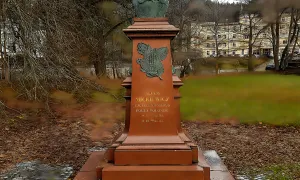
Baroque socha svatého Bernarda z Clairvaux, located on the edge of Bernardov Rock near the Mill Colonnade in Karlovy Vary, is an important historical monument. Built in 1706, it represents a saint with a plain face and a mascara garment with a cross with a crown of thorns hanging on it. The statue is a cultural heritage and its history is closely linked to the development of Karlovy Vary as a spa town.
The statue of St. Bernard of Clairvaux was created during the flowering of Baroque art in Bohemia. This period was characterised by political and cultural changes in Europe. The statue resembles the original Bernard spring beneath the rock, from which the statue emerged. Although the author of the statue is not known, its location and symbolism are associated with the spiritual significance of Saint Bernard for the local area.
Architecturally, the statue is typical of Baroque style. It represents a saint standing on a low prism pedestal with carved year "1706." The saint has a plain-haired appearance and wears a mascara. On his left shoulder, he carries a cross wrapped in a crown of thorns, holding a table marked "INRI" with his right hand, while his left one lies on his chest. This detailed description highlights the spiritual and symbolic aspects of the statue.
The statue of St. Bernard has undergone several important events during its history. In 1891, it was moved to the bottom of the rock due to the extraction of part of the island for the expansion of the Mill Colonnade, which included the modification of its environment. In 1992, the statue was restored to ensure its preservation for future generations.
The statue of St. Bernard of Clairvaux is a key part of the history of Karlovy Vary. Its location at the Mill Colonnade, built after extraction of another part of the rock, highlights the links between the statue and local spa traditions. The statue is not only a work of art, but also a monument to the historical significance of Bernard's spring for the region.
Today, socha svatého Bernarda z Clairvaux stands as a permanent symbol of local culture and history. It has been a protected cultural monument since 3 May 1958, possibly since 5 February 1964, with register number CSDP 28332 / 4-875. For visitors to Karlovy Vary, the statue is not only an artistic monument, but also a place to think about the historical significance of St. Bernard and its links with the spa city. Her visit offers a unique opportunity to explore the rich history and culture of Karlovy Vary, which makes her an essential part of every local and foreign person.
Then and now
Drag the slider to compare how the landmark may have looked when it was built with the view today.
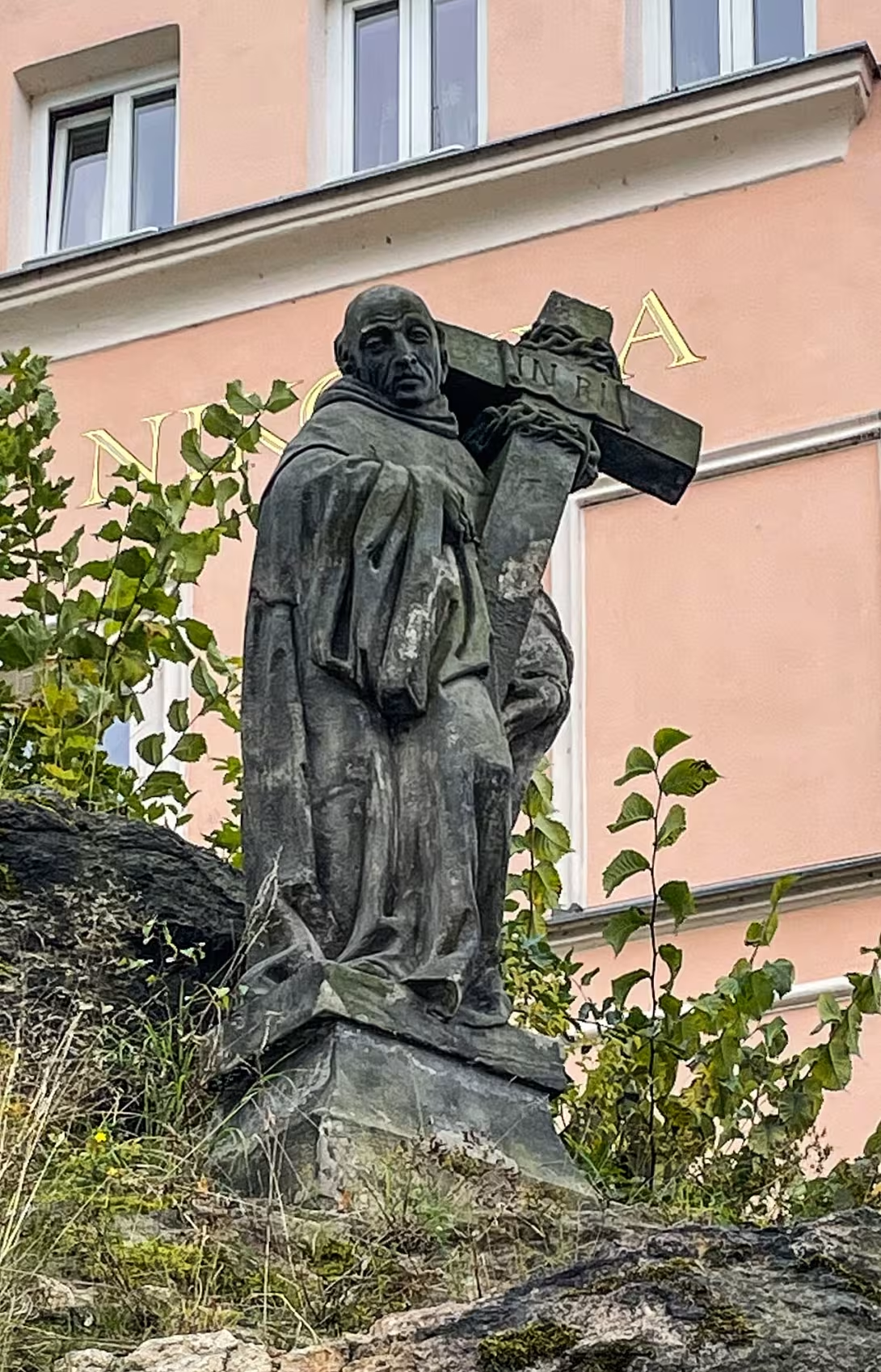
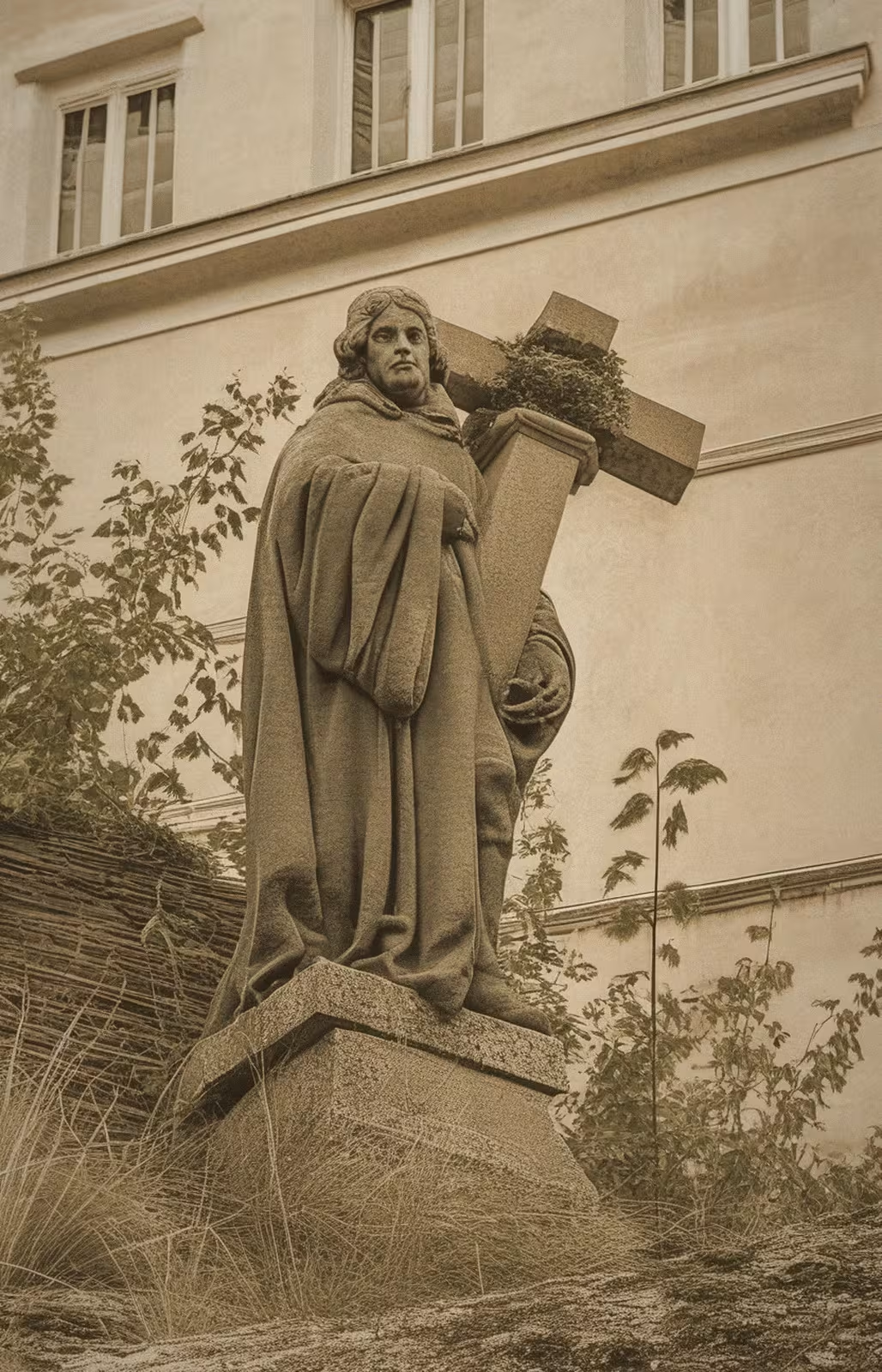
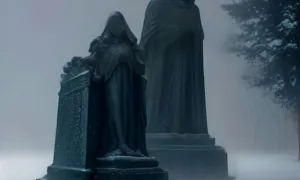
The historical appearance on the left is an AI-generated visualisation and serves as inspiration only.
Historical milestones
- 1958
- The statue was declared a cultural monument.
- 1964
- Alternatively, the statue has been protected since February 5th.
Historical events
- 1891
- The statue has been moved to the bottom of the rock to remove part of the edge.
- 1992
- The statue has been restored.
Points of interest
- Baroque socha svatého Bernarda z Clairvaux is located on the edge of Bernardo Rock near the Mill Colonnade in Karlovy Vary. - The statue was built in 1706 and represents a saint with a plain-haired face and a mascara with a cross with a crown of thorns hanging on it. - The statue is a cultural heritage and its history is closely linked to the development of Karlovy Vary as a spa town. - In 1891, the statue was moved to the lower edge of the rock because of the extraction of part of the island for the expansion of the Mill Colonnade, which included the modification of its environment. - The statue of Saint Bernard of Clairvaux is a protected cultural monument from 3 May 1958, possibly from 5 February 1964, with the register number SAR 28332 / 4-875.
Guide
Show guide text
This text was created by artificial intelligence and has not been editorially reviewed. It may contain inaccuracies.
Welcome to Karlovy Vary, a place where healing springs meet rich history and where every stone tells its own story. Just stop right now and take a deep breath. You're standing in one of the very special and atmospheric places of this city. There's a figure standing before you who's been here for hundreds of years. It's socha svatého Bernarda z Clairvaux. Feel where you are - you are standing on the very edge of Bernard's rock. It's a place that combines nature's savagery and human pursuit of spiritual uplift. Take a look at this figure that floats over the surrounding terrain, and in a quiet way, all the thousands of people who walk through here every day go towards the Mill Colonnade.
Now let's look together at where this statue came from and at what time it came from. This Baroque exhibition of art dates back to 1706. Imagine how many centuries Saint Bernard has stood here and watched the city change beneath him. At the time of its creation, the Baroque era ruled in European art. The Baroque was not only about decorating, but above all about strong emotions, about deep faith and about trying to express inner tension and piety through outer shapes. Although today we do not know the name of a particular artist who carved this character, his work survived wars, storms and regime changes. It is fascinating to think that in 1706, when the statue was finished, the surroundings looked completely different, and yet this figure remains a fixed point in time.
Now I would like to ask you to pay full attention to the details that you see right in front of you. Look first at the face and head of the saint. Note that it is depicted as a simple-haired man. This type of cut, where the top of the head is shaved, was at that time a clear sign of the monastic state and symbolized the humility and devotion of God. Now move your view below on his clothing. You see that mascara robes? Look at how deep the folds of the cloth are cut. It is in these details that the Baroque-style championship takes place. These algae are not random; the task is to give the statue a sense of movement and dynamics. It is as if the substance in a mild breeze, which often blows here on the edge of the rock, actually moved.
Now focus on the most important detail that St. Bernard holds in his hands. It's a cross, but if you look closely, you'll see it's not ordinary. It's wrapped around a crown of thorns. This symbol is very strong. It reminds us of the suffering, sacrifice and humility that were crucial to the life of Saint Bernard and the whole Christian faith. It's the contrast between a quiet, calm expression of the saint's face and a painful symbol of thorns. The whole character stands on a low prism pedestal. If you approach it and look down, you'll see the period 1706. It is simple but powerful proof of the age of this work, which tells us exactly when this journey of St. Bernard in Karlovy Vary began.
Who was this man that we see here? Saint Bernard of Clairvaux was one of the most influential men of his time. He was not only a monk, but also a master, a teacher and a man of deep prayer who influenced both the king and the Pope. His presence here at the edge of the rock is not random. Bernard's rock and this statue symbolize spiritual guidance and protection over the city and its visitors. Imagine how the neighborhood changed over the centuries. The city grew, colonnades became the center of healing procedures, and thousands of people looking for health walked past this rock. St. Bernard watched over them quietly, as a silent witness to human hope and suffering.
It is important to remember that this statue is not only a beautiful decoration of the landscape, but a true cultural heritage that has its recognised value. In 1958, it was officially declared a cultural monument. That means the company has recognized its irreplaceable value for our history and art. Later, on February 5, 1964, the statue was fully protected by the law. This was done to preserve its form in its original state for generations to come, and for you who stand before it today. It is a reminder that some things are so valuable that we must actively protect them from forgetting and time.
If you're standing by this statue, you might wonder why it was placed right here on this rock cliff. Perhaps this is to remind you of the yaptCalculation between earth and heaven, between the mass of the rock and the spirit of the saint. Feel the calm that radiates from this character, even when surrounded by the noise of a modern city. It's a place for a short stop, for a moment to think about what remains in life when the century passes. Baroque art always encourages us to feel more, not just to see the surface, but to seek deeper meaning.
Now that you have seen the details of the garment, the symbolism of the crown and the year on the pedestal, I suggest you stay in this place for a while. Look around you, perceive the atmosphere of Bernard's rock and its location at the Mill Colonnade. This statue is like a quiet guide that welcomes you in the heart of Karlovy Vary.
Let us now slowly say goodbye to this noble figure. Saint Bernard of Clairvaux will continue to guard this piece of town and you can now continue your journey. I suggest you explore other parts of Karlovy Vary, visit the surrounding colonnades and let the beauty of this unique city captivate you. I hope meeting with this baroque monument has brought you a sense of peace and inspiration. I wish you a pleasant continued walk and many beautiful experiences while discovering the secrets of this historic place. Goodbye.
Tips for visitors
The best time to visit the statue of St. Bernard of Clairvaux is in the spring or autumn season when the weather is pleasant and fewer people. The sunny day provides ideal light for the photograph of the statue.
The location is easily accessible by car and public transport.
When you visit, take with you comfortable shoes because the surrounding terrain around Bernard's rock can be uneven. Don't forget the protective sunglasses and water, especially in the summer months.
For photography is the best place in front of the statue with respect to light conditions. In the morning or in the evening, they offer the best colored images, where the sun does not shine directly into the eyes.
In the vicinity you can visit the Mill Colonnade, which is nearby and offers beautiful shots. For families with children it is a suitable place for short walks and relaxation.
Frequently asked questions
Can the monument be visited?
This is a structure in a public space that can usually be seen from outside free of charge. We have not verified that this particular one is freely accessible.
Where is the monument?
Location: Karlovy Vary. The map on this page shows the exact spot.
Why is the monument protected?
It is listed in the Central List of Cultural Monuments of the Czech Republic as a cultural monument (register no. 1000139630).
Businesses nearby
Do you run a restaurant, accommodation, shop, museum, rental, wellness or other visitor service near this monument? Show yourself directly to the people heading to it — this is how they will see you in the app and on the web:
Nearby
Bernardova skála
Mlýnská kolonáda
Accommodation nearby
Trips and activities nearby
Guided tours, tickets and activities nearby from GetYourGuide
Affiliate link: if you buy from the partner, we may receive a commission. The price for you does not change.
Search tours and activities →Themed route
Thematic cruise route from Karlovy Vary
1. Statue of St. Bernard of Clairvaux - Type: Memorial - Why is it worth a visit: This statue is located on Bernard's rock and represents an important historical figure which advocated the moral renewal of the church. It's a beautiful place for quiet moments with a view of the city.
2. Bernard's Rock - Type: Natural landmark - Why is it worth visiting: The rock is known for its unique shape and history, which dates back to the 19th century. It is an ideal place for a short walk with a natural environment and a view of Karlovy Vary.
3. Mill Colonnade - Type: Architectural monument - Why is it worth a visit: This colonnade is part of the history of local industry and served as an exhibition space for mineral baths. It's a beautiful place with an architectural interest where you can enjoy a quiet moment.
Visiting order: - Start at Bernard's Rock and look at the statue of St. Bernard of Clairvaux. - The next step is to walk around Bernard's rock to enjoy the natural environment. - Make the trip by visiting the Mill Colonnade and looking at its historical architecture.
Seasonal recommendations
Spring: In the spring season, Karlovy Vary is transformed into a blooming shelter, where green foliage and various flowers revive the surroundings of the statue of St. Bernard. The sun illuminates the memory warmer than in winter, which contributes to a beautiful atmospheric effect. At this time it is advisable to visit in the morning or evening to avoid the Mediterranean hot hours while enjoying the spring sunshine. It is recommended to wear light clothes with the possibility to add layers because temperatures can be variable.
Summer: In the summer period Karlovy Vary is full of tourists and guests attracted to heat springs. The sun light illuminates the statue of St. Bernard at its peak, making it an ideal place for photography. Noon is usually the hottest and most noisy time, so it is recommended to visit in the morning or evening. Wear light clothes that keep the skin dry, and not miss the sun protection.
Autumn: In autumn, Karlovy Vary is transformed into a room with fine forest colours. Leaves falling from trees add a unique atmosphere to the statue of St. Bernard, and sunlight is warmer than winter. This period is ideal for visitors who want to avoid summer crowds. Wear layered clothes with the possibility to add a warm shirt or coat is suitable because autumn can be cold and wet.
Winter: In winter, Karlovy Vary is transformed into a place with a view of the snow landscape around the statue of St. Bernard. The sunlight is weaker, which contributes to a shaded and less bright image of the monument. Visiting this place in the morning is ideal when the sun starts to warm up the snow, which creates beautiful light effects. It is recommended to wear warm clothes with protection against cold and moisture such as fur helmets or cups that help keep the body warm.
Visualizations and artistic views


The visualisations are generated by artificial intelligence and serve as inspiration.
Photos from the area
Real photos taken near the monument

Zdroj a licence jsou uvedeny u každého snímku.
Tips from visitors
No tips yet. Be the first!
Log in and add your tip.
Sources and literature
Photos: Zorka Sojka / CC BY-SA 4.0 — Wikimedia Commons. The author and licence also appear when you hover over the image.
Faktickým podkladem tohoto textu byl článek na Wikipedii, jehož autory jsou přispěvatelé Wikipedie. Článek je dostupný pod licencí CC BY-SA 4.0.
Location on the map
More monuments – Karlovy Vary
Show all in the municipality
Příběhy a pověsti
Legendy, pověsti a příběhy spjaté s touto památkou
Fotografie návštěvníků
Zatím žádné fotografie. Buďte první, kdo přidá fotografii z návštěvy!
Log in a přidejte svou fotografii nebo hodnoťte.
Za ověřenou návštěvu v aplikaci získáte víc bodů — poznáme podle GPS, že jste na místě.
Reviews and comments