



Socha svatého Jana Nepomuckého Statue
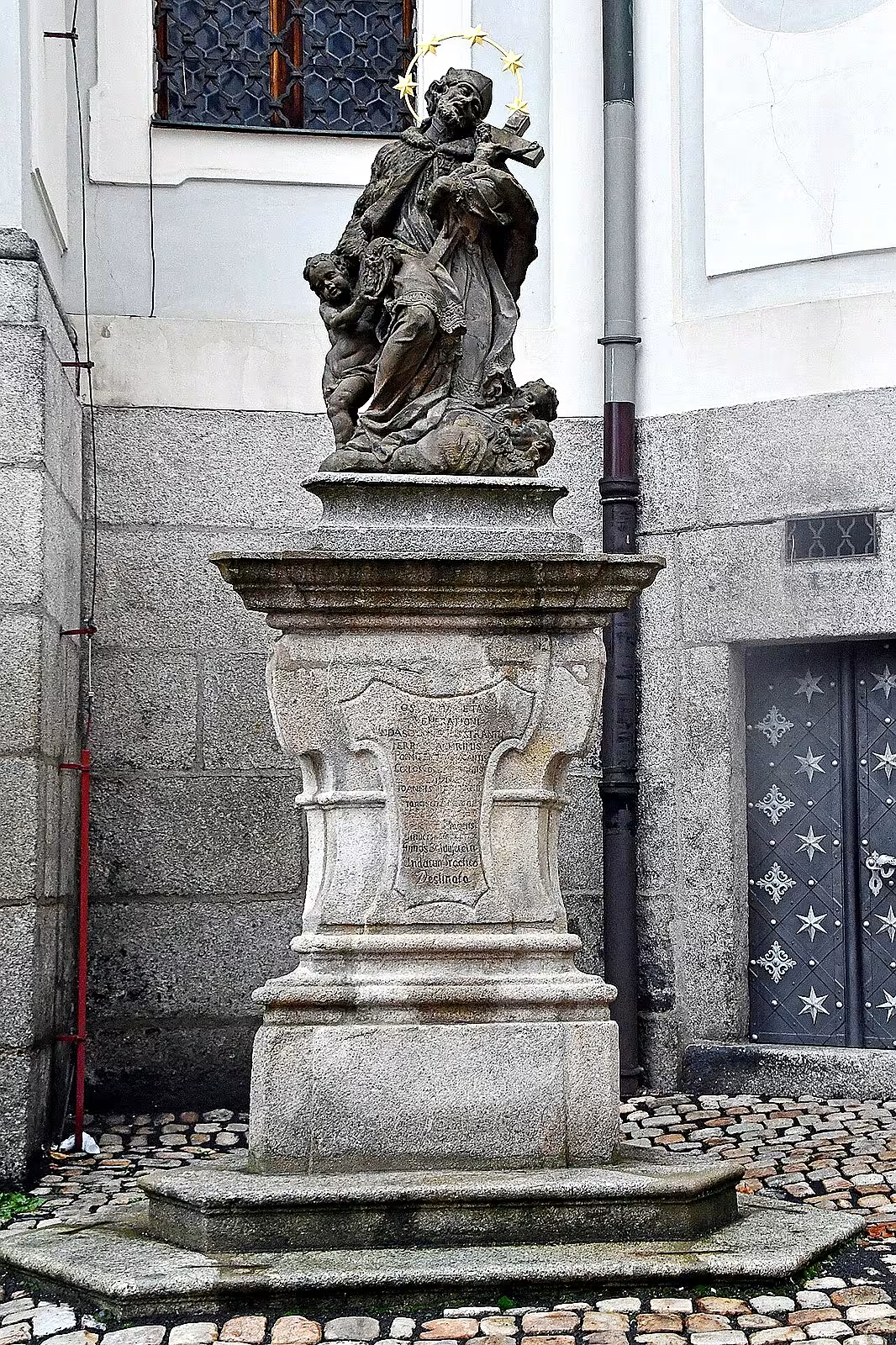
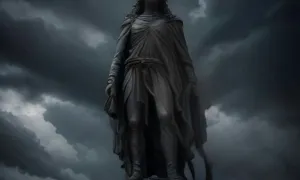
The statue of Saint John Nepomucene in Karlovy Vary is a late Baroque sculpture erected in 1746 near the Church of St. Mary Magdalene. This life-sized sandstone monument commemorates a devastating flood that struck the city on May 21st of the same year, marking it as both a historical and cultural landmark. Standing at a height of 2 meters with a base measuring 4.2 meters, the statue is notable for its artistic representation of Saint John Nepomucene adorned in traditional priestly attire, including a rochet and biretta. The sculpture's significance is enhanced by its dedication to František Bachmann, a renowned Karlovy Vary physician who funded it from his estate.
The statue was commissioned following the catastrophic flood of 1746, which profoundly impacted the city. This event prompted Dr. František Bachmann to erect the monument as an act of remembrance and gratitude for divine intervention during such calamitous times. The statue's placement in Karlovy Vary underscores its importance as both a spiritual symbol and a historical marker, reflecting the community's resilience and faith.
Architecturally, the sculpture embodies the late Baroque style prevalent in 18th-century Europe, characterized by dramatic expressions and intricate details. Crafted from sandstone, it features Saint John Nepomucene with five stars originally surrounding his head, though some have faded over time. The statue is mounted on a profiled three-sided pedestal adorned with Latin inscriptions that commemorate its dedication and the flood event. These inscriptions, although partially illegible today, offer insight into the historical context and intentions behind the monument's creation.
The ownership of the statue transitioned to public heritage status when it was declared a cultural monument in 1958, with further protection established on February 17, 1972. This recognition underscores its enduring significance within Karlovy Vary's cultural landscape, ensuring its preservation for future generations.
Today, the statue stands as a testament to both historical events and artistic achievement. Visitors can appreciate its detailed craftsmanship and the poignant story it tells about the city's past struggles and triumphs. Its proximity to the Church of St. Mary Magdalene adds an additional layer of cultural richness, making it a worthwhile destination for those interested in history, art, or simply exploring Karlovy Vary's unique heritage.
The statue of Saint John Nepomucene is more than just a monument; it is a narrative woven into the fabric of Karlovy Vary. Its presence invites reflection on the past while offering an opportunity to connect with the city's enduring spirit. Visitors are encouraged to explore this remarkable piece of history, where art and memory converge in a single, evocative sculpture.
Then and now
Drag the slider to compare how the landmark may have looked when it was built with the view today.
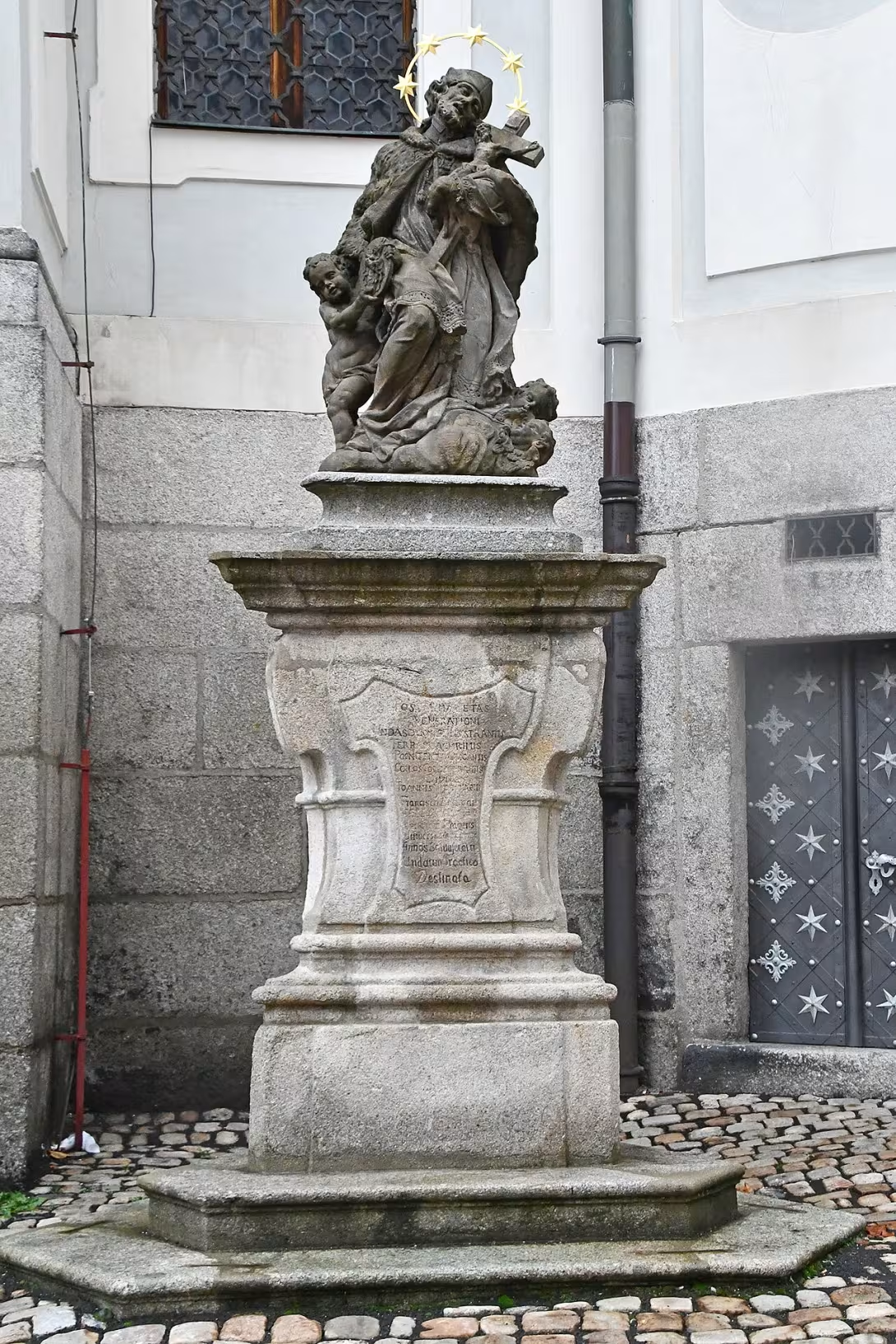

The historical appearance on the left is an AI-generated visualisation and serves as inspiration only.
Historical milestones
- 1746
- The statue was erected to commemorate the devastating flood that struck Karlovy Vary on May 21st.
Architectural development
The late Baroque sandstone sculpture stands at a height of 2 meters with a base measuring 4.2 meters, originally featuring five stars around Saint John's head. The statue is mounted on a profiled three-sided pedestal with an upper cover plate and inscriptions in Latin. Over time, parts of the inscription have become illegible.
Historical events
The statue was erected in 1746 to commemorate the devastating flood that struck Karlovy Vary on May 21st of the same year.
Points of interest
- The statue of Saint John Nepomucene was initially surrounded by five stars symbolizing the saint's heavenly virtues, though some have faded over time due to weathering and age. - František Bachmann, who funded the monument, was not only a physician but also an influential figure in Karlovy Vary's medical community, known for his efforts during the 1746 flood crisis.
- The Latin inscriptions on the statue’s pedestal are partially illegible today; however, they once provided detailed accounts of the 1746 flood and the reasons behind the monument's erection, offering a glimpse into historical sentiments.
- In addition to its commemorative role, the statue is believed to have been strategically placed near the Church of St. Mary Magdalene to enhance the spiritual ambiance of the area, aligning with Baroque traditions that often integrated art with religious spaces.
- The transition of the statue's ownership to public heritage status in 1958 reflects a broader post-war movement in Czechoslovakia to preserve cultural monuments as symbols of national identity and resilience.
Guide
This guide is narrated by a synthetic voice generated by artificial intelligence.
Show guide text
This text was created by artificial intelligence and has not been editorially reviewed. It may contain inaccuracies.
This late Baroque statue of Saint John of Nepomuk in Karlovy Vary dates from seventeen forty-six and stands by the Church of Saint Mary Magdalene. Who created it is not known.
Behind its creation lies a disaster. On the twenty-first of May, seventeen forty-six, the town was struck by a cloudburst, and after it came great floods which severely damaged Karlovy Vary. The statue was acquired from the estate of a renowned Karlovy Vary doctor, Doctor Franz Bachmann. It was erected that same year in the middle of the town, by the southwestern wall of the former deanery church of Saint Mary Magdalene.
The statue is made of sandstone and depicts the saint in life size. The figure itself measures two meters, and with the pedestal four point two meters. Saint John of Nepomuk is dressed as a priest, wearing a surplice and a biretta on his head. Originally, he had five stars around his head. With his left hand, he holds a cross with the crucified Christ. His right hand is placed on a small amorette, a little angel standing by his left side, which holds an oval medallion with a relief of the Madonna. At the feet of the saint lie two further figures.
The statue stands on a profiled three-sided sandstone pedestal with a covering plate on top. On the front side is a Latin dedicatory inscription in an ornamental cartouche, today already partly difficult to read. It praises Saint John of Nepomuk as the one who illuminates Bohemia, sprinkles the earth with tears of penance, and illuminates the heavens. It also mentions Francis Bachmann, a doctor of Prague University, who worked for many years by the local medicinal waters and commissioned the statue.
On the side surfaces of the pedestal continues another Latin inscription with a chronogram, that is, a text in which highlighted letters together give the date. It says that the statue was erected by his heir in a year of sorrow, when a terrible cloudburst and a torrent of waters raged at this place on the twenty-first of May. The second and third part of this inscription are today almost illegible.
The pedestal rests on two stone steps, which today are partly sunken into the surrounding terrain. The statue is protected as a cultural monument.
Tips for visitors
The best time to visit the statue of Saint John Nepomucene is during late spring or early autumn when the weather is mild, making it ideal for exploring Karlovy Vary's historical sites. During these months, you can enjoy pleasant temperatures and fewer crowds, allowing for a more relaxed experience as you admire the Baroque sculpture in its natural setting near the Church of St. Mary Magdalene.
It's advisable to check current routes and schedules through a local transportation app or website, as these will provide up-to-date information on how to get there using buses or other means of public transit.
When visiting, consider bringing comfortable walking shoes for exploring the area around the Church of St. Mary Magdalene and enjoying the scenic surroundings. A light jacket might also be useful, especially if you plan to visit in the cooler months. Additionally, carrying a water bottle can help keep you hydrated as you explore.
For photography enthusiasts, early morning or late afternoon offers the best natural lighting for capturing the statue of Saint John Nepomucene and its surroundings. The soft light during these times enhances the details of the Baroque sculpture and provides beautiful shadows that add depth to your photos. Try taking pictures from different angles around the church area to capture unique perspectives.
Nearby, within a 30-minute walk or short drive, you can visit other attractions such as the Church of St. Mary Magdalene itself, which is renowned for its stunning architecture and historical significance. Families with children might also enjoy exploring Karlovy Vary's thermal springs and parks, offering both relaxation and fun activities suitable for all ages.
Frequently asked questions
Can the monument be visited?
This is a structure in a public space that can usually be seen from outside free of charge. We have not verified that this particular one is freely accessible.
Where is the monument?
Location: náměstí Svobody, Karlovy Vary, Karlovarský kraj. The map on this page shows the exact spot.
Why is the monument protected?
It is listed in the Central List of Cultural Monuments of the Czech Republic as a national cultural monument (register no. 38550/4-3979). It is protected as part of a larger listed ensemble.
Businesses nearby
Do you run a restaurant, accommodation, shop, museum, rental, wellness or other visitor service near this monument? Show yourself directly to the people heading to it — this is how they will see you in the app and on the web:
Nearby
The statue is located near the Church of St. Mary Magdalene in Karlovy Vary, a city known for its spa culture and historical architecture.
Accommodation nearby
Trips and activities nearby
Guided tours, tickets and activities nearby from GetYourGuide
Affiliate link: if you buy from the partner, we may receive a commission. The price for you does not change.
Search tours and activities →Themed route
Thematic Walking Tour of Karlovy Vary
1. Socha svatého Jana Nepomuckého - Type: Historical Statue - Why Visit: This statue is a significant cultural landmark in Karlovy Vary, representing the city's rich history and devotion to St. John of Nepomuk, who is venerated for his martyrdom and association with protecting secrets.
2. Kostel svaté Magdaleny (Church of St. Mary Magdalene) - Type: Historical Church - Why Visit: Located near the statue, this church is an architectural gem showcasing Baroque design. It offers visitors a glimpse into Karlovy Vary's historical and religious heritage.
3. Historické lázně (Historical Spa Buildings) - Type: Cultural Landmarks - Why Visit: These buildings are central to the city’s identity as a renowned spa destination, reflecting its long-standing tradition of wellness and healing that dates back centuries.
4. Přírodní prameny (Natural Springs) - Type: Natural Feature - Why Visit: The natural springs are the lifeblood of Karlovy Vary’s spa culture, offering unique mineral-rich waters that have attracted visitors for their therapeutic properties since medieval times.
5. Staré lázeňské náměstí (Old Spa Square) - Type: Historic Public Space - Why Visit: As the heart of Karlovy Vary’s spa district, this square is surrounded by historic buildings and offers a charming atmosphere where visitors can experience the city's vibrant cultural life.
This tour provides an immersive journey through Karlovy Vary’s historical and cultural landmarks, highlighting its unique blend of natural beauty and architectural heritage.
Seasonal recommendations
Jaro: In the springtime, as Karlovy Vary awakens from its winter slumber, the atmosphere around the statue of Saint John Nepomucene is filled with warm rays of sunshine and vibrant greenery. This time of year offers stunning lighting with long days that highlight the details of the statue under a newly sprouting leafy canopy. Visitors can expect lighter crowds and pleasant temperatures, making it ideal for a relaxed stroll. It's recommended to wear footwear suitable for walking on grass and layered clothing that allows you to adjust to fluctuating spring temperatures.
Léto: Summer in Karlovy Vary is the peak of the tourist season with long days and sunny weather, bringing a lively atmosphere around the statue of Saint John Nepomucene. Visitors can expect high crowds and possibly long lines at popular attractions. Sunlight accentuates the metallic sheen of the statue, making it particularly visually captivating. Practical tips include arriving early to minimize waiting time and wearing light clothing, sunglasses, and plenty of water to enjoy summer without worries.
Podzim: Autumn offers a unique atmosphere around the statue of Saint John Nepomucene as leaves turn into various shades and trees begin to shed their foliage. This season is known for its milder crowds compared to summer, allowing visitors to explore the monument in a more tranquil environment. Sunny afternoons highlight colorful leaves and provide beautiful lighting that gives the statue a romantic touch. It's recommended to wear layered clothing to adjust to cooler morning and evening temperatures, along with footwear suitable for potentially wet conditions.
Zima: A winter visit to the statue of Saint John Nepomucene in Karlovy Vary offers a completely different experience with the charm of ice and snow covering the urban landscape. The atmosphere is calm and quiet, with fewer crowds than in warmer months, allowing visitors to enjoy the statue in a more serene setting. The gentle and soft sunlight of winter days adds a melancholic and tranquil character to the statue. Practical tips include wearing warm clothing, protective headgear, and quality footwear for cold conditions.
Visualizations and artistic views


The visualisations are generated by artificial intelligence and serve as inspiration.
Photos from the area
Real photos taken near the monument


Zdroj a licence jsou uvedeny u každého snímku.
Tips from visitors
No tips yet. Be the first!
Log in and add your tip.
Sources and literature
Photos: Pasztilla aka Attila Terbócs / CC BY-SA 4.0 — Wikimedia Commons. The author and licence also appear when you hover over the image.
Faktickým podkladem tohoto textu byl článek na Wikipedii, jehož autory jsou přispěvatelé Wikipedie. Článek je dostupný pod licencí CC BY-SA 4.0.
Location on the map
More monuments – Karlovy Vary
Show all in the municipality
Příběhy a pověsti
Legendy, pověsti a příběhy spjaté s touto památkou
Fotografie návštěvníků
Zatím žádné fotografie. Buďte první, kdo přidá fotografii z návštěvy!
Log in a přidejte svou fotografii nebo hodnoťte.
Za ověřenou návštěvu v aplikaci získáte víc bodů — poznáme podle GPS, že jste na místě.
Reviews and comments