






Socha svatého Jana Nepomuckého ve výklenku domu č. p. 272 Statue
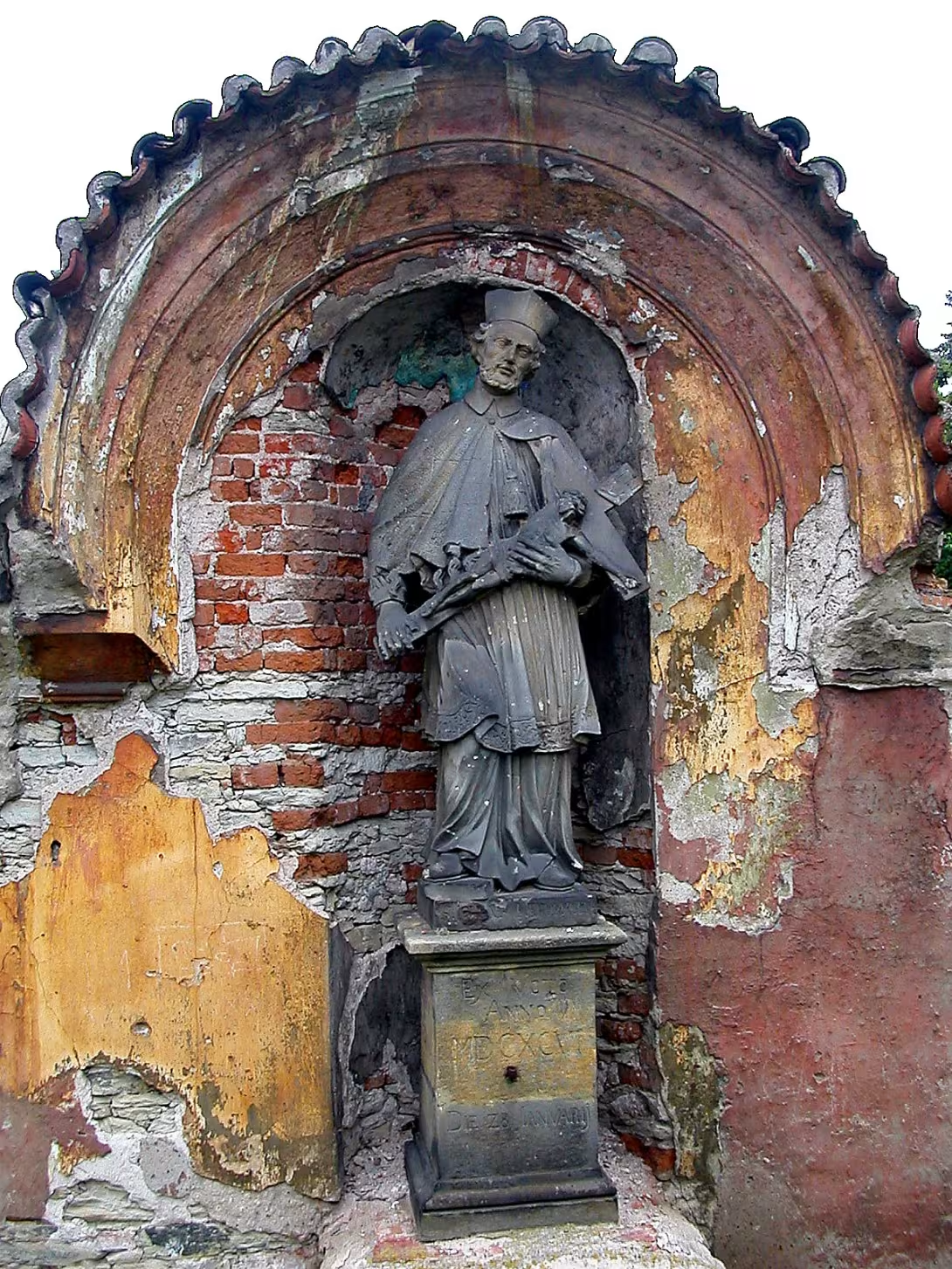
The statue of St. John Nepomuk in the niche chapel of the house No. 272 in Nymburk is an early Baroque sandstone statue created by Jan Brokoff in 1696. This monument is located near the parking lot in Cologne Street near the bridge across the Elbe and is protected as a cultural monument since 1988. The statue, known for its historical and artistic value, was originally part of a Baroque house which was demolished in the 1960s.
The creation of the statue is linked to the period of the Habsburg government in Czech countries, when Baroque art and architecture were developed in response to the Reformation. This style was characterized by dramatic forms and rich decor, which is also evident in this work by John Brokoff. The statue of St. John Nepomuk was ordered by a Nymburk townsman and official Samuel of Venice, which underlines the importance of this character for its creation.
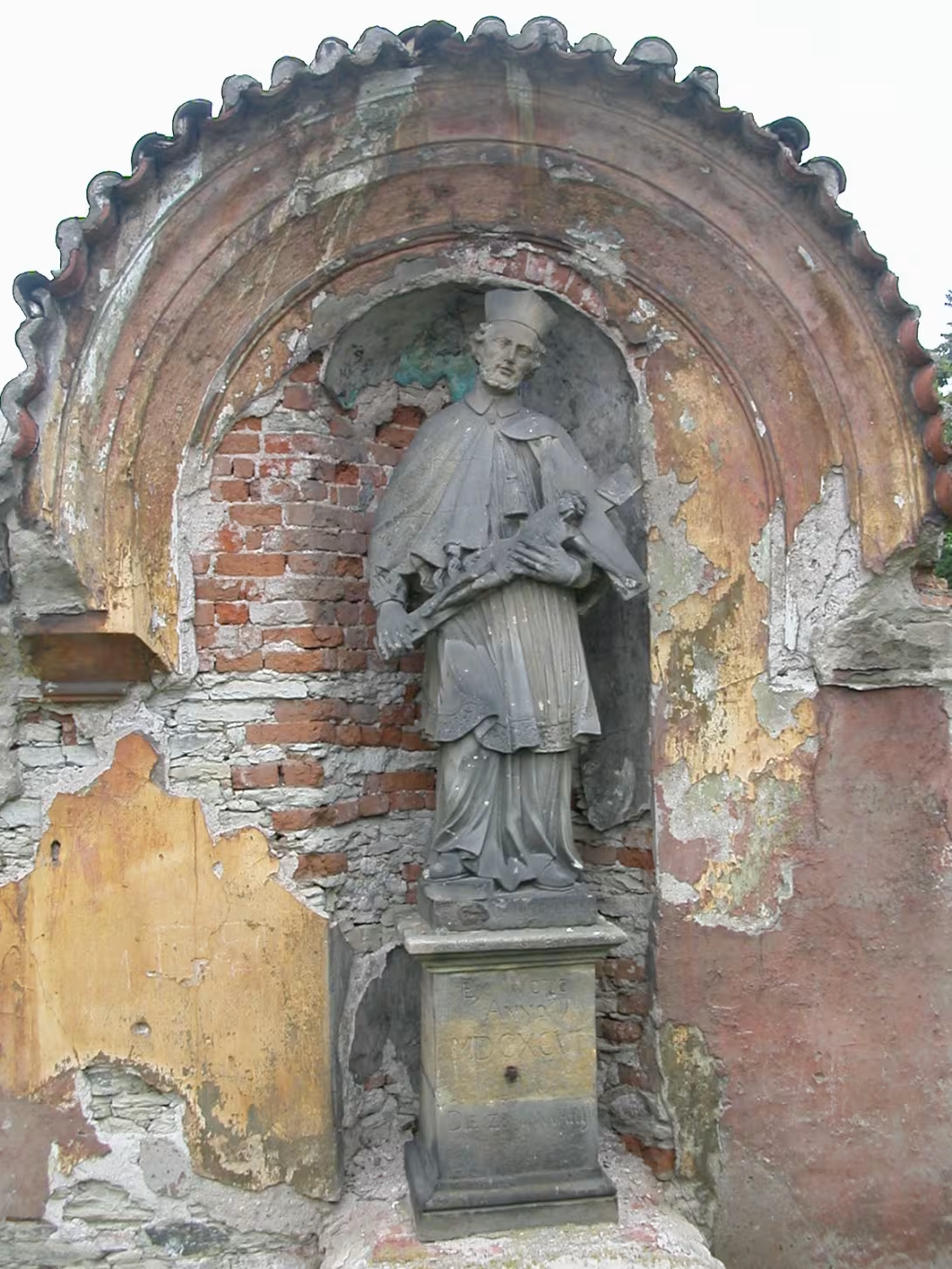
The architecture of the statue of St. John Nepomuk is typical of the Baroque era. The sculptor Jan Brokoff portrayed a life-sized saint with a cross on his left hand, which corresponds to the traditional concept of this character. It is located in the niche chapel, which served as the only rest of the original Baroque house no. 272. The statue stands on a prism pedestal with the year 1696 and the initials SAB, which indicates the builder of the statue and his wife (A.). These elements not only highlight the artistic value of the work, but also provide historical context.
The statue of St. John Nepomuk was moved after the destruction of the original house in the 1960s and is now stand alone, making it a unique cultural heritage of the city of Nymburk. Its declaration as a cultural monument in 1988 highlights its historical and artistic value.
Today the statue is easily accessible and is worth visiting not only for its beauty, but also as a monument to the rich history of Nymburk and Baroque art. Its location near the parking lot in Cologne Street near the bridge over the Elbe makes it an ideal place for those who want to know the history of the city and its cultural heritage.
The statue of St. John Nepomuk is not only a work of art, but also part of the life of Nymburk. Its presence in the city is reminiscent of the historical past and also serves as an inspiration for current and future generations. Visiting this monument is a journey to the past, which offers a view of the rich artistic traditions and history of Czech countries.
Then and now
Drag the slider to compare how the landmark may have looked when it was built with the view today.
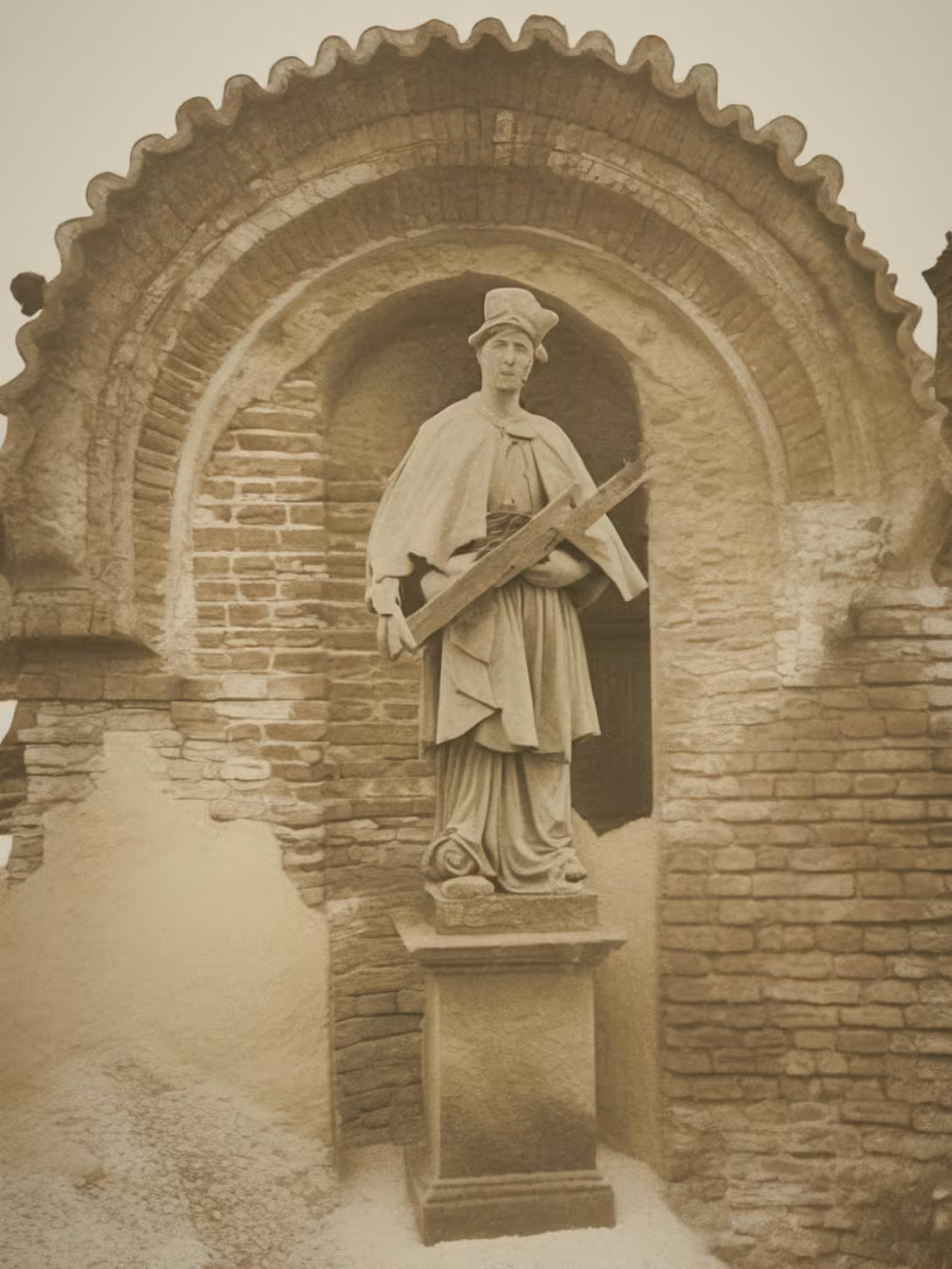
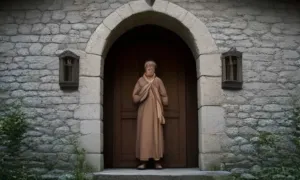
The historical appearance on the left is an AI-generated visualisation and serves as inspiration only.
Historical milestones
- 1696
- The creation of a statue of St. John of Nepomuk by Jan Brokoff.
Architectural development
The statue of St. John Nepomuk is in the traditional concept with a cross on his left hand, located in a niche chapel. It is supported by a prism base with the year 1696 and the initials SAB, indicating the builder of the statue and his wife.
Historical events
- 1696
- The creation of a statue of St. John of Nepomuk by Jan Brokoff.
- 1988
- The statue was declared a cultural monument.
Points of interest
- The statue of St. John Nepomuk is an early Baroque sandstone statue created by Jan Brokoff in 1696. - This monument is located near the parking lot in Cologne Street near the bridge across the Elbe and is protected as a cultural monument since 1988. - The statue was ordered by a Nymburk townsman and official Samuel of Venice, which underlines the importance of this character for its creation. - After the destruction of the original house in the 1960s, the statue was moved and now stands alone, making it a unique cultural heritage of the city of Nymburk. - Its declaration for cultural heritage in 1988 highlights its historical and artistic value.
Guide
Show guide text
This text was created by artificial intelligence and has not been editorially reviewed. It may contain inaccuracies.
Welcome to Nymburk! You are standing in front of one of the most memorable places in our city - the statue of St. John Nepomuk, who proudly shuts down in the niche of the old house. Look up and see this impressive early Baroque sandstone statue. It's a great example of an art championship that hits you with its historical depth and aesthetic beauty.
The statue was created in 1696 by famous sculptor Jan Brokoff. This masterly carved painting is a work that represents not only artistic value but also a deep historical context. At that time, St. John Nepomucký was very honored in Bohemia and his statues appeared in many places throughout the kingdom.
Take a closer look and see how the statue is located in the niche chapel. This architecture adds to the impressive image and reminds us that this Baroque work was once part of the house No. 272. Although the house itself no longer exists - it was demolished in the 1960s - the statue has been preserved and has become a beautiful monument that we can still appreciate today.
When you explore the surroundings, notice the following attractions: the statue of St. John Nepomuk was ordered by a Nymburk townsman and official Samuel Benátský. This man played an important role in the history of our village and his contribution to the location of this statue is a truly fascinating story.
Now that they've fallen in love with this place, let's see other interesting things. The statue of St. John Nepomuk has been protected as a cultural monument since 1988 and stands near the parking lot in Cologne Street, near the bridge over the Elbe. This place is not only interesting for artists or historians; It's also a great stop for anyone who likes to dive into the past and wants to understand how far we've come in the last millennia.
Allow me to invite you to further explore Nymburk. The city has many hidden treasures and every corner tells us its unique stories. Whether you choose for other historical monuments, beautiful architecture or just for a moment relaxation in picturesque streets - Nymburk has something interesting for everyone.
Thank you for your attention and I wish you a pleasant stay. Let you discover the many other beauty this historical community hides. When we meet again in another interesting place!
Tips for visitors
The best time to visit the statue of St. John Nepomuk is in the spring or autumn season when the weather is pleasant and fewer people. The Baroque style of the statue in these days stands out against the background of green trees or reviving leaves.
Parking is available near the parking lot near Cologne Street. For those travelling by public transport, the location is well accessible from the main routes Nymburka. We recommend checking the current connection before visiting.
When visiting take with you sun protection and plenty of drinking water, especially during the summer months. It is also important to have a camera or mobile phone with you to capture the beauty of the statue.
For photo is the best time in the morning or in the evening when the light is milder and allows better shots. Also remember to explore different angles for interesting views on the statue.
In the vicinity, about 30 minutes' walk away, there is a bridge over the Elbe, which is ideal for a short walk and use of the landscape. For families with children this place is suitable for looking at historical buildings and relaxation in a quiet environment.
Businesses nearby
Do you run a restaurant, accommodation, shop, museum, rental, wellness or other visitor service near this monument? Show yourself directly to the people heading to it — this is how they will see you in the app and on the web:
Nearby
Socha je umístěna u parkoviště v Kolínské ulici v Nymburku, blízko mostu přes Labe.
Accommodation nearby
Themed route
Socha svatého Jana Nepomuckého ve výklenku domu č. p. 272 This stone relief is the main point of your journey. It stands in the historical niche of the facade and offers a view of traditional folk sculptures in the street environment.
Parking in Cologne Street The statue is located right next to this parking lot. It is an ideal place for a short stop where you can see the statue up close without having to walk long.
Cologne Street This street forms the immediate surroundings of the monument. Walking through it allows you to see the atmosphere of the local environment and there are other architectural elements that complement the image of the old town.
Elbe Bridge Located near the statue and parking lot. It crosses the Elbe River and serves as an important transport and visual element in this part of the village.
Elbe River The water flows under the bridge and forms the natural boundary of the landscape. The view of the river from nearby offers a peaceful and natural dimension.
Municipality of Nymburk The entire route takes place within this village. It's a basic context for understanding the location of individual points and their relationships in the city.
House No. 272 The building where the statue is located. It is a specific architectural object whose facade is the bearer of the main monument.
Envelope The architectural element of the facade, which protects the statue and also aesthetically frames it. It's a detail that's worth paying attention to on closer inspection.
Stone statue Material and form of work. The statue is made of stone and its condition and details are an important part of the visit.
Historical landmark General character of the place. It is a cultural heritage that deserves the respect and attention of visitors.
Urban environment General context of the route. The route takes place in the urban area of the village, not in the wilderness.
River proximity Location relative to the water flow. The influence of the river on the microclimate and the appearance of the surrounding area is obvious.
Accessibility The location is easily accessible for pedestrians and cyclists thanks to the location near the parking lot and street.
Cultural values Monuments carry historical and artistic values that are the reason for their existence.
Architectural details The facade of the house and the niche contain little things that enrich the visual experience.
Views of the river From the point you can see the flow of the Elbe, which adds a natural element to the route composition.
Local History The village and its monuments witness the past, which is reflected in today's form.
Traditional craft Sculpture is an example of a traditional craft that has been preserved in the form of this monument.
Public space The parking lot and the streets form a public area where the monument is located.
Saint's symbolism Saint Jan Nepomucký has a specific symbolism that is important for the local community.
Walkways Surfaces around the parking lot and streets allow comfortable movement.
State of the monument The actual appearance of the statue and niche is important for its appreciation.
River landscape A wider view of the surroundings of the Elbe River within the village.
Urban structure Organisation of buildings and streets in this part of the village.
Natural elements The river is the only significant natural element in this context.
Cultural identity The monuments contribute to the identity of the municipality Nymburk.
Historical layers The building and the statue bear traces of different periods.
Aesthetic value The appearance of the statue and its surroundings is aesthetically interesting.
Local Memory Monuments preserve local people's memories.
Traditional architecture House No. 272 is an example of local construction style.
Water flow The Elbe is a water stream that passes through the village.
Bridge crossing The bridge connects both sides of the river.
Location in the street The statue is integrated into the street space.
Detail of facade The niche is a detailed element of the facade.
Cultural heritage Monuments are part of the cultural heritage.
Historical context Monuments have a historical context.
Works of art The statue is a work of art.
Local monuments It's a local monument.
Municipal landmark The sights belong to the village.
Public landmark Monuments are publicly available.
Walkway network The sidewalks allow movement.
Surface areas The surfaces are suitable for walking.
Space The space around the monument is sufficient.
Atmosphere The atmosphere of the place is calm.
Silence The place offers silence.
Relax. The place offers peace.
Room The room is available.
Rest The place allows for rest.
Stop The location allows a stop.
View The place offers a view.
View The location offers a view.
Ambient The surroundings are part of the experience.
Landscape The landscape is part of the experience.
Nature Nature is part of the experience.
Water Water is part of the experience.
River The river is part of the experience.
Elbe The Elbe is part of the experience.
Bridge The bridge is part of the experience.
Street The street is part of the experience.
Parking The parking lot is part of the experience.
House The house is part of the experience.
Statue The statue is part of the experience.
Monuments Monuments are part of the experience.
Municipality The village is part of the experience.
Nymburk Nymburk is part of the experience.
Seasonal recommendations
Spring: In the spring period, the statue of St. John Nepomuk is illuminated by sunlight, which highlights its details and adds life to it. Nature is awakening, trees are beginning to sprout, creating an idyllic background for visiting. The atmosphere is calm and friendly. It is recommended to visit the morning or evening when there are fewer people, and clothing suitable for mild temperatures.
Summer: In summer, the atmosphere around the statue of St. John Nepomuk is full of life. The sun illuminates the memory of long sunlight, creating ideal conditions for photography. Nature is at its peak and may be the presence of crowds, especially in the main summer season. It is recommended to visit an early afternoon or early evening and to use a protective sun cream against UV radiation.
Autumn: In autumn, the statue of St. John Nepomuk is dressed in coloured leaves that leave trees around. The sun sets early and illuminates the memory with long golden rays. The atmosphere is calm and friendly, ideal for relaxation. It is recommended to visit on Wednesday week when there are fewer people, and clothes suitable for colder temperatures.
Winter: In winter, the statue of St. John Nepomuk is lit by the icy rays of the sun. Nature around it is calm and can be covered with snow, giving the monument a romantic look. The atmosphere is quiet and represents an ideal moment for a peaceful visit. It is recommended to visit on Wednesday or end of the week when opening hours are shorter, and use warm clothes with protection against wind and frost.
Visualizations and artistic views


The visualisations are generated by artificial intelligence and serve as inspiration.
Photos from the area
Real photos taken near the monument


Zdroj a licence jsou uvedeny u každého snímku.
Tips from visitors
No tips yet. Be the first!
Log in and add your tip.
Sources and literature
Photos: Daniel Šebesta / Public domain — Wikimedia Commons. The author and licence also appear when you hover over the image.
Faktickým podkladem tohoto textu byl článek na Wikipedii, jehož autory jsou přispěvatelé Wikipedie. Článek je dostupný pod licencí CC BY-SA 4.0.
Location on the map
Příběhy a pověsti
Legendy, pověsti a příběhy spjaté s touto památkou
Fotografie návštěvníků
Zatím žádné fotografie. Buďte první, kdo přidá fotografii z návštěvy!
Log in a přidejte svou fotografii nebo hodnoťte.
Za ověřenou návštěvu v aplikaci získáte víc bodů — poznáme podle GPS, že jste na místě.
Reviews and comments