






Sokolovna v Plzni Sokol gymnasium
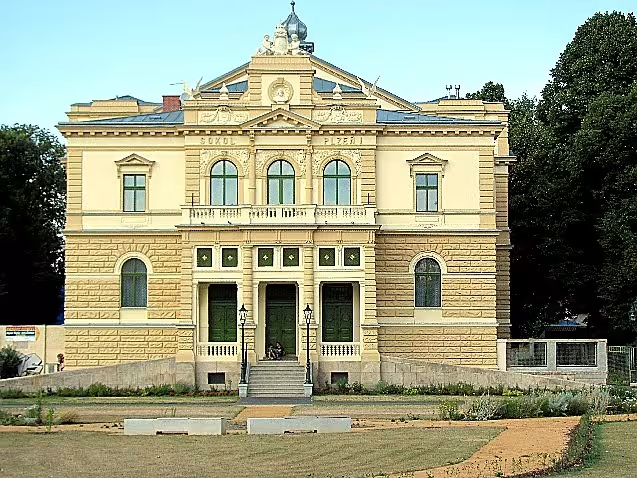
Sokolovna v Plzni is a Neo-Renaissance building with a gym which served as the main headquarters of the Pilsen Falcon. The building from 1892-1896 is located in the town of Plzeň 3 in Štruncová orchards. Since 2010 it has been declared a cultural monument of the Czech Republic. The construction represents a specific type of sport for physical and social purposes.
Physical unity of Pilsen, later renamed TJ Sokol Plzeň I, was established in 1863, i.e. only a year after Prague's unit. Under the leadership of Hynek Palla, she sought to build a representative residence for a long time. Around 1890, the area was secured in the newly emerging Štrunc orchards on the edge of the rivers Men and Radbuza, close to the later athletic and football stadium. The construction was supported by the Pilsen Purkmaster and a member of the Falcon Václav Peták. The project was developed by the architect Josef Podhajský and the construction took place between 1892 and 1896. The opening ceremony took place on 9 February 1894 and in 1904 the building was electrified.
The one-storey Neo-Renaissance building with a rectangular plan has an elevated basement, ground floor and floor. The object is divided into two parts. The south section includes an entrance with a portico, a lobby, a hallway with a main staircase and other rooms. The north section dominates the main hall, which, thanks to the gallery on the arcades, reaches the second floor. The whole complex is covered with a system of rolled-up roofs, above the main hall is located a turret. The facade is richly decorated with stucco and carries a sculpture with an emblem of the Sokol organization. The facade consists of a decorated portal with a balcony on the first floor. The central part of the building consists of a gym, which also serves as a social hall.
The ground in front of the building is part of the park adjustment connected to the Štrunka set. In the 1970s, this area was partly disrupted by the construction of a city's roadway. The architecture of the building draws on historicism, namely the Renaissance, which corresponded to the trends of the European building of the national renewal period.
The building is currently owned by TJ Sokol Pilsen I. During World War II during the Holocaust, 2604 Jews from Pilsen and the surrounding area were gathered here before transporting to concentration camps from the main station. These events have been reminiscent of a memorial plate on the facade since 2002.
The building was renovated in 2010 and was officially declared a cultural monument of the Czech Republic in the same year. Sokolovna remains an important architectural and social symbol of the body movement in Pilsen. It is an example of the type of sport that took place in the countries of the Czech Crown and later in the First Republic.
The monument represents a unique combination of sports function and social space in historical context. Its visit offers insight into the history of Czech national revival and painful events of the 20th century.
Historical milestones
- 1894
- The opening ceremony of the falcon.
- 1904
- Construction electrification.
- 2002
- Location of the memorial plate on the facade of a building resembling Holocaust victims.
- 2010
- Declaration for cultural monument of the Czech Republic and reconstruction.
Architectural development
One-storey Neo-Renaissance building on a rectangular plan with a rich stucco facade and a system of rolled roofs. The north part consists of the main hall with galleries on the arcades and turret, the south part of the entrance with a portic. The building was renovated in 2010.
Historical events
In 1904 the building was electrified. During World War II, it served as a gathering place for 2604 Jews from Pilsen and the surrounding area before transporting them to concentration camps.
Owners
TJ Falcon Pilsen I
Points of interest
- It's a Neo-Renaissance building with a gym that served as the headquarters of the Pilsen Falcon. - The construction was designed by the architect Josef Podhajský and was built between 1892 and 1896. In 1904, the building was electrified. - During World War II, 2604 Jews were gathered here before transporting to concentration camps. - Since 2010 it has been declared a cultural monument of the Czech Republic.
Guide
Show guide text
This text was created by artificial intelligence and has not been editorially reviewed. It may contain inaccuracies.
Welcome to Pilsen, one of the most beautiful parts of the city, specifically here in the Eastern Suburb. Stop for a moment, take a deep breath and look around you. You are standing in Strunk orchards, where you are now welcomed by this impressive building. In front of you is a building that is not just an ordinary house of stone and bricks, but a living witness to Pilsen history, a symbol of health, national pride and deep sadness. Look at its overall form. In front of you you can see the main headquarters of the Pilsen Falcon, a building that combines the discipline of gym with the elegance of social life. Let us now return together in time more than 120 years ago. Imagine Pilsen at the end of the nineteenth century, a time of great change and expansion. It was during this period between 1892 and 1896 that this building was created. It was a time when the Sokol movement was not just about sports, but imagined the whole philosophy of body and spirit education. The aim was to create a strong and healthy nation, and it was therefore necessary to have a place to serve as the centre of these activities. The architect Josef Podhajský was behind this project. His job was to design a space that would be practical for gyms, but at the same time sufficiently representative for festive events. The result is this space, which was ceremonially opened in 1894 and has since been a necessary part of the Pilsen landscape. Now pay attention to the architecture itself. The building is built in Neo-Renaissance style. When you look at its facade like that, feel the harmony and balance that is typical of this direction. Neo-Renaissance returned to the principles of ancient European architecture to express stability, culture and a reasonable order. Notice how the building works in the orchard space. It's a specific type of sports, because it wasn't designed to be an exercise hall. Inside is a gym, but at the same time there were reserved areas for social events, balls and meetings. It was a place where people from different layers of society met together, a common goal to improve their condition and grow friendship. Look at the facade and imagine how people in period costumes were flowing here ten years ago, full of enthusiasm and energy. The Sokolovna was not just a building, it was an institution made up of people. The personalities we closely associate with this place include Hynek Palla or Václav Peták. These men and their comrades put all their passion into the work of the Falcon. To them, exercise was not only a matter of muscle, but a way to inner freedom and confidence. It was thanks to them that this building became a social symbol, where the identity of a modern citizen was formed in Pilsen. Now let's move forward in time a little bit. It's 1904. The world is changing rapidly and new, fascinating power is starting to penetrate the buildings. It was this year that Plzeň Sokolovna was electrified. Imagine the contrast. An electric light suddenly came into the spaces that had previously been lit by the lamps. It was a symbol of progress, modernity and faith in a better future. At that time, the road seemed to only lead up, to more light and more health. However, history also has its dark shadows, and this building is their painful witness. I want to ask you now to focus your attention on the facade of the building. Look for a plaque that was placed in 2002. This board brings us back to the darkest days of World War II. It was here, in these areas, to serve health and joy, that tragedy took place. During the war, Sokolovna was used as a gathering place. Two thousand six hundred and four Jews were gathered here before transporting them to the slaughter camps. It is freezing to realize that a place that was a symbol of national vitality has become a place of fear and goodbye for a short time. This plaque is not just a historical record, but a constant reminder of what happens when hatred of humanity wins. When you stand in front of this building today, you perceive this particular contrast. On the one hand, it is a neo-Renaissance elegance and joy of movement, on the other hand, it is a silent testimony of suffering. It is this constancy that makes Pilsen Sokol's place so special. It's a building that teaches us not only about architecture, but above all about the human nature and history of our city. Another significant milestone occurred in 2010. The building was officially declared a cultural monument of the Czech Republic. It's not just a formal title, it's recognition of its irreplaceable value. This year there was also an extensive reconstruction, which ensured that Neo-Renaissance beauty could be maintained for future generations and that the building could continue to serve the inhabitants of Pilsen and its visitors. Thanks to this repair we can admire the construction in its full glory today, while maintaining its authentic atmosphere. Now that you have learned of the journey of this building from its base stone in 1892 to its present form, I suggest you look again. Feel the serenity of the Strunk orchards in which Sokolovna fits so naturally. Try to imagine the thousands of people who passed through here, the voices that were there, and the silence that was once here in the time of evil. Sokolovna v Plzni remains as a beacon of the body movement and a reminder that buildings are much more than walls. They are the boxes of our memories, our achievements and our mistakes. It's a place where sport, culture, and history meet in one neo-Renaissance unit. Thank you for stopping by this monument. Now invited to further explore the area of Eastern Suburbia. Walk slowly through the orchards, feel the surrounding greenery and let your thoughts float freely. Perhaps you'll be interested in more details of Pilsen architecture or just relax this park. I wish you a pleasant continuation in your discovery of Pilsen. Goodbye.
Tips for visitors
The best time to visit Sokolov in Pilsen is during spring or autumn when the weather is pleasant and less humane. This time allows you to enjoy a peaceful walk around the Strunk orchards and use sunlight to photograph architectural details of the building.
Parking can be found near Sokolov, but due to limited capacity we recommend using public transport. The best way to get here is a tram or bus that will take you directly to East Suburb. You can find the current connections and routes in the traffic search engine.
When you visit, remember to bring comfortable shoes, because walking in Strunk orchards can be long. If you are planning to photograph a building, consider tools such as a telelens or a polarization filter to help capture details and minimize reflections.
The photo of Sokolov is best at noon when the sun illuminates the facade from the side. The best places for photos are from both sides of the rivers Máže and Radbuzy, where you can capture the overall view of the building in the context of nature.
In the vicinity of Sokolov there are athletic and football stadiums, which can be visited for people interested in sports. If you have children, you can connect them to active rest in Strunk orchards where there are different routes and playgrounds.
Businesses nearby
Do you run a restaurant, accommodation, shop, museum, rental, wellness or other visitor service near this monument? Show yourself directly to the people heading to it — this is how they will see you in the app and on the web:
Events nearby




Zdroj akcí: otevřená data měst a obcí ČR (Národní katalog otevřených dat) a kalendář akcí Národního památkového ústavu.
Nearby
Budova se nachází v Štruncových sadech na ostrohu řek Mže a Radbuzy, v blízkosti atletického a fotbalového stadionu.
Accommodation nearby
Trips and activities nearby
Guided tours, tickets and activities nearby from GetYourGuide
Affiliate link: if you buy from the partner, we may receive a commission. The price for you does not change.
Search tours and activities →Themed route
Thematic cruise route: Sokolovna v Plzni and surroundings
1.Sokolovna v Plzni (Monuments) - This architectural pearl is the largest representation of Czech functionalism in Central Europe. Sokolovna is located in the middle of Štruncová orchards and offers visitors an opportunity to explore its history, architecture and importance for local culture.
2. Spinach sets (Green) - After visiting the Sokolovna, enjoy a relaxing moment in Strunc orchards, which are one of the oldest urban green areas in Pilsen. These sets offer beautiful walks along the rivers of May and Radbuzy, an ideal place to relax and enjoy nature.
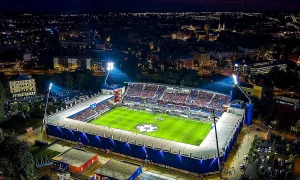
3. Athletic Stadium (Sports complex) - There is an athletic stadium near the falcon house, which is an important place for athletes and fans. Visitors can enjoy a look at modern sports facilities or look at ongoing events, which is a reminder of the importance of physical education and sport.
4. Football Stadium (Sports complex) - The final stop of the route is the football stadium, which serves as a home for local football teams. Here visitors can wish the success of their favorite players and teams or look at the history of the stadium, which is part of the sports heritage of Pilsen.
This route offers visitors the opportunity to explore the architectural and sporting wealth of Pilsen in one of the most prominent places in the city.
Seasonal recommendations
In the spring the surroundings are alive and the colors return to the urban landscape. The light is very fine in this period, which is ideal for observing the details of the construction. The atmosphere is fresh and full of new energy. We recommend you take several layers of clothing because the weather can change quickly. It's a great time to visit, because people don't pile up in numbers like in the summer months.
The summer season brings intense sunshine and hot days to the eastern part of the city. The atmosphere is very lively and busy. Due to high temperatures and larger groups of people we recommend that you come as early as possible in the morning to enjoy your peace and avoid the greatest heat. Dress easy and don't forget enough water.
Autumn months offer a calm mood, accompanied by golden colors in the surroundings. The light is very deep in the afternoon and creates interesting shadows on the facade. For a comfortable walk we recommend to have a waterproof jacket and fixed shoes in case of bad weather. It's the best time for those who seek silence.
In winter time, the atmosphere of the monument is very quiet and still. Days are short and light is weak, which gives the place a serious character. It is necessary to be thoroughly and warmly dressed, especially if you spend time outside. Check the current opening hours before you arrive, which may be shorter than usual during this period.
Visualizations and artistic views

The visualisations are generated by artificial intelligence and serve as inspiration.
Photos from the area
Real photos taken near the monument

Zdroj a licence jsou uvedeny u každého snímku.
Tips from visitors
No tips yet. Be the first!
Log in and add your tip.
Sources and literature
Photos: Folieskes / CC BY-SA 3.0 — Wikimedia Commons. The author and licence also appear when you hover over the image.
Faktickým podkladem tohoto textu byl článek na Wikipedii, jehož autory jsou přispěvatelé Wikipedie. Článek je dostupný pod licencí CC BY-SA 4.0.
Location on the map
More monuments – Východní Předměstí
Show all in the municipality

Příběhy a pověsti
Legendy, pověsti a příběhy spjaté s touto památkou

Fotografie návštěvníků
Zatím žádné fotografie. Buďte první, kdo přidá fotografii z návštěvy!
Log in a přidejte svou fotografii nebo hodnoťte.
Za ověřenou návštěvu v aplikaci získáte víc bodů — poznáme podle GPS, že jste na místě.
Reviews and comments