






Kroftovy pivovarské domy Brewery building
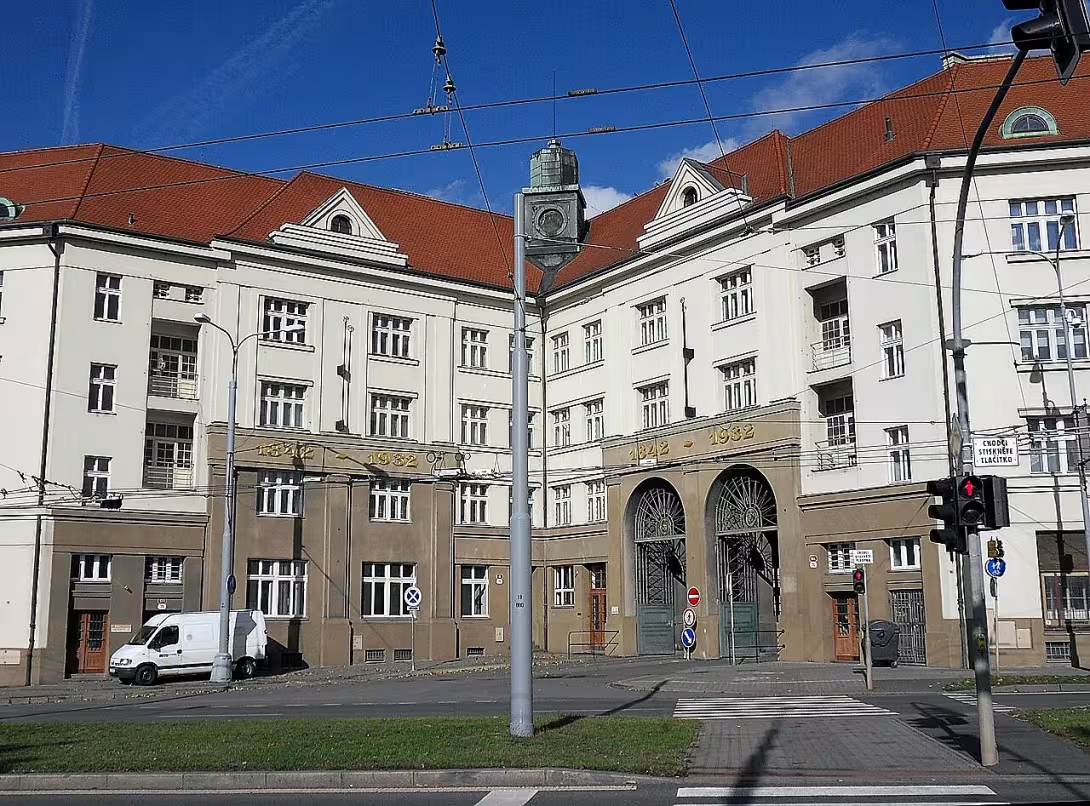
Kroftovy pivovarské domy consists of a large set of five buildings in U street Pravodní na Pilsen East Suburb. This multifunctional complex was created in 1930-1932 and was used to ensure the needs of the town brewery, including the accommodation of employees and operational facilities. Since 1995, the whole complex has been protected as a cultural monument.
In 1928, the Municipal Brewery Management Board decided to launch an architectural competition on the design of a new building for the apartment building. The aim was to prepare the construction for the 90th anniversary of the establishment of the brewery in 1932. The winner was the Pilsen builder Karel Mastný, who worked on the project together with architect Bohumil Chvojka. Greasy entered the competition with an offer to create the work without a claim for financial reward.
Construction took place in several stages. In 1930, Josef Štika started the construction, which built a house with an orientation number 17 in which there was a bar, dining room and smaller flats. Subsequently František Němec starší continued its work. The whole set of five houses was completed in 1932. This four-storey building includes 32 employee apartments with a size of one to four rooms, kitchen, dining room, shop, bath tub and entrance gate with a doorway and two passes to the brewery area.
The object bears the name of Richard Krofty, who, since 1909, has served on the board of the town brewery and in 1922-1933 served as its chairman. Kroft made a major contribution to the development of the brewery. In 1931, a bronze memorial plaque was placed in the lobby near the doorman, reminiscent of the circumstances of the construction.
The current owner of the building is the town brewery, now known as the Pilsen Pravoda. This cultural monument documents the expansion of industry and urban development during the period of the first republic. As an important witness to the history of the local industry, it is worth paying attention to both its complex function and its historical importance.
Historical milestones
- 1928
- Decision to write the competition on architectural solution of the apartment house
- 1930
- Start of construction of the first house
- 1932
- Completion of the entire five-house complex
- 1995
- The building was declared a cultural monument
Architectural development
The construction was carried out between 1930 and 1932 in several stages. The project was created by a winning design in the architectural competition. The file includes various functional units for brewery operation.
Historical events
1928: publication of an architectural competition; 1930: construction start; 1932: completion of the whole complex; 1995: declaration for cultural heritage.
Owners
Urban brewery (today Pilsen Právod)
Points of interest
- A set of five buildings was created in 1930-1932 and was used to ensure the needs of the town brewery. - The winner of the architectural competition was Karel Mastný, who offered to create the work without a claim for financial reward. - This four-story building includes 32 employee apartments, kitchen, dining room, shop, bath tub and entrance gate. - The object is named Richard Krofty, who was chairman of the brewery board in 1922-1933. - In 1931, a bronze memorial plaque was placed in the lobby near the doorman, reminiscent of the circumstances of the construction.
Guide
Show guide text
This text was created by artificial intelligence and has not been editorially reviewed. It may contain inaccuracies.
Welcome. You're standing in the eastern suburb, in a place where the history of beer swimming intersects with the daily life of the townspeople's society. In front of you is a large set of five buildings that make up the so-called Kroftovy pivovarské domy. If you stop for a moment and let the view wander freely on the facades, you will feel a certain gravity of this place. It is not just a pile of bricks and plaster, but a live testimony of the time when industry and housing were not separated, but they were complementary. These buildings are not only a remnant of the past, but a functional celery that was built with a clear goal: to ensure housing and comfort for employees of the famous Urban Brewery.
Let's take a step back in time to understand why these places were created. A key decision was made in the late 1920s, namely in 1928. The head office of the town brewery realized that for the smooth operation of production and satisfaction of its people it needs modern and quality living right near the workplace. An architectural competition was announced on the design of an apartment house which would fulfil these requirements. The result of this competition and the subsequent realization is the complex you see before you. The first house began to build in 1930 and the whole construction of five houses was completed in 1932. It was therefore at the time of the interwar when architecture was sought between tradition and modern, and it is these houses that show how the then urban culture sought to strike a balance between functionality and aesthetic experience.
Now pay attention to the architectural solution. The set consists of five buildings which form a harmonious whole together. The focus should be the main four-story object. Look at his proportions. It's a building that used to be an apartment building for employees, but it wasn't just a series of doors. Each apartment, and there were twenty-two, was equipped with a kitchen, dining room and spa. That was a great comfort at the time. Note also the gate with the doorway that closes the area. This gate was not only a technical element but also a symbol of the protection and privacy of this inner world. The whole complex is a multifunctional complex that has been protected as a cultural monument since 1995, which means that its form has been preserved for future generations.
But who was behind this work? Behind the facades you now admire are the names of two important architects. The winner of the competition was Karel Mastný, who offered to create the work without a claim for financial reward. This is a detail that points to his enthusiasm and faith in the project. He was working with Bohumil Chvojka. Together they created an environment to serve the people who created the glory of this brewery. And who were those people? The key personalities associated with this place include Richard Krofta, whose name bears this complex. He was a man who carried the brewery tradition proudly. We also mention Josef Štika and František the German elder. Their names are closely linked to the history of the town brewery and thus to this apartment complex. It was people who lived here, worked and formed a community that gave this place a soul.
The interesting thing that may interest you is the very creation of this file. As has already been said, five buildings were created in a short period of time, between 1930 and 1932. This shows the organisation and determination of the brewery management at the time. But let's look at it from a different angle. Imagine what it was like for the employees who lived here. They didn't have to commute from other parts of town. They were part of this compound. They knew their home was right next to the place where the beer they were drinking themselves. It was a closed world where work and private relationships interconnected. The gate with the doorman was the border between this inner world and the outer city. The doorman was not only a guardian, but also a confidant who knew who was coming and who was going. This atmosphere of community and belonging today is difficult to grasp, but remains in the stones and plaster of these houses.
It's important to realize that these houses weren't built for just one type of people. They were intended for brewery employees, which at that time meant a wide range of professions. From brewery workers to administrative staff. Each of them had their own apartment, their own corner where they could rest. Kitchen and dining room in the apartment were secured, which made everyday life easier. The spa was also part of the equipment, which was not so obvious at the time. These details show that the town brewery valued its people and wanted to give them the best possible conditions. That is why this complex is protected today. It is not just about architectural value, but about cultural and social importance.
Now let's move on to the conclusion of our short passage. You're standing in front of a landmark over 90 years old. She's seen war, regime changes and modernization. Yet she kept her temper. If you look at the facades, try to imagine what they looked like years ago. They were certainly revived by life, the windows were opening, smoke was rising from the kitchen, voices were coming out of the dining room. Today these houses are quiet, but their history is still heard if you know how to listen.
I suggest you get carried away by the atmosphere of this place while you're walking through the Eastern suburb. Stop at the gate, look at the facade details, try to imagine the life that took place here. If you have the option, try to learn more about the history of the town brewery, because this is the key to understanding the importance of these houses. Richard Krofta, Josef Štika and František Němec starší are just the tip of the ice mountain. Hundreds of people who lived and worked here are behind them.
Finally, I would like to thank you for your attention. I hope this short description has helped you better understand what you are seeing in front of you. Kroftovy pivovarské domy is not just a building, it's a story. A story about how industry and human life can connect and create something that persists in time. Thank you and wish you a pleasant continuation of your walk. Don't forget to enjoy the atmosphere of this place. When you leave, you will at least remain in it.
Tips for visitors
For the best visual experience of architecture of these five historic buildings we recommend a visit during the day when light is sufficient for detailed observation of facades. It is ideal to take advantage of the time around sunset, when the sun's rays highlight the texture of old walls and the historical character of objects.
The location can be easily transported by car through public transport. Please check the current traffic connections and parking options in this part of Pilsen in internet search engines or mobile applications before travelling.
When walking through the historical environment, it is recommended to wear comfortable shoes suitable for movement in urban development. For families with children, the very history of buildings that once served as homes for brewery workers can be interesting, which can be a great starting point for a brief chat about the past.
As part of your trip, don't forget to explore the surroundings. The area of the brewery Plzeň Pravod and the historical district Východní Předměstí are located nearby, which complement the overall view of the area connected with the brewery tradition.
Businesses nearby
Do you run a restaurant, accommodation, shop, museum, rental, wellness or other visitor service near this monument? Show yourself directly to the people heading to it — this is how they will see you in the app and on the web:
Events nearby


Zdroj akcí: otevřená data měst a obcí ČR (Národní katalog otevřených dat) a kalendář akcí Národního památkového ústavu.
Nearby
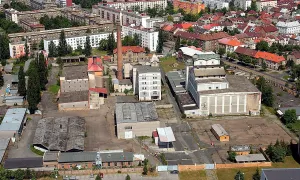
The area of the brewery Plzeň Pravod and the district Východní Předměstí in Pilsen.
Accommodation nearby
Trips and activities nearby
Guided tours, tickets and activities nearby from GetYourGuide
Affiliate link: if you buy from the partner, we may receive a commission. The price for you does not change.
Search tours and activities →Themed route
1. The area of the brewery Plzeň Pravod - Industrial complex. A place where the history of brewing beer with unique architecture is enacted.
Kroftovy pivovarské domy - Monuments. Exceptional buildings representing housing associated with brewery tradition.
3. Quarter Východní Předměstí - City zone. The walk will reveal the specific character and atmosphere of this Pilsen section.
Visualizations and artistic views


The visualisations are generated by artificial intelligence and serve as inspiration.
Photos from the area
Real photos taken near the monument

Zdroj a licence jsou uvedeny u každého snímku.
Tips from visitors
No tips yet. Be the first!
Log in and add your tip.
Sources and literature
Photos: Jik jik / CC BY-SA 4.0 — Wikimedia Commons. The author and licence also appear when you hover over the image.
Faktickým podkladem tohoto textu byl článek na Wikipedii, jehož autory jsou přispěvatelé Wikipedie. Článek je dostupný pod licencí CC BY-SA 4.0.
Location on the map
More monuments – Východní Předměstí
Show all in the municipality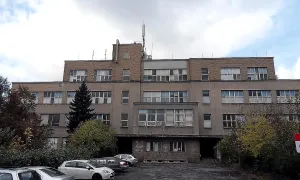

Příběhy a pověsti
Legendy, pověsti a příběhy spjaté s touto památkou

Fotografie návštěvníků
Zatím žádné fotografie. Buďte první, kdo přidá fotografii z návštěvy!
Log in a přidejte svou fotografii nebo hodnoťte.
Za ověřenou návštěvu v aplikaci získáte víc bodů — poznáme podle GPS, že jste na místě.
Reviews and comments