






Špičák Other
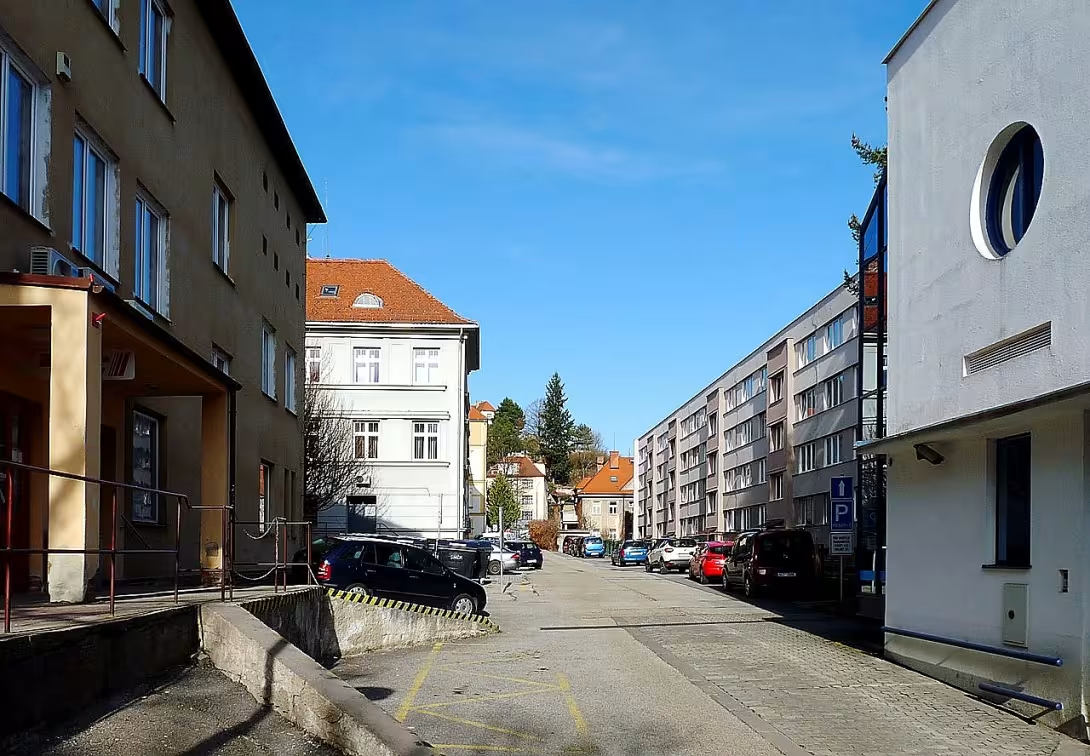
Špičák is an important transportation hub located in the southern Czech city of Český Krumlov, within the Latrán district. It serves as a key entry point for tourists and a vital public transport node, featuring bus stops that connect to regional lines and long-distance buses linking the city with České Budějovice and Prague. Its strategic importance is due to its proximity to Český Krumlov Castle and the historic center. Špičák hosts various facilities including a polyclinic, bank branches, and several institutions.
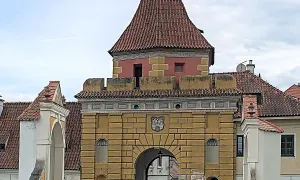
The area's historical context includes the construction of Budějovická brána between 1598 and 1602. This gate was one of nine original city gates built during that period, highlighting its significance in regional development. The gate remains a notable landmark today, marking the boundary with the historic district of Latrán.
Architecturally, Špičák has evolved into a modern hub while retaining elements from different eras. Budějovická brána stands as a testament to late 16th-century construction techniques and styles. In the 1970s, the Luna cinema was built nearby, designed by architect Bohumil Böhm, adding mid-20th-century modernity to the area. Additionally, Pivovar Eggenberg, with its brewing tradition dating back to the 16th century, contributes to the historical and cultural fabric of Špičák.
Throughout its history, Špičák has experienced various changes in ownership and administration, transitioning from a medieval city gate area to a modern transportation hub. The presence of institutions such as banks and healthcare facilities indicates its ongoing importance to the local community.
Key events associated with Špičák include the construction of Budějovická brána and the establishment of Pivovar Eggenberg, both reflecting significant historical developments. The Luna cinema's opening in the 1970s further underscores the area's evolution as a cultural center within Český Krumlov.
Today, Špičák remains a vital part of Český Krumlov, offering accessibility to its historic sites and serving as a central point for both residents and visitors. Its strategic location near the castle and historical center makes it an essential stop for anyone exploring the city. The presence of public transport facilities, parking spaces, and local services enhances its appeal as a convenient entry point.
Špičák's blend of historical significance and modern functionality makes it a noteworthy destination in Český Krumlov. Visitors are invited to explore this unique site where history meets contemporary life, offering insights into the city's past while providing practical amenities for today's travelers.
Historical milestones
- 1598-1602
- Construction of Budějovická brána.
- 16th century
- Establishment of Pivovar Eggenberg's brewing tradition.
- 1970s
- Opening of Luna cinema by Bohumil Böhm.
Architectural development
The Špičák area has evolved into a modern transportation and service hub. Notable developments include the construction of Budějovická brána in the late 16th century and the establishment of Pivovar Eggenberg, a brewery with roots dating back to the 16th century. In the 1970s, the Luna cinema was built nearby, designed by architect Bohumil Böhm.
Historical events
1598–1602: Construction of Budějovická brána, one of the nine original city gates, marking an important historical development in the area.
Points of interest
- The Budějovická brána was originally part of a network of nine city gates built in the late 16th century, each serving as a critical point for defense and trade within Český Krumlov. This gate not only marked the boundary with Latrán but also symbolized the city's strategic importance during that era.
- Pivovar Eggenberg, located near Špičák, has been producing beer since the 16th century, making it one of the oldest breweries in the region. Its enduring presence highlights the area's long-standing tradition of brewing and its role in local culture and economy.
- The Luna cinema, designed by architect Bohumil Böhm in the 1970s, introduced a modern architectural style to Špičák, contrasting with the historical elements like Budějovická brána. This blend of old and new reflects the area's evolution from a medieval gate to a contemporary cultural hub.
- Despite its transformation into a modern transportation center, Špičák has retained its historical charm through landmarks such as Budějovická brána and Pivovar Eggenberg. These sites serve as reminders of the area's rich past while supporting its current role in facilitating access to Český Krumlov's historic attractions.
- The strategic location of Špičák near Český Krumlov Castle has made it a focal point for both historical development and modern urban planning. Its evolution from a medieval entryway to a bustling transportation hub underscores its ongoing significance in connecting the city's past with its present-day needs.
Guide
This guide is narrated by a synthetic voice generated by artificial intelligence.
Show guide text
This text was created by artificial intelligence and has not been editorially reviewed. It may contain inaccuracies.
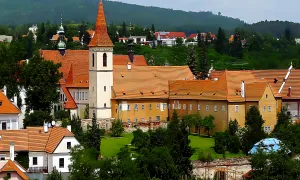
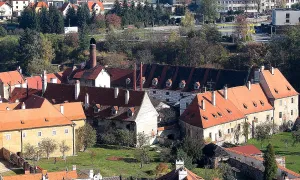
Špičák is a locality in Český Krumlov that represents first and foremost the entrance gate to the city. It is not an independent part of the municipality. It extends in the urban district of Latrán, on the border with Nádražní Předměstí, north of the historic center in the valley of the Polečnice stream. The castle and old center are just a short distance from here.
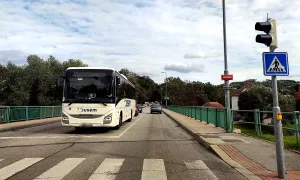
Špičák is the main transit hub for public transportation in the city. At the busy stop Český Krumlov, Špičák, city buses, regional connections and long-distance lines to České Budějovice and Prague meet. For many tourists, this is where their visit to Krumlov begins.
However, the locality does not serve only visitors. It is also one of the service centers for the city's residents. You can find a clinic, a bank here, and some institutions also have their headquarters here.
On the border of Špičák stands the Budějovická brána, built between 1598 and 1602. It is the only preserved one of the original nine city gates. It separates the modern part of Špičák from the historic district of Latrán, so here literally the new city meets the old.
On the southern edge of the locality lies the Eggenberg brewery complex, whose tradition dates back to the sixteenth century. A completely different era is recalled by the Luna cinema. It was built in the seventies of the twentieth century according to a design by architect Bohumil Böhm and today it is the only permanent cinema in the city. It stands not far from the bus stop.
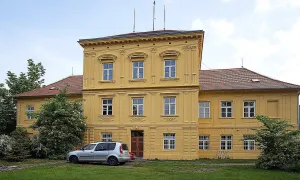
Also worth noting is Třída Míru. It is lined with a number of architecturally valuable buildings from the end of the nineteenth to the middle of the twentieth century.
Frequently asked questions
Can the monument be visited?
We have not verified whether this monument is accessible. Please ask the owner or operator, or the local municipal office.
Where is the monument?
Location: Latrán, Jihočeský kraj. The map on this page shows the exact spot.
Businesses nearby
Do you run a restaurant, accommodation, shop, museum, rental, wellness or other visitor service near this monument? Show yourself directly to the people heading to it — this is how they will see you in the app and on the web:
Events nearby

Zdroj akcí: otevřená data měst a obcí ČR (Národní katalog otevřených dat) a kalendář akcí Národního památkového ústavu.
Nearby
Špičák is situated near Český Krumlov Castle and the historic center of the city. The Budějovická brána, one of the few remaining original city gates, marks its boundary with the historical district of Latrán.
Accommodation nearby
Trips and activities nearby
Guided tours, tickets and activities nearby from GetYourGuide
Affiliate link: if you buy from the partner, we may receive a commission. The price for you does not change.
Search tours and activities →Themed route
Trasa: Latrán and Surroundings
1. Budějovická brána (historical site) Budějovická brána is one of the few original city gates in Český Krumlov. Its history dates back to the 14th century and it represents a significant architectural landmark of the city.
2. Latrán (historical site) Latrán is the historical heart of the town of Český Krumlov, located on the left bank of the Vltava River. Its history dates back to the 13th century and it is full of historic buildings and streets.
3. Špičák (main destination) Špičák is a dominant feature of Český Krumlov, offering views over the town and its surroundings. It is an ideal place for relaxation and observing the area.
Seasonal recommendations
Jaro
Specific: In the spring season, Špičák is surrounded by blooming trees and flowers, creating a pleasant atmosphere. The lighting is mild, allowing for observation of details on the monument. The atmosphere is calm and serene.
Practical Tips: It's advisable to visit Špičák during weekdays in the spring to avoid crowds of tourists. The best time to visit is from 9 to 11 a.m. or from 3 to 5 p.m. in the afternoon when the sun is strongest. You don't need to worry about difficult clothing, but we recommend wearing comfortable hiking shoes.
Lěto
Specific: During the summer season, Špičák is full of life and energy. The lighting is stronger, allowing for observation of details on the monument. The atmosphere is vibrant with activity.
Practical Tips: It's best to visit Špičák early in the morning during the main summer season before large groups of tourists arrive. We recommend arriving around 8 a.m. to avoid crowds. Clothing should be light and comfortable, as you'll be walking on trails.
Podzim
Specific: In the autumn season, Špičák is surrounded by beautiful colors and lighting that create a unique atmosphere. The lighting is mild, allowing for observation of details on the monument. The atmosphere is calm and serene.
Practical Tips: It's best to visit Špičák during weekdays in the autumn to avoid crowds of tourists. The best time to visit is from 9 to 11 a.m. or from 3 to 5 p.m. in the afternoon when the sun is strongest. You don't need to worry about difficult clothing, but we recommend wearing comfortable hiking shoes.
Zima
Specific: In the winter season, Špičák is quiet and peaceful, with mild lighting. The atmosphere is calm and serene.
We recommend arriving early in the morning to avoid crowds. Clothing should be warm and comfortable, as it will be cold.
Visualizations and artistic views


The visualisations are generated by artificial intelligence and serve as inspiration.
Photos from the area
Real photos taken near the monument

Zdroj a licence jsou uvedeny u každého snímku.
Atmosphere of the place
This atmospheric visualisation of the place and period was generated by artificial intelligence. It is not real footage of the location.
Tips from visitors
No tips yet. Be the first!
Log in and add your tip.
Sources and literature
Photos: Czeva / CC BY-SA 3.0 — Wikimedia Commons. The author and licence also appear when you hover over the image.
Faktickým podkladem tohoto textu byl článek na Wikipedii, jehož autory jsou přispěvatelé Wikipedie. Článek je dostupný pod licencí CC BY-SA 4.0.
Location on the map

Příběhy a pověsti
Legendy, pověsti a příběhy spjaté s touto památkou

Fotografie návštěvníků
Zatím žádné fotografie. Buďte první, kdo přidá fotografii z návštěvy!
Log in a přidejte svou fotografii nebo hodnoťte.
Za ověřenou návštěvu v aplikaci získáte víc bodů — poznáme podle GPS, že jste na místě.
Reviews and comments