






Historický pivovar Český Krumlov (dříve Eggenberg) Brewery building
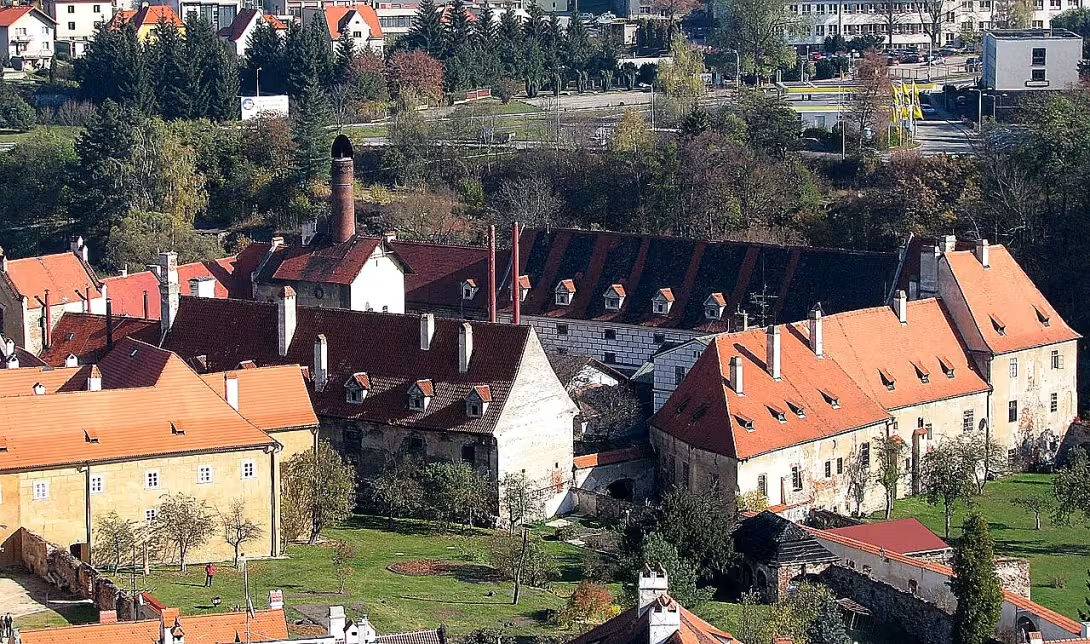
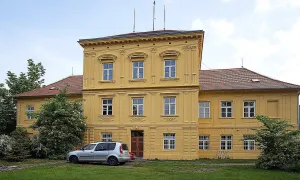
The historic brewery in the Krumlov district of Latrán is a former mansion. He evolved from the Renaissance residence through the armory into a major industrial enterprise. The object is a remarkable long history associated with the most important noble families and the current function of the minibrewery.
The tradition of brewing beer in Český Krumlov dates back to the 13th century. While the townspeople used their own brewery or local brewery on the Broad Street, this complex represents exclusively the government brewery. It was developed gradually by Rožmberk, Eggenberg and then by Schwarzenberk.
The basic wing of the building was created in 1546 as a representative residence of Anna from Rogendorf. After her death in 1562, Petr Vok z Rožmberka had the building completely rebuilt into an armory in 1592. From 1625 to 1630, the construction was adapted to the Eggenberg Brewery. The beer production has thus completely moved from the castle to Latrán.
In 1719 he transferred the property to the Schwarzenberg family. The production of barley beer was expanded here in the 18th century. Since 1788 Krumlov Hops replaced a better quality raw material imported from princes of hops from the north of Bohemia.
In the 19th century, at a time of economic expansion, the brewery underwent major modernization. A method of lower fermentation was introduced and a new oven and drying plant of the English type were built. Although the object hit a heavy fire in 1869, it was completely restored in 1870. New basement spaces and the top fridge have been added. In the 1980s, a steam engine was introduced, making production more than 30,000 hl per year. In 1935 the company belonged to important beer distributors in Czechoslovakia.
During World War II, the area was under occupation. The then owner, Prince Adolf Schwarzenberg, had to flee to exile because of his antinacist activities and the protection of Jewish associates. After the occupation, the property was illegally nationalized in 1947.
Following the closure of the original operation in 2014 and the dismantling of the technologies that were transferred to Pardubice, a new establishment started operating in these premises in 2015. Today there is a Historic Brewery, which is ranked among mini breweries.
The monument offers insight into the history of the Czech economy and the development of industrial production in South Bohemia. It is an ideal place to understand the continuity of traditions in the historical district of Latrán.
Then and now
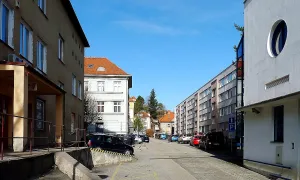
Drag the slider to compare how the landmark may have looked when it was built with the view today.
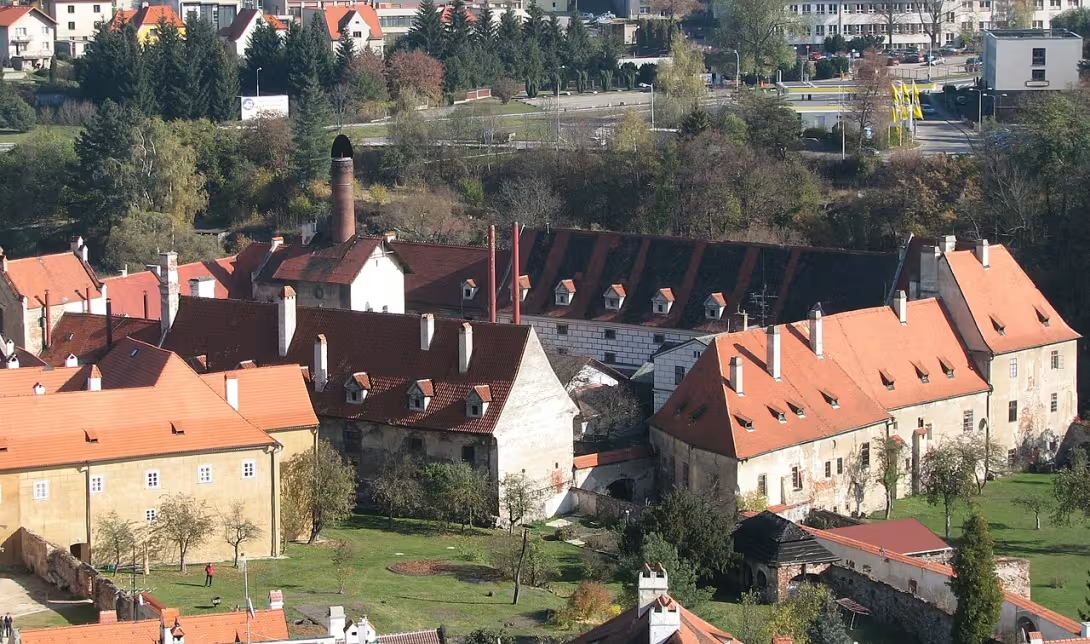
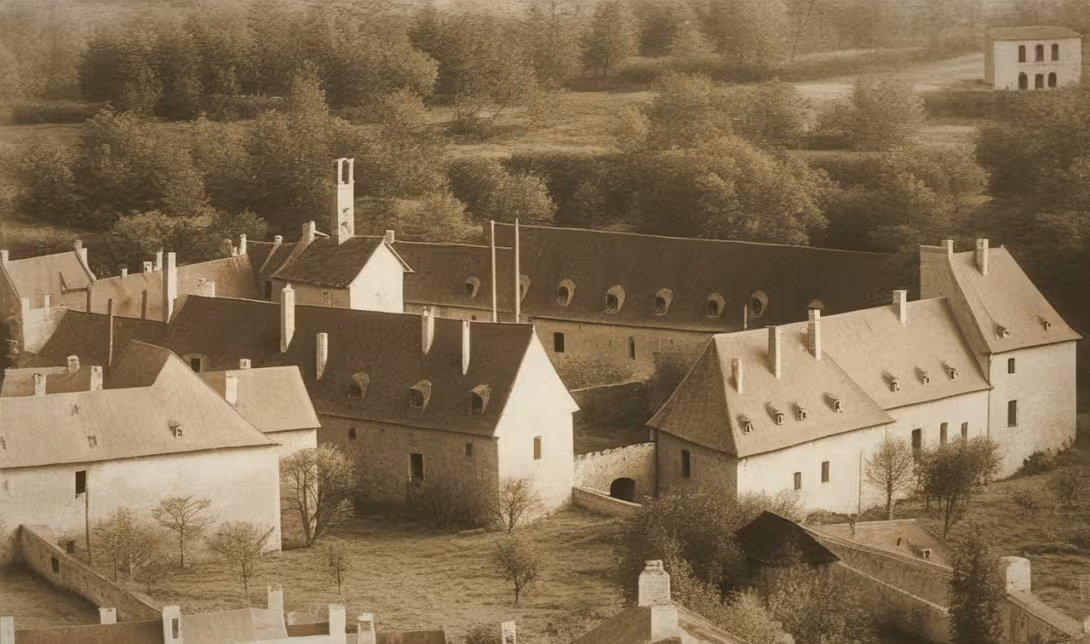
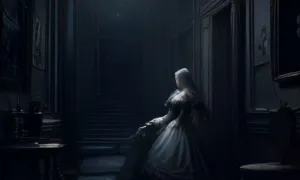
The historical appearance on the left is an AI-generated visualisation and serves as inspiration only.
Historical milestones
- 1546
- Opening of the base wing of Anna from Rogendorf
- 1592
- Conversion of the building to the armory
- 1625
- Beginning of the reconstruction to the Eggenberg Brewery
- 1719
- Take over property by the Schwarzenberg family
- 2014
- Closing of the original brewery
- 2015
- Opening of the new Historical Brewery
Architectural development
The construction of the original premises started in 1546. The building was converted into an armory in 1592 and was adapted for the purposes of the brewery between 1625 and 1630.
Historical events
1546 opening of the building, 1592 rebuilding into the armory, 1625-1630 rebuilding into a brewery, 1719 taking over Schwarzenberg
Owners
Rožmberk, Eggenberg, Schwarzenberk
Points of interest
- The area has evolved from the Renaissance residence through the armory into a major industrial enterprise. - The object gradually developed the noble families Rožmberk, Eggenberg and Schwarzenberk. - In the 19th century, major modernization took place, in which a method of lower fermentation was introduced. - After a heavy fire in 1869, the construction was completely restored in 1870. - In the 1880s, steam engines were introduced, making production more than 30,000 hl per year.
Guide
Show guide text
This text was created by artificial intelligence and has not been editorially reviewed. It may contain inaccuracies.
Welcome to the heart of the historical Český Krumlov. You are standing in the location Latrán, where history touches every stone and every wall. In front of your eyes is a building that is not just an ordinary object, but a living witness of centuries, transformations and the fate of great generations. Feel this atmosphere - the air here is filled with traditions and stories that have taken place here for hundreds of years. This complex, which you see today primarily as part of a brewery complex, has passed an incredible journey from a luxury aristocratic mansion to a major industrial enterprise.
Let's go back deep into the past together to understand why this place looks like it does. This whole history began in 1546. At that time there was no beer production, but there was a representative residence for Anna of Rogendorf. Imagine the Renaissance atmosphere at that time, elegance and nobility that this mansion radiated. It wasn't just a house, it was a symbol of power and position. But only a few decades later, in 1592, the first major transformation took place. The object's function has changed radically and the mansion has been converted into an armory. A place full of noble elegance became a place of strategic importance, where weapons were stored and strength prepared.
Now pay attention to how this space began to turn into an industrial hub. Another major breakthrough occurred in 1625. This year, the building was remodeled to the Eggenberg Brewery. That was the moment when the fate of this place was forever connected to the tradition of brewing beer. From the Renaissance mansion and military armory gradually became a machine for the production of drinks, which was intended to supply aristocratic yards and wider surroundings. In the 18th century, namely 1719, property became part of the extensive Schwarzenberg estate. Under the dominion of the Schwarzenberg family, the brewery developed into one of the most important pillars of their estate and became an important beer producer whose name was known throughout the region.
When looking at the building that's surrounding you, try to perceive its mass and structure. Even though you see a historic brewery today, its architecture has traces of all these periods. Notice how the Renaissance foundations gradually adapted to the needs of industry. The complex evolved from a fragile mansion through a functional armory to a robust industrial enterprise. This transformation is seen in the overall effect of architecture, which must also be representative and highly functional.
This space was shaped by the hands and decisions of the most important figures of the time. You can imagine here the presence of the Rožmberk families, who left their trail at this point, or the Eggenberg families, who introduced the brewery tradition here. Let us not forget the family of Schwarzenberg and their prominent representative, Adam Francis of Schwarzenberg, who, under his influence, controlled a large part of this rich estate. Each of these personalities and genera added another layer of importance to this place.
If you look at the history of this place, you will come across a period of great progress, but also great trials. In the 19th century there was a major modernization in the area. It was a period when technology began to change and brewery craft became science. It was at that time that the lower fermentation method was introduced, a revolutionary change that allowed beer to be produced on a much larger scale and with high quality. But history wasn't just about success. In 1869, the object had to deal with a heavy fire that threatened its entire existence. Yet this space was able to reborn from the ashes and continue its role.
You may have a question as to how this historical cycle ended in modern times. After long years of operation, a sad moment came in 2014 when the original brewery had to shut down. It seemed this tradition could end. But history tends to repeat itself and return to life. Just a year later, in 2015, a new Historical Brewery was opened. This closed the circle and this area again became a place where beer is brewed, extracted and shared with people.
Now I want to invite you to further explore. You're standing at a place where noble elegance meets industrial power. Feel the constant transformation that has taken place here for centuries. Whether you decide to continue your tour of the premises or continue on the streets of Latrán, remember that every building in this city has its own unique story. Thank you for sharing this story with us. We wish you a pleasant continuation in discovering the beauty of Český Krumlov.
Tips for visitors
The best time to visit is the morning clock or late afternoon, when there is a quieter atmosphere in the area and the history of the Czech brewery can be better perceived.
The location is available by car and by public transport; Check the current connection and parking possibilities in the Latrán area in the internet search engine.
We recommend taking comfortable shoes suitable for historical tiles. For the best photos, look for soft light hitting the facades of buildings that highlight the details of the former armory.
In the immediate surroundings we recommend to visit Český Krumlovský castle, historical city centre and explore the Latrán district.
We recommend to families with children a walk along the streets that offer a safe space for exploring history in a friendly environment.
Businesses nearby
Events nearby


Zdroj akcí: otevřená data měst a obcí ČR (Národní katalog otevřených dat) a kalendář akcí Národního památkového ústavu.
Nearby
Český Krumlovský castle, historical city center and district Latrán
Accommodation nearby
Trips and activities nearby
Guided tours, tickets and activities nearby from GetYourGuide
Affiliate link: if you buy from the partner, we may receive a commission. The price for you does not change.
Search tours and activities →Themed route
1. Český Krumlovský Castle, a monument, offers a tour of an extensive complex with a rich history. 2. The historical center of the city, the urban part, engulfs you with its unique construction and narrow streets. The 3rd district of Latrán, the urban district, represents a historic path to the main destination with the right atmosphere. 4. The historical brewery Český Krumlov, a monument, is the main point of the trip, where you will learn the tradition of brewing.
Seasonal recommendations
In spring Latrán blooms and the surrounding brewery is flooded with fresh greenery. The atmosphere is full of hope and light is fine, which is ideal for walking through historic streets. I recommend wearing layered clothes because the morning cold can quickly replace the warm noon. The best is to visit the memory in the morning before the main wave of visitors arrives.
The summer season brings a radiant sun and the most lively atmosphere in the city. The gardens are in full bloom and the brewery area is very open. Due to the huge number of tourists in the high season, a very early arrival is necessary to avoid long fronts. Choose light, breathable materials and don't forget the sun protection.
Autumn in Latrán is a period of golden colors and melancholy calm. Fog above the river and warm shades of leaves create a cozy mood that matches the history of the brewery. It's practical to carry waterproof shoes and a lighter jacket in case of rain. The ideal time to visit is late afternoon when light creates dramatic shadows in narrow alleys.
In winter, the city calms down and snow-covered roofs give the monument a fabulous look. In advent time, expectations rule and the air smells of spices. It is necessary to choose warm, thermal clothes and solid shoes. Pay attention to shorter opening times and plan to visit in advance to make the tour before dark.
Visualizations and artistic views


The visualisations are generated by artificial intelligence and serve as inspiration.
Photos from the area
Real photos taken near the monument


Zdroj a licence jsou uvedeny u každého snímku.
Tips from visitors
No tips yet. Be the first!
Log in and add your tip.
Sources and literature
Fotografie: Hu Totya / CC BY-SA 3.0 — Wikimedia Commons. The author and licence also appear when you hover over the image.
Faktickým podkladem tohoto textu byl článek na Wikipedii, jehož autory jsou přispěvatelé Wikipedie. Článek je dostupný pod licencí CC BY-SA 4.0.
Location on the map

Příběhy a pověsti
Legendy, pověsti a příběhy spjaté s touto památkou
Fotografie návštěvníků
Zatím žádné fotografie. Buďte první, kdo přidá fotografii z návštěvy!
Přihlaste se a přidejte svou fotografii nebo hodnoťte.
Za ověřenou návštěvu v aplikaci získáte víc bodů — poznáme podle GPS, že jste na místě.
Reviews and comments