






Stará synagoga ve Velkém Meziříčí Museum building
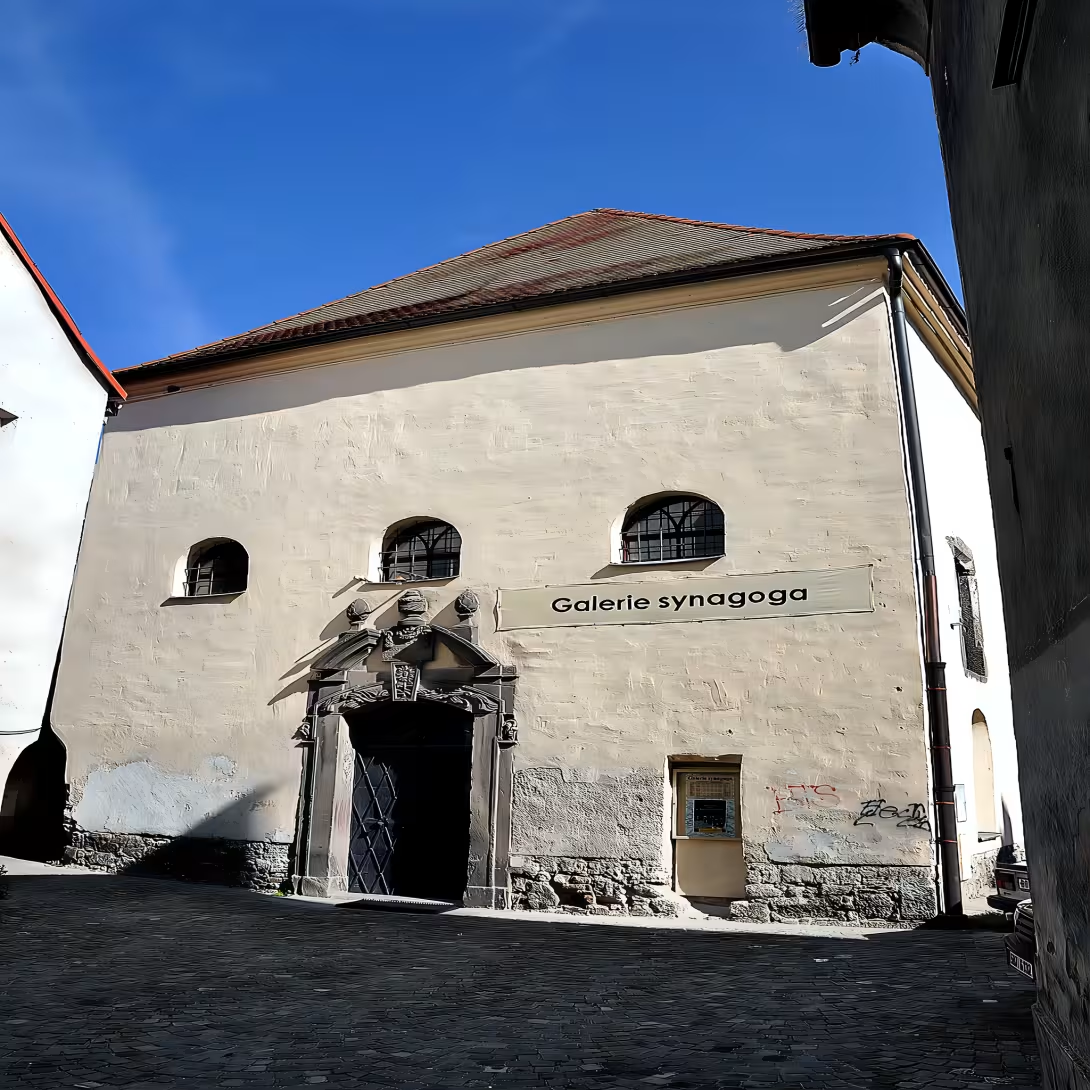
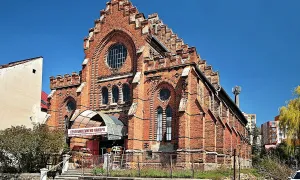
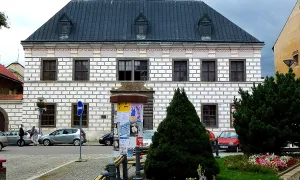
Stará synagoga ve Velkém Meziříčí is a Gothic-Renaissance building from the end of the 17th century, located in Novosada Street, also known as the Jewish Hall. This historical monument currently serves as a museum and gallery dedicated to the history of the local Jewish village.
The first mention of the presence of Jews in Meziřice dates back to 1497 and 1518. Their arrival was probably related to the expulsion from Moravian royal cities, but the exact reasons are not known, as the Jewish village archive burned in a fire in the 19th century. A larger settlement occurred after the Thirty Years' War, causing the need to build a new, larger prayer house. In the 18th century, Jews accounted for a third of the population of the city and in 1857 there were the most people, a total of 1116 people. In Meziřičí there was a yeshiva, where important scholars grew up, such as Cvi Aškenazi, who later became chief rabbi in Hamburg, Amsterdam and London. The Jewish community in the place died as a result of deportation during World War II and was not restored after that.
Architectural is a two-storey rectangular stone building with later brick extensions. The building is built in Gothic-Renaissance style and its masonry is extremely strong in some parts, it measures up to one meter. The main entrance to the building consists of a baroque-classicist stone portal from the second half of the 18th century. The portal has a door with Hebrew inscription dating back to 1812. The interior layout is traditional: the entrance area with the hall is located in the west, from there it enters the main hall with a halo on the east side and seats situated along the walls. The capacity of the main hall is 85 men. On the first floor there is a women's gallery designed for 63 women, which is now entered by a metal spiral staircase from the main hall.
The synagogue was built in close proximity to the older Little Synagogue, which was further used as a winter prayer house. The old synagogue served for worship until 1870 when the neighbouring New Synagogue was built. From this point on, the building was mostly used to store the material. In 1991 the synagogue was returned to the Jewish religious community in Brno and in the years 1995- 1996 the building was restored.
Today, the building serves as a gallery and museum space. The women's gallery has a permanent exhibition dedicated to the history and monuments of the Jewish village.
This monument is an important witness to the history of local settlement and offers a detailed view of the life of the Jewish community. Its visit represents an opportunity to know the cultural heritage of the region.
Then and now
Drag the slider to compare how the landmark may have looked when it was built with the view today.
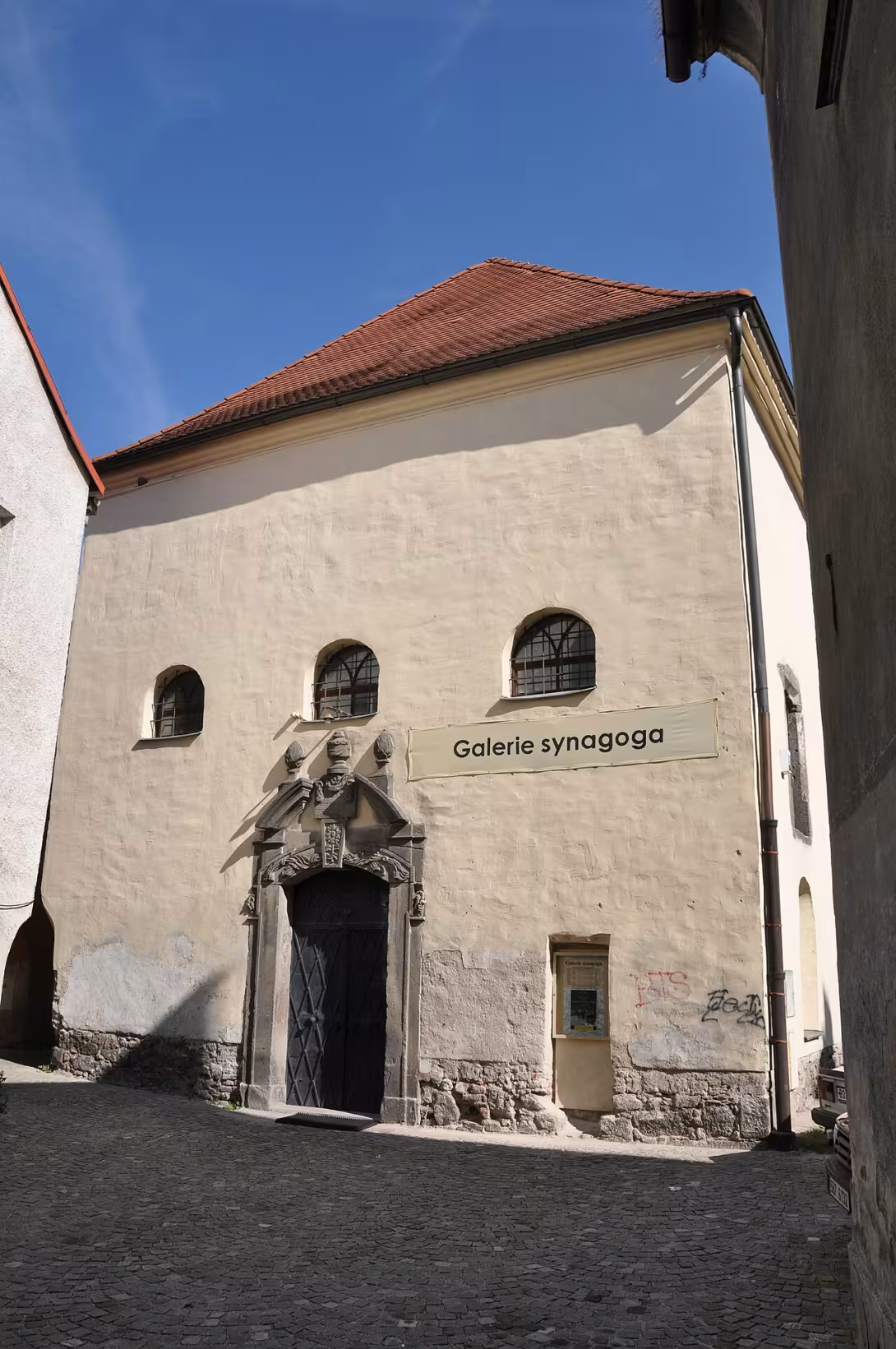
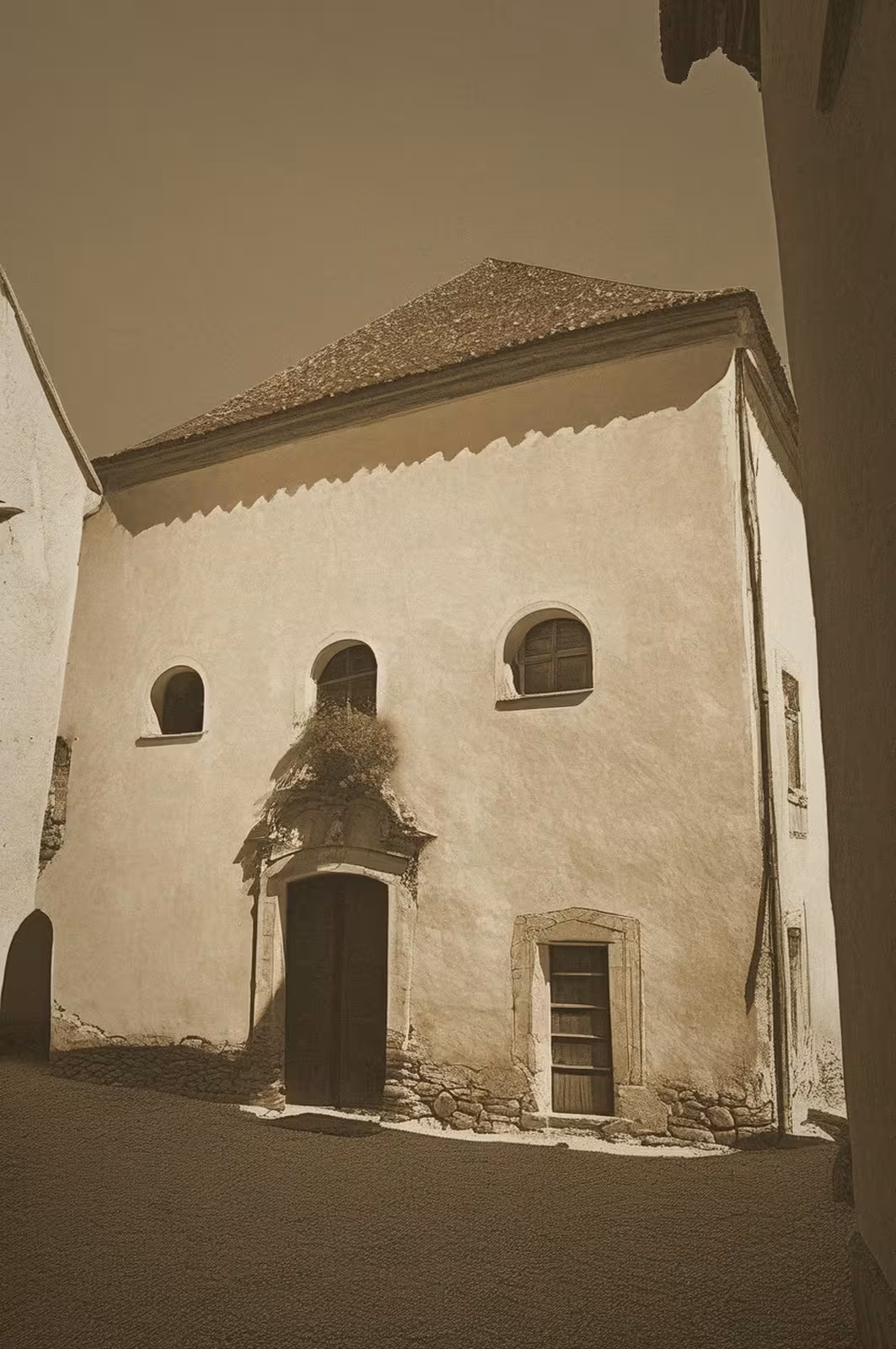
The historical appearance on the left is an AI-generated visualisation and serves as inspiration only.
Historical milestones
- 1812
- Date on Hebrew inscription at forged doors
- 1870
- Building a new synagogue and changing the use of an old building
- 1991
- Return of the synagogue to the Jewish religious community in Brno
- 1995
- Start of building restoration
Architectural development
It is a two-storey stone building with later brick constructions. The architecture is Gothic-Renaissance with Baroque-Classicist stone portal from the second half of the 18th century.
Historical events
End of 17th century: construction of synagogue; 1870: creating a new synagogue and changing the use of the building; 1991: return of the Jewish village; 1998-1996: reconstruction of the building.
Owners
Jewish religious community in Brno (since 1991).
Points of interest
- The Gothic-Renaissance building from the late 17th century in Novosada Street today serves as a museum and gallery. - The wall of the building is extremely strong in some parts and measures up to one meter. - The Baroque-Classicist stone portal contains forged doors with Hebrew inscription from 1812. - The main hall had a capacity of 85 men and the women's gallery was designed for 63 women. - The building was used for services until 1870, after which it was mostly used to store material.
Guide
Show guide text
This text was created by artificial intelligence and has not been editorially reviewed. It may contain inaccuracies.
Welcome to the historic heart of the Great Mezzanine! You're standing in front of one of the most distinctive monuments of our city, an old synagogue. This Gothic-Renaissance building awaits you with silent memories and beautiful stories that took place here.
The synagogue was built at the end of the 17th century, at a time when the Jewish community experienced its expansion after a 30-year war. This building served as a spiritual centre and meeting place for the community, which settled here and prospered.
Look up at the synagogue facade. Notice strong walls that are extremely thick to one metre in some parts. This robust construction shows the strength and resistance that the building has shown for centuries. The Baroque-Classicist stone portal is another visual record of history. It has forged doors with Hebrew inscription bearing the date 1812. This detail can bring you back to the past and remind you of a time when the synagogue was the center of Jewish life.
Now let's look at the key personalities associated with this monument. Cvi Aškenazi is one of the important characters that influenced the history of the synagogue and the Jewish community in the Great Mezorich. His story and benefits are part of the rich heritage that is being kept here.
One interesting thing to notice is the architectural style of the synagogue. Surprisingly, it combines Gothic and Renaissance elements into one harmonious whole. This mixture reflects the historical variability of the period in which the building was built.
Let's move on to another interesting detail. The main hall of the synagogue had capacity for 85 people and served as a place of prayer and meeting. Today, after long years of transformation, the museum and gallery is dedicated to the Jewish history of the local village.
And what can you not afford to see? In the synagogue you will find a rich collection of artifacts that tell stories of life and faith. Every piece is like a drop in a sea of history that you can see and draw from.
Allow me to invite you to explore this fascinating place again. The synagogue in the Great Mezzanine is a great example of history and architecture waiting for its discoverers. Whether you look at the details or notice the atmosphere, every step in this building is a journey into the past.
Thank you for your attention and pleasant examination of the old synagogue. I hope you will find yourself comfortable here and enjoy every moment of your visit.
Tips for visitors
The best time to visit the Old Synagogue in the Great Mezirice is during spring and autumn, when the weather is quietest and pleasant. Special events and exhibitions related to the history and architecture of the synagogue are also held in these months.
When visiting, take with you suitable shoes and clothes because the floors in the historic buildings can be cold. It is also important to have a camera or mobile phone to capture the beautiful architecture of the synagogue.
Photography of the Old Synagogue offers several search places, especially from nearby streets. The best light for photos is usually in the evening or in the morning when the sun lights the building from the side.
In the vicinity of the synagogue is the Little Synagogue, which was previously used as a winter prayer house. It is another interesting historical object that can be visited during the visit of the Old Synagogue.
Frequently asked questions
Can the monument be visited?
Some buildings of this kind are open for guided tours, others serve another purpose or are privately owned. We have not verified whether and when this monument is open – please ask the operator.
What are the opening hours and admission?
We have not verified the opening hours or admission. Current information is published by the operator.
Where is the monument?
Location: Velké Meziříčí, Kraj Vysočina. The map on this page shows the exact spot.
Why is the monument protected?
It is listed in the Central List of Cultural Monuments of the Czech Republic as a cultural monument (register no. 1000148777).
Businesses nearby
Do you run a restaurant, accommodation, shop, museum, rental, wellness or other visitor service near this monument? Show yourself directly to the people heading to it — this is how they will see you in the app and on the web:
Events nearby
Zdroj akcí: otevřená data měst a obcí ČR (Národní katalog otevřených dat) a kalendář akcí Národního památkového ústavu.
Nearby
V těsném sousedství se nachází Malá synagoga, která byla dříve využívána jako zimní modlitebna.
Accommodation nearby
Themed route
1. Old synagogue (indoor space) - Type: Exposure. Why: A tour of the interior and knowledge of the history of the place. 2. Old synagogue (outer space) - Type: Architecture. Why: Admiring the facade and surrounding area. 3. Small Synagogue - Type: Monuments. Why: Visit the former winter prayer house in a close neighbourhood.
Seasonal recommendations
In the spring the monument is excellent thanks to the awakening nature and fresh light, which lights up pleasantly into the interiors. The atmosphere is full of renewal and optimism. We recommend to dress in layered clothes so that you don't be surprised by the variable weather, and schedule a visit in the morning when the air is the cleanest.
The summer season brings intense sun and rich colors of the surrounding city, creating a pleasant contrast with the cold and calm inside the synagogue. Expect more visitors in the main season, which is why it is best to come right at the opening to avoid crowds. Choose light, breathable clothes and don't forget enough fluids.
The autumn is dominated by golden leaves and softer light, which gives the building a nostalgic and deep touch. It is the perfect time for quiet contemplation in a quieter atmosphere without a summer rush. Due to frequent collisions, waterproof shoes and jackets are suitable, while the best time for a tour is late afternoon.
In winter the monument is very quiet and the freezing air outside highlights the feeling of safety in the maintained interior. In advent time, the surrounding area is a progressive holiday mood.
Visualizations and artistic views


The visualisations are generated by artificial intelligence and serve as inspiration.
Photos from the area
Real photos taken near the monument


Zdroj a licence jsou uvedeny u každého snímku.
Tips from visitors
No tips yet. Be the first!
Log in and add your tip.
Sources and literature
Photos: Ben Skála / CC BY-SA 2.5, rozlišení zvýšeno umělou inteligencí — Wikimedia Commons. The author and licence also appear when you hover over the image.
Faktickým podkladem tohoto textu byl článek na Wikipedii, jehož autory jsou přispěvatelé Wikipedie. Článek je dostupný pod licencí CC BY-SA 4.0.
Location on the map
Příběhy a pověsti
Legendy, pověsti a příběhy spjaté s touto památkou
Fotografie návštěvníků
Zatím žádné fotografie. Buďte první, kdo přidá fotografii z návštěvy!
Log in a přidejte svou fotografii nebo hodnoťte.
Za ověřenou návštěvu v aplikaci získáte víc bodů — poznáme podle GPS, že jste na místě.
Reviews and comments