






Staré Bohnice Other
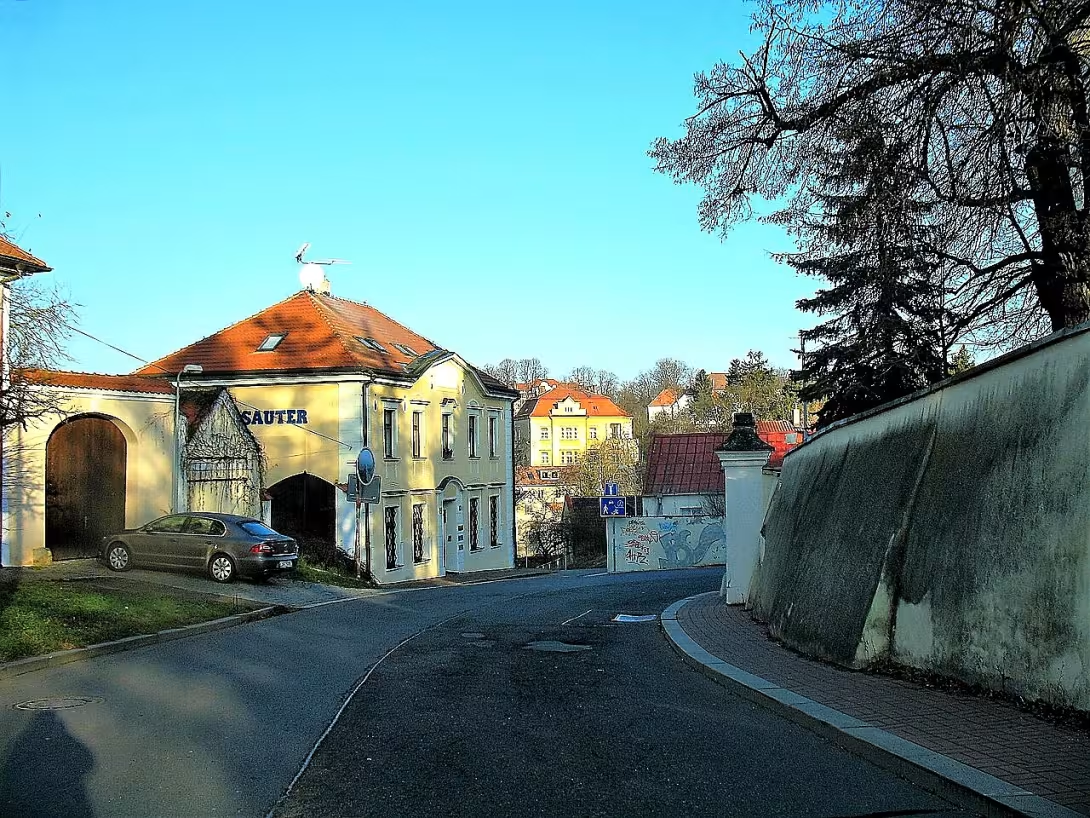
Staré Bohnice forms a village monument zone in Prague 8 and represents the historical core of the original village. This area, the roots of which date back to the 12th century, is an important example of the old agricultural development of the Prague countryside. The Main City of Prague Decree of November 1, 1993 provides commemorative protection.
The settlement of the area is connected to the middle of the 12th century, when there was an important trade route from northern Bohemia to Prague. Authentic written by the Vyšehrad Probost Gervasius confirms that on 30 May 1158, the Bishop of Prague Daniel put the remains of the saints in the altar stone of St. Peter and Paul's church as evidence of his consecration. The names of King Vladislav and Queen Judith are attached to this document.
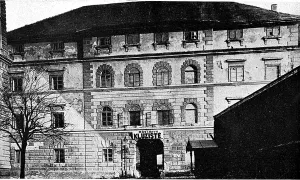
The dominant of the zone is the church of St. Peter and Paul. It underwent Baroque reconstruction in the first half of the 18th century and other modifications at the turn of the 18th and 19th centuries. On the other hand, there is a Baroque rectory from 1738. The estate of the Vrany family is a significant representative of the 18th century folk Baroque. The area includes a residential building, a gate, fenced walls, a barn and an outhouse with a hoarder, whose shield is listed in 1777. Another element of the building is Kolping's house, which in the 19th century served as a general school for children from Bohunice and surrounding settlements such as Suchdol, Baba, Sedlec and Troja.
The Vrány family's estate was linked to important figures of the village. Antonín Vraný worked as a speedster in the first half of the 19th century, while Karel Vraný has been Mayor of Bohunice since 1900.
The monument zone is situated on the right bank of Vltava at an altitude of 240 to 270 metres. Its south-center consists of a crossroads of the streets of Bohunice and the Constitutional, from which the building stretches north to the valley of Bohunice. It includes the western part of Bodnice Street, a village with a park and a church with a former cemetery. From the hospice Strasbourg, the installation continues to stretch west to the natural park Drahana-Troja.
The village of Bohnice became part of Prague in 1922. Today the Vrany farm serves as a community centre operated by the Bohunice Association live. You can reach Old Božnice by bus line 236. Visitors can use a blue marked tourist route, which leads from the crossroads of the streets of Bohemian and Constitutional through the monument zone and the Bohemian Valley to the Vltava near the stop of the Castle.
Staré Bohnice retains the authentic atmosphere of Prague's countryside and represents valuable testimonies of medieval settlement. Visiting this zone offers a view of the history of agricultural architecture right in the heart of the metropolis.
Historical milestones
- 1158
- Insert relics into the altar stone and document creation
- 1777
- This year's number on the Vrany estate
- 1922
- Classification of Bohunice in Prague
- 1993
- Provisions for the conservation of the zone
Architectural development
The settlement dates back to the 12th century. The church underwent Baroque reconstruction in the 18th century. The dominant style is the folk baroque, whose homestead is the Vrany family.
Historical events
In 1158 the church was consecrated and relics were inserted into the altar stone. In 1922 the village was incorporated into Prague. In 1993 the conservation of the zone was established.
Points of interest
- The roots of the area date back to the 12th century, when there was an important trade path from northern Bohemia to Prague. - The document from 1158 confirms the sanctification of St. Peter and Paul's church and gives the names of King Vladislav and Queen Judith. - The Vrany family estate represents the folk Baroque of the 18th century and its shouchar is 1777. - The Kolping House served in the 19th century as a general school for children from Bohunice and surrounding settlements. - The village of Bohnice became part of Prague in 1922.
Guide
Show guide text
This text was created by artificial intelligence and has not been editorially reviewed. It may contain inaccuracies.
Welcome to the Old Gods. Stop for a moment, take a breath and look around you. You are standing right where time has stopped and where you can feel the real atmosphere of the old Prague countryside. In front of you is a village monument zone, which is now a rare jewel within a large metropolis. Feel the peace and quiet that still persists here in the valley of the Bothnic creek. What you see before you is not just a group of old houses, but a living proof of what the agricultural background of Prague looked like centuries ago. The core of this area is a historical development that resembles the old days when the rhythm of the day determined work on the fields and the bell of the church bell.
Now let's go back deep into the past together to understand why this place is so special. The roots of Bohunice go back to the twelfth century. Imagine that one of the most important trade routes that connected North Bohemia to Prague was once through here. This journey was not only a road for goods and buyers, but it was an artery that was flowing through news, news and cultural influences. Thanks to this strategic position, a settlement developed here, which gradually gained meaning. The key moment in the history of this place is the year one hundred and fifty-eight. It is this year that a rare document comes from which it confirms the sanctification of St. Peter and Paul's Church. This text mentions the names of the prominent personalities of the time, namely King Vladislav and Queen Judith. It is fascinating to think that, almost nine centuries ago, the highest rulers of that country were there.
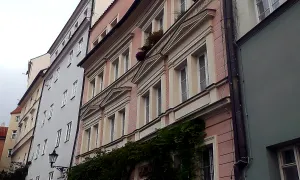
Now pay attention to the architecture surrounding you. See the facade of the surrounding buildings and see the overall character of the building. Staré Bohnice is an example of the traditional agricultural arrangement. Notice how houses form a harmonious whole around the historical embankment. The dominance of space is the church of St. Peter and Paul, who stands here as a silent witness to all the events that took place in the valley. There's a very interesting detail within the church that you may not know about. In the year one hundred and fifty-eight relics were inserted into the altar stone, which made this place the spiritual center of the entire area in the Middle Ages.
Let us now move on to another important point, which is the residence of the Vrana family. Look at her shapes and details. This estate is a wonderful example of the so-called 18th-century folk baroque. People's baroque is not only an architectural style, it is an expression of ambition and taste of the then cottages and peasants who inspired themselves by the magnificent buildings of cities and castles but transformed them into their own, simpler and more attractive style. Notice the pride of this estate. If you suffer from details, you will find on it a year of seven hundred seventy-seven. This year, it tells us exactly when the hoarder was finished and how important an element of the farm was the grain warehouse for the Vrana family. With this place are the names Antonín Vraný and Karl Vraný, who helped to keep this farm in such good condition that we can admire it today.
In addition to the Vrány family, memories of this place are linked to other names such as Daniel, Gervasi or the aforementioned King Vladislav. Each of these names represents a different layer of history. From the early Middle Ages, when the first stone buildings were founded here, through the Baroque blossom of rural settlements, to modern times. It's interesting to see how the Gods changed. For a long time they worked as a separate village, only after they were officially assigned to Prague in the year one thousand nine hundred twenty-two. But even then they managed to maintain their unique face and were not absorbed by urban development. In order for this unique atmosphere not to disappear, in the year one thousand nine hundred ninety-three strict conservation of the entire zone was established. That way, we can stand here today and feel like we're back in time.
You may now be interested in one more mysterious aspect of this place. Imagine all the people who have walked the same paths you've walked for thousands of years. Traders from northern Bohemia who headed here to Prague, royal escorts, local peasants and craftsmen. It all happened right here in this quiet valley. The mystery remains many small stories of the people who lived in these houses, but their clues are precisely the details in the stone and in the form of the structures you see around you. Every threshold, every wall and every inch of the way in this zone tells its own story about hard work, faith and bond to the ground.
Now that you know the basic history and meaning of this place, I suggest you continue to explore at a slow pace. Let the sounds of the stream guide you and look at the old buildings. Take a look around, stop by the church and look at the details of the Vrany estate again. Try to imagine what life was like in the eighteenth century, when the hubris was a novelty and the surrounding fields fed the city. Staré Bohnice is not just an open-air museum, it is a vivid memory of the Prague countryside, which has almost disappeared elsewhere.
Thank you for accompanying me on this short journey through history. I hope you've found time to think and that the atmosphere of this valley has caught your eye. Now the word is yours. Walk through the monument zone, feel its peace and enjoy the beauty of the folk baroque and the silence of the old church. I wish you a pleasant ongoing tour and a beautiful day spent in the heart of the Old Bohemian. Goodbye.
Tips for visitors
The best time to visit is the late afternoon, when the sun lights up baroque goods and a historic light. Soft light in this period creates ideal conditions to capture the authentic atmosphere of the old village.
The location is available both by car and public transport. Use the traffic search engine to plan your trip to provide up-to-date departure information. Parking in the vicinity of historic buildings is possible, but we recommend looking for reserved places.
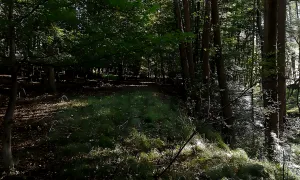
For comfortable movement in the valley of the Bothnike Brook take with you comfortable shoes and possible clothes in case of weather change. For families with children, exploring surrounding nature in the valley is a very interesting and undemanding way to spend time.
If you are looking for the best places to photograph, focus on St. Peter and Paul's church or baroque property. After a tour of the historical zone, you can also visit the surrounding natural attractions, such as the Drahana-Troja Nature Park, Bohemian Valley or Vltava.
Businesses nearby
Do you run a restaurant, accommodation, shop, museum, rental, wellness or other visitor service near this monument? Show yourself directly to the people heading to it — this is how they will see you in the app and on the web:
Events nearby

Zdroj akcí: otevřená data měst a obcí ČR (Národní katalog otevřených dat) a kalendář akcí Národního památkového ústavu.
Nearby
Přírodní park Drahaň-Troja, Bohnické údolí a Vltava.
Accommodation nearby
Trips and activities nearby
Guided tours, tickets and activities nearby from GetYourGuide
Affiliate link: if you buy from the partner, we may receive a commission. The price for you does not change.
Search tours and activities →Themed route
1. Vltava, a river, offers a pleasant walk along the water. It's a great place to start a trip. 2. Natural park Drahana- Troja, a natural area, provides beautiful routes in a green environment. You can observe local vegetation here. 3. The Bohemian Valley, the natural body, attracts the way through the wild nature. This part is ideal for quiet lovers. 4. Staré Bohnice, the destination of the trip, represents the conclusion of your route. Here you can finish your trip.
Seasonal recommendations
Spring in the Old Bohemian Mountains brings flourishing nature and soft light conditions, when trees and grass are gaining on color and the atmosphere is calm and refreshing. Practical advice: it is advisable to wear layered clothes, count on possible rain and the best time to visit is in the morning when the crowds are smaller and nature fully awakened.
The summer months in Old Bohemia are characterized by intense sunlight and dense greenery, which provides shade, but the atmosphere can be overwhelmed by visitors, especially on weekends. Practical advice: best to come early in the morning, protect your eyes and head against the sun, wear light clothes and plenty of water. In the afternoon it may be warmer and the traffic may be higher.
Autumn days in the Old Bohemia bring an altered colour range of leaves and slowly colder air, light is soft and creates pleasant conditions for walks. The atmosphere is thoughtful and calm. Practical advice: it is advisable to dress in layers to adapt to temperature change, and to use the afternoon to visit when light is still good, but crowds less than in summer. The weather can be variable, so packing an umbrella is wise.
Winter in the Old Bodybones is recognizable by the low sun, bare trees and quiet atmosphere, when nature rests, an iceberg can occur and roads require caution. Practical advice: warm clothes, gloves and scarf are necessary, visiting time can be shortened so it is good to check it in advance. The best time for a tour is noon, when the light is strongest and the roads are safer. The crowds are minimal, allowing for a peaceful experience.
Visualizations and artistic views

The visualisations are generated by artificial intelligence and serve as inspiration.
Photos from the area
Real photos taken near the monument


Zdroj a licence jsou uvedeny u každého snímku.
Tips from visitors
No tips yet. Be the first!
Log in and add your tip.
Sources and literature
Photos: Marie Čcheidzeová / CC BY-SA 4.0 — Wikimedia Commons. The author and licence also appear when you hover over the image.
Faktickým podkladem tohoto textu byl článek na Wikipedii, jehož autory jsou přispěvatelé Wikipedie. Článek je dostupný pod licencí CC BY-SA 4.0.
Location on the map
Příběhy a pověsti
Legendy, pověsti a příběhy spjaté s touto památkou
Fotografie návštěvníků
Zatím žádné fotografie. Buďte první, kdo přidá fotografii z návštěvy!
Log in a přidejte svou fotografii nebo hodnoťte.
Za ověřenou návštěvu v aplikaci získáte víc bodů — poznáme podle GPS, že jste na místě.
Reviews and comments