



Steinkopfův mlýn Water mill
Objekt se nedochoval — na místě dnes nestojí. Následující text popisuje jeho historii, ne současnou návštěvu.
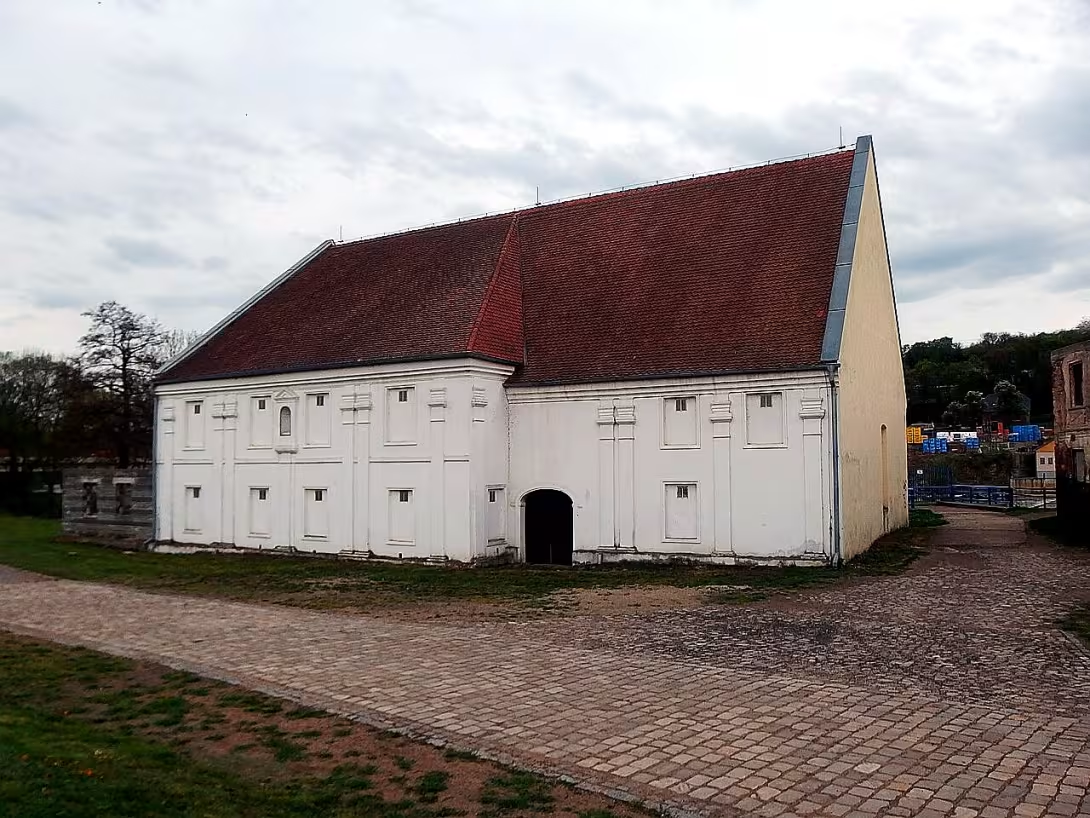
Steinkopfův mlýn, located in the village Kadaň on the river Ohře, is a protected historical water mill and cultural monument of the Czech Republic. This object has roots dating back to the seventeenth century, although it underwent several reconstructions, its Renaissance character remained evident in the architecture of the facade. The mill stands on the river Ohře between the ride and the bridge at the former hospital, which gives it a unique place in the city space.
The history of the mill dates back to 1654, when it was recorded in the framework of the IRS. The document indicates that it had already served as a key facility for the local population. In 1811 the fire of the suburbs probably hit the mill as well, which led to its classical adjustment. Other significant changes occurred in 1904 when the residential tract was rebuilt and the facade changed under the guidance of Josef Peter. In the years 1907 and 1926, the turbine was installed and the drive was sealed, which modernised its operational capabilities.
Architecturally, the mill is a Renaissance patrols with a saddle roof. His facade is divided by the high order of Tuscan Pilastres and a simple cordon ledge, highlighting its historical roots. After the fire in 1811, a classical adjustment was made which added a new dimension to its appearance. In 1904 another reconstruction of the residential tract and change of facade under the direction of Josef Peter took place. The last significant reconstruction was completed in 1931 according to the design of architect A. Sturma.
The mill had different owners and administrators who influenced his fate. In the years 1907 and 1926, the turbine was set up and the drive was sealed, which shows the continued adaptation of the mill to more modern technologies. The mill was originally part of the mill in 1930, but the saw disappeared before that year. At that time, Francis' 60-horsepower turbine was used, highlighting its technical sophisticated.
Key events in the history of the mill include a suburban fire in 1811, which is likely to have hit the building itself. Another important change was the installation of the turbine and the bridging of the drive between 1907 and 1926. In the 1980's, the mill burned down again and was partially demolished, indicating its constant transformation over the years.
Today Steinkopfův mlýn is a protected cultural monument and is worth visiting for its historical value and architectural features. Its location on the Ohře River between the ride and the bridge at the former hospital adds a unique character to this monument. Visiting the mill means not only exploring its history, but also appreciating its importance as part of the local cultural heritage.
Steinkopfův mlýn is a reminder of rich history and technical progress. Its adaptation to modern needs and the preservation of Renaissance elements makes it an important cultural monument worth discovering. Visiting this mill is an opportunity to appreciate not only its architectural beauty, but also understand the history of local industry and technology.
Historical milestones
- 1654
- Filing of the mill in the framework of the IRS.
- 1811
- A suburban fire that probably hit the mill.
- 1904
- Rebuilding the residential tract and changing the facade under the direction of Josef Peter.
- 1931
- Rebuilding the residential part according to the design of architect A. Sturma.
Architectural development
The object shows Renaissance elements with facade broken down by Tuscan Pilasters. After the fire in 1811, the classicist treatment took place and the residential tract was rebuilt in 1904. The last significant reconstruction of the residential part took place in 1931 according to the design of architect Sturm.
Historical events
In 1811, the mill was probably hit by a suburban fire. Between 1907 and 1926, the turbine was installed and the drive was sealed. In the 1980s, the building burned down again and was partially demolished.
Points of interest
- Steinkopfův mlýn is a protected historical water mill and cultural monument of the Czech Republic.
- The mill stands on the Ohre River between the ride and the bridge at the former hospital, which gives it a unique location in urban space.
- The suburban fire in 1811 probably hit the mill as well, which led to its classicism.
- In the years 1907 and 1926, the turbine was installed and the drive was sealed, which modernised its operational capabilities.
The mill had various owners and administrators who influenced his fate.
Guide
Show guide text
This text was created by artificial intelligence and has not been editorially reviewed. It may contain inaccuracies.
Welcome to Kadani. You're standing in front of one of the most important historical points in this city - the Steinkopf Mill. Before we go into his history, let yourself stand for a moment and perceive the surroundings. Look at the river of the Ohre that flows right in front of you. Feel the constant movement of water, the sound that's been going on here for centuries. The mill is located in a truly exceptional place, with an unrepeatable atmosphere. It is located in a unique section between the calm surface of the lake and the nearby bridge at the former hospital. This location creates a strange, almost closed world in urban space, where nature meets history in every detail. Feel the harmony between running water and the solid architecture of the building, which stands here as a silent witness to many events.
But in order to really understand what you're seeing right now, we need to go back to the past with you. Steinkopfův mlýn is not just an ordinary building but a living document of history. Its roots go much further than it might seem. The first clear evidence of its existence can be found in the seventeenth century. In particular, the mill is documented as part of the so-called IRS, which was the inventory of assets at the time, which today provides us with incredibly accurate information about what the economy at the time looked like and what the individual objects played in it. This means that by the year one thousand six hundred fifty-four this place was already firmly anchored in the history of the region. Imagine the landscape at that time, the work of people who were bound to the rhythm of the river, and the importance this water mill had for the whole community.
Now pay attention to the construction itself and its appearance. Although the mill has been remodeled many times over the centuries to meet new needs, its face still tells the story of its original form. If you look at the facade now, see if you can find clues of the past in its details. Although the building has undergone many interventions, its Renaissance character remains apparent in the architecture of the facade. It's fascinating how different epochs could connect within one building. But the history of this place has not always been about a quiet bloom. We have to realize that this object had to face great trials. In the year one thousand eight hundred eleven there was a great fire in the suburbs, which probably hit this mill too. Such events often led to the necessary reconstructions and changes in the form of buildings, which in this case probably affected his appearance at the time.
Over time, however, the mill constantly developed and adapted to modern times. Over the centuries, there have been major architectural changes that have shaped what you are now observing. In the year one thousand eight hundred and four, there was a significant rebuilding of the residential tract. At that time, the facade was changed under the guidance of Josef Peter. This work was crucial for how the building acts as a living space. Another important step in the history of architecture of this place came only at the beginning of the twentieth century. In the year one thousand nine trăm thirty, the residential part was rebuilt according to the design of architect A. Sturma. Thanks to these different hands that touched this building, Steinkopfův mlýn is today a fascinating mix of different styles and periods. Every layer of facade, every detail of the residential tract is the result of the work of these men and their efforts to keep the mill functional and aesthetically interesting for every generation to come.
When you look at this complex, you might think that there was a much more intense activity in the past than you can see today. Steinkopfův mlýn wasn't just a mill. Part of this historical unit was in the past also saw. Imagine the noise, the constant movement of wood and the tremendous effort of the people who worked here. This saw was an important part of the local economy, but its time is running out. It disappeared a year ago a thousand nine trăm thirty, which changed the profile of this place and the mill became a more peaceful place than it was at the time of its greatest work activity.
It is important to stress that what you are standing in front of is not just a historical building. Steinkopfův mlýn is protected as a real-estate cultural monument of the Czech Republic. This gives him a special weight and it means that his existence is an important reference for all of us to our history and how our environment developed. It's one of those pillars of history that reminds us of the continuity of life in this city.
The interesting thing that might interest you is the constant transformation that this object has undergone. From the seventeenth century to the beginning of the twentieth century, the mill was constantly adapting. Every fire, every need for a new living space, or every change in water processing technology has led to the building gaining new features. And yet, despite all the reconstructions, designs of architects like Josef Peter or A. Sturm, you can still feel the original, ancient soul in the facade architecture. It's like a building has several layers of memory that intertwine.
I hope this short tour has helped you better understand the meaning and beauty of this place. Steinkopfův mlýn is more than just a building made of stone and wood; It's a story about resilience, the work of people and the constant movement of time, which is just as relentless as the flow of the Ohre River. Let yourself stop for a while, feel the atmosphere of this unique place between the lake and the bridge and enjoy the beauty of the historic Kadani. I wish you a pleasant further walk around this beautiful city.
Businesses nearby
Do you run a restaurant, accommodation, shop, museum, rental, wellness or other visitor service near this monument? Show yourself directly to the people heading to it — this is how they will see you in the app and on the web:
Nearby
The mill stands on the river Ohre between the ride and the bridge at the former hospital in Kadani.
Visualizations and artistic views


The visualisations are generated by artificial intelligence and serve as inspiration.
Photos from the area
Real photos taken near the monument


Zdroj a licence jsou uvedeny u každého snímku.
Tips from visitors
No tips yet. Be the first!
Log in and add your tip.
Sources and literature
Photos: Palickap / CC BY-SA 4.0 — Wikimedia Commons. The author and licence also appear when you hover over the image.
Faktickým podkladem tohoto textu byl článek na Wikipedii, jehož autory jsou přispěvatelé Wikipedie. Článek je dostupný pod licencí CC BY-SA 4.0.
Location on the map
More monuments – Kadaň
Show all in the municipality
Příběhy a pověsti
Legendy, pověsti a příběhy spjaté s touto památkou

Fotografie návštěvníků
Zatím žádné fotografie. Buďte první, kdo přidá fotografii z návštěvy!
Log in a přidejte svou fotografii nebo hodnoťte.
Za ověřenou návštěvu v aplikaci získáte víc bodů — poznáme podle GPS, že jste na místě.
Reviews and comments