



Štola Starý Martin Mine
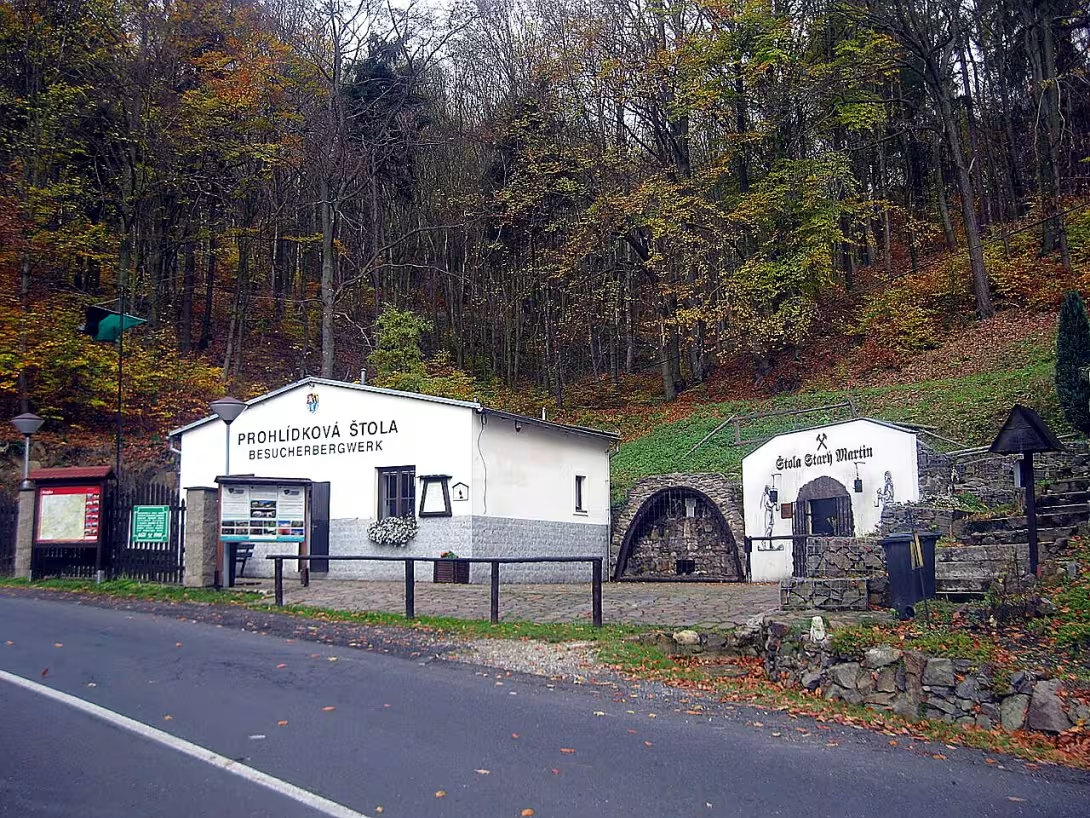
Štola Starý Martin is a historic mining monument located in the former upper town of Krupka, the Krušné Mountains, Teplice district. It is the remnants of the largest mining area in Steinknochen and belongs to the cultural monuments of the Czech Republic. Established in 1864, the mine was used to extract tin ores and now attracts visitors as a tour museum with a one-kilometer route. This monument is important not only by its history, but also by making one of the longest tin ore veins in Europe available.
The history of the stol dates back to the 14th century, when probably the mining of tin ores began in this place. The first written mention of the mining operation is contained in the Krupsky Mining Code of 1482, where there was talk of stamping and maintaining the Dürrholz's deep stol. This well was gradually expanded and reached approximately 1.5 kilometres in the mid-16th century. In 1864, the Chinese mines near Krupa were bought by the miners Schiller and Lewald, who began with the stamping of Old Martin's stones towards Luke's vein.
Architecturally, the bridge was gradually expanded and modernized. In the years 1916-1922 there was an increase in the profile of the stol and the introduction of rail transport, allowing for more efficient mining of rich parts of the Lukas vein. After the closure of the operation in 1922, the stale was lost, but during World War II it was re-engulfed and the conquest continued.
The property of the dimple has undergone several changes. After Schiller and Lewald the mine went to war operation Militarbergbau in Graupen in 1916, then in 1920 to the Škoda races in Pilsen and finally in 1922 to Hugo Mautner. The mining of tin in the mantelpiece was completed in the late 1950s, but in the 1960s, the new Martin exploration stalls began.
The key event in Old Martin's history was its declaration for cultural monument by the Ministry of Culture of the Czech Republic on 21 January 2015, with effect from 19 February of the same year. Today it is accessible as a tour museum, offering a view of historical mining tools and techniques. The permanent exposure to mining tools provides visitors with an overview of the mining methods used in the past.
At present, the bridge is accessible as a sightseeing and mining museum. The one-kilometre route allows visitors to discover the history and technique of mining tin ores in the Erzgebirge Mountains. The tour is not only an educational experience but also a reminder of the industrial development of the region during the 19th and early 20th centuries.
Štola Starý Martin is an important witness to the history of mining in the Czech Republic, offering a unique view of technical and cultural aspects of mineral mining. It is a place where everyone can learn more about the past and remember the importance of industrial development for the region. You can not only enjoy historical information but also appreciate efforts to preserve this important cultural heritage when visiting the Old Martin Stol.
Then and now
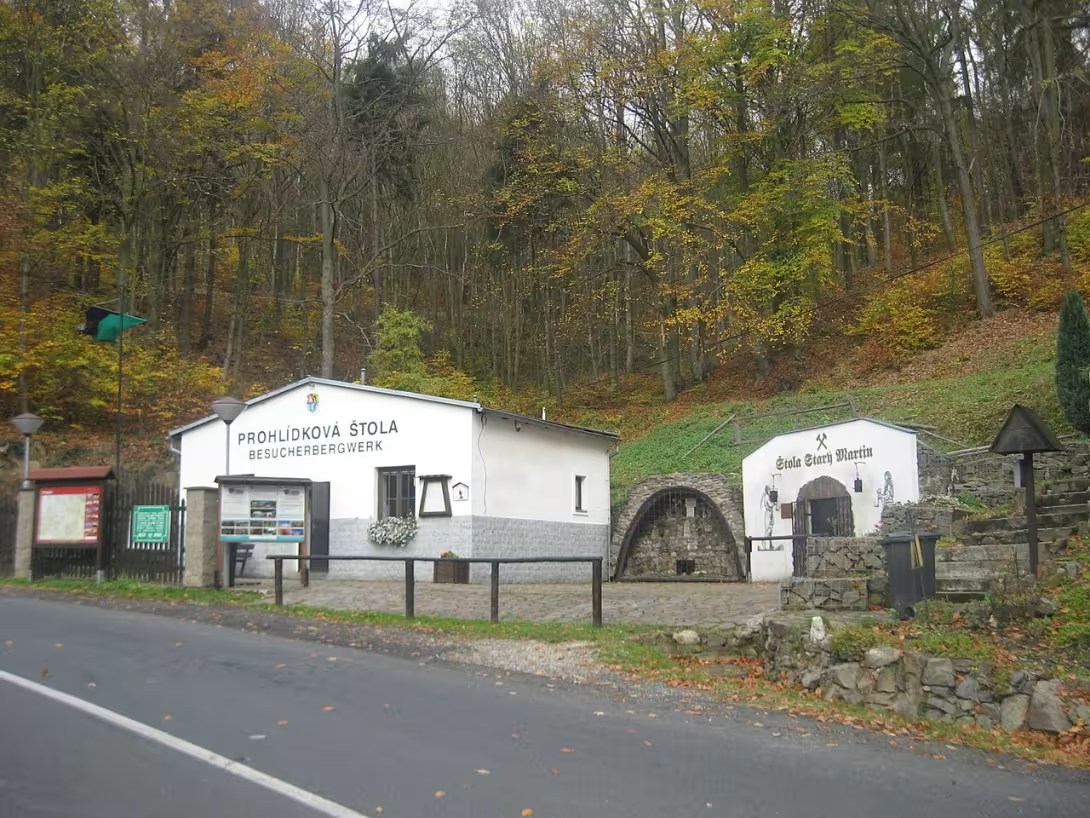
Drag the slider to compare how the landmark may have looked when it was built with the view today.
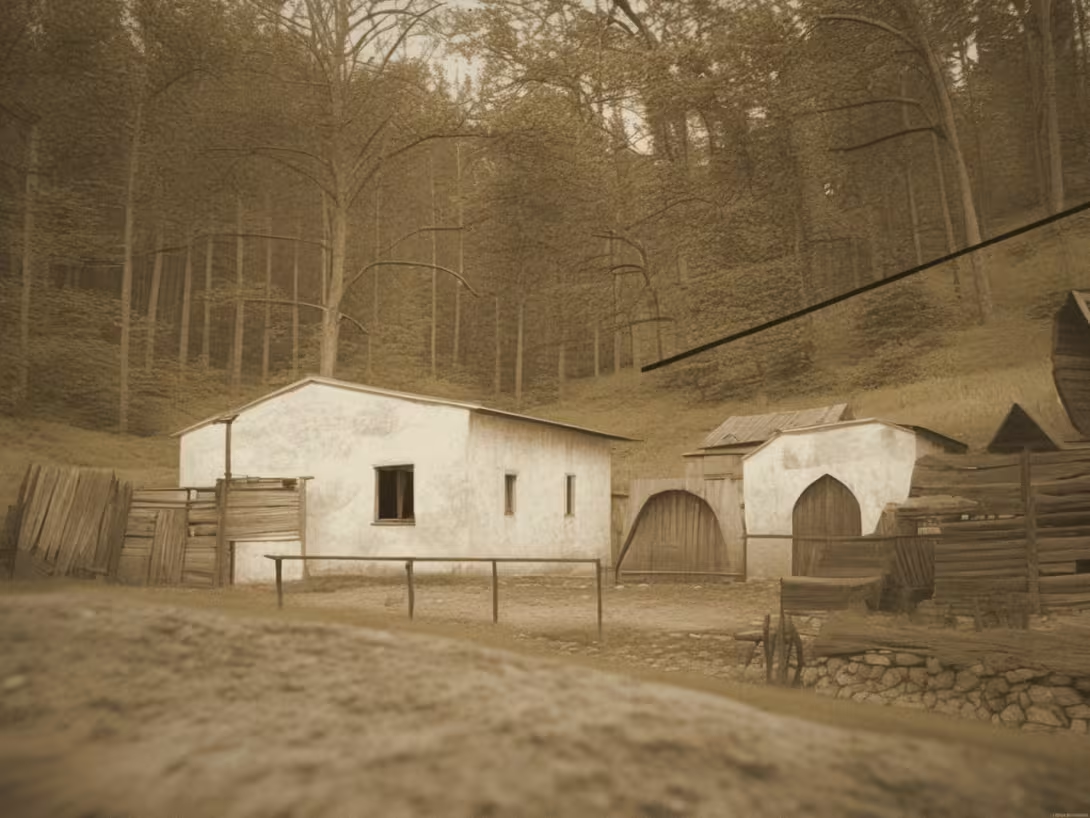
The historical appearance on the left is an AI-generated visualisation and serves as inspiration only.
Historical milestones
- 1482
- The first written mention of the embossing heritable stol Dürrholz in the Krupsky Upper Order.
- 2015
- Declaration for cultural monument by the Ministry of Culture of the Czech Republic.
Architectural development
Štola Starý Martin was gradually expanded and modernized, especially in 1916-1922, when it increased the profile of the bridge and the introduction of rail transport. After the closure of the operation in 1922 it faded, but was re-engulfed during World War II.
Historical events
- 1864
- Started Old Martin Mines Schiller and Lewald.
- 1916
- The mine went under war operation Militarbergbau in Graupen.
- 2015
- Declaration of mining work for cultural monument by the Ministry of Culture of the Czech Republic.
Owners
- 1864
- 1916
- 1920
- 1922
Points of interest
- Štola Starý Martin is the remnants of Steinknochen's largest mining area and is one of the cultural monuments of the Czech Republic. - The history of the stol dates back to the 14th century, the first written mention of mining operations is from 1482 in the Krupsky Upper Order. - In the years 1916-1922 the bridge was expanded and rail transport was introduced for more efficient mining. - After several changes in ownership, tin mining was completed in the 1950s, but in the 1960s, New Martin's exploration stalls began to build. - On 21 January 2015 the stol was declared a cultural monument by the Ministry of Culture of the Czech Republic, which ensures its protection and accessibility as a museum.
Guide
Show guide text
This text was created by artificial intelligence and has not been editorially reviewed. It may contain inaccuracies.
Welcome! You're standing right in front of a fascinating historical piece - Old Martin's Stable in Krupa. This architectural monument invites you to explore the depths that tell us about the rich past of this place. Look at its robust structure and prepare to travel to history.
Let's dive into the history of this monument. Štola Starý Martin is part of Steinknochen's largest mining region, which dates back to the 14th century. The first written mention of mining operations is the year 1482 in the Krupsky Upper Order. The mine was set up in 1864 to mine tin ore and become a key element of the region's economy.
Now pay attention to the architecture of the dimple. Take a look at her one-meter route, which will guide you through historic mining tools and technologies. Note the details of how these spatial structures were designed to withstand pressures from the depths of the earth.
Names like Schiller or Lewald appear among the key personalities associated with this monument. In the years 1916-1922, the mantle was expanded, reflecting its importance and adaptability at different times of history.
The interesting thing about this monument is that in 2015 the stol was declared a cultural monument by the Ministry of Culture of the Czech Republic. This award highlights its historical and cultural value.
Now that you've become somewhat familiar with this place, we're going to invite you to further explore the mantelpiece. Every step in this ancient structure offers new knowledge and opportunities to amaze the human effort that has taken place here. We hope your visit was illuminating and inspiring for you.
Thank you for your attention to this historic episode. May you enjoy your next trip to our beautiful world!
Tips for visitors
The best time to visit Old Martin Stola is in summer months when the weather is favourable and you can enjoy beautiful landscapes. Visit it also during the sunny day for the best light for photography.
Transport by public transport is also possible; use the route search for the current connection.
When visiting, bring suitable shoes as the path to the stalls may be irregular. Also remember to bring drinking water and a protective umbrella.
For photography are ideal places inside and outside the stalls where wonderful light effects increase the atmosphere. The best time for a photograph is at noon when the light is strongest.
In the vicinity of Old Martin Stola you can visit other historical mining monuments and natural elements. For families with children it is advisable to explore the area around Komáří horky, where there are several beautiful walkways.
Frequently asked questions
Can the monument be visited?
Some buildings of this kind are open for guided tours, others serve another purpose or are privately owned. We have not verified whether and when this monument is open – please ask the operator.
What are the opening hours and admission?
We have not verified the opening hours or admission. Current information is published by the operator.
Where is the monument?
Location: Krupka. The map on this page shows the exact spot.
Why is the monument protected?
It is listed in the Central List of Cultural Monuments of the Czech Republic as a cultural monument (register no. 1478399295).
Businesses nearby
Do you run a restaurant, accommodation, shop, museum, rental, wellness or other visitor service near this monument? Show yourself directly to the people heading to it — this is how they will see you in the app and on the web:
Nearby
Štola Starý Martin se nachází v Krušných horách, blízko vrcholových partií Komáří hůrky. V okolí jsou další historické důlní památky a přírodní prvky.
Accommodation nearby
Trips and activities nearby
Guided tours, tickets and activities nearby from GetYourGuide
Affiliate link: if you buy from the partner, we may receive a commission. The price for you does not change.
Search tours and activities →Themed route
Thematic cruise route: Historical mining monuments near Krupka
1.Štola Starý Martin (mine) Type: Mining monument Why is worth a visit: Štola Starý Martin is one of the oldest and best preserved mining blocks in the Erzgebirge Mountains. It offers an interesting view of the history of iron ore mining and has a rich history dating back to the 16th century.
2. Mineral monument of Komáří hořka Type: Mining monument Why is worth a visit: This site is known for its historic mines and stalls, which are part of an extensive mining system. You will visit the ancient mining techniques here and you can see the exhibition premises.
3. Natural Elements of the Ernest Mountains Type: Nature Why is worth a visit: The surrounding terrain offers beautiful natural elements such as forests and mountain valleys. It is an ideal place to relax and explore local flora and fauna in a quiet environment.
4. Historical road between mines Type: Historical route Why is worth a visit: This route combines various historical mining monuments and offers the opportunity to explore the region on walking paths. It is an ideal way to learn more about the past mining in the area.
5.Krupka Type: Local centre Why is it worth a visit: Krupka is a small town with rich history and cultural heritage. You visited here you can explore local architecture, shops and restaurants that offer an authentic view of life in the Erzgebirge Mountains.
This route allows you not only to discover the history of mining iron ore, but also to enjoy the beauty of nature and local culture.
Seasonal recommendations
Spring: In the spring season, Old Martin's stoll complex in Krupa is strangely attractive because of its lighting, when the sun's rays penetrate the depths of the mine and create unique light effects. Nature awakens from a freezing sleep, adding a sense of renewal and hope to the atmosphere. Visitors should use this time for short walks around mining buildings, because it is not yet too hot. Days become longer and offer more light, allowing long visits without the risk of unnecessary solar saturation. It is advisable to come in the early afternoon when the crowd has not gathered and you can enjoy a quiet tour.
Summer: Old Martin gets his full shine. During long days, the lighting in the lower space changes in a way that is best explored during the prehistoric hours when the temperature is still pleasant. In the main summer season, however, more visitors are gathered, so we recommend to arrive early in the morning or late in the afternoon to avoid long fronts. Hot clothes are suitable for lower parts, but on the surface you may need summer peas or parasol. Water in drinks and plenty of drinking fluids are key to ensuring comfort during the visit.
Autumn: Autumn brings the atmosphere of mild melancholy to Old Martin's castle complex when tree leaves begin to dye and fall. This time of year offers a quieter visit with fewer people on the tour, allowing a better examination of historical details. The sunny days are still warm and pleasant, but the evenings start to cool quickly, so it is advisable to wear more layers of clothing. The best time to visit is in the early afternoon when the shade of leafy trees helps keep the temperature pleasant.
Winter: In winter, Old Martin gains an atmosphere of mysticism and mystery. Tight passages of mines are illuminated by light, which is projected through ice shapes on the walls, creating unique visual effects. The mine is often visited during the winter months because of its calm and completely different character, so you avoid large crowds. It is necessary to come up with warmer clothes, including hat and gloves, because the temperature inside the mine is low. Visit the hill in the early afternoon or after lunch when the days start to shorten, but there is still enough light for a tour.
Visualizations and artistic views


The visualisations are generated by artificial intelligence and serve as inspiration.
Photos from the area
Real photos taken near the monument

Zdroj a licence jsou uvedeny u každého snímku.
Tips from visitors
No tips yet. Be the first!
Log in and add your tip.
Sources and literature
Photos: Gortyna / CC BY-SA 4.0 — Wikimedia Commons. The author and licence also appear when you hover over the image.
Faktickým podkladem tohoto textu byl článek na Wikipedii, jehož autory jsou přispěvatelé Wikipedie. Článek je dostupný pod licencí CC BY-SA 4.0.
Location on the map


Příběhy a pověsti
Legendy, pověsti a příběhy spjaté s touto památkou
Fotografie návštěvníků
Zatím žádné fotografie. Buďte první, kdo přidá fotografii z návštěvy!
Log in a přidejte svou fotografii nebo hodnoťte.
Za ověřenou návštěvu v aplikaci získáte víc bodů — poznáme podle GPS, že jste na místě.
Reviews and comments