



Studijní ústavy Building complex
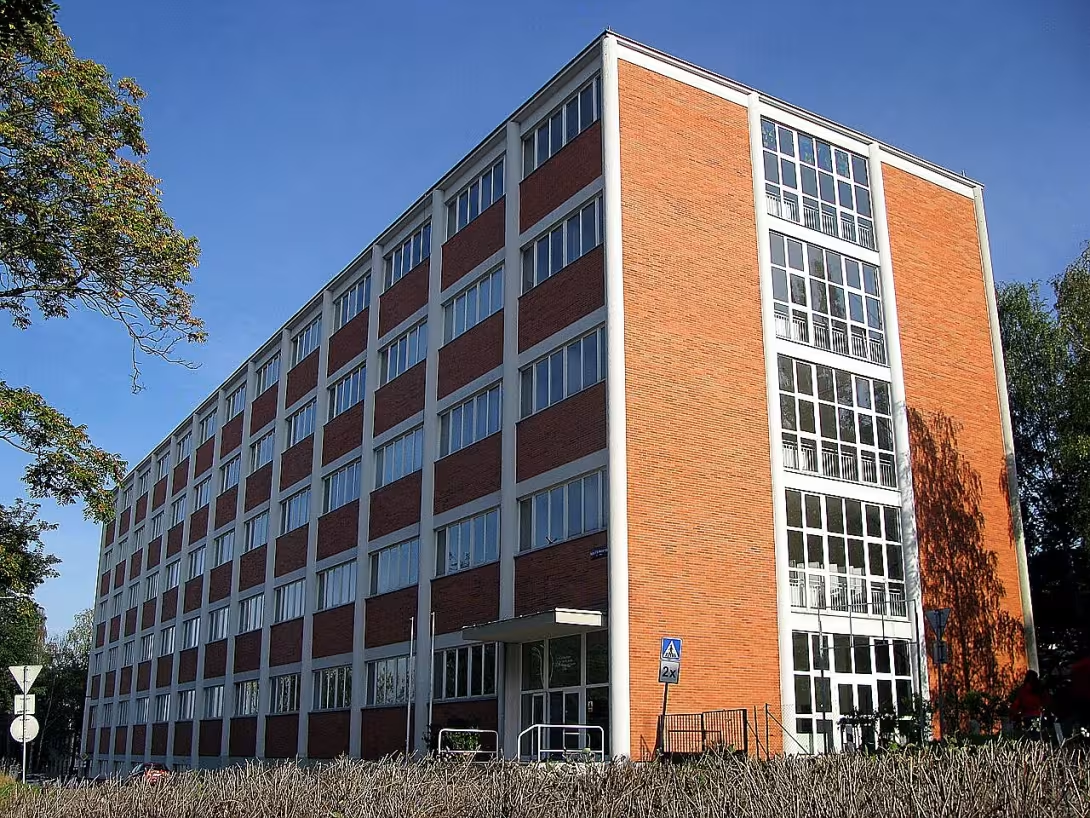
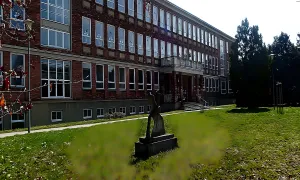
Studijní ústavy in Zlín, known as 1st and 2nd Institute of Study, are a pair of functionalist buildings in T. G. Masaryk Square. These objects were built in 1936 and 1938 according to the design of architect František Lydia Gahura as part of the attempt to establish a new educational and scientific research institution. The complex is part of the so-called Gahur prospectus, the key urban axis of the city.
The creation of the Study Institute was inspired by the initiative of Jan Antonín Bati, then owner of the Batya Group. In 1935 the implementation of the plan for the creation of an institution focused on technology and science began. František Lýdie Gahura, an architect with deep roots in Bata, was responsible for their design. His urban plans had not only created a functional space for education and research, but also aesthetically complete the already existing architectural structure Zlína. The plan included two other buildings for spiritual sciences and art that were not implemented.
The architecture of the Study Institute is characterised by functionalism with free structure. The buildings were built as part of a planned complex which was to include two other buildings for spiritual science and art. The construction is designed to match Gahura's urban plan, both with respect to aesthetics and functionality. The buildings are situated in the upper part of the later Gahurov prospectus around the Tomáš Bati Memorial and form part of the urban axis of the city.
The company Bata, which entered them on the list of real cultural monuments in 1997, became the property of the Study Institutions after their completion. After World War II, the buildings were gradually transferred to different purposes: the 1st Institute of Education served the needs of secondary education, while the 2nd Institute hosted the National Security Corps. In 1997, both buildings were officially recognised as cultural monuments.
Key events in the history of Study Institutions include the opening of the 1st Institute of Study in 1936 and the completion of the 2nd Institute of Study in 1938. During World War II, the First Institute was damaged, which led to the loss of part of its archive and library. After the war, buildings adapted to new needs, including educational institutions.
Today, the 1st Institute of Study serves as the seat of the Gymnasium and Language School with the right of state language examination Zlín, while the 2nd Institute of Study is based by the Zoning Department Zlín Police of the Czech Republic. Studijní ústavy is open to the public and is worth visiting not only because of its historical value, but also because of architectural properties that reflect innovative thinking of the 1930s.
Studijní ústavy in Zlín is a reminder of the ambitious planning and architectural arts that have become an integral part of the cultural heritage of the city. Their history and important roles in education and administration make them an interesting target for anyone interested in the architecture and history of Zlína. Visiting these monuments offers an opportunity to appreciate not only their aesthetic value, but also a deeper understanding of the history of the city and its development.
Historical milestones
- 1935
- Start of implementation of the plan to establish an educational and scientific research institution.
- 1936
- Opening of the 1st Institute of Study.
- 1938
- Completion of the Second Institute of Study.
- 1945
- After World War II, the buildings were transferred to various purposes, including secondary education and the National Security Corps.
- 1997
- Buildings recognised as cultural monuments and listed as real cultural monuments.
Architectural development
Studijní ústavy were built in 1936 and 1938 as part of a planned complex of buildings which was to include two other buildings for spiritual science and art. The architectural design is characterised by functionalism with free structure, which corresponds to the urban plan of František Lydia Gahura.
Historical events
- 1936
- Opening of the 1st Institute of Study
- 1938
- Completion of the 2nd Institute of Study
- 1997
- Registration on the list of real cultural monuments
Owners
- 1935
- 1997
Points of interest
- Studijní ústavy in Zlín are a pair of functionalist buildings built in 1936 and 1938 according to the design of architect František Lydie Gahura. - The creation of these buildings was inspired by the initiative of Jan Antonín Bati, then owner of the Bata Group. - After World War II, the buildings were transferred for various purposes: the 1st Institute of Study served the needs of secondary education, while the 2nd Institute hosted the National Security Corps. - In 1997 both buildings were officially recognised as cultural monuments and listed as real cultural monuments. - Today, the 1st Institute of Study serves as the seat of the Gymnasium and Language School with the right of state language examination Zlín, while the 2nd Institute of Study is based by the Zoning Department Zlín Police of the Czech Republic.
Guide
Show guide text
This text was created by artificial intelligence and has not been editorially reviewed. It may contain inaccuracies.
Welcome to this fascinating site of historical monuments in Zlín - Study institutes! You are facing a pair of functionalist buildings that have a unique architectural structure and a rich history. These buildings are located in T. G. Masaryk Square and are known as the 1st and 2nd Institute of Study.
Let's immerse ourselves in their creation and historical context. In 1935 he began to implement a plan to establish a new educational and scientific research institution. This ambitious project was inspired by Jan Antonín Bati, then owner of the Batya Group. František Lýdie Gahura, a respected architect, designed these buildings and were built as part of this plan between 1936 and 1938.
Look up at the facade of these buildings. Note their functional design, which is characteristic of Gahurov architectural style. Buildings have simple lines and use modern materials of the time, which creates harmonic symmetry. Note also the way in which space is organized - this is exactly the design that Gahura wanted to achieve.
Now let us pay attention to the key figures involved in this place. František Lýdie Gahura, the architect of this complex, was known for its innovative ideas and influence on modern Czech architecture. Jan Antonín Baťa played a key role in financing and supporting this project, showing its commitment to the development of the city of Zlín.
The interesting thing is that after World War II, the buildings were transferred for different purposes. They have now served secondary education and the National Security Corps. This shows the flexibility of these buildings, which could adapt to the various needs of the community.
Let's start with a tour of Gahur's prospectus, the key urban axis of the city. Note how Studijní ústavy harmonically intermingle with the surrounding environment and contribute to the overall character of T. G. Masaryk Square.
We recommend you explore other parts of Zlína to learn even more about its rich history and architecture. Thank you for your visit to the Institute of Study!
Tips for visitors
The best time to visit the study institutes in Zlín is in the spring or autumn period when nature is in full beauty and the sun illuminates the building with special light. This time of year offers ideal conditions for photography thanks to mild temperatures and beautiful colors.
For comfortable travel you can use buses or trams that are well connected to the surrounding locations.
When visiting the Study Institute, it is advisable to take a camera or mobile phone with you to capture architectural details. In addition, we recommend clothes suitable for comfort such as shoes and sun cap.
Photography of the Study Institute offers the best possibilities from T. G. Masaryk Square, especially at noon, when the light is ideal for capturing details of buildings. It is also recommended to visit the monument of Thomas Bati, which offers a beautiful perspective on the complex.
The Tomáš Bati Memorial can be visited in the vicinity of the Study Institutions, which is an ideal place to relax and see. It is advisable for families with children to visit boarding houses offering interesting architecture and history.
Frequently asked questions
Can the monument be visited?
Some buildings of this kind are open for guided tours, others serve another purpose or are privately owned. We have not verified whether and when this monument is open – please ask the operator.
What are the opening hours and admission?
We have not verified the opening hours or admission. Current information is published by the operator.
Where is the monument?
Location: Zlín, Zlínský kraj. The map on this page shows the exact spot.
Why is the monument protected?
It is listed in the Central List of Cultural Monuments of the Czech Republic as a cultural monument (register no. 1000162270).
Businesses nearby
Do you run a restaurant, accommodation, shop, museum, rental, wellness or other visitor service near this monument? Show yourself directly to the people heading to it — this is how they will see you in the app and on the web:
Nearby
Studijní ústavy jsou situovány na jižním okraji Zlína, po stranách Památníku Tomáše Bati. Komplex je součástí urbanistické osy města a sousedí s internátními budovami.
Accommodation nearby
Trips and activities nearby
Guided tours, tickets and activities nearby from GetYourGuide
Affiliate link: if you buy from the partner, we may receive a commission. The price for you does not change.
Search tours and activities →Themed route
Thematic cruise route in Zlín
1.Studijní ústavy - Type: Building complex - Why is it worth visiting: Studijní ústavy is a leading architectural work that reflects modernist principles and is part of the urban axis Zlína. Visit this place to understand the influence of Le Corbusier on Czech architecture.
2. Tomáš Bati Memorial - Type: Memorial - Why is it worth visiting: The monument is located near the Study Institute and dedicated to the memory of Thomas Bata, the founder of Bata. It's the perfect place to know the history of the Zlín industry.
3. Internal buildings - Type: Architectural Complex - Why is it worth a visit: These buildings are part of the overall architectural work of the Study Institute and represent an interesting view of the environment focused on students. They are ideal for learning the history of education in this region.
4. Tanks of Study Institute - Type: Architectural space - Why is it worth a visit: The tank is a key part of the complex where you can enjoy architectural details and the atmosphere of the place. It is ideal for relaxing and reflective moments in historically important environments.
5. Tower of Study Institutions - Type: Architectural structure - Why is it worth visiting: The tower offers unique views of the city of Zlín and surrounding landscape. This is an exceptional opportunity to understand architectural design and its integration into the urban environment.
This route offers a comprehensive view of history, architecture and educational traditions Zlína.
Seasonal recommendations
Spring: In the spring season Studijní ústavy in Zlín is turned into an attractive place where the atmosphere is full of new life forces. Solar rays illuminate the historical architecture of the complex in a special way, which gives the buildings a wonderful shine. Flowers and trees are beginning to bloom, turning the surrounding nature into a living palette of colors. Visitors should be dressed appropriately for mild weather - flying jacket and short gloves are the ideal choice. The best time to visit is in the early afternoon when the crowd can avoid.
Summer: Summer brings their fullest form to the study institutes in Zlín. The bright sun illuminates architecture in its full glory, but it can cause anxiety during a long stay outside. Visitors should dress in light materials and not forget the protective sunglasses and short gloves. Early arrival is recommended to avoid large crowds that are common in the main summer season.
Autumn: In autumn, Studijní ústavy offers a quieter atmosphere. The leaves of the trees turn into golden and red colors, which gives the surroundings a romantic look. Sunshine days are common, but evenings get cold fast, so visitors should be prepared for different weather. The layered clothing is ideal - a flying jacket and a warm shirt are suitable for this season. The best times for visiting are early afternoon hours when nature is in the most beautiful form and the crowd is not many.
Winter: In winter, Studijní ústavy is transformed into a place full of peace. Cold weather reduces traffic, allowing you to enjoy the complex in a more peaceful atmosphere. The sun rays illuminating buildings add magic and moonlight gives the surroundings a mysterious look. Visitors should dress in warm, insulating clothes - leather jackets, thermal gloves and shoes are necessary.
Visualizations and artistic views


The visualisations are generated by artificial intelligence and serve as inspiration.
Photos from the area
Real photos taken near the monument


Zdroj a licence jsou uvedeny u každého snímku.
Tips from visitors
No tips yet. Be the first!
Log in and add your tip.
Sources and literature
Faktickým podkladem tohoto textu byl článek na Wikipedii, jehož autory jsou přispěvatelé Wikipedie. Článek je dostupný pod licencí CC BY-SA 4.0.
Location on the map

Příběhy a pověsti
Legendy, pověsti a příběhy spjaté s touto památkou

Fotografie návštěvníků
Zatím žádné fotografie. Buďte první, kdo přidá fotografii z návštěvy!
Log in a přidejte svou fotografii nebo hodnoťte.
Za ověřenou návštěvu v aplikaci získáte víc bodů — poznáme podle GPS, že jste na místě.
Reviews and comments