



Typový rodinný dům U Lomu 632 House
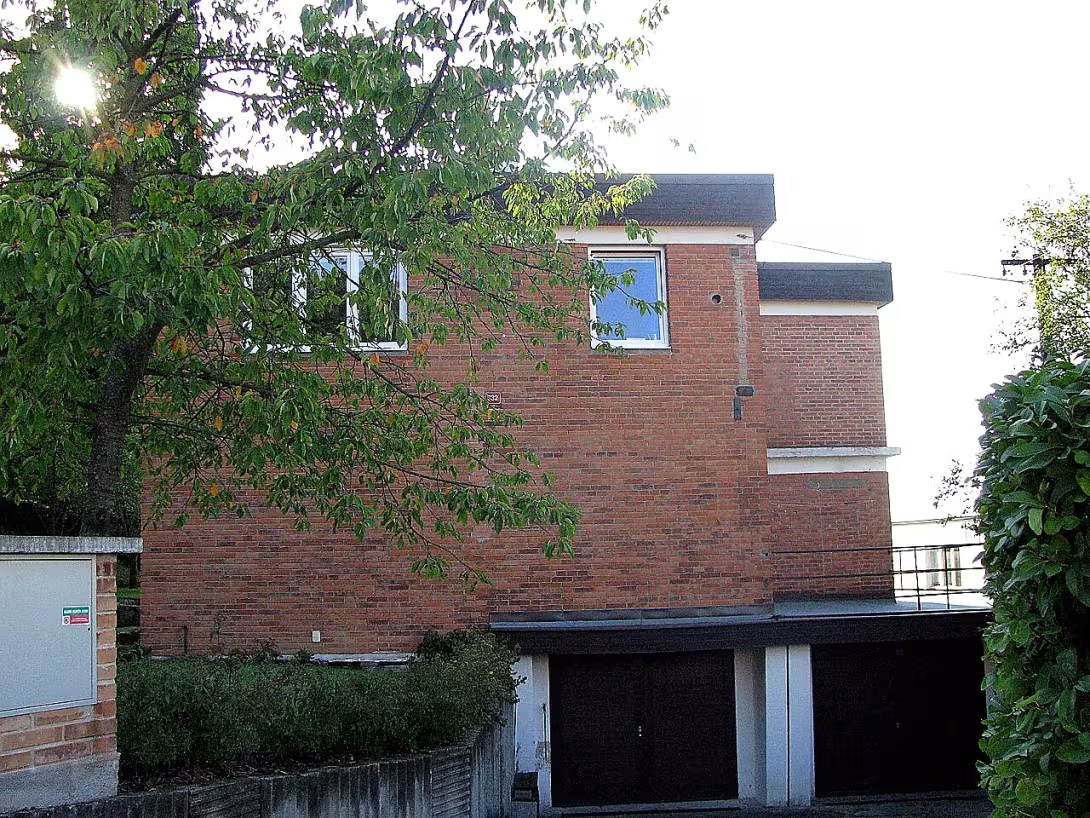
Typový rodinný dům U Lomu 632 is a notable example of functionalist architecture located in Zlín, Czech Republic. Situated at ulice U Lomu with the address number 632, this house forms part of the model colony U Lomu. Developed following an international housing competition initiated by the Baťa company in early 1935, it aimed to design affordable and well-designed living spaces for workers. This reflects broader social and industrial trends during Europe's interwar period.
The origins of Typový rodinný dům U Lomu 632 are rooted in the post-World War I era when Baťa's shoe manufacturing enterprise experienced rapid growth, leading to an increased workforce. In response, Baťa initiated the construction of standardized housing units during the interwar period. The international housing competition launched by Baťa in 1935 aimed at designing new types of family homes that were both affordable and well-designed. This led to the creation of the U Lomu colony, which included Typový rodinný dům U Lomu 632 as one of its components.
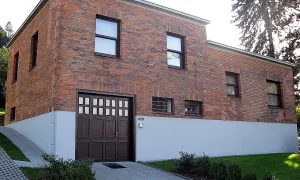
The architecture reflects functionalist principles, focusing on practicality and affordability. Designed by Baťa's construction department, the house is part of a larger effort to provide efficient living spaces for workers. The building features standardized elements typical of the era, such as reed brickwork and flat roofs, common in the U Lomu colony. It has a total usable area of 70 square meters, with a ground floor layout that includes a veranda, living room, workroom, kitchen, bathroom, and toilet. An upper floor accommodates three bedrooms, while a terrace is accessible from above the veranda.
Throughout its history, Typový rodinný dům U Lomu 632 remained under Baťa's construction department until it was recognized as part of cultural heritage in 1983. This recognition underscores its significance as an important development in modern architecture. Despite its innovative design, none of the competition's designs were used for mass production, highlighting the experimental nature of this architectural endeavor.
The U Lomu colony itself is noteworthy as one of the first examples of functionalist architecture in Czechoslovakia. The international housing competition that led to its creation was part of a broader trend during the interwar period towards modernist movements and social reform. This context emphasizes the historical significance of Typový rodinný dům U Lomu 632 as an embodiment of these progressive architectural ideals.
Today, Typový rodinný dům U Lomu 632 stands as a cultural heritage site, listed under the registry number 34823/7-7062. It is recognized by the State Institute for Monument Protection as a significant development in modern architecture. Visitors to Zlín can explore this historical monument and gain insight into the innovative architectural practices of the early 20th century. The house's preservation allows us to appreciate its role in shaping living conditions during a transformative period in European history, making it an intriguing destination for those interested in architecture and social history.
Then and now
Drag the slider to compare how the landmark may have looked when it was built with the view today.
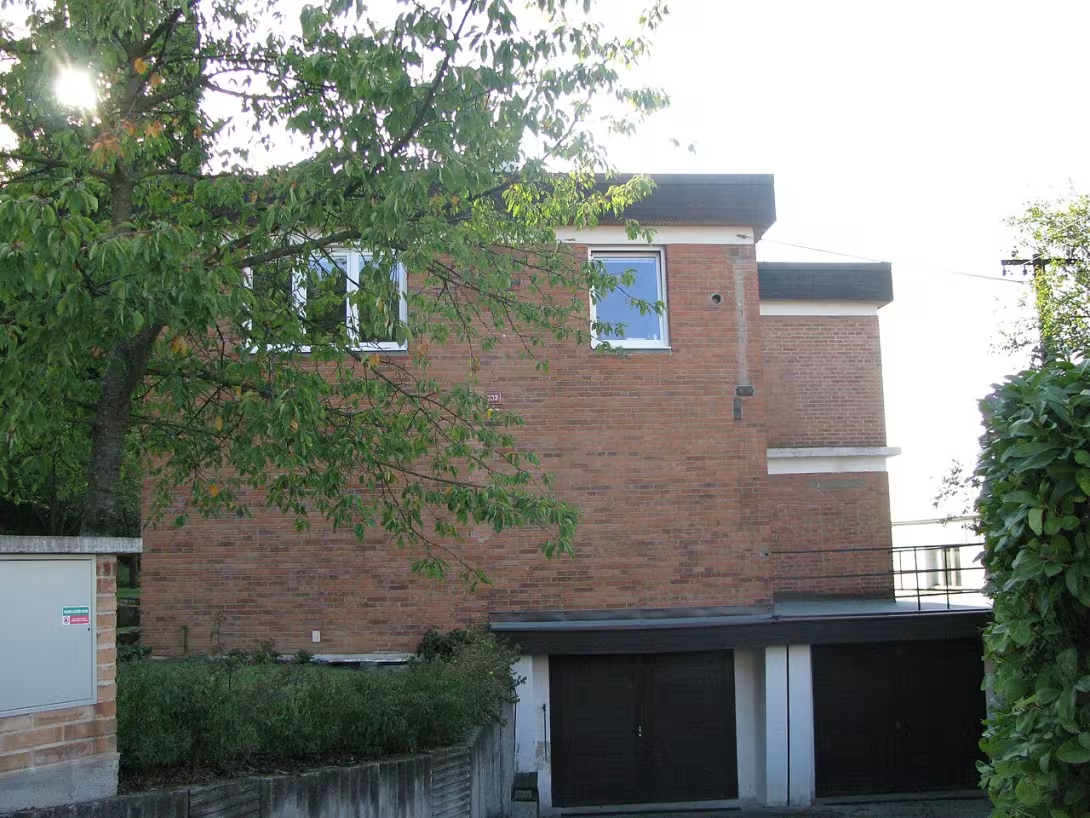
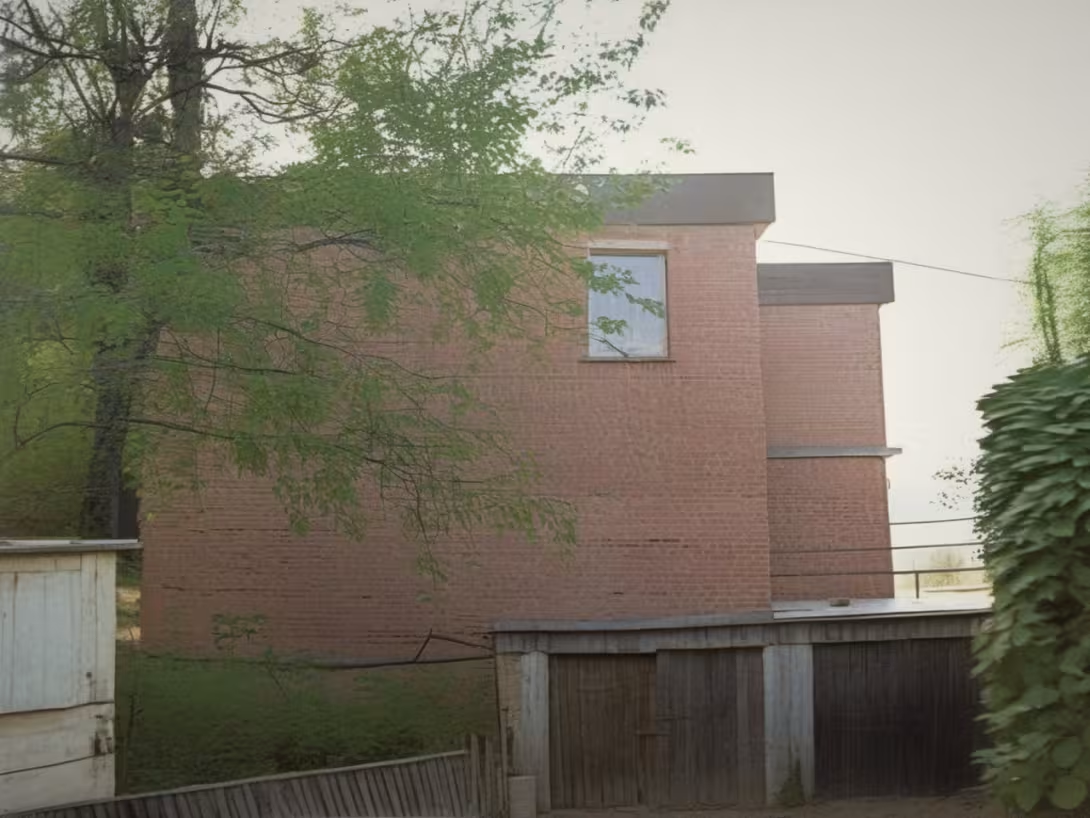
The historical appearance on the left is an AI-generated visualisation and serves as inspiration only.
Historical milestones
- 1935
- The house was built as part of Baťa's international housing competition.
- 1983
- The building was listed as a cultural heritage site.
Architectural development
Typový rodinný dům U Lomu 632 was designed by Baťa's construction department, reflecting functionalist principles with a focus on practicality and affordability. The house is part of the U Lomu colony, which included several other designs from the competition. It features standardized elements typical of the era, aimed at providing efficient living spaces for workers.
Historical events
In early 1935, Baťa company launched an international housing competition to design a new type of family home, leading to the creation of the U Lomu colony.
The house was built in June 1935 as part of this initiative and later became part of the cultural heritage list in 1983.
Points of interest
- Although the international housing competition initiated by Baťa in 1935 led to innovative designs for functionalist homes, none of these were ultimately used for mass production. This highlights how Typový rodinný dům U Lomu 632 was part of an experimental phase rather than a commercial rollout.
- The architecture of Typový rodinný dům U Lomu 632 reflects the broader trend of social reform during Europe's interwar period, emphasizing affordable and practical living spaces. This aligns with the modernist movement that sought to improve workers' quality of life through design.
- Despite its significance in architectural history, Typový rodinný dům U Lomu 632 remained under the control of Baťa’s construction department until it was recognized as cultural heritage in 1983. This delay underscores how industrial and architectural innovations were often ahead of their time in terms of public recognition.
- The use of reed brickwork and flat roofs in Typový rodinný dům U Lomu 632 is characteristic of the functionalist style, which prioritized efficiency and cost-effectiveness over ornamental design. These features are emblematic of the era's shift towards modernism in architecture.
- Located within the model colony U Lomu, Typový rodinný dům U Lomu 632 was part of one of the first examples of functionalist architecture in Czechoslovakia. This highlights its pioneering role in introducing new architectural ideals to the region during a period of significant social and industrial change.
Guide
This guide is narrated by a synthetic voice generated by artificial intelligence.
Show guide text
This text was created by artificial intelligence and has not been editorially reviewed. It may contain inaccuracies.
A typical family house at U Lomu number 632 belongs to a model colony of family homes on the southern edge of Zlín, beyond Gahurov Avenue. Unlike the neighboring buildings, it did not emerge from a competition. It was designed by the construction department of the Baťa company and was built in June 1935, at the same time as four award-winning competition entries.
After 1918, the Baťa shoe factory grew rapidly, and with it the number of employees. The company therefore built housing for them: standardized four-unit buildings on Letná, semi-detached houses on Zálešná and Podvesná, bachelor quarters and dormitories. By 1934, over two and a half thousand rental houses had been built, and according to company publications, seventy percent of workers lived there.
However, construction was monotonous. At the initiative of architect Vladimír Karfík, head of the architectural studio, the company announced an international competition at the beginning of 1935 for a new type of family house. They were looking for affordable and well-planned apartments including furniture, which would respect the usual Zlín construction methods. Zlín thus followed European model settlements like Weissenhof in Stuttgart, the New House colony in Brno, or the Baba settlement in Prague.
The jury included Jan Antonín Baťa, mayor Dominik Čipera, and leading architects, including František Lýdie Gahura, Bohuslav Fuchs, Pavel Janák, Dušan Jurkovič, and also Le Corbusier. There were 289 entries, most from Czechoslovakia. The jury awarded neither first nor second prize. The houses then had to be built very quickly so that on June 25, 1935, participants of the international housing congress could see them. In the end, no competition entry achieved series production.
The colony lies on the sloping terrain of Barabáš hill, in greenery near the forest edge, with views of the city. House number 632 stands on its upper edge, above the semi-detached house of Adolf Beneš and František Jech.
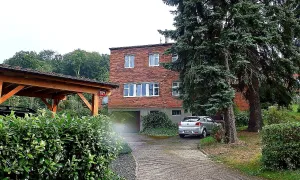
Very little is known about the house itself. It is a detached single-story house with a rectangular floor plan. Like most houses in the colony, it is built of exposed brick masonry and has a flat roof. It is partially built into a basement, and the living space was 70 square meters. On the ground floor there is a veranda, a living room, a study, and a kitchen with a bathroom and toilet. On the upper floor, three bedrooms were designed, and above the veranda there is an accessible terrace.
In 1983, the house, together with the other buildings of the colony, was registered as a cultural monument. Conservationists evaluate it as a significant historical document of modern architecture.
Tips for visitors
The best time to visit the Typový rodinný dům U Lomu 632 is during late spring or early autumn when the weather is pleasant, allowing you to comfortably explore both the interior and exterior of this functionalist-style house. These seasons offer mild temperatures and beautiful natural lighting, ideal for appreciating the architectural details. Additionally, visiting outside peak tourist season can provide a more tranquil experience.
It's advisable to check current routes and schedules in advance to plan your visit efficiently.
When visiting Typový rodinný dům U Lomu 632, consider bringing a camera or smartphone for photography, comfortable walking shoes, and perhaps a light jacket depending on the weather. The house offers unique architectural elements that are best captured with good lighting, so aim to photograph during daylight hours when natural light enhances the building's features.
For photography enthusiasts, the exterior of the house provides excellent opportunities to capture its functionalist design against the backdrop of Zlín’s landscape. Early morning or late afternoon light can create dramatic shadows and highlights on the structure. Inside, look for angles that showcase the open floor plans typical of functionalist architecture.
Nearby attractions within a 30-minute drive include other parts of the U Lomu model colony, which offer additional insights into early 20th-century urban planning and architecture in Zlín. These sites complement your visit to Typový rodinný dům U Lomu 632 by providing context on its historical and cultural significance.
Families with children will find the area around Typový rodinný dům U Lomu 632 interesting, as it offers a chance to explore architectural history in an engaging way. Consider planning your visit to coincide with any local events or exhibitions that might be taking place at nearby attractions within the U Lomu colony, providing both educational and recreational opportunities for children.
Frequently asked questions
Can the monument be visited?
This is a residential or farm building, not a museum with opening hours. Please view it from public space and respect the owners' privacy. We have no information about access to the interior.
Where is the monument?
Location: Zlín, Zlínský kraj. The map on this page shows the exact spot.
Why is the monument protected?
It is listed in the Central List of Cultural Monuments of the Czech Republic as a cultural monument (register no. 1000001329).
Businesses nearby
Do you run a restaurant, accommodation, shop, museum, rental, wellness or other visitor service near this monument? Show yourself directly to the people heading to it — this is how they will see you in the app and on the web:
Accommodation nearby
Trips and activities nearby
Guided tours, tickets and activities nearby from GetYourGuide
Affiliate link: if you buy from the partner, we may receive a commission. The price for you does not change.
Search tours and activities →Themed route
Trasa: Zlín - rodinný dům U Lomu 632 a okolí
1. Rodinný dům U Lomu 632 (hlavní cíl) Typ: rodinný dům Proč stojí za návštěvu: Tento dům je příkladem typového rodinného domu z 30. let 20. století, který představuje architektonický styl funkcionalismu. Je to vzácný příklad, jak se v té době stavěly obytné budovy v Zlíně.
2. Zlín Typ: město Proč stojí za návštěvu: Město Zlín je známé jako rodiště firmy Bata a nabízí řadu zajímavých architektonických památek, včetně funkcionalistických budov a parků navržených Le Corbusierem.
3. Základní škola a budova administrativy Bata (přibližně 1 km od domu) Typ: škola a administrativní budova Proč stojí za návštěvu: Tyto budovy jsou dalšími příklady funkcionalistické architektury v Zlíně a jsou součástí komplexu staveb navržených Le Corbusierem pro Bata.
4. Park Bata (přibližně 1,5 km od domu) Typ: park Proč stojí za návštěvu: Tento park je součástí komplexu staveb navržených Le Corbusierem pro Bata a nabízí klidnou zelenou zónu uprostřed města.
Seasonal recommendations
Jaro
In the spring months, the family home U Lomu 632 is full of life and energy. The green trees and flowers around the house create a pleasant atmosphere enhanced by beautiful lighting. We recommend visiting the tour before noon to avoid crowds of tourists. It's advisable to bring an umbrella and comfy shoes for a comfortable visit.
Léto
During the main summer season, the home U Lomu 632 is very popular. We suggest arriving early to avoid large crowds. Choose lighter clothing as the weather is usually warm. Don't forget to bring sunglasses and a hat for sun protection.
Podzim
In the autumn months, the home U Lomu 632 is surrounded by beautiful nature. The foliage on trees creates a colorful atmosphere complemented by pleasant lighting. We recommend visiting the tour later in the afternoon to avoid crowds of tourists. It's advisable to bring warm clothing as the weather is usually cold.
Zima
In the winter months, the home U Lomu 632 is closed and quiet. It's advisable to bring warm clothing and boots with good grip for a safe visit.
Visualizations and artistic views


The visualisations are generated by artificial intelligence and serve as inspiration.
Photos from the area
Real photos taken near the monument


Zdroj a licence jsou uvedeny u každého snímku.
Tips from visitors
No tips yet. Be the first!
Log in and add your tip.
Sources and literature
Photos: Pavel Langer / CC BY-SA 3.0 — Wikimedia Commons. The author and licence also appear when you hover over the image.
Faktickým podkladem tohoto textu byl článek na Wikipedii, jehož autory jsou přispěvatelé Wikipedie. Článek je dostupný pod licencí CC BY-SA 4.0.
Location on the map

Příběhy a pověsti
Legendy, pověsti a příběhy spjaté s touto památkou
Fotografie návštěvníků
Zatím žádné fotografie. Buďte první, kdo přidá fotografii z návštěvy!
Log in a přidejte svou fotografii nebo hodnoťte.
Za ověřenou návštěvu v aplikaci získáte víc bodů — poznáme podle GPS, že jste na místě.
Reviews and comments