






Swéerts-Šporkův palác Palace
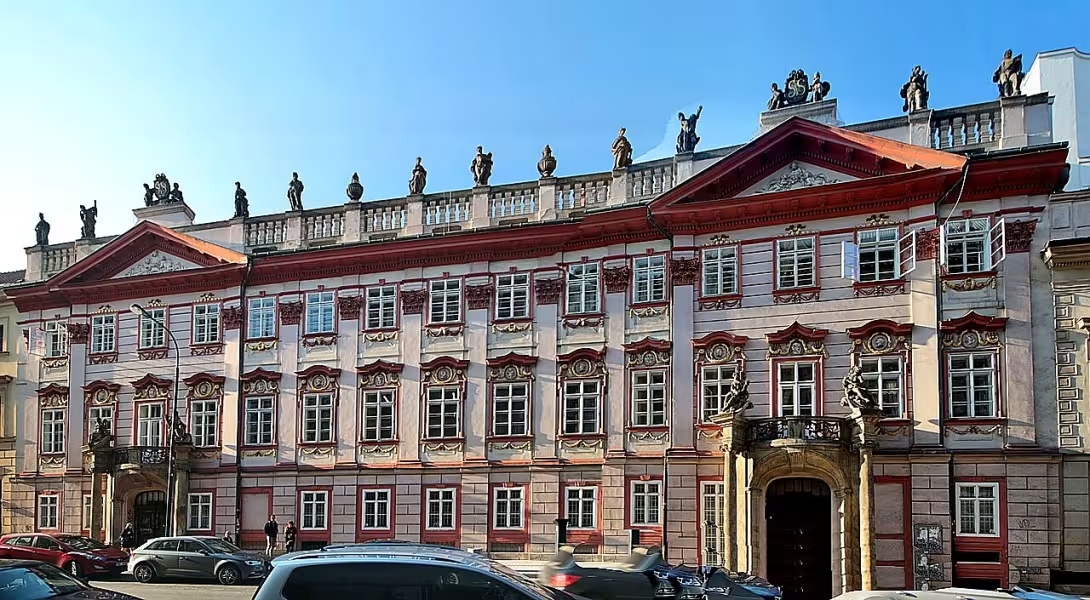
Swéerts-Sporkův Palác, located in Prague's New Town at Hybernská Street, is a significant cultural monument featuring two distinct baroque buildings. Constructed between 1694 and 1699 by architect Jan Baptist Mathey for Karel Jáchym Breda, the western building was later acquired by František Antonín Špork. In 1701, he established Prague's first permanent theater there. The eastern building underwent a neoclassical redesign by Ignác Jan Nepomuk Palliardi in 1790 and experienced further transformations over time.
The palatial complex is notable for its architectural evolution and cultural significance in Prague's history. Originating in the late 17th century, when Prague was a vibrant cultural hub within the Habsburg Monarchy, the western building reflects Baroque artistic developments. Špork's acquisition marked a pivotal moment with the establishment of the first permanent theater. Later, Jan František Kristián Swéerts-Sporck unified both buildings under his ownership, leading to additional architectural changes.
Architecturally, the complex showcases two styles: Baroque and Neoclassicism. The western building, originally baroque, was transformed into a neoclassical style by Antonín Haffenecker after 1783. Its façade features 15 axes divided by three-axis risalits with triangular pediments, adorned with sculptural decorations by Ignác Michal Platzer. The eastern building, redesigned in the classical style by Palliardi, retains elements of its original baroque design, including a significant entrance portal and a segmental pediment decorated with stucco reliefs.
Ownership has changed multiple times since construction. Initially owned by Karel Jáchym Breda, it was acquired by František Antonín Špork in 1699 and later by Jan František Kristián Swéerts-Sporck. After being divided and sold post-1803, the western building came under Charles University's administration during the 1970s, serving as a facility for the Faculty of Arts. The eastern building was acquired by SEBRE in 2011 and underwent comprehensive reconstruction completed in 2018, after which it was sold to Generali Real Estate Fund CEE.
Key events include Špork's establishment of Prague's first permanent theater, showcasing Italian operas such as Vivaldi's "Argippo." The early 20th-century addition of a modernist extension for the Anglo-Czechoslovak Bank marked another significant transformation. Recent renovations have integrated historical elements with contemporary design, including a green roof and three flying sculptures by Michal Gabriel.
Today, Swéerts-Sporkův Palác stands as a testament to Prague's rich cultural heritage and architectural evolution. Protected as a cultural monument since 1964, it reflects its historical significance. Visitors can explore the western building, now part of Charles University, and appreciate the eastern building's modern adaptations. Its blend of Baroque and Neoclassical architecture, coupled with contemporary enhancements, makes it a compelling site for those interested in history, architecture, and culture.
Swéerts-Sporkův Palác offers a unique glimpse into Prague's past while showcasing innovative architectural integration. It is a must-visit destination for anyone seeking to understand the city's cultural and historical landscape.
Then and now
Drag the slider to compare how the landmark may have looked when it was built with the view today.
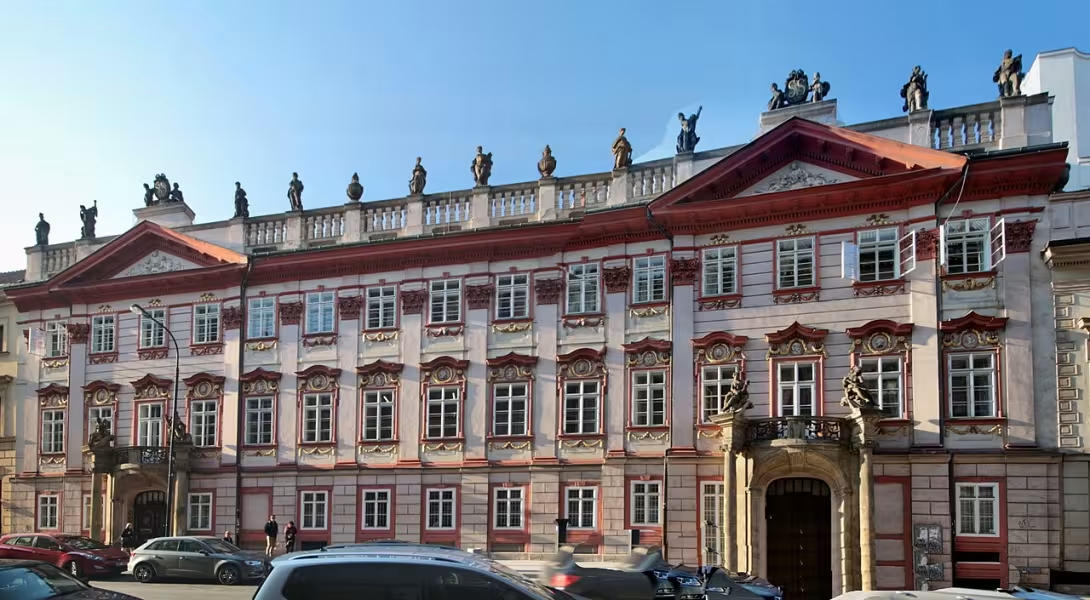

The historical appearance on the left is an AI-generated visualisation and serves as inspiration only.
Historical milestones
- 1694
- Construction of the western baroque building began.
- 1701
- František Antonín Špork opened the first permanent theater in Prague at this site.
- 1790
- Redesign of the eastern building into a neoclassical style by Ignác Jan Nepomuk Palliardi.
- 2018
- Completion of comprehensive reconstruction of the eastern building.
Architectural development
The complex began as two distinct baroque structures. The western building, originally designed by Jan Baptist Mathey, was later transformed into a neoclassical style by Antonín Haffenecker. The eastern building underwent a redesign in the classical style by Ignác Jan Nepomuk Palliardi and received a modernist extension in the early 20th century. Recent renovations have integrated these historical elements with contemporary design.
Historical events
František Antonín Špork opened the first permanent theater in Prague at the site in 1701.
The western building was redesigned in neoclassical style by Antonín Haffenecker after 1783.
In the early 20th century, a modernist extension was added to the eastern building for Anglo-Czechoslovak Bank (1923-1925).
Comprehensive reconstruction of the eastern building completed in 2018.
Owners
Karel Jáchym Breda (1694-1699)
František Antonín Špork (from 1699, until his death in 1738)
Jan František Kristián Swéerts-Sporck (later owner of both buildings)
Various owners post-1803
Univerzita Karlova v Praze (1970s onwards for the western building)
SEBRE (2011-2019)
Generali Real Estate Fund CEE (since 2019)
Points of interest
- Although the Swéerts-Sporkův Palác is renowned for its architectural styles, it was originally constructed as part of a single project by architect Jan Baptist Mathey before being divided into two distinct buildings with different stylistic influences.
- The establishment of Prague's first permanent theater in 1701 by František Antonín Špork marked a significant cultural milestone, introducing Italian operas like Vivaldi’s "Argippo" to the city and setting a precedent for future theatrical endeavors in Prague.
- In an intriguing twist of history, after being divided post-1803, the western building eventually became part of Charles University. This transition highlights its transformation from a private residence into an academic facility, serving as the home for the Faculty of Arts during the 1970s.
- The eastern building's acquisition by SEBRE in 2011 and subsequent reconstruction completed in 2018 introduced modern elements such as a green roof and three flying sculptures by Michal Gabriel, blending contemporary design with historical architecture.
- Despite its Baroque origins, the western building underwent significant neoclassical redesigns, particularly after 1783 when architect Antonín Haffenecker transformed it. This included sculptural decorations by Ignác Michal Platzer, showcasing a unique fusion of artistic styles over centuries.
Guide
This guide is narrated by a synthetic voice generated by artificial intelligence.
Show guide text
This text was created by artificial intelligence and has not been editorially reviewed. It may contain inaccuracies.
The Swéerts-Špork Palace, often called simply the Špork Palace, comprises two Baroque buildings in Prague's New Town. Their facades face onto Hybernská Street, with their rear sections overlooking V Celnici Street. Each building was constructed at a different time, they differ in architecture, and today they have different owners. The entire complex has been a cultural monument since 1964.
The left, western building is a two-story palace built between 1694 and 1699 according to a design by Jan Baptista Mathey for Karel Jáchym Bred. As early as 1699, František Antonín Špork purchased it. In 1701, he opened Prague's first permanent theater stage there. Italian operas were performed here, including Vivaldi's Argippo, which was composed specifically for Prague.
Špork's grandson Jan František Kristián Swéerts-Sporck later acquired the neighboring palace and had both buildings renovated. After 1783, Antonín Haffenecker remodeled the left section in the Classical style. The broad facade has fifteen bays and is articulated by two risalits with triangular pediments. The sculptures on the attic and two stone portals with classical deities come from the workshop of Ignác Michael Platzer. After 1803, the complex was divided again. From the nineteen seventies onward, the left building has served the Faculty of Philosophy of Charles University, primarily its Institute of Translatology.
The right, eastern building was remodeled in 1790 by Ignác Jan Nepomuk Palliardi from the original Baroque palace. It is single-story and Classical in style. From the original structure, mainly the entrance portal remained, similar to the portals of the neighboring building. The sculptural decoration was again created by Platzer. Above the facade rises a segmental pediment with stucco relief depicting bird hunting. Between 1923 and 1925, an annex was added at the rear for the Anglo-Czechoslovak Bank according to a design by Josef Gočár. During the war, the Gestapo seized the building, later it belonged to the Czechoslovak State Railways and served as offices.
In 2011, the company SEBRE purchased the building after a series of failed auctions for 190 million crowns. The renovation according to the studio of Stanislav Fiala was completed in 2018. The palace opened and connected with two other houses onto V Celnici Street and with a new alleyway named after Saint Hubert. It references the order founded by František Antonín Špork, even though other family branches had nothing to do with this palace. The historic facades were preserved. An extension with a green roof was added, and three red-painted flying sculptures by Michal Gabriel, two winged deer and a winged bull. The reconstruction received an award in the Building of the Year 2018 competition for exemplary and sensitive restoration of a historical structure.
Tips for visitors
The best time to visit Swéerts-Šporkův palác is during the late spring or early autumn months, when the weather is pleasant for exploring the outdoor areas and enjoying a stroll through Prague's New Town. These seasons offer comfortable temperatures and fewer crowds compared to peak tourist season in summer. Additionally, visiting on weekdays can provide a more tranquil experience, allowing you to appreciate the baroque architecture without the hustle of weekend tourists.
Public transportation is recommended as it offers convenient access to the area. You can reach the palace using trams or buses that run through nearby streets, and these options are generally reliable and frequent.
When planning your visit to Swéerts-Šporkův palác, it's advisable to bring comfortable walking shoes as you may want to explore both buildings and their surroundings. A camera is also recommended for capturing the intricate baroque details of the facades on Hybernská Street. Additionally, carrying a light jacket or umbrella can be helpful since weather conditions in Prague can change quickly.
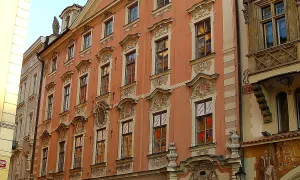
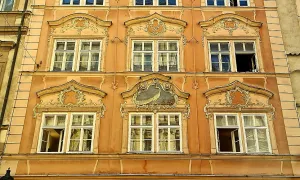
For photography enthusiasts, the best spots around Swéerts-Šporkův palác are along Hybernská Street where you can capture the stunning baroque facades of both buildings. Early morning or late afternoon light is ideal for highlighting architectural details and creating dramatic shadows. If possible, visit during these times to make the most of natural lighting conditions.
Nearby attractions within a 30-minute walk include Prague's Old Town Square, which offers historical sites like the Astronomical Clock and Týn Church. Another option is the National Museum in Veletržní Palác, showcasing extensive art collections. These nearby locations provide additional cultural experiences for visitors who wish to extend their exploration of Prague beyond Swéerts-Šporkův palác.
Frequently asked questions
Can the monument be visited?
Some buildings of this kind are open for guided tours, others serve another purpose or are privately owned. We have not verified whether and when this monument is open – please ask the operator.
What are the opening hours and admission?
We have not verified the opening hours or admission. Current information is published by the operator.
Where is the monument?
Location: Praha 1, Hlavní město Praha. The map on this page shows the exact spot.
Why is the monument protected?
It is listed in the Central List of Cultural Monuments of the Czech Republic as a cultural monument (register no. 1000152067).
Businesses nearby
Do you run a restaurant, accommodation, shop, museum, rental, wellness or other visitor service near this monument? Show yourself directly to the people heading to it — this is how they will see you in the app and on the web:
Events nearby

Zdroj akcí: otevřená data měst a obcí ČR (Národní katalog otevřených dat) a kalendář akcí Národního památkového ústavu.
Accommodation nearby
Trips and activities nearby
Guided tours, tickets and activities nearby from GetYourGuide
Affiliate link: if you buy from the partner, we may receive a commission. The price for you does not change.
Search tours and activities →Themed route
Trasa: Výlet po Praze 1
1. Staroměstská radnice (historický objekt, architektonická pozoruhodnost) - stojí za návštěvu pro svou krásnou gotickou architekturu a bohatou historii. Nachází se v blízkosti hlavního cíle, Swéerts-Šporkova paláce.
2. Nerudova ulice (ulice, historická atmosféra) - je známá jako jedna z nejkrásnějších ulic v Praze a nabízí pohled do historických domů a kaváren. Nachází se nedaleko hlavního cíle.
3. Kostel svatého Mikuláše (kostel, architektonická pozoruhodnost) - je jedním z nejstarších kostelů v Praze a stojí za návštěvu pro svou jedinečnou gotickou architekturu. Nachází se v blízkosti hlavního cíle.
4. Náměstí Oldřicha (náměstí, historická atmosféra) - je malé, ale klidné náměstí, které nabízí pohled na krásné historické domy a kavárny. Nachází se nedaleko hlavního cíle.
Seasonal recommendations
Jaro: In the spring season, Swéerts-Šporkův palác is surrounded by blooming trees and flowers, creating a pleasant atmosphere. It's also specific for its lighting that gives the palace a warm and comforting hue. Practical tips: during the spring season, the palace is less visited, but it's still good to come early to avoid crowds. Don't forget to wear walking shoes and comfortable clothing for strolling around the city.
Léto: During the main summer season, Swéerts-Šporkův palác is full of tourists eager to see historical landmarks. It's specific for its warm weather and long days that allow a visit to the palace even in the afternoon hours. Practical tips: arrive early before the crowds grow, and don't forget to bring an umbrella or sunglasses.
Podzim: In the autumn season, Swéerts-Šporkův palác is surrounded by colorful leaves of trees, creating a beautiful autumnal effect. It's also specific for its pleasant weather that allows strolls around the city. Practical tips: during the autumn season, the palace is less visited, but it's still good to come early to avoid potential rain.
Zima: In winter, Swéerts-Šporkův palác is enveloped in gloom, but it's still possible to see its historical interiors. It's also specific for its warm lighting that gives the palace a cozy and comforting hue.
Visualizations and artistic views


The visualisations are generated by artificial intelligence and serve as inspiration.
Photos from the area
Real photos taken near the monument


Zdroj a licence jsou uvedeny u každého snímku.
Tips from visitors
No tips yet. Be the first!
Log in and add your tip.
Sources and literature
Photos: VitVit / CC BY-SA 4.0 — Wikimedia Commons. The author and licence also appear when you hover over the image.
Faktickým podkladem tohoto textu byl článek na Wikipedii, jehož autory jsou přispěvatelé Wikipedie. Článek je dostupný pod licencí CC BY-SA 4.0.
Location on the map
Příběhy a pověsti
Legendy, pověsti a příběhy spjaté s touto památkou
Fotografie návštěvníků
Zatím žádné fotografie. Buďte první, kdo přidá fotografii z návštěvy!
Log in a přidejte svou fotografii nebo hodnoťte.
Za ověřenou návštěvu v aplikaci získáte víc bodů — poznáme podle GPS, že jste na místě.
Reviews and comments