



Synagoga Schomre-Schabos Synagogue
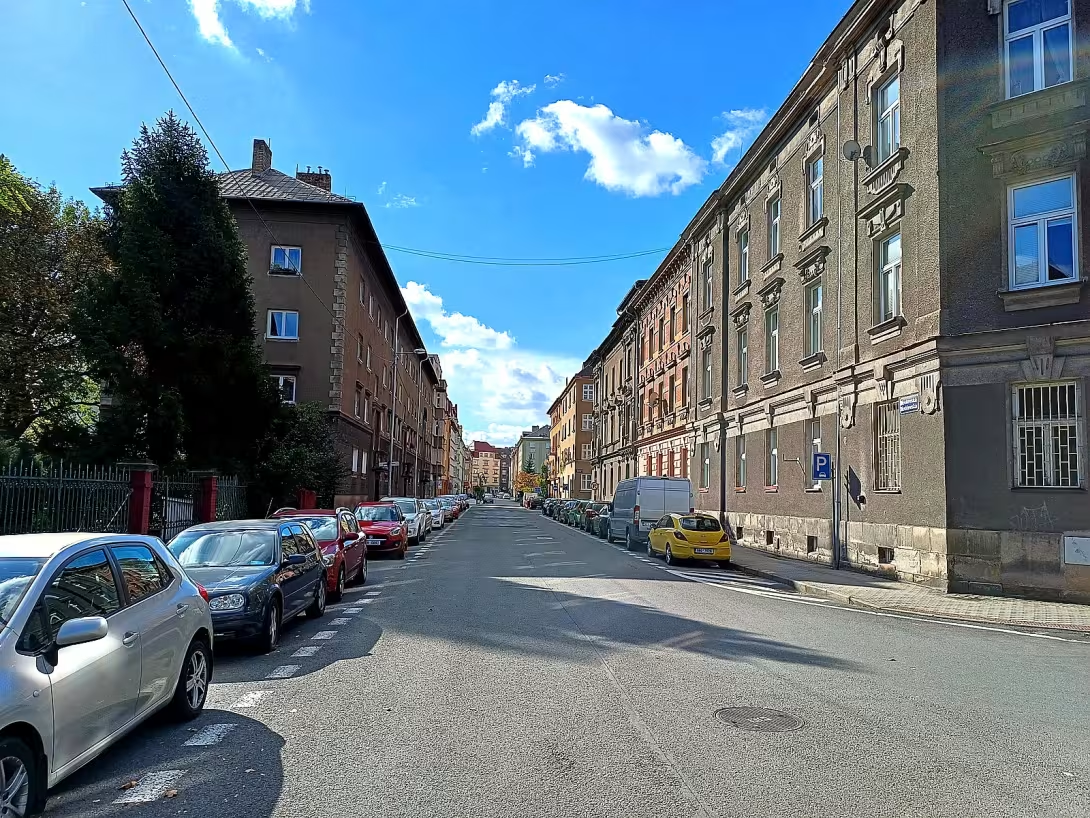
Synagoga Schomre-Schabos in Český Těšín is a former Jewish prayer house from 1928, built in eclectic-maurethan style. It stands in a series of buildings on Božkov Street and belongs to three synagogues in the Moravian-Silesian Region. Today there is a club of the Polish Cultural and Information Union.
The building was built under the first republic. The democratic atmosphere in Czechoslovakia allowed Jewish communities to create their own centres. The synagogue plan was designed in 1928 by architect Eduard David at the initiative of the Schomre Schabos Orthodox Association, which means "Shabbat Guardians." The builders Josef Nosska and Adolf Richter provided the realization, the first owner was Moses Löbl May.
It's a three-story object with a five-axis, richly divided facade. Architecture combines elements of historism with Mauritanian details. These are especially visible in high windows with profile shamrans and moldings. In the corner of the ground floor there is an entrance door in a profiled portal with arches in the shape of a donkey spine. The interior originally included a prayer room for 152 men, a gallery for approximately 100 women, an apartment manager and a ritual spa. These were built in 1935 by Václav Nequasila for Taharas Jisroel.
During World War II, the synagogue was not burned, unlike other buildings in Těšín. The reason was the position between the terraced houses, which threatened to damage the surrounding buildings. Yet the interior was destroyed and the building was used for the rest of the occupation as a warehouse of theatrical props. After the war, services were restored here. These continued until 1948 when Rabbi Natan Bergman emigrated to Israel and brought the family scrolls of the Torah with him.
In the following years the building remained unused until the town sold it to the Polish Cultural and Information Association in 1967. He rebuilt the building in 1978 for his needs. In 2009 the monument was restored, during which the windows in the facade were reconstructed.
Synagoga Schomre-Schabos is today declared a cultural monument of the Czech Republic. It represents important architectural and historical testimony about the Jewish community in Český Těšín. Her visit helps to better understand the multicultural nature of the region.
Then and now
Drag the slider to compare how the landmark may have looked when it was built with the view today.
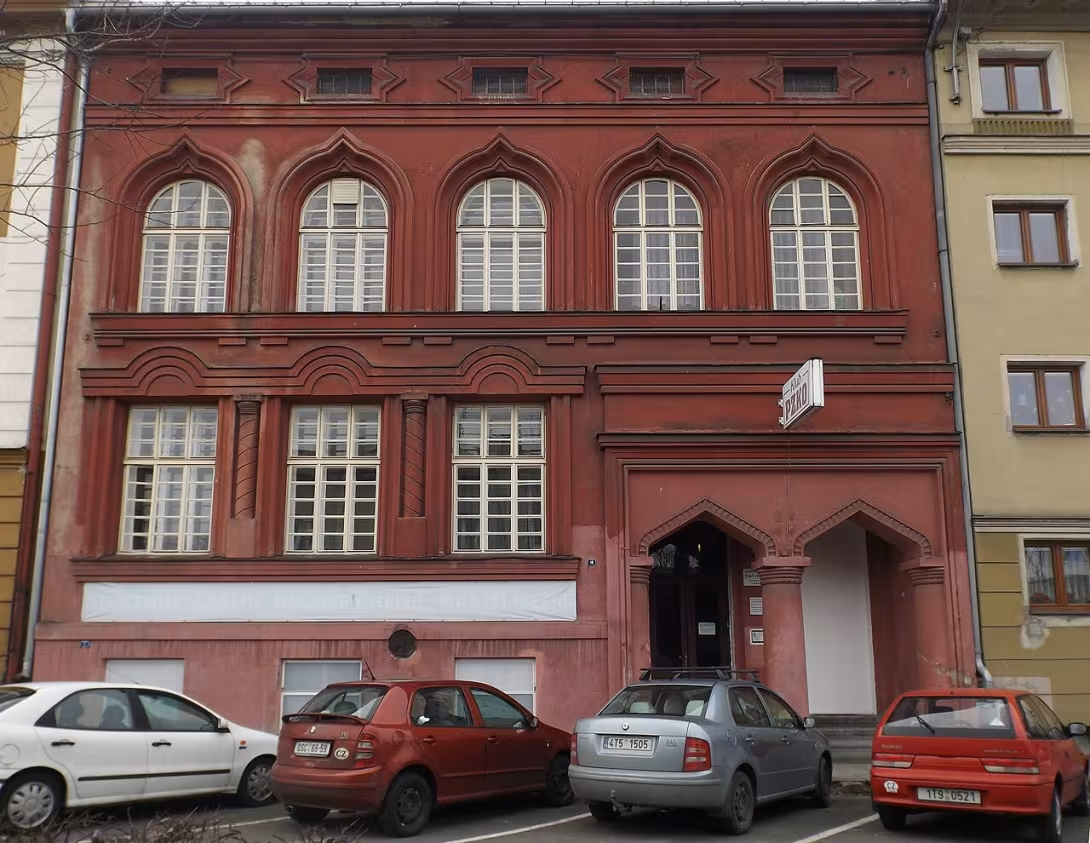

The historical appearance on the left is an AI-generated visualisation and serves as inspiration only.
Historical milestones
- 1928
- completion of synagogue construction
- 1935
- construction of ritual baths by Václav Nequasil
- 1967
- sale of the building to the Polish Cultural and Information Union
- 2009
- building renewal and window rebuilding in the facade
Architectural development
The building was built in 1928 in eclectic-maurean style with five-axis facade and arches in the shape of a donkey's spine. In 1935 a ritual spa was added. In 1978 an internal reconstruction was carried out for the needs of the clubhouse and in 2009 the renovation of the windows was carried out.
Historical events
1935: construction of ritual baths; 1948: the end of services and the departure of Rabbi Nathan Bergman to Israel; 1978: reconstruction of the building for the purposes of PZKO.
Owners
Schomre Schabos Association (since 1928), City of Český Těšín, Polish Cultural Information Association (from 1967).
Points of interest
- Synagoga Schomre-Schabos was built in 1928 and has an eclectic-maurean style. - Architect Eduard David designed a synagogue plan at the request of the Schomre Schabos Orthodox Association, which means "Shabbat Guardians." During World War II, the synagogue was not burned down because of the risk of damage to the surrounding houses. - After the war, the building was rebuilt by the Polish Cultural and Information Union in 1978 and restored in 2009. - The synagogue is today declared a cultural monument of the Czech Republic.
Guide
Show guide text
This text was created by artificial intelligence and has not been editorially reviewed. It may contain inaccuracies.
Welcome to Czech Teschen. You're standing right on Bozkov Street in front of a building that carries deep history and the soul of this place. Before you go any further, stop for a moment and feel the atmosphere radiating from this place. In front of your eyes is the synagogue of Schomre-Schabos. Even though this building is part of a series of buildings, such as the other houses on this street, its appearance immediately distinguishes you from ordinary urban architecture. There's something noble in it, something that makes you take a deep breath and pay attention to the details.
Let us now return to the time when this story began to be written. Imagine 1928. The world was changing then, people building new dreams and new spaces for their faith. It was this important year that this synagogue was completed. It was built for an orthodox association that bears the name of Schomre-Schabos. If you ask what this name means, the answer is very beautiful and at the same time deep. It means the guardians of the Sabbath. For the then community, the Sabbath was not just another day in the calendar, but a sacred time of peace, prayer and meeting. This building was supposed to be where this sacred time was guarded and where people could find a spiritual home.
Now pay attention to the construction itself and to what you see around you. Look at her look. The architect Eduard David, who designed this plan, chose a very specific and fascinating style for the synagogue. We call it the eclectic-maurean style. What does that even mean? The eclectic means that the architect did not want to be limited by just one rule, but wanted to take the best of the different traditions and combine it into one harmonious whole. The Mauritanian influence then brings a touch of Eastern history and traditions into the building, which is very typical of synagogues. This style brings to the street a sense of exotic and noble. Note also the facade of the building. Even if it passes through time and the building underwent an important recovery in the year two thousand and nine, you can still feel the original idea. For example, during the restoration, the building was working very carefully to repair the windows in the facade, so that it could again represent its history with dignity.
If you look at the internal layout you can imagine, you would know that the synagogue was designed with great respect for tradition. It had a prayer house, which was supplemented by a special part, a gallery intended for women. This allowed women to follow divine services in peace and reverence without disturbing the rhythm of prayer. This building was not only about space, but about creating a certain order and sanctity.
The history of this place is also linked to other important structures and people. In 1935 a ritual bath was added to the whole complex, built by Václav Neklasil. These baths were necessary for the community at the time to maintain ritual purity. There were people in these areas who shaped life in this city. Names such as Moses Löbl May or Natan Bergman are closely linked to this place. Even if they are names from the past, their presence is still felt in these walls. They were people who were here looking for a connection to God and other members of their community.
But now I'm telling you something that may seem like a strange coincidence or almost a mystery. Something unusual happened during World War II. Many religious structures were destroyed by fire at that time. But this synagogue remained intact. Why was that? The reason was not mercy, but practical concern. People were afraid that if this building was set on fire, a dangerous fire could damage all the other houses in this building very quickly. That's how the synagogue survived even the darkest of times because of this fear.
Today, the synagogue no longer serves to pray in its original sense, but its role has changed. The building was sold to the Polish Cultural and Information Association in 1967 and today it serves as their clubhouse. Although her function has changed, her importance as a cultural monument remains unquestionable. It's a place that teaches us about history, about faith and how the world around us changes.
Thank you for stopping by and paying attention to this place. We hope that this brief insight into the past helped you better understand the character of Český Těšín. Continue to walk now and let the beauty of this city drift away. We will say goodbye to you and wish you a pleasant further discovery of the surroundings.
Tips for visitors
The best time to visit is early in the morning or late in the afternoon, when there are fewer visitors in the synagogue and light penetrates through high windows, creating a pleasant atmosphere for the tour.
The synagogue is also available by urban transport - stops are within walking distance, check the current connections in the traffic search engine.
Take comfortable shoes, a bottle of water and possibly a printed guide or application with information about the history of the synagogue. Respect the rules of internal space - cover your shoulders and avoid noisy behavior.
Photography is allowed, but without lightning. The best images are made at the main entrance and in the main hall, where the afternoon sun illuminates the stained glass. Take care of the privacy of other visitors and do not interfere with religious subjects.
There is no specific place to visit in the vicinity of the synagogue, but you can walk along Božkov Street and soak up the atmosphere of the historical Czech Těšín, where there are many other architectural attractions.
Frequently asked questions
Can the monument be visited?
Religious buildings are usually open mainly during services; at other times a visit is normally arranged with the parish or the operator. We have not verified specific times.
Where is the monument?
Location: Český Těšín, Moravskoslezský kraj. The map on this page shows the exact spot.
Why is the monument protected?
It is listed in the Central List of Cultural Monuments of the Czech Republic as a cultural monument (register no. 1372611463).
Businesses nearby
Do you run a restaurant, accommodation, shop, museum, rental, wellness or other visitor service near this monument? Show yourself directly to the people heading to it — this is how they will see you in the app and on the web:
Nearby
🏰 Historic sites (249)
- Bývalá židovská synagoga;Klub PZKO 0.0 km Božkova 154/16
- Český Těšín 0.1 km
- JIŘÍ TŘANOVSKÝ, 0.1 km
- Muzeum Těšínska 0.2 km
- Dworek Cieszyński 0.2 km Przykopa 14
- Rosalie Weisner 0.3 km
- Galeria w Bramie na Cieszyńskiej Wenecji 0.3 km +48 507 104 751;+48 509 705 501 web
- Tramvaj 0.3 km
- Studnia Trzech Braci 0.3 km Trzech Braci
- Muzeum tiskařství 0.4 km
- W TYM DOMU W WALCE Z OKUPANTEM HITLEROWSKIM ZGINAL 15 KWIETNIA 194 ZOŁNIERZ ARMII KRAJOWEJ JOZEF SMOLINSKI PS TYGRYS W 0.4 km
- W ZAMKU OD 11 LISTOPADA 1918 R. DO 4 SIERPNIA 1920 R. SWOJĄ SIEDZIBĄ MIAŁA RADA NARODOWA KSIĘSTWA CIESZYŃSKIEGO, 0.4 km
- Tomáš Garrique Masaryk 0.4 km
- Pomnik Legionistów Śląskich 0.4 km
- Obětem 1.sv. války 0.4 km web
- Jan Kubisz 0.4 km
- WŁADYSŁAW RAKOWSKI 0.4 km
- Leopold Jan Szersznik 0.4 km
- Pałac Myśliwski Habsburgów w Cieszynie 0.4 km Zamkowa 3 web
- Kościół pw. Świętego Mikołaja 0.5 km Zamkowa
🍽️ Restaurants and dining (472)
- Torg Coffee 0.1 km Smetanova 1908/9 +420 775 567 165
- Radegastovna Těšínská 0.1 km Hlavní třída 140/3
- Bistro Lokálka 0.1 km
- Eldorado 0.2 km
- Istanbul Kebab 0.2 km
- Maestro 0.2 km
- Ha Noi 0.2 km
- Restaurace 7 0.2 km web
- U Vočka 0.2 km
- U Vávry 0.2 km web
- U Staré sauny 0.2 km
- Nový Dvůr 0.2 km
- Avion 0.3 km
- Bistro 34 0.3 km Štefánikova 34 +420 605 258 885 web
- Plackarnia u Janka 0.3 km Przykopa 30 +48 570 227 333
- Ristorante Italiano da Capo 0.3 km
- Pizzeria NowaWenecja 0.3 km +48 535 690 092
- La Cascada 0.3 km web
- U Studni 0.3 km Trzech Braci 1
- Sankara 0.3 km
🏨 Accommodation (105)
- Hotel Central 0.3 km web
- Hotel Piast 0.5 km
- Hotel Cieszyński 0.5 km
- 3 Bros' Hostel 0.5 km
- Sonata Guest house 0.6 km
- Brama Wyższa 0.7 km
- Liburnia 0.8 km
- Szkolne Schronisko Młodzieżowe 0.9 km Błogocka 24 +48 33 852 16 29;+48 783 298 399 web
- Kasztanowy Dwór 1.0 km
- Fundacja 1.2 km
- Gambit 1.3 km Nestora Bucewicza 18 web
- Camping Pod Czarnym Bocianem 1.4 km +48 532 787 950 web
- Zajazd "Academicus" 1.5 km Ignacego Paderewskiego 6
- Gościniec Błogocice 1.7 km
- Noclegi "Marek i Karolina" 1.9 km +48 601 474 359 web
- Mercure Cieszyn 2.1 km Motelowa
- Pod Zelenou 2.2 km
- Hotel 500 2.9 km
- Penzion Pod Zámkem 4.7 km +420 725 178 819
- Penzion Mlýn 5.9 km +420606674971 web
🚲 Rentals and sport (61)
- Biegshop.pl 0.3 km
- Domino Sport 0.3 km
- Trefa Sport 0.3 km
- Hala Widowiskowo-Sportowa im. Cieszyńskich Olimpijczyków 0.6 km
- Sportovní hala 0.7 km
- Atomica Sport 0.7 km
- Activity4Fun 0.7 km
- Ondraszek 0.7 km
- Stadion miejski 0.8 km
- Totem 0.9 km
- Kąpielisko miejskie 1.0 km
- Martes Sport 1.0 km
- D-Sport 1.0 km
- Sportissimo 1.0 km
- Městské koupaliště 1.4 km
- Boisko piłkarskie "Pod Wałką" 1.7 km web
- Učebna plavání při ZŠ Pod Zvonek 1.9 km Pod Zvonek 1865/30
- Tor Motocrossowy - Cieszyn MX 3.4 km
- LKS OLZA Pogwizdów 6.5 km
- STEEL RING TŘINEC s.r.o. 6.9 km +420733738213 web
🥾 Hiking and nature (156)
- Wenecja Cieszyńska 0.3 km
- Cień kota z Kociej Szajki 0.3 km web
- Masarykovy sady 0.3 km
- Kryjówka Kociej Szajki 0.3 km web
- Cień kota z Kociej Szajki 0.4 km web
- Cień kota z Kociej Szajki 0.4 km web
- Kościół pw. Świętej Marii Magdaleny 0.4 km Plac Dominikański 2 +48 33 852 12 19 web
- Góra Zamkowa 0.4 km +48 33 851 08 21 web
- Lávka u zbytků věže se vstupní bránou 0.4 km
- Widok na Czeski Cieszyn 0.5 km
- Park Angielski na Górze Zamkowej 0.5 km
- Góra Zamkowa 0.5 km
- Urząd Miejski w Cieszynie 0.5 km Rynek 1 +48 334794200 web
- Park Pokoju 0.5 km
- Skwer Komeńskiego 0.6 km
- Kościół pw. Wniebowzięcia Najświętszej Maryi Panny w Cieszynie 0.7 km Plac ks. Józefa Londzina 1 web
- Kościół pw. Świętej Trójcy 0.7 km Plac ks. Józefa Londzina
- Park Liburnia 0.7 km
- Park Świętej Trójcy 0.7 km
- Kościół Jezusowy 0.8 km Plac Kościelny 6 +48 33 857 96 69
Accommodation nearby
Themed route
1. Synagoga Schomre-Schabos, religious building. Take a look at the inner space and the appearance of this historic building. 2. Synagogue tank, outdoor area. Walk around the building and observe the details of her exterior appearance. 3. Exhibition in building, educational part. Meet the history of this place through exhibited historical objects.
Seasonal recommendations
In spring nature awakens around the monument and the light is fine, which gives the building a feeling of a new beginning. The air is fresh and the surroundings are starting to dye. We recommend wearing layered clothes because the weather can be variable. It is an ideal time to visit because tourists are getting less than in the main summer so you can enjoy the tour in peace.
Summer months bring strong sunshine and long days that highlight each line of construction. The mood is alive and full of energy. It is best to come first thing in the morning to avoid the biggest crowds and heat. Dress lightly and don't forget enough water to enjoy the tour in maximum comfort.
Autumn season offers golden shades and often a foggy blow that creates a nostalgic and calm mood. The light in the afternoon is very soft, which is convenient for photography. Prepare stronger shoes in case of wet surface and warmer clothing. It's the best time for those who seek deep inner peace.
In winter the surroundings are quiet and the days are short, which creates a very serious and respectful charge. The light is weaker and often grey, which underlines the historical nature of the place. It's best to plan a visit in a brighter part of the day.
Visualizations and artistic views


The visualisations are generated by artificial intelligence and serve as inspiration.
Photos from the area
Real photos taken near the monument


Zdroj a licence jsou uvedeny u každého snímku.
Tips from visitors
No tips yet. Be the first!
Log in and add your tip.
Sources and literature
Photos: T.Bednarz / CC BY-SA 4.0 — Wikimedia Commons. The author and licence also appear when you hover over the image.
Faktickým podkladem tohoto textu byl článek na Wikipedii, jehož autory jsou přispěvatelé Wikipedie. Článek je dostupný pod licencí CC BY-SA 4.0.
Location on the map


Příběhy a pověsti
Legendy, pověsti a příběhy spjaté s touto památkou
Fotografie návštěvníků
Zatím žádné fotografie. Buďte první, kdo přidá fotografii z návštěvy!
Log in a přidejte svou fotografii nebo hodnoťte.
Za ověřenou návštěvu v aplikaci získáte víc bodů — poznáme podle GPS, že jste na místě.
Reviews and comments