






Synagoga v Žatci Synagogue
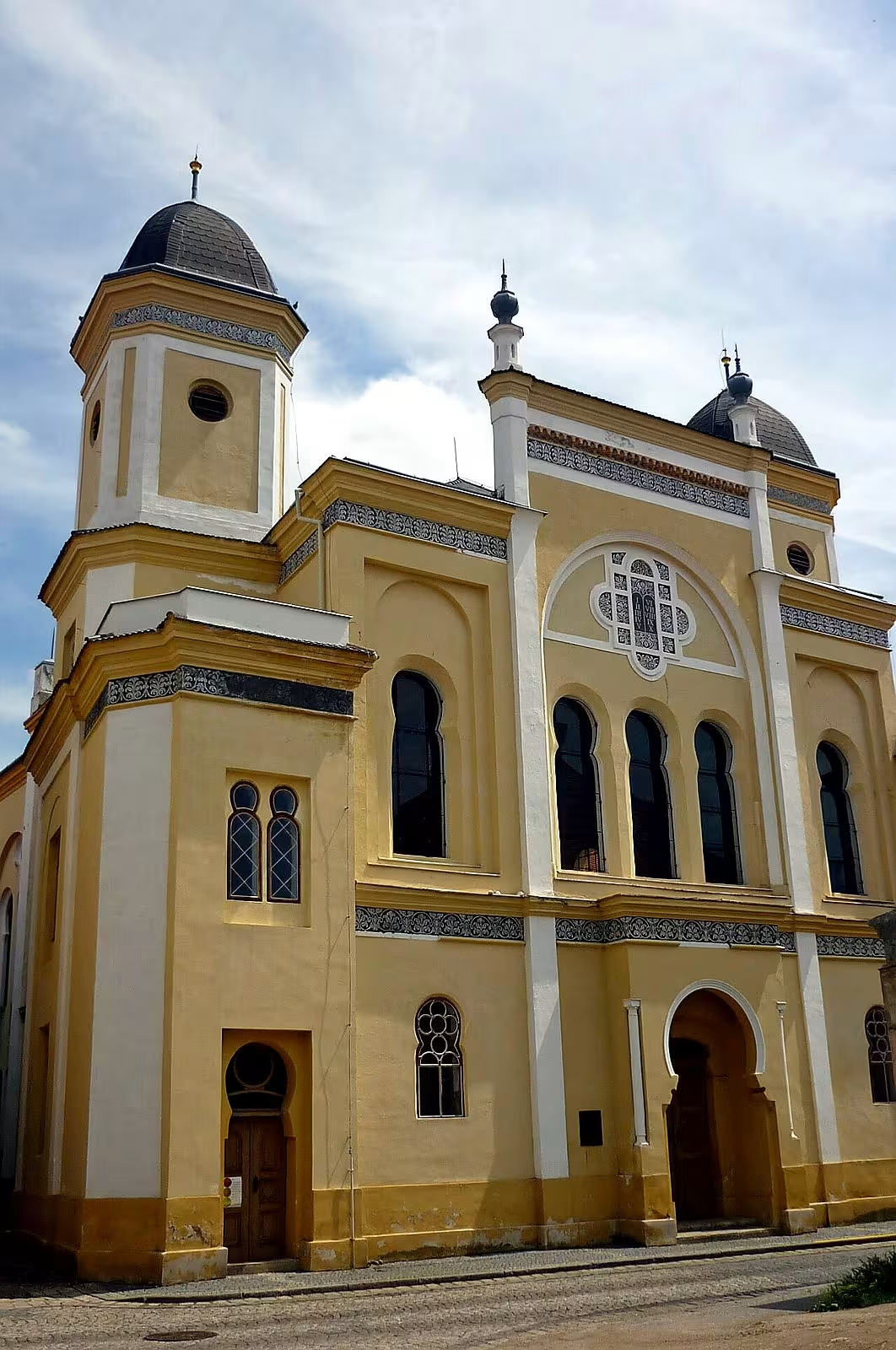
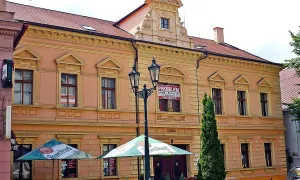
ŽatecKá synagogue, the second largest preserved in Bohemia, represents an important cultural monument. This building in Moorish style was built in 1871-1872 in the eastern part of the city centre, in Long street.
The project was created by the construction master Johann Staňek, author and synagogue. The ceremony was held on March 19, 1872 under the leadership of Rabbi Dr. Abraham Frank.
Architecturally, it's a single-boat building with an apsid. The western facade with risalite consists of two prism towers with dome, while the inner space is closed by a rolling vault. The interior is decorated with wall paintings from 1883, which were supplemented during renovation in 1911.
The fate of the monument was complicated during the 20th century. In November 1938, a fire damaged her during Crystal Night. But the local firefighters put out the fire to prevent the flames from moving to the surrounding building, thereby saving the building from being completely burned. However, the internal equipment was not preserved as a result of the fire. During World War II, she served as a military hospital and auxiliary school. After 1949, it was used as a civil defence warehouse, which led to its gradual deterioration.
In 1997, the facade and roof coverings were repaired. The significant breakthrough occurred in 2013 when Daniel Černý of Chomutov bought the synagogue and the adjoining rabbino house and started extensive reconstruction of both objects. In 2023 he won the Patrimonium Award for futuro in the category Rescue of monuments from the National Heritage Institute. From the south side of the building lies the former Jewish school, where the offices of the Jewish village used to be and the rabbi's apartment was located.
The synagogue was ceremoniously reopened on 19 March 2024, namely exactly 152 years after the original ordination. Thanks to excellent acoustics, the subject is occasionally used for concerts. The restored monument is protected as a cultural monument of the Czech Republic and represents an important point on the map of the historical Žatce. It's worth a visit to anyone interested in architecture and history.
Then and now
Drag the slider to compare how the landmark may have looked when it was built with the view today.
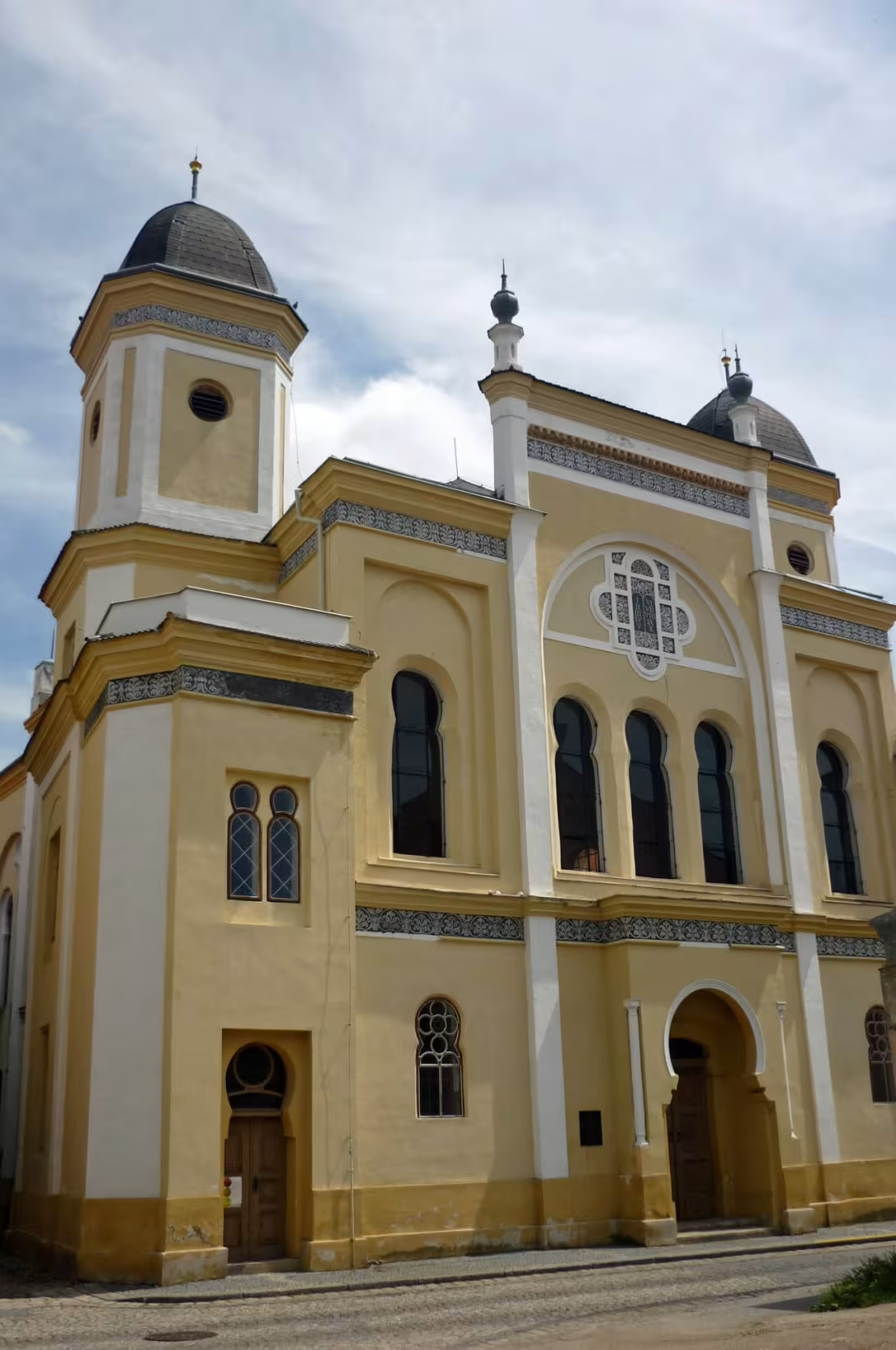
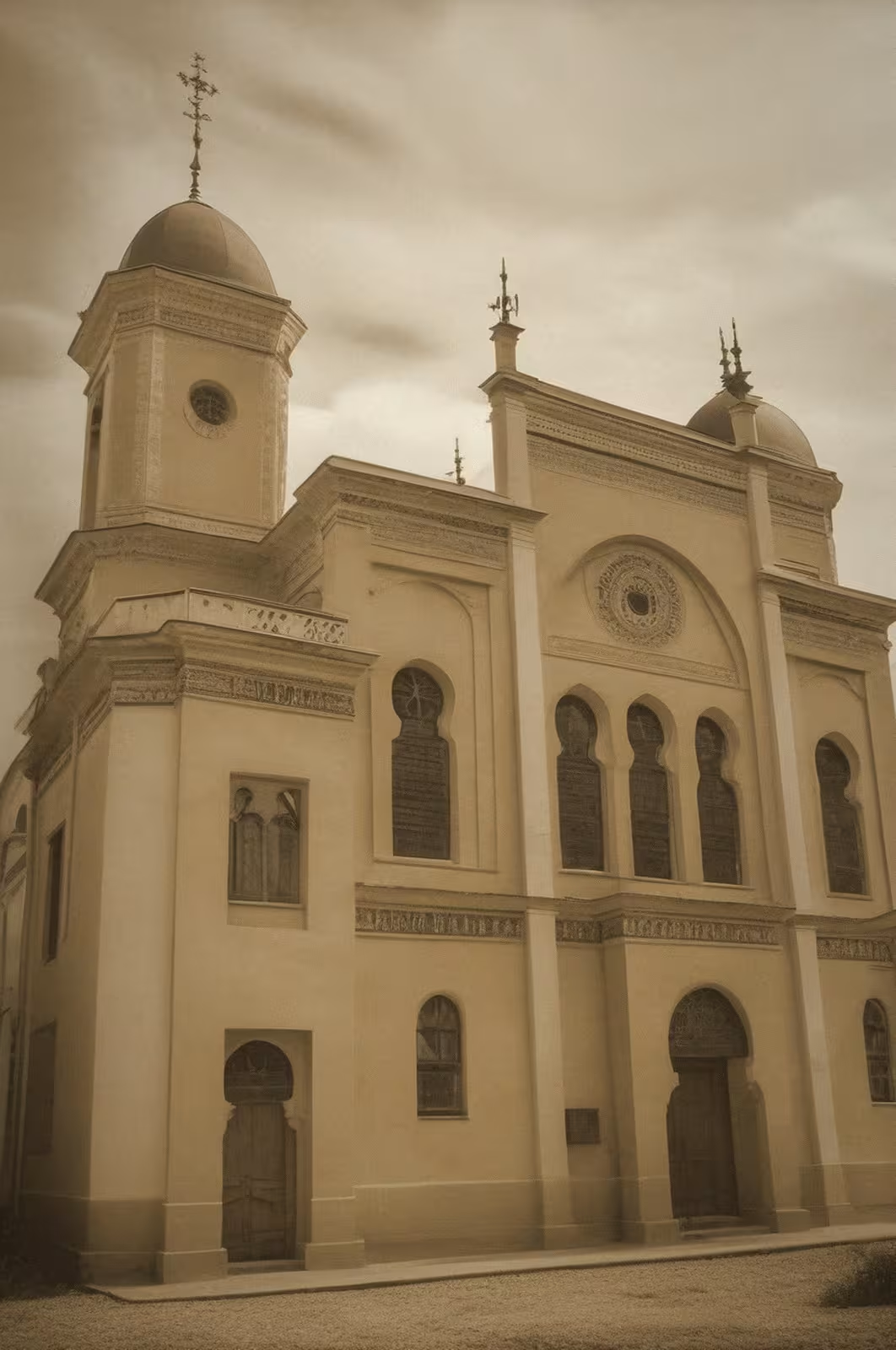
The historical appearance on the left is an AI-generated visualisation and serves as inspiration only.
Historical milestones
- 1872
- The ceremony of the synagogue led by Rabbi Dr. Abraham Frank
- 1938
- Damage to the building by fire during Crystal Night
- 2013
- Opening of the reconstruction of the synagogue and Rabbi house
- 2024
- Festive reopening of the synagogue
Architectural development
The construction was built in Moorish style according to the plans of Johann Staňek. In the interior there is a rolling vault and wall paintings taken at the turn of the 19th and 20th centuries. The facade and roof cover were repaired as part of the recent reconstruction.
Historical events
1872: the ceremonial consecration of the synagogue; 1938: fire damage during Crystal Night; 2024: festive reopening after reconstruction.
Owners
Daniel Černý (since 2013)
Points of interest
- It is the second largest preserved synagogue in Bohemia, built in Moorish style. - During Crystal Night in November 1938, she was damaged by a fire that the local fire department put out. - During World War II, she served as a military hospital and an auxiliary school. - It was reopened on March 19, 2024, precisely 152 years after the original ordination. - The building is occasionally used for concerts thanks to excellent acoustics.
Guide
Show guide text
This text was created by artificial intelligence and has not been editorially reviewed. It may contain inaccuracies.
Welcome to Žatci, a city with a rich history, where today we will stop in front of one of the most important buildings in the whole region. You're standing in front of a synagogue that dominates the eastern part of downtown. Feel her greatness and majesty. It is a truly impressive view that carries the trail of many generations and dramatic turns of fate. Imagine how this place worked at the time of its greatest fame, when it was the heart of the Jewish community in this city. It is a space that radiates peace, but also keeps within it the echoes of the stormy twentieth century.
Let us now return together in time more than 150 years ago. We are in 1871, at a time when the Žatec decided to build a new, dignified space for worship. The building you're standing in front of was built between 1871 and 1872. Its creator was architect Johann Staňek, who chose for this project very specific and at that time very popular direction, which was the Moorish style. This architectural approach was intended to express the uniqueness and cultural identity of the community that lived and formed here. In 1872, the most famous moment of the beginnings of this building occurred when the synagogue was ceremoniously consecrated. The whole important ceremony was led by Rabbi Dr Abraham Frank, a man whose name is closely linked to the history of this place.
Now pay attention to the architecture itself, which is right in front of you. Look up and notice the overall composition of the building. The synagogue is built as a one-ship space, which means that the inner space is not divided by columns, which creates a sense of openness and unification. Note also the apsid, i.e. the semi-spherical end of the building that gives the building harmony. But the most striking element that certainly attracts your sight is two prism towers. Take a look at the ending where the dome stands. It is these elements combined with the Moorish details that make this synagogue one of the most beautiful and distinctive structures of its kind. It is the second largest preserved synagogue in all Bohemia, which only underlines the importance of Žatka as the center of Jewish life at that time.
However, this building is not just a set of architectural elements, it is primarily the place of human stories. In addition to the already mentioned Rabbi Abraham Frank, we also encounter the history of this place by the name of Daniel Black. The personalities who worked here breathed life into these walls and made them a spiritual sanctuary. But history also brought dark chapters. If you look at the facade, you might also see traces of a past that was cruel. In November 1938, during events known as Crystal Night, the synagogue was attacked and damaged by fire. Imagine the horror and uncertainty that people experienced at the time. But at this tragic moment, something fundamental happened. Local firefighters, with courage and speed, were able to extinguish the fire. Thanks to their intervention, the building was not completely destroyed, which is why we can stand here today and admire its beauty.
But during World War II, the synagogue lost its original function. There were no more prayers, but the building served as a military hospital and later as an auxiliary school. It was a time when the sacred space turned into a utilitarian space, a place where the pain of war and the need of the army were solved. After the war, however, another period came, which was perhaps the worst for the building in terms of physical condition. The synagogue has been neglected. Her noble halls, which once filled the voices of the believers, became a common stock. Dust and silence have replaced the ceremonies. The building slowly faded, and it seemed that its fame was gone forever.
But it is here that begins the most inspiring part of the story that brings us to the present. The hope returned in 2013, when an extensive and challenging period of reconstruction was launched. The work did not only drive the synagogue itself, but also the adjoining Rabbi house. It was a huge effort to restore every detail, preserve the Moorish style and return the building to its original dignity. After years of patient work, professional planning and repairs, there was a great victory. In 2024, the synagogue was ceremonially reopened. In particular, on March 19, this door opened again for the public and for all who seek to connect with history.
It's fascinating to think of the way this building has traveled. From the triumphant consecration in 1872, to the flames of Crystal Night, to the cold days of the military hospital and the dust of the forgotten warehouse, to today's shining form. This synagogue is a symbol of resistance. It is a reminder that while something seems to be irreparably lost, care and respect for history can complete miracles.
Now that you know the story of this place, I suggest you just look at the facade for a while and see the atmosphere that rules here. Notice the contrast between the robustness of the towers and the fineness of the Moorish details. Try to imagine all the people who have walked through here in the last centuries, and think about how many emotions have happened in these walls.
I invite you now to further explore. You can enter and be consumed by the silence and space that has been restored with such love, or continue your journey along the Žatci and seek further traces of Jewish heritage in the vicinity. I hope this short trip to history has helped you see this building not only as an architectural unique but as a living witness of time.
Thank you for your attention and I wish you a pleasant rest of your stay in our city. Goodbye.
Tips for visitors
The best time to visit is in the morning, when the light best highlights the Turkish interior details. It's a calmer period that allows you to perceive architecture without a great rush.
You can reach Žatka by car and public transport; The current connections and parking options near the sights are best checked in internet maps or on the official city website.
We recommend that you take drinking water and change for the entrance fee, which is paid on the spot. The most suitable areas for photography are inside the building where you can capture a unique style, but always follow the rules regarding the use of lightning.
In the close neighbourhood you can explore the former Jewish school, the rabbi's apartment and the offices of the Jewish village. It is advisable for families with children to prepare short stories about the history of the place to make a visit for the smallest interesting and educational.
Businesses nearby
Do you run a restaurant, accommodation, shop, museum, rental, wellness or other visitor service near this monument? Show yourself directly to the people heading to it — this is how they will see you in the app and on the web:
Events nearby

Zdroj akcí: otevřená data měst a obcí ČR (Národní katalog otevřených dat) a kalendář akcí Národního památkového ústavu.
Nearby
K budově přiléhá bývalá židovská škola, byt rabína a kanceláře židovské obce.
Accommodation nearby
Themed route
1. Synagoga v Žatci, a religious monument: The main objective of the tour, which represents the historical heart of the local Judaism. 2. Former Jewish school, historical building: An adjacent building where important education and education of young people took place. 3. Rabbi's apartment, residential building: Part of the complex that served as a home for spiritual leaders. 4. The offices of the Jewish village, administrative building: The place where important issues of administration and organization of life in the village were previously addressed.
Seasonal recommendations
In the spring Žatec flourishes and the surroundings of the synagogue gain fresh, green form. The soft spring light pleasantly highlights the details of the facade and in the alleys there is a feeling of rotation. We recommend to dress in layers because the morning cold can quickly replace the warm noon. The ideal time to visit is in the morning when the air is the cleanest.
The summer season brings intense sun and hot air, which creates a pleasant contrast with the cold in the interior of the monument. The city is in the main season full of visitors, which gives the surroundings dynamism. To avoid the greatest crowds, come immediately at the opening. Don't forget light, breathable clothes and plenty of fluids.
In autumn, the surroundings of the synagogue are covered in golden colours, and morning fog gives the place a mysterious, nostalgic atmosphere. Light is milder in this period and shadows are longer, which is suitable for observing architecture. Due to unstable weather, waterproof shoes and lighter jackets are suitable. It's best to visit the memory in the afternoon.
In winter, the construction works with a sharp edge, especially if it is covered by a layer of snow. The atmosphere is quiet and meditative, allowing a deeper perception of the history of the place. It is necessary to choose really warm clothes and to check the opening hours that are shorter in this period. We recommend a visit before dark to make the interior fully visible.
Visualizations and artistic views


The visualisations are generated by artificial intelligence and serve as inspiration.
Photos from the area
Real photos taken near the monument


Zdroj a licence jsou uvedeny u každého snímku.
Atmosphere of the place
This atmospheric visualisation of the place and period was generated by artificial intelligence. It is not real footage of the location.
Tips from visitors
No tips yet. Be the first!
Log in and add your tip.
Sources and literature
Photos: SchiDD / CC BY-SA 3.0 — Wikimedia Commons. The author and licence also appear when you hover over the image.
Faktickým podkladem tohoto textu byl článek na Wikipedii, jehož autory jsou přispěvatelé Wikipedie. Článek je dostupný pod licencí CC BY-SA 4.0.
Location on the map
Příběhy a pověsti
Legendy, pověsti a příběhy spjaté s touto památkou
Fotografie návštěvníků
Zatím žádné fotografie. Buďte první, kdo přidá fotografii z návštěvy!
Log in a přidejte svou fotografii nebo hodnoťte.
Za ověřenou návštěvu v aplikaci získáte víc bodů — poznáme podle GPS, že jste na místě.
Reviews and comments