






Sýpka v Zavlekově Granary
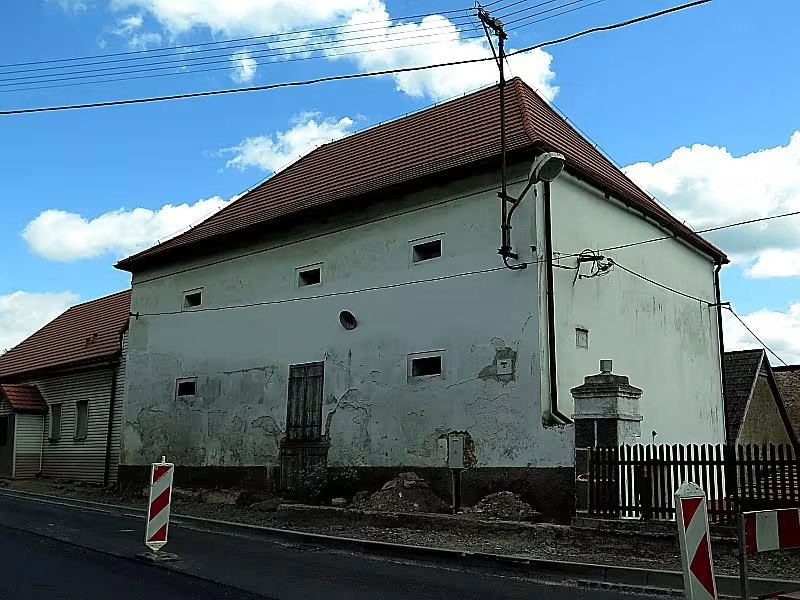
Sýpka v Zavlekově is a historical monument located in the Klatovy district of the Czech Republic. Originally built as a castle in the second half of the 16th century, it was transformed into a granary during the 18th century. This site stands out for its architectural evolution from medieval fortifications to agricultural utility structures and has been protected as a cultural monument since 1964.
The origins of Sýpka v Zavlekově trace back to the early 16th century when Jan Chanovský Dlouhoveský z Dlouhé Vsi purchased the estate in 1544. He commissioned the construction of a new manor after the previous "old castle" had vanished at the start of that century. The first documented mention of this new structure dates to 1626, although it was already established by then. Jiří Chanovský became the sole lord of Zavlekově in 1613 following the deaths of his brothers and later participated in the Bohemian Revolt from 1618 to 1620. As a consequence, he faced penalties that converted his estate into royal manorial land in 1623.
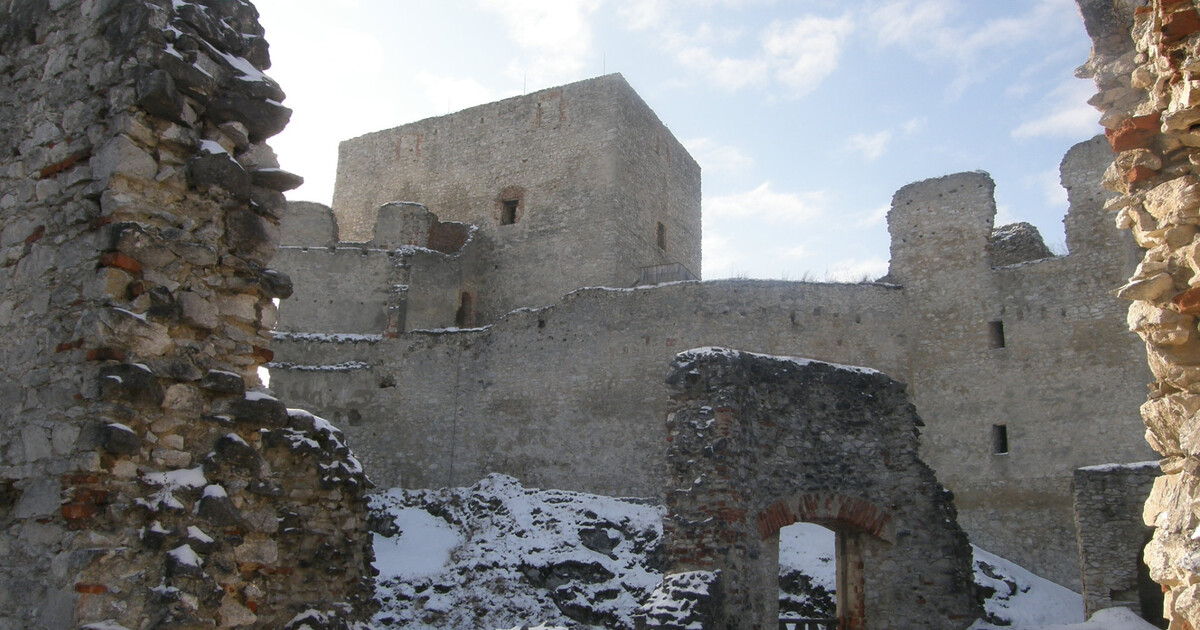
Architecturally, Sýpka v Zavlekově underwent significant changes over time. Initially built as a castle, it was repurposed into a granary in the 18th century. The structure features two floors with small rectangular windows that provide lighting to both levels. A distinctive element of its design is the late Gothic portal from its original form, which has been preserved on the side facing the street.
The ownership history of Sýpka v Zavlekově reflects a series of rapid changes throughout the 17th and early 18th centuries. After Jiří Chanovský's era, Diviš Lv Žákavec z Žákavy acquired it in 1669. By 1689, Lidmila Veronika Doudlebská z Doudleb became the owner, selling it to Adam Humprecht Fortunát Koc z Dobrše just two years later. The estate changed hands quickly thereafter, with Jindřich Vinkler z Heimfelda purchasing it shortly after. Anna Františka Barbora z Lanova acquired Zavlekově in 1716 and bequeathed it to her husband Bedřich Bohuslav Serin z Eichenau, who sold it to Petr Eusebius Radecký z Radče in 1738. The final recorded owner before its transformation into a granary was Václav Marian z Petynku in 1739.
The site's historical context is enriched by the broader events of Bohemia during the 16th century, which was part of the Holy Roman Empire and experienced significant religious and political upheaval, including the early stages of the Protestant Reformation. These tensions contributed to conflicts such as the Bohemian Revolt in which Jiří Chanovský participated.
Today, Sýpka v Zavlekově stands as a testament to its layered history, offering visitors insight into both its medieval origins and its later agricultural role. The preserved late Gothic portal serves as a tangible link to its past, making it an intriguing destination for those interested in architectural evolution and historical narratives. Its status as a protected cultural monument underscores its significance, inviting exploration and appreciation of this unique site.
Then and now
Drag the slider to compare how the landmark may have looked when it was built with the view today.
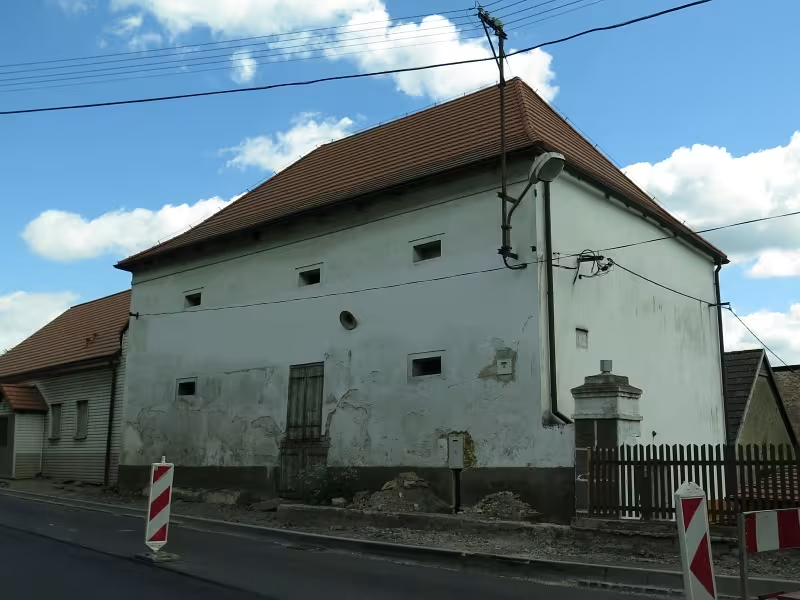

The historical appearance on the left is an AI-generated visualisation and serves as inspiration only.
Historical milestones
- 1626
- First written mention of the new castle.
- 1613
- Jiří Chanovský became the sole lord of Zavlekově.
Architectural development
Initially constructed as a castle, Sýpka v Zavlekově underwent significant architectural changes in the 18th century when it was converted into a granary. The structure features two floors with small rectangular windows for lighting and retains a late Gothic portal from its original form.
Historical events
Jan Chanovský Dlouhoveský built a new manor in the early 16th century.
Jiří Chanovský participated in the Bohemian Revolt (1618-1620) and was penalized by converting his estate to royal manorial land in 1623.
Owners
Jan Chanovský Dlouhoveský z Dlouhé Vsi (1544)
Jiří Chanovský (1613-1640s)
Diviš Lv Žákavec z Žákavy (1669)
Lidmila Veronika Doudlebská z Doudleb (1689-1707)
Adam Humprecht Fortunát Koc z Dobrše (1707)
Jindřich Vinkler z Heimfelda (1707)
Václav Maxmilián Vidršpergár z Vidršpergu (1715)
Anna Františka Barbora z Lanova (1716)
Bedřich Bohuslav Serin z Eichenau (1738)
Petr Eusebius Radecký z Radče (1738-1739)
Václav Marian z Petynku (1739)
Points of interest
- The transformation of Sýpka v Zavlekově from a castle to a granary is an example of adaptive reuse, reflecting broader trends in the 18th century where many medieval structures were repurposed for agricultural needs.
- Despite its conversion into a granary, the structure retains the late Gothic portal from its original form, serving as a unique architectural link between its medieval past and later utilitarian function.
- The rapid succession of owners in the 17th and early 18th centuries highlights the turbulent socio-political landscape of Bohemia during this period, with estates frequently changing hands due to political upheavals or financial transactions.
- Jiří Chanovský's involvement in the Bohemian Revolt underscores the estate’s connection to significant historical events, illustrating how local nobility were entangled in broader European conflicts and religious movements such as the Protestant Reformation.
- Sýpka v Zavlekově's status as a protected cultural monument since 1964 emphasizes its importance not just locally but also within the context of Czech heritage conservation efforts, preserving it for future generations to explore its rich historical narrative.
Guide
This guide is narrated by a synthetic voice generated by artificial intelligence.
Show guide text
This text was created by artificial intelligence and has not been editorially reviewed. It may contain inaccuracies.
Welcome to the granary in Zavlekove, one of the most interesting historical landmarks in this area. You are standing before it now and have in front of you a unique example of architectural transformation that took place in the 18th century. The granary in Zavlekove was originally a castle built in the second half of the 16th century but was later rebuilt as a granary to serve agricultural purposes.
Let's move forward in time and return to the beginnings. The first written mention of the new castle dates back to 1626. Jiří Chanovský became the sole lord of Zavlekove in 1613. The Chanovští played a significant role in the history of this location, and their name is associated with many interesting stories.
Now pay attention to the architecture of the granary in Zavlekove. Its most intriguing feature is the transition from medieval fortifications to agricultural purposes. Take a look at the façade and notice how the original castle structure transformed into a granary. It's an excellent example of adaptive reconstruction that was very popular in the 18th century. Many medieval buildings were rebuilt as agricultural structures to meet the needs of a growing population.
Also, note that the granary retains elements of late Gothic architecture typical of its original castle form. This is remarkable because even after being converted into a granary, it was possible to preserve the original architectural style.
The granary in Zavlekove is also associated with many interesting personalities. Jan Chanovský Dlouhoveský z Dlouhé Vsi and Jiří Chanovský were significant representatives of the Chanovští family who controlled this location. Lidmila Veronika Doudlebská z Doudleb was another personality who made her mark in the history of this place.
What is interesting here? The granary in Zavlekove is a great example of adaptive architecture that became very popular in the 18th century. At the same time, it was possible to preserve the original architectural style typical of late Gothic.
Today, the granary in Zavlekove has been protected as a cultural monument since 1964. Its historical significance and architectural interest make it an exceptional landmark worth exploring. I hope that the granary in Zavlekove has intrigued you and that you will want to return back in time to learn more about the details and stories associated with this fascinating monument.
Tips for visitors
The best time to visit the Sýpka v Zavlekově is during late spring or early autumn when the weather is pleasant, allowing for comfortable exploration of the site. These seasons offer optimal lighting conditions for photography and a chance to enjoy the surrounding natural beauty without the summer crowds. The mild temperatures make it ideal for walking around the area and appreciating the architectural details of the granary.
Public transport can also be used to reach the location; however, it is recommended to verify current routes and schedules through a transportation search tool before your visit.
When planning your visit, consider bringing comfortable walking shoes as you may want to explore the area around the granary. A camera or smartphone for capturing photos of the architectural features is also suggested. Additionally, carrying a light jacket might be useful due to variable weather conditions, and don't forget water and snacks if you plan on spending several hours at the site.
For photography enthusiasts, the best spots are likely around the exterior of the granary where natural lighting can highlight its historical architecture. Early morning or late afternoon is ideal for capturing soft light that accentuates textures and details. The surrounding landscape also offers scenic backdrops for photographs, especially during sunrise or sunset when shadows add depth to images.
Nearby attractions within a 30-minute drive include the historic town of Klatovy, which offers cultural insights with its museums and old-town charm. For families with children, this area provides an opportunity to explore local history in an engaging way. The proximity allows for a day trip where you can visit Sýpka v Zavlekově and then enjoy other activities or sightseeing in Klatovy.
Frequently asked questions
Can the monument be visited?
This is a residential or farm building, not a museum with opening hours. Please view it from public space and respect the owners' privacy. We have no information about access to the interior.
Where is the monument?
Location: Plzeňský kraj. The map on this page shows the exact spot.
Why is the monument protected?
It is listed in the Central List of Cultural Monuments of the Czech Republic as a cultural monument (register no. 1000159328).
Businesses nearby
Do you run a restaurant, accommodation, shop, museum, rental, wellness or other visitor service near this monument? Show yourself directly to the people heading to it — this is how they will see you in the app and on the web:
Events nearby
Zdroj akcí: otevřená data měst a obcí ČR (Národní katalog otevřených dat) a kalendář akcí Národního památkového ústavu.
Accommodation nearby
Themed route
Tour: The Granary in Zavlekov and Surroundings
1. Granary in Zavlekov - Main destination of the tour. A unique granary from the 16th century, one of the few preserved structures of this type in the Czech Republic. Its uniqueness lies in the combination of Gothic and Renaissance elements.
2. Zavlekova - A town located near the granary. You can explore its historic center with a series of interesting buildings and refresh yourself at one of the local pubs.
3. Church of St. Wenceslas - The church in Zavlekova, which dominates the village. It has interesting architecture and is worth visiting if you are in the area.
4. Zavlekovský Pond - A small pond located near the granary. You can relax here and observe local birds.
Seasonal recommendations
Jaro: The spring season is characterized by the greenery of nature reflected in the colors of the historic granary. The atmosphere is full of optimism and hope for a new beginning. Practical tips: the best time to visit the granary is in April or May, when the weather is mild and nature is in full bloom. We recommend visiting the granary early in the morning or late afternoon to avoid crowds of tourists.
Summer: The main summer season brings new life to the granary. The lighting is stronger to illuminate the interior spaces. The atmosphere is full of energy and fun. Practical tips: the best time to visit the granary is in June or July, when the weather is sunny and tourists are abundant.
Autumn: The autumn season brings a calm and quiet atmosphere to the granary. The lighting is mild to illuminate the interior spaces. Practical tips: the best time to visit the granary is in September or October, when the weather is mild and nature is fully matured.
Winter: The winter season brings a calm and quiet atmosphere to the granary. The lighting is weaker to illuminate the interior spaces. Practical tips: the best time to visit the granary is in December or January, when the weather is cold and there are fewer tourists.
Visualizations and artistic views


The visualisations are generated by artificial intelligence and serve as inspiration.
Photos from the area
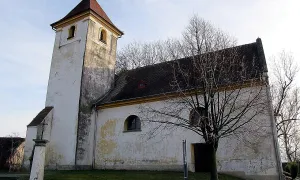
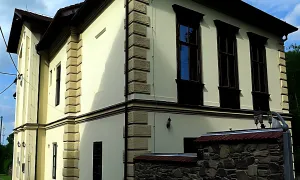
Real photos taken near the monument

Zdroj a licence jsou uvedeny u každého snímku.
Tips from visitors
No tips yet. Be the first!
Log in and add your tip.
Sources and literature
Photos: Sovicka169 / CC BY-SA 4.0 — Wikimedia Commons. The author and licence also appear when you hover over the image.
Faktickým podkladem tohoto textu byl článek na Wikipedii, jehož autory jsou přispěvatelé Wikipedie. Článek je dostupný pod licencí CC BY-SA 4.0.
Location on the map
More monuments – Plzeňský kraj
Show all in the region

Příběhy a pověsti
Legendy, pověsti a příběhy spjaté s touto památkou
Fotografie návštěvníků
Zatím žádné fotografie. Buďte první, kdo přidá fotografii z návštěvy!
Log in a přidejte svou fotografii nebo hodnoťte.
Za ověřenou návštěvu v aplikaci získáte víc bodů — poznáme podle GPS, že jste na místě.
Reviews and comments