



Terčino údolí Protected area
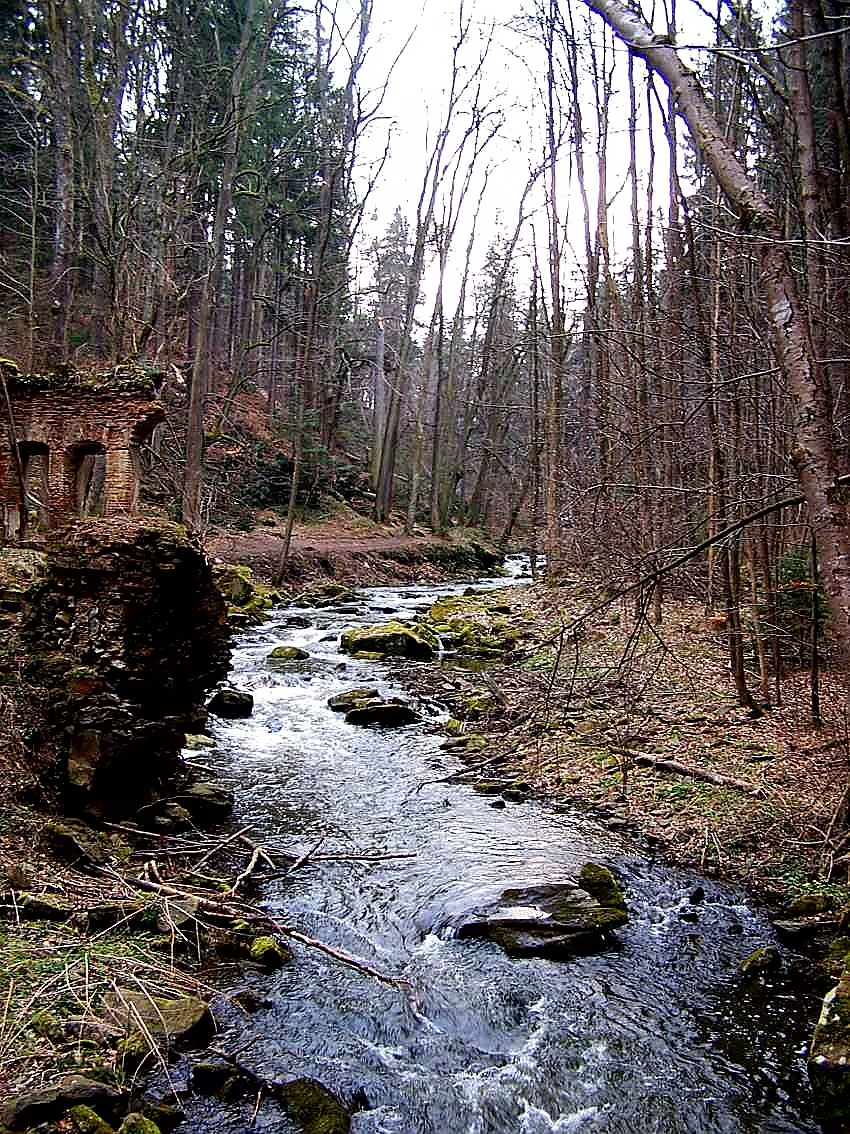
Terčino údolí is a romantic landscape park and a national natural monument in the valley of the Strepnice river near the village Údolí, approximately one kilometre from the New Castles. It originated in 1756. It is a remarkable combination of rare dendrology and romantic buildings, thanks to which it is also protected as a cultural monument of the Czech Republic.
The park was built by Count Jan Nepomuk Buquoy for his wife Teresa, after which he also carried his later name. There was originally a pheasant founded in 1667 and in the beginning it was called Valloncherie. The work on its creation was driven by the gardener Ignác Fnoika. The original area was 68.8 hectares. The concept was based on the fashion ideas of Jean-Jacques Rousseau at the time about being in free and unbridled nature. A similar approach to landscape parks was applied at the time in Lednice, Vlasí, Veltrus or Beautiful Dvoře.
Architectural elements in the valley reflect different periods and styles. In 1788- 1797, the Empire building Lazniček was built, originally called Venzelbau and later Neugebau. In 1803 the Blue House was built, which served the Countess as a summer residence until 1817. The park was also supplemented by a small architectural and sculpture mobility in the form of memoirs with poetic texts that sang friendship. In 1817 an artificial waterfall of about 20 metres was established and in 1852 a Swiss cottage was established. The year 1860 recorded a reconstruction of the Hamer house and the house of the Kolar in the style of English neo-Gothic.
The park was owned by the Buquoy family. The Jiří Jan Jindřich Buquoy was built to make significant modifications and renovations in the 1940s. But the history of the site is also marked by destruction; There was a devastating flood in 1936. It practically destroyed the Blue House, from which only the ruins of two perimeter walls remained. At the time of socialism, the buildings were kept under-maintained, leading to the demise of some small architectural equipment.
From a botanical point of view, the park is an important presence of exotic trees such as douglasks, exudates or over 15 meters high cypress near the Blue House. Very old oak trees stand out among the local species. The oldest of them, a summer oak with a strain of 730 centimeters, grows here for approximately 500 years.
The current area of the park is 138.3 hectares. Since 1949, the territory has been protected as a national natural monument. For visitors, there is a reconstruction of a 5 km learning path. On the edge of the complex there is a water tank Humenice, which serves to protect against floods, and in its vicinity is a late Gothic fortress of Cuknštejn.
Terčino údolí represents a unique link between natural value and historical landscape architecture. It is a place where the influence of European romanticism on the Czech landscape can be observed. Visiting this space offers the opportunity to explore rare specimens of trees and the remains of romantic buildings.
Then and now
Drag the slider to compare how the landmark may have looked when it was built with the view today.
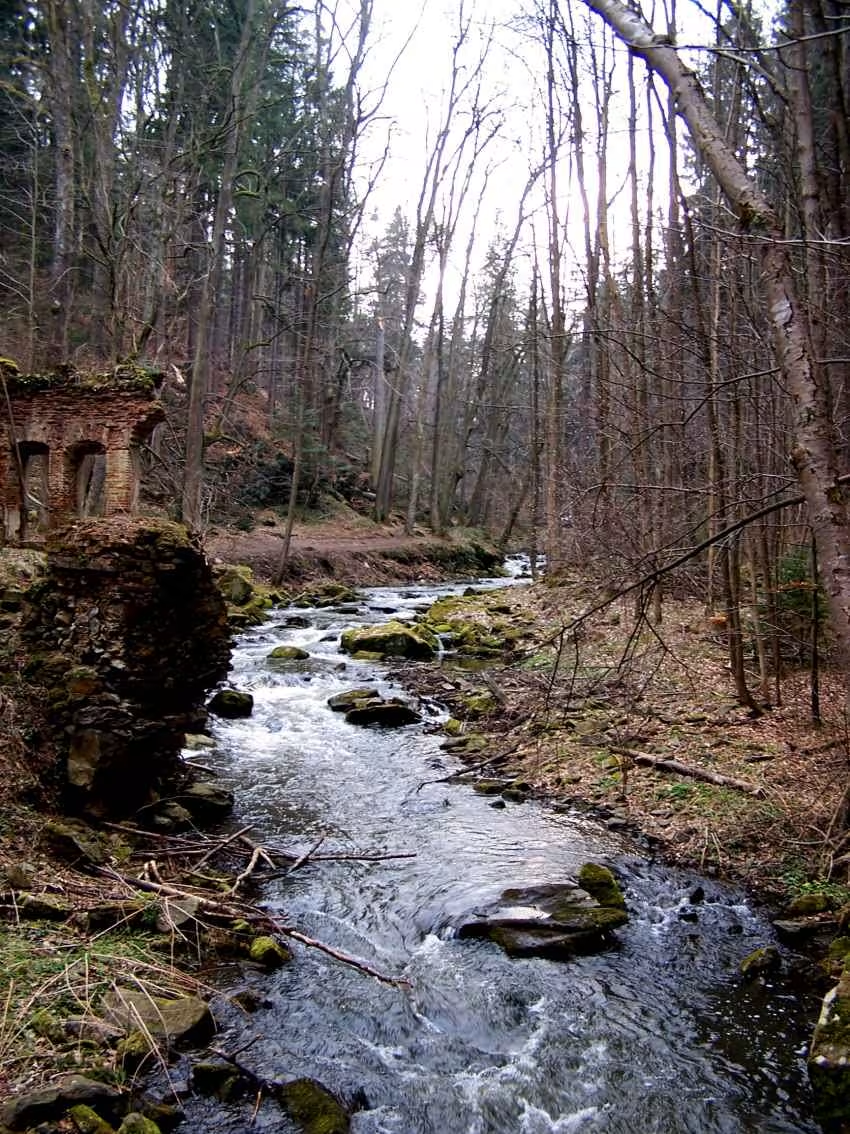
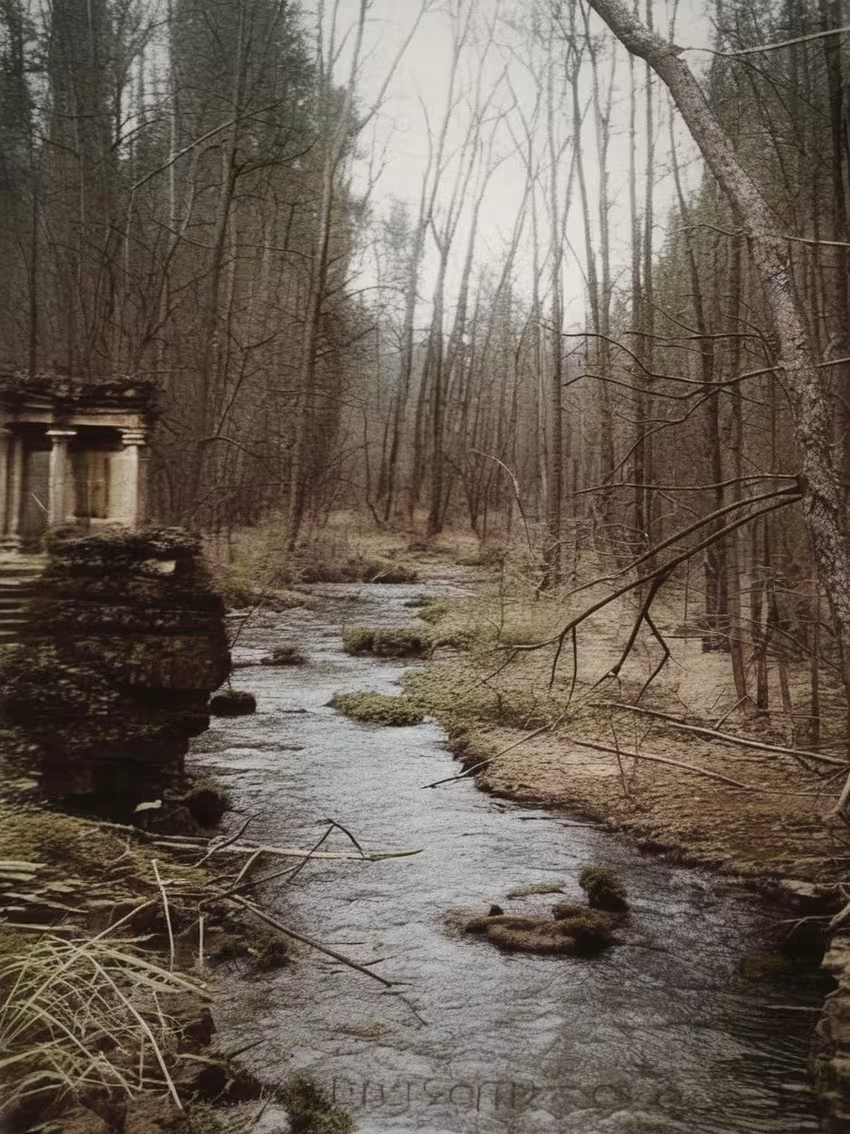
The historical appearance on the left is an AI-generated visualisation and serves as inspiration only.
Historical milestones
- 1756
- Establishing a romantic landscape park
- 1817
- Establishing an artificial waterfall about 20 metres high
- 1852
- Status of Swiss cottage
- 1949
- Announcement of the park by the national natural monument
Architectural development
In 1788- 1797 the Empire building Lazniček (Venzelbau) was built and in 1803 the Blue House. In 1860, the Hamer house and the pie house were converted into English neogotics. The park was gradually supplemented with an artificial waterfall and Swiss chat.
Historical events
In 1936 the park was severely damaged by the flood, which practically destroyed the Blue House. Since 1949, the territory has been protected as a national natural monument.
Owners
Buquoy family
Points of interest
- The park was built in 1756 and built by Count Jan Nepomuk Buquoy for his wife Theresa. - There is an artificial waterfall from 1817, which measures approximately 20 metres. - The oldest oak tree in the park grows approximately 500 years and has a strain of 730 centimeters. The Blue House, which served as a summer residence, was practically destroyed in 1936 by a devastating flood. - Since 2007, a reconstructed 5 km learning trail has been available for visitors.
Guide
Show guide text
This text was created by artificial intelligence and has not been editorially reviewed. It may contain inaccuracies.
Welcome to Terra Valley. Stop for a moment, take a deep breath and feel the calm surrounding you right now. You're standing on the threshold of one of the most beautiful romantic landscapes in our wake. In front of you, there is a valley of the Strepnice River, where nature and the human hand have become a harmonious whole. Look around you at the dense greenery and smooth flow of water. It was this view, full of peace and nature, that was the main goal of the creators of this place.
Now let's move back many years in time to the mid-eighteenth century. It's year seven hundred and fifty-six. It is at this time that Count Jan Nepomuk Buquoy decided to create this unique place. But it was not only a question of power or wealth, but above all a declaration of love. The Count had this park built for his wife Theresa, from whom the name of the valley itself came. Imagine that time when the ideas of the famous thinker Jean Jacques Rousseau appeared in fashion. He believed that man should spend time in unbridled nature to find true peace and purity of the soul. It is these ideas that have become the basis for the form of the park that you are discovering today. Instead of strict geometric shapes and carved livelots, here you will find natural curves and a sense of freedom.
Now, when you perceive the atmosphere of this place, pay attention to the surrounding landscape. The park is not just about trees and flowers, but it is a complex that contains a number of romantic constructions and architectural elements. Notice how buildings are naturally registered in the field. One of the key creators who left his mark was Ignác Fnoika. During your walk, focus on how the roads twist and how they lead you to individual stops. Everything here is designed so that the visitor can find a new, surprising view behind every corner.
If we go deeper into the valley, you'll meet the personalities that were closely linked to this place. In addition to the founder Jan Nepomuk and his Theresa, other members of the family, such as Václav Buquoy or Jiří Jan Jindřich Buquoy, have left their trail. For them, this valley was a refuge from the hustle and bustle of the company at the time. It was a place for contemplation, walks and quiet conversations. Imagine them walking the same paths that you walk and admiring the beauty of the Ceppes.
Now, let's do something that I'm sure will interest you. Within the park there are several real unique features. One of them is an artificial waterfall, which was set up in a thousand eight hundred seventeen. If you reach it, you'll see water falling from about 20 meters. It is a fascinating example of how in the nineteenth century it managed to tame the water so that it looked natural and yet appeared monumental.
But if you're looking for a real witness to history, focus your attention on the trees. One extraordinary oak tree grows in the park. Imagine this tree has witnessed history for about 500 years. His tribe has a perimeter of seven hundred and thirty centimeters. It is a living monument that stood here long before Count Buquoy laid the first stone to establish the park, and it will probably stand here long after we leave. It's a fascinating idea that you can put your hand on the bark of a tree that the Middle Ages remember.
Another interesting point is the Swiss cottage, which was built in the year one thousand eight hundred fifty-two. At that time, fascination was in fashion by far-off landscape and exotic, and that is why the construction of the evocative mountain landscape was created. Also note the Blue House, which served as a summer residence. This building complements the overall picture of the romantic hiding place of the world where man could escape from reality.
All these elements together form a space that is today protected as a national natural monument. This announcement took place in a thousand and nine hundred forty-nine to preserve this unique combination of nature and human architecture for future generations.
Now that you know the story of Terka's Valley, I suggest you continue your research at your own pace. Let the sound of water and the scent of old trees guide you. Stop by the waterfall, touch the bark of the old oak tree, and try to imagine what kind of conversations the Buquoy husbands had when they walked through this valley together. Watch how the light has swept through the tree leaves and how the mood of the landscape changes with every step of you.
This park is like an open book about love, nature and the desire for peace. I hope you enjoyed this short trip to history and that Terčino údolí has enchanted you with its mystery and beauty. I wish you a pleasant further walk and remember to perceive every detail of this romantic paradise. Goodbye.
Tips for visitors
The best time to visit is late spring or autumn, when the colors of nature in the valley of the Strepnice river change beautifully and the landscape park is most romantic. The valley can be reached by car or public transport; Check the specific path and connection in maps or search engines.
Take suitable shoes for a walk and plenty of water. Since it is a landscape park, we recommend the clothes suitable for nature walks that allow you to freely discover the surroundings.
For best photos, set off in the morning or late afternoon light, which creates deep shadows and highlights the romantic atmosphere of the valley. Focus on views of the river and historical elements of the park.
In the vicinity there is a water tank Humenice and a well preserved late Gothic fortress of Cuknštejn, which is an ideal addition to the whole trip.
Families with children appreciate the space for exploring nature and walking along the water. The park offers a quiet environment suitable for common observation of the surrounding countryside and history built for Countess Theresa.
Frequently asked questions
Can the monument be visited?
We have not verified whether this monument is accessible. Please ask the owner or operator, or the local municipal office.
Where is the monument?
Location: Údolí. The map on this page shows the exact spot.
Why is the monument protected?
It is listed in the Central List of Cultural Monuments of the Czech Republic as a cultural monument (register no. 1000147388).
Businesses nearby
Do you run a restaurant, accommodation, shop, museum, rental, wellness or other visitor service near this monument? Show yourself directly to the people heading to it — this is how they will see you in the app and on the web:
Nearby
V blízkosti se nachází vodní nádrž Humenice a dobře zachovalá pozdněgotická tvrz Cuknštejn.
Accommodation nearby
Themed route
Here is the design of the cruise route:
1. Humenice water tank (water surface) - The ideal place to start the journey and a short walk by the water. 2.Terčino údolí (park) - The main destination of the trip, where you can enjoy the beauty of nature in the park area. 3. Cuknštejn Fortress (historical building) - Late Gothic fortress, which is very well preserved and offers a view of the past.
Seasonal recommendations
In spring, the valley wakes up in rich green colors and the first flowers bloom here. The air is fresh and light soft, which creates a feeling of a new beginning. We recommend moisture-resistant and light-layered footwear because it can be colder in the lowlands. The best time for walking is in the morning when dew is still visible on the grass.
Summer brings thick shielding under trees and intense scent of nature. The sun penetrates the leaves and creates a game of light and shadow on the road. In the main summer season it is advisable to set off very early in the morning to avoid heat. Don't forget the hat on your head, enough drinking water and light, breathable substances.
Autumn in this park excels with golden and red colour of leaves, which turns the overall atmosphere into melancholy. Light is golden and soft in this period, which is ideal for landscape observation. It is suitable for waterproof raincoats and fixed footwear that does not slip on wet leaves. An ideal visit in the afternoon.
Winter will turn the valley into a quiet and minimalist place where grey and white tones dominate. The atmosphere is calm and freezing, possibly snowy. In advent time it is necessary to choose warm winter shoes, gloves and wool clothing. Due to the short day, it is best to plan the journey by noon to make enough daylight.
Visualizations and artistic views


The visualisations are generated by artificial intelligence and serve as inspiration.
Photos from the area
Real photos taken near the monument


Zdroj a licence jsou uvedeny u každého snímku.
Tips from visitors
No tips yet. Be the first!
Log in and add your tip.
Sources and literature
Photos: Mgr. Zdeněk Kubeš / CC BY-SA 2.5 — Wikimedia Commons. The author and licence also appear when you hover over the image.
Faktickým podkladem tohoto textu byl článek na Wikipedii, jehož autory jsou přispěvatelé Wikipedie. Článek je dostupný pod licencí CC BY-SA 4.0.
Location on the map
More monuments – Údolí
Show all in the municipality
Příběhy a pověsti
Legendy, pověsti a příběhy spjaté s touto památkou

Fotografie návštěvníků
Zatím žádné fotografie. Buďte první, kdo přidá fotografii z návštěvy!
Log in a přidejte svou fotografii nebo hodnoťte.
Za ověřenou návštěvu v aplikaci získáte víc bodů — poznáme podle GPS, že jste na místě.
Reviews and comments