



Třemšín Ruin
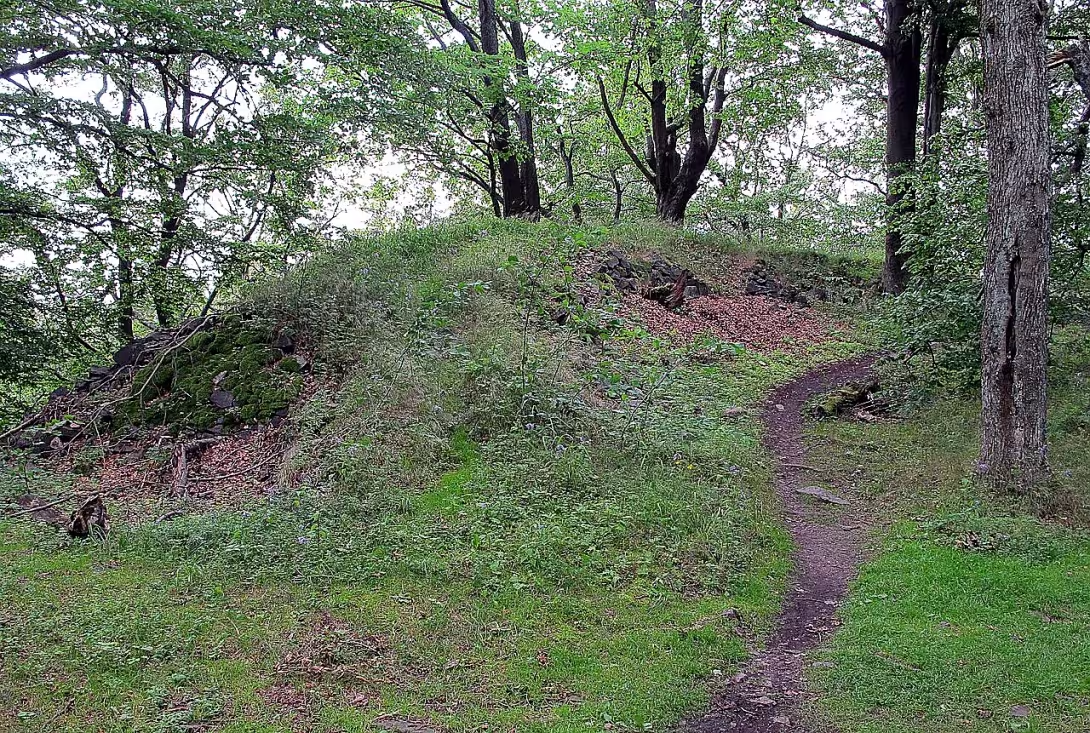
Třemšín is a medieval castle ruin located atop the eponymous mountain in the southern part of the Central Bohemian Brdy Mountains, near Rožmitál pod Třemšínem. This site features remnants of a romanticized medieval fortification and holds the status of a cultural monument within the Czech Republic. Its name is derived from 'střemcha,' a type of tree indigenous to the area, with local legends suggesting hidden treasures beneath its grounds.
The origins of Třemšín trace back to around 1200 when it was established by the Buzic family as a Gothic castle. During this period, Bohemia experienced significant feudal consolidation under the Přemyslid dynasty, leading to architectural developments and the establishment of numerous castles across the region. The site's historical significance is further underscored by its various ownerships over the centuries.
Throughout its history, Třemšín saw a series of notable owners. Initially founded by the Buzic family, it later came under the control of Beneš z Třemšína in 1349, followed by Hroch z Třemšína in 1389. The late 14th century witnessed Diviš z Třemšína and his sons Herš and Jodok Zajíc as its lords. After the death of Herš, Jan Zajíc acquired the castle in 1403 through a royal grant from King Václav IV. By 1408, Hroch z Maršovic had taken control, allegedly seizing it by force to transform it into a den for bandits.
The early 15th century marked turbulent times for Třemšín during the Hussite Wars. In 1424, Jan Zajíc reclaimed the castle, only for it to be captured and plundered by Hussites later that year. Between 1436 and 1446, Mikuláš Vepř řečený Svinda occupied the site before its eventual abandonment.
Local legends add a layer of mystique to Třemšín's history. One tale recounts how during a siege in 1420, Hussite forces used hazelnuts to breach the castle walls after running out of ammunition. Another legend speaks of the lord's daughter escaping during the Hussite invasion, losing her golden crown into a pond, which led to her mysterious disappearance.
Today, Třemšín stands as a testament to its storied past, with only remnants of its medieval fortifications remaining. The site is accessible and offers visitors a glimpse into the region's rich history. Its cultural significance and the legends surrounding it make Třemšín a compelling destination for those interested in exploring Czech heritage.
Visiting Třemšín provides an opportunity to connect with the historical narratives that have shaped this area, offering insights into both its architectural legacy and the folklore that continues to captivate imaginations. Whether you are drawn by history or legend, Třemšín invites exploration and reflection on its enduring allure.
Then and now
Drag the slider to compare how the landmark may have looked when it was built with the view today.
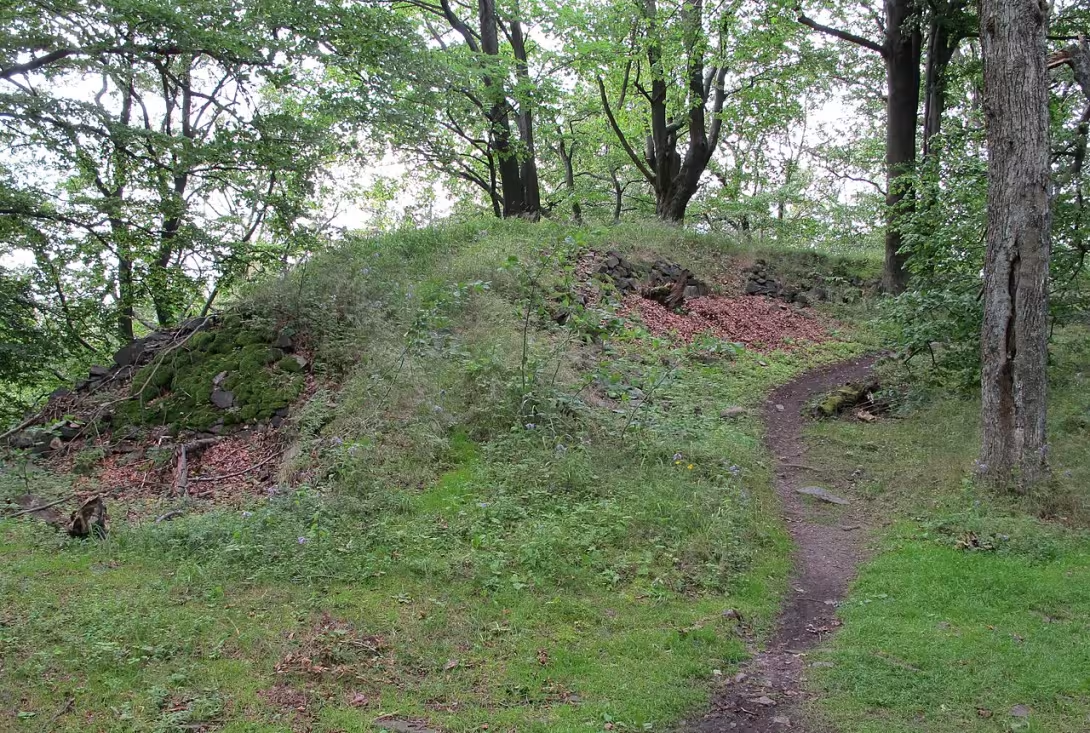

The historical appearance on the left is an AI-generated visualisation and serves as inspiration only.
Historical milestones
- 1424
- The Hussites captured and plundered Třemšín.
- 1436
- Mikuláš Vepř řečený Svinda occupied the castle.
Architectural development
Initially established around 1200 by the Buzic family as a Gothic castle, Třemšín underwent several ownership changes and was eventually abandoned. In the late 18th century, modifications were made to its landscape, including stone walls that altered its original structure.
Historical events
In the early 15th century, during the Hussite Wars, Jan Zajíc reclaimed the castle. In 1424, it was captured and plundered by Hussites.
Between 1436-1446, Mikuláš Vepř řečený Svinda occupied the castle.
Owners
Rod Buziců (circa 1200)
Beneš z Třemšína (1349)
Hroch z Třemšína (1389)
Diviš z Třemšína and his sons Herš and Jodok Zajíc (late 14th century)
Jan Zajíc (1403, after Herš's death)
Hroch z Maršovic (1408)
Points of interest
- During the Hussite Wars, legend has it that Třemšín's defenders ran out of ammunition and resorted to hurling hazelnuts at attackers in a desperate attempt to breach the castle walls. - The name "Třemšín" is derived from 'střemcha,' a type of tree native to the area, which adds an ecological dimension to its historical significance. - In 1403, Jan Zajíc acquired Třemšín through a royal grant from King Václav IV, highlighting the castle's strategic importance and its connection to the ruling monarchy at the time. - A local legend tells of the lord's daughter who escaped during a Hussite invasion, losing her golden crown into a pond, which led to her mysterious disappearance and added an element of romantic tragedy to Třemšín’s history. - In 1436, Mikuláš Vepř řečený Svinda took control of the castle, marking one of its many transitions in ownership during a period characterized by political instability and conflict.
Guide
This guide is narrated by a synthetic voice generated by artificial intelligence.
Show guide text
This text was created by artificial intelligence and has not been editorially reviewed. It may contain inaccuracies.
Třemšín is a mountain in the southern part of Brdy and at the same time a ruined castle on its peak, approximately seven kilometers from Rožmitál pod Třemšínem. The castle has preserved remains of medieval fortifications in a romantic style and they are protected as a cultural monument.
The name of the mountain and the castle come from rowan trees that grow here. However, people have taken a liking to a more colorful interpretation involving three golden rods, or golden twigs. According to one of many local legends, they are hidden as treasure in the castle well.
Already in the tenth century, two fortified settlements stood on Třemšín. Around the year 1200, the Buzici family founded a Gothic castle here. The first known lord was Beneš z Třemšína in the year 1349. By the end of the fourteenth century, the castle was held by Diviš z Třemšína with his sons Herš and Jodok Zajíc. When Jodok disappeared and Herš died, King Václav Čtvrtý granted the castle to Jan Zajíc z Třemšína in 1403.
Then the owners changed. In the year 1408, Hroch z Maršovic appears in the records. The historian August Sedláček believed that he could have seized the castle by force and turned it into a robbers' den. This would be consistent with a letter from Jindřích z Rožmberka to the king from the year 1410. It states that robbers were gathering on Třemšín and harming the property of the Nepomuk monastery. However, the king replied that he had not yet received such a report from Nepomuk.
During the Hussite Wars, the Catholic Jan Zajíc returned to the castle. In 1424, the Hussites conquered and plundered the castle. Between 1436 and 1446, it was still inhabited by Mikuláš Vepř called Svinda, an impoverished nobleman who made his living by fighting in foreign service. After that, the castle was abandoned. Although Zdeněk Lev z Rožmitálu received permission from King Ferdinand I in 1528 to renovate the castle, it did not happen due to financial reasons. Around the year 1800, Archbishop Salm had the paths modified and the mountaintop reinforced with stone walls. In this way, the original state of the fortress was irreversibly destroyed.
Legend tells that the castle long resisted Hussite fire. When the attackers ran out of ammunition, one soldier filled a cannon with a helmet full of hazelnut shells and fired it at the damaged tower. The tower collapsed. Hazel trees with fruits resembling Hussite helmets then grew from the nuts in the ruins.
Another legend describes the escape of the castle lord's daughter through a secret passage. On the fields near Hvožďany, she looked back at the burning castle and dropped her keys. At a large pond, the wind blew a golden crown from her head and that night the girl vanished without a trace. The place near Hvožďany has been called Na klíčích since that time, and the pond was given the name Zlatohlav.
Tips for visitors
The best time to visit Třemšín Castle ruins is during late spring or early autumn when the weather is mild, and the natural surroundings are particularly beautiful. During these seasons, you can enjoy pleasant hiking conditions without the crowds that summer months might bring. The landscape around the Brdy Mountains is lush in spring with blooming flora, while autumn offers a stunning display of fall foliage.
If you're planning to drive, it's advisable to arrive early or consider public transportation options. For those using public transport, check the latest schedules online prior to your visit.
When visiting Třemšín Castle ruins, bring comfortable walking shoes as you'll need them for the hike up the mountain. Also consider packing a backpack with water, snacks, and perhaps a light jacket or raincoat depending on the weather forecast. Since there are no facilities at the site itself, it's important to be self-sufficient.
For photography enthusiasts, Třemšín offers several picturesque spots where you can capture the ruins against the backdrop of the Brdy Mountains. The best light for photography is typically during the golden hours—shortly after sunrise or before sunset—when the sunlight creates a warm glow and long shadows that enhance the texture and depth of the ruins.
Nearby Rožmitál pod Třemšínem, within 30 minutes' drive, offers additional historical sites such as the Church of St. John of Nepomuk and the local museum which provides insights into the region's history. Families with children will enjoy exploring these nearby attractions after visiting the castle ruins.
Frequently asked questions
Can the monument be visited?
This is a ruin. Such sites are often freely accessible, but some can only be visited with a guide or are closed for safety reasons. We have not verified the current situation – take care and respect any restrictions.
Where is the monument?
Location: Voltuš, Středočeský kraj. The map on this page shows the exact spot.
Why is the monument protected?
It is listed in the Central List of Cultural Monuments of the Czech Republic as a cultural monument (register no. 26079/2-2630).
Businesses nearby
Do you run a restaurant, accommodation, shop, museum, rental, wellness or other visitor service near this monument? Show yourself directly to the people heading to it — this is how they will see you in the app and on the web:
Nearby
The Třemšín area is part of the Central Bohemian Brdy Mountains, known for its natural beauty and hiking trails. Nearby Rožmitál pod Třemšínem offers additional historical sites.
Accommodation nearby
Themed route
Třemšín Thematic Trail
1. **Třemšín Castle Ruins (Castle, Historical Site) Begin your journey at the historic Třemšín castle ruins located in Voltuš. This site offers a glimpse into medieval architecture and history. The ruins are set against the scenic backdrop of the Central Bohemian Brdy Mountains, making it an ideal starting point for exploring the area's rich past.
2. **Rožmitál pod Třemšínem (Town, Historical Sites) Approximately a 15-minute drive from Třemšín, Rožmitál pod Třemšínem is known for its charming town center and historical sites. The town provides an opportunity to explore local history and culture, with well-preserved architecture that reflects the region's heritage.
3. **Local Trails in Brdy Mountains (Hiking Trail, Nature) From Rožmitál pod Třemšínem, venture into the nearby trails of the Central Bohemian Brdy Mountains. These trails offer stunning natural scenery and are perfect for hiking enthusiasts looking to immerse themselves in the area's beauty. The diverse landscapes provide a peaceful retreat from urban life.
4. **Rožmitál pod Třemšínem Historical Museum (Museum, Cultural Insight) Conclude your visit at the historical museum in Rožmitál pod Třemšínem. This museum offers insights into the local history and culture of the region, featuring exhibits that highlight the area's past and its significance within Central Bohemia.
This thematic trail combines historical exploration with natural beauty, providing a comprehensive experience of the Třemšín area and its surroundings.
Seasonal recommendations
Spring: Visiting Třemšín Castle ruins during spring offers a unique experience with the landscape coming to life as nature awakens from winter's slumber. The castle grounds are adorned with vibrant wildflowers and fresh greenery, creating a picturesque backdrop for photography enthusiasts. As daylight hours lengthen, the soft morning light casts a gentle glow over the ancient stones, enhancing their historical allure. Visitors can enjoy relatively mild temperatures, making it an ideal time to explore without the summer crowds or winter chill. It's advisable to wear comfortable walking shoes and layered clothing to accommodate fluctuating weather conditions. Arriving early in the day allows for a peaceful stroll through the ruins before larger groups arrive.
Summer: Summer at Třemšín Castle is characterized by lush greenery and abundant sunshine, making it perfect for outdoor activities and exploration of the expansive grounds. The warm temperatures and long daylight hours provide ample opportunity to fully appreciate the castle's history and natural beauty. However, this season also attracts more visitors, so arriving early in the morning can help avoid the larger crowds that gather later in the day. Sun protection is essential; wearing a hat, sunglasses, and sunscreen will ensure comfort during your visit. Light, breathable clothing is recommended to stay cool under the summer sun.
Autumn: Autumn at Třemšín Castle presents a stunning display of fall foliage, with vibrant reds, oranges, and yellows transforming the landscape into a breathtaking tapestry. The cooler temperatures make for comfortable exploration of the ruins, while the softer light of late afternoon enhances the castle's mystical atmosphere. This is an ideal time to visit if you prefer fewer crowds, as many tourists opt for summer vacations. Layered clothing is advisable to accommodate changing weather conditions throughout the day. Bringing a camera can help capture the stunning autumnal scenery and the historic charm of the ruins.
Winter: Winter transforms Třemšín Castle into a serene and enchanting destination, with snow-covered grounds offering a magical setting that feels like stepping back in time. The stark beauty of the castle ruins against the backdrop of a winter landscape provides unique photographic opportunities, especially during sunrise or sunset when the light is soft and golden. However, visitors should be prepared for colder temperatures and potentially icy paths; wearing warm clothing, sturdy boots, and gloves is essential. Winter offers a quieter experience, perfect for those seeking tranquility amidst history.
Visualizations and artistic views


The visualisations are generated by artificial intelligence and serve as inspiration.
Photos from the area
Real photos taken near the monument


Zdroj a licence jsou uvedeny u každého snímku.
Tips from visitors
No tips yet. Be the first!
Log in and add your tip.
Sources and literature
Photos: Huhulenik / CC BY 3.0 — Wikimedia Commons. The author and licence also appear when you hover over the image.
Faktickým podkladem tohoto textu byl článek na Wikipedii, jehož autory jsou přispěvatelé Wikipedie. Článek je dostupný pod licencí CC BY-SA 4.0.
Location on the map





Příběhy a pověsti
Legendy, pověsti a příběhy spjaté s touto památkou

Fotografie návštěvníků
Zatím žádné fotografie. Buďte první, kdo přidá fotografii z návštěvy!
Log in a přidejte svou fotografii nebo hodnoťte.
Za ověřenou návštěvu v aplikaci získáte víc bodů — poznáme podle GPS, že jste na místě.
Reviews and comments