



tvrziště Hradiště Motte
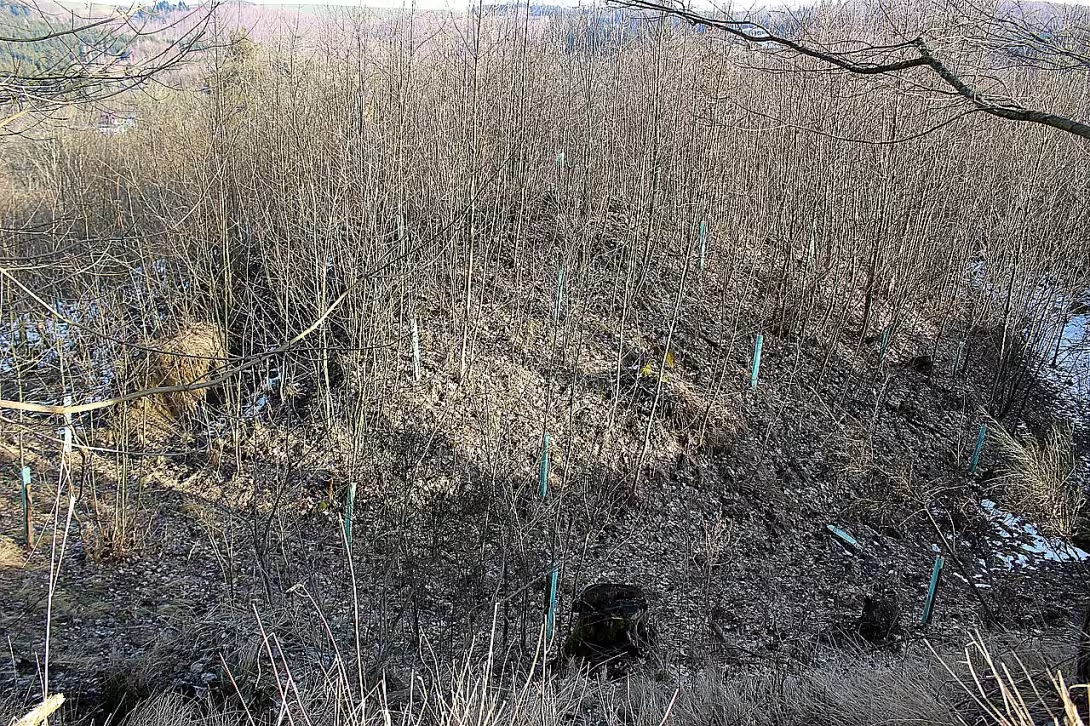
The Castle Hradiště or Hodkov is an extinct medieval fortress near the village Hodkov southwest of the Záslavice district of Kutna Hora in Central Bohemia. In the fifteenth and first half of the sixteenth centuries, she served as the centre of a small aristocratic estate. Today, it has preserved a fortress with terrain tracks and fortifications, which is protected as a cultural monument.
This monument represents the type of remnant of a noble estate whose oldest form of construction is linked to the period of the fourteenth and fifteenth centuries. During the flowering period, the fortress took place in the Czech countries of Hussite war and there were frequent changes in the possession of noble goods. The first written mention of Hodkov dates back to 1375, when the village belonged to Peter from Kolovrat, but which was based in Zruč nad Sázavou Castle. According to Augustus Sedláček, it was already standing, but it belonged to someone other than Albert of Hodkova, to whom part of the village belonged in 1395. At the end of the 14th century at Hodkov was Kuneš z Hodkova, the ancestor of the family Bohdanecky of Hodkova, to which also belonged Otryba and for a certain period of time of China. For the first time, the Hodkovské fortress itself was evidenced in 1414 in the agreement on the possession of the property.
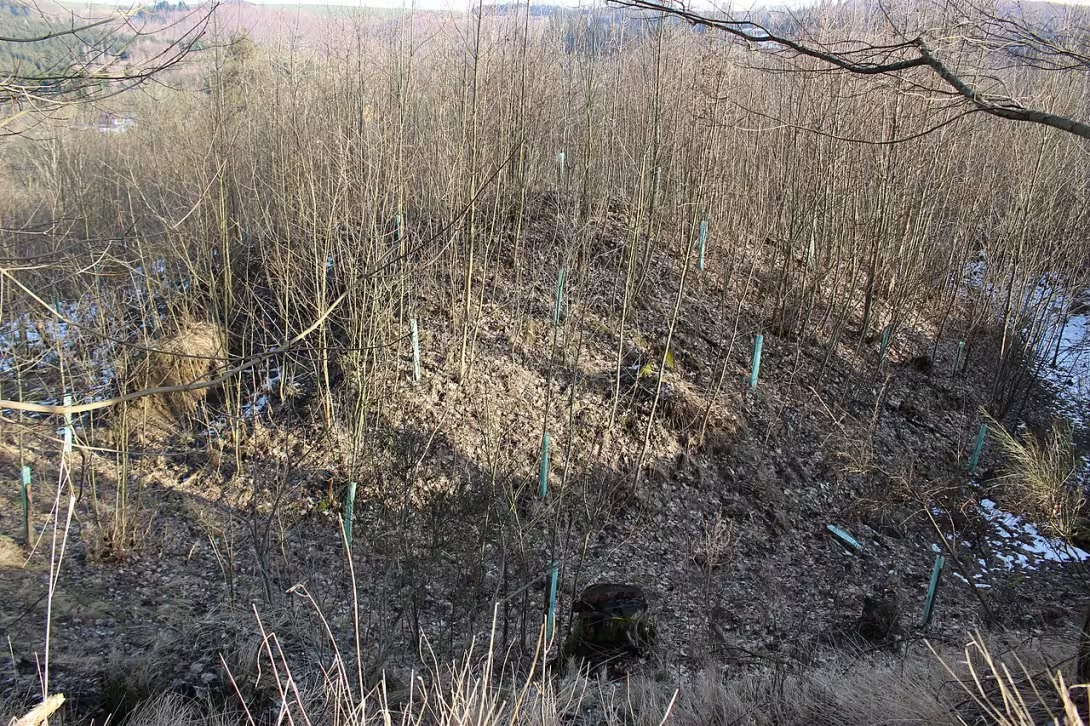
The building was a fortress built as an object of the motte type on the central hill. The fortification consisted of up to six meters of deep moat, which surrounded the central hill from three sides, while the east side protected the steep slope. From the south, the trench crossed the narrow front of the neck, and there are now several deepening and aluminium-shaped filling on the hill. Later construction modifications and fates left traces of decay and wall disassembly on the building.
The history of owners and administrators dates back to Petr from Kolovrat to Kunesh from Olbramovice, who, from 1406 to 1418, held the position of Karlstejn Purkrabi. In 1414 he entered into an agreement on the possession of property with Otek of Olbramovice and Mikuláš of Lhota. After the death of Kunesh of Olbramovice between 1418 and 1419, his property was declared death, causing disputes with Otek of Olbramovice and Mikuláš of Lhota. But these disputes postponed the beginning of the Hussite wars. Hodkov was then dominated by Otík z Olbramovic, which was inherited by the son of Kuneš Kozel z Olbramovic. In 1464, he registered his wife's estate to Elizabeth from Žestok. After the death of the husbands, Jan z Říčan a Hrádku and the brothers Václav and Ondřej Dvořecký of Olbramovice claimed the inheritance, with Elishka's share to King Vladislav in 1474. Hodkov subsequently remained in the property of Dvořecký z Olbramovice and in 1520 it belonged to Přech z Dvořecké in the division of the property. 1546 He bought Načeradec, where he moved, and the headquarters in Hodkov and Olbramovice began to decay. Shortly before, Přich sold the village to Peter Rybk from the Escape, but he lived in the sailing yard.
Key events include 1414, when the existence of the fort was first documented in the framework of a property-holding agreement. In 1550, the manatee's fortress is referred to as desolate, even though at the beginning of the seventeenth century its walls were still in an easy repair state. After 1760, the royal chamber began to dismantle the remaining walls and the building material obtained served in expanding the economic court on the southern edge of the village. People's rumors about the destruction of the fortress during the Hussite wars are also tied to history, for which historical documents are missing.
Today, only a fortress with terrain traces of buildings and fortifications has been preserved from the former noble manor, which resembles the form of medieval motte settlements. The whole area in Kutna Hora district is protected as a cultural monument and offers visitors a view of historical terrain development and medieval fortification. Visiting this place allows you to see the appearance of fedual settlements and historical development of rural estates.
Then and now
Drag the slider to compare how the landmark may have looked when it was built with the view today.
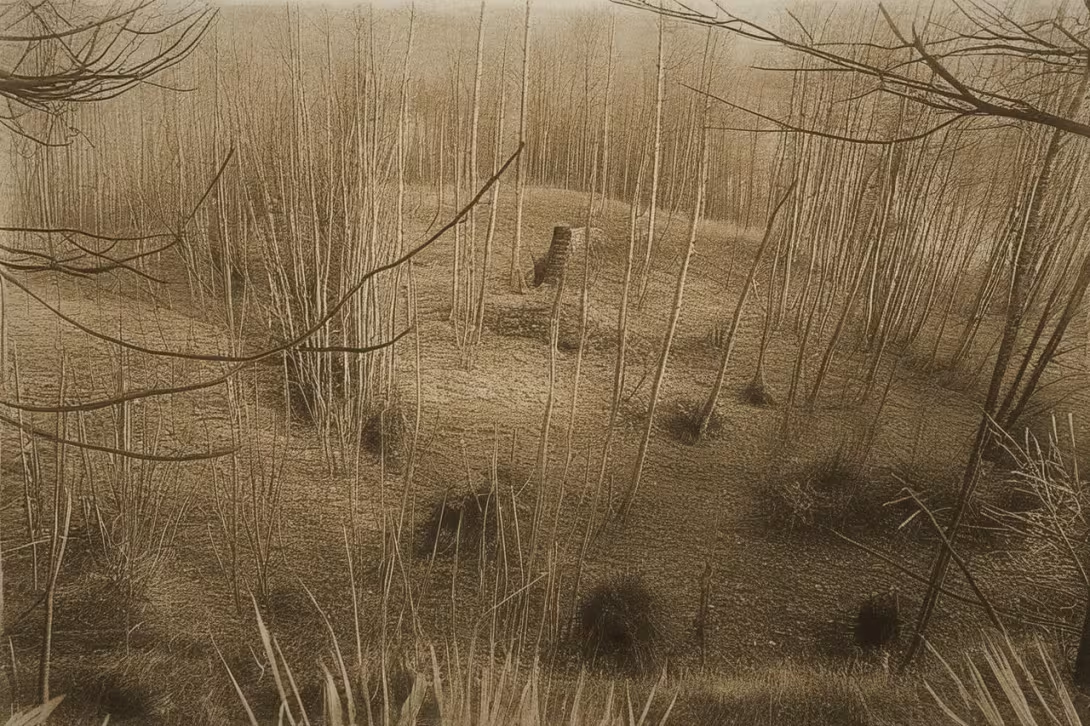
The historical appearance on the left is an AI-generated visualisation and serves as inspiration only.
Historical milestones
- 1414
- First evidence of the existence of a fortress under a property-holding agreement
- 1550
- The fortress is mentioned as desolate in the earth's plates
- 1760
- Beginning of disassembly of walls at the command of the Royal Chamber
Architectural development
The fortress was built as an object of the motte type on the central hill. The fortification consisted of up to six metres deep moat and steep slope on the east side. Later, the walls were dismantled for the needs of the economic court.
Historical events
1414: First evidence of the existence of a fortress under the property ownership agreement; 1550: The fortress is declared desolate in the earth's plates; After 1760: Dismantling the remains of the walls at the command of the Royal Chamber.
Owners
1375: Petr z Kolovrat (owner of village); Kuneš z Olbramovic, Otík z Olbramovic and Mikuláš ze Lhoty; 1464: Kuneš Kozel z Olbramovic and Eliška ze Žestok; after 1474: Jan z Říčan a Hrádku and brothers Václav and Ondřej Dvořecký from Olbramovice; Přech z Dvořeckých; Načeradec.
Points of interest
- The fortress served in the 15th and first half of the 16th century as the centre of a small aristocratic estate. - The building was a fortress built as a motte-type object on the central hill, which from three sides surrounded up to six meters deep moat. - The first written mention of Hodkov dates back to 1375 and the clock fort itself was first proven in 1414. - In 1550 Earth records, the clock fort is referred to as desolate. - After 1760, the royal chamber began to dismantle the walls of the fort.
Guide
Show guide text
This text was created by artificial intelligence and has not been editorially reviewed. It may contain inaccuracies.
Welcome to the unique memory of our past. Right now, you're standing in a place that carries the silent traces of ancient things, and you put on headphones to look beneath the surface of what was left of the ordinary bystander's eyes. Look around you. What is right in front of your eyes is the extinct tvrziště Hradiště, which is located near the picturesque village of Hodkov near the Weaponry. When you look at the terrain inequalities in front of you, maybe at first glance you'll see only an overgrown hill and a wavy landscape, but know that under this layer of green and time, there's a big piece of medieval history hiding. The whole area is today a strictly protected cultural monument, which shows its enormous historical significance. From the original seat of the nobility, the fortress itself has been preserved to this day with clearly noticeable terrain traces of earlier buildings and defensive fortifications. Let us dive together into a story that was unfolding here centuries ago, and let my voice guide us in the footsteps that left time.
Let's move on in time to the beginning of the 15th century. The first written clause on the existence of the fort dates back to fourteen hundred and fourteen, when it was mentioned in the official agreement on the possession of the surrounding goods. At that time and throughout the first half of the sixteenth century, this building served as a proud centre of a small aristocratic estate. Imagine what it looked like back then. Instead of the silence you hear around you now, there was a lively life. There were small rulers and nobles who managed their lands, decided the fate of the subjects and defended their property. The residents of this place often changed because the goods were sold, bought or transferred as part of the family ties.
Now pay attention to the very form of the place where you stand. The architects who once designed this fortress are now unknown, but their construction plan is clear from the ground. The fortress was built as a premeditated object of the so-called motto. That means her heart was a central hill, raised above the surrounding terrain. If you look around you, notice how this hill was protected. On three sides he was surrounded by a deep moat, which in its greatest glory reached a depth of up to six metres. Imagine how hard it must have been to overcome such a fortification. The moat and raised hill formed a natural and very effective barrier against anyone who wanted to get on the fort without an invitation. There is hardly anything left of the original walls and living areas until today, but if you look carefully under your feet and around you, you will see clear terrain tracks of buildings and fortifications that help us to reconstruct the former form of this noble mansion.
This place is associated with a number of fascinating historical personalities whose names have been preserved in the time sheets and the Earth's records. People came through here, forming the shape of the region. We will find Peter from Kolovrat, Jeník from Hodkova, Alberta from Hodkova and Kunesh from Hodkova between the holders and the people associated with this estate. Later included Kuneš z Olbramovic, Otík z Olbramovic, Mikuláš ze Lhoty and Kuneš Kozel z Olbramovic. Names such as Eliška ze Žestok, Jan z Říčan a Hrádku, Václav Dvořecký, Ondřej Dvořecký, Přech z Dvořeckých or Jindřich z Dvořeckých show that there was a great deal of interest in the farm and that there was a change of significant royal families. Načeradec and Petr Rybka z Újezdu left their trail. Each of these people has printed some of their own fate, everyone has been here, dealing with everyday worries, disputes about property or long-distance contracts.
It is also interesting to see the wider context of the area itself, as the first written mention of the village Hodkov itself dates back to the year 133,170, which means that the settlement existed here before the fortress itself was built. But the fate of this place was not too merciful to its material heritage. Over time, the fortress gradually faded as property ratios changed and the center of power moved elsewhere. The break occurred in the fifteenth and sixteenth centuries, when the meaning of the estate fell. The important milestone in the chronology is the year 15 hundred and fifty, when the fortress in the earth's plates is explicitly referred to as desolate for the first time. That means she was lifeless at the time, abandoned, and took her fame for granted. A real blow to the physical remains of the building came more than 200 years later. In the year 60, that is to say in the year seventeen hundred sixty, the royal chamber was instructed to begin to dismantle the remaining walls of the fort. People then took bricks and building materials from abandoned ruins to use it elsewhere, and thus the destruction of the above-ground part of this once proud mansion was completed.
Imagine how the face of this place changed over the centuries. From the living aristocratic manor to the abandoned ruins growing through the weeds to the stone-covered walls, which served as a building material for new houses in the area. Today, this place is protected as a silent witness to ancient times. Before I say good-bye, allow me to invite you to further explore. Walk slowly around the perimeter of the former fortifications, feel the shape of the terrain, try to feel through your eyes the direction of the access roads and where the main residence of the noblewoman used to stand. Let your imagination speak, and imagine the stuffing of horses, the screaming of guards on the rolls and the violence of the medieval farm. Thank you for listening to this audio guide, I hope this stop has been rewarding for you, and I wish you a beautiful rest of the day when exploring other historical treasures of our landscape. Goodbye.
Tips for visitors
In summer, the site is covered with grass and shrubbery.
For transport, choose an ideal car. You can park in the nearby village Hodkov and reach the place by a short walk along the field road, or take advantage of local transport to the Záslavice and complete the rest of the journey by foot; Check the current connection in the search engine.
Take with you fixed shoes because you are moving in the field of the extinct fortress, which is now a ruin. It will also be useful to repellent against ticks and we recommend a snack with drinks, as you will find no facilities for refreshments on site.
The morning or late afternoon light will best serve for photography, which will highlight the depth of ditches and waves. The best footage will be taken from high places surrounding the main area of the former mansion.
Within 30 minutes' drive, you can visit the village Hodkov and the picturesque residence of Záslavice in Kutná Hora district, located in the immediate vicinity of the monument.
Frequently asked questions
Can the monument be visited?
This is an archaeological site. Often there is little to see on the ground and the land may be private. We have not verified access.
Where is the monument?
Location: Hodkov, Středočeský kraj. The map on this page shows the exact spot.
Why is the monument protected?
It is listed in the Central List of Cultural Monuments of the Czech Republic as a cultural monument (register no. 1000127239).
Businesses nearby
Do you run a restaurant, accommodation, shop, museum, rental, wellness or other visitor service near this monument? Show yourself directly to the people heading to it — this is how they will see you in the app and on the web:
Nearby
Village Hodkov, Weaponry, Kutna Hora district.
Accommodation nearby
Trips and activities nearby
Guided tours, tickets and activities nearby from GetYourGuide
Affiliate link: if you buy from the partner, we may receive a commission. The price for you does not change.
Search tours and activities →Themed route
1. Happy tvrziště Hradiště Type: Historical monument Why is it worth a visit: The main destination of our route is the remains of the medieval mansion, located in the town register Hodkov. The site offers a view of the past associated with fortified settlements in the region.
2. Municipality of Hodkov Type: Villages Why is it worth a visit: The village Hodkov itself forms a quiet rural residence in Kutna Hora district. The walk of the municipalities will allow you to see the traditional nature of the countryside in the immediate vicinity of the main destination.
3. Weapons Type: Cities / Villages Why is it worth a visit: Neighbouring Weapons expands knowledge of the wider surroundings of this location. The whole area offers links between local history and rural environment.
Seasonal recommendations
Spring at the fort of the Hradiště in HodkovA brings awakening nature, where surrounding sides and moats cover flowering spring herbs and fresh green grass contrasts with ancient masonry. Sun rays penetrate thin treetops and create ideal lighting conditions for shooting details of masonry remains. There is a great deal of calm in this period and you rarely encounter tourists. As the soil is soggy and slippery after the rain and rain, wear solid waterproof shoes and choose layered clothes with windbreaker. The best time to visit is in the morning, when the morning fog slowly retreats to the spring sun.
Summer at the Hodkovské ruin offers lush vegetation, which, although partly covering the views of the terrain waves and walls themselves, provides a mysterious atmosphere of the overgrown castle. The lighting is the sharpest in the morning, so for deep exploration of the location you better use the late afternoon when the low sun draws interesting shadows. Although it is a free-access ruin outside the main tourist streams, sometimes families with children take trips during summer holidays. Don't forget to bring with you an effective tick repellent, plenty of drinking water and a light breathable headgear, because in the surrounding open terrain it can be hot at noon.
Autumn transforms tvrziště Hradiště into a melancholy landscape where the ruins become a sea of yellow, red and brown fallen leaves. The low sun creates all-day side lighting, which perfectly highlights the dirt of the terrain and the remains of historical fortification. All-present silence and the morning mist-covered landscape give the right historical atmosphere for the perception of ancient times. As it gets cold and the wind blows, put on a warm jacket, hat and gloves. The ideal time for visiting is around noon, when the air temperature will climb to a more tolerable value for a while and the fog will disperse.
Winter gives a raw and completely deserted impact to the Hodkovsky fortress, especially when the old walls and trenches covered a layer of pristine snow. The light is very bright in these months, and the days are short, giving the ruins a dramatic touch, but it significantly limits the time for safe movement. You rarely meet tourists here in winter, which guarantees absolute solitude. For the trip, choose a highly warm winter dress, high snow boots with anti-slip soles and a flashlight if you stay until nightfall. The best time to visit is early afternoon hours, until there is at least a little daylight outside and temperatures fall to the deepest of the night's frost.
Visualizations and artistic views


The visualisations are generated by artificial intelligence and serve as inspiration.
Photos from the area
Real photos taken near the monument


Zdroj a licence jsou uvedeny u každého snímku.
Tips from visitors
No tips yet. Be the first!
Log in and add your tip.
Sources and literature
Photos: Vojtěch Dostál / CC BY-SA 4.0 — Wikimedia Commons. The author and licence also appear when you hover over the image.
Faktickým podkladem tohoto textu byl článek na Wikipedii, jehož autory jsou přispěvatelé Wikipedie. Článek je dostupný pod licencí CC BY-SA 4.0.
Location on the map





Příběhy a pověsti
Legendy, pověsti a příběhy spjaté s touto památkou

Fotografie návštěvníků
Zatím žádné fotografie. Buďte první, kdo přidá fotografii z návštěvy!
Log in a přidejte svou fotografii nebo hodnoťte.
Za ověřenou návštěvu v aplikaci získáte víc bodů — poznáme podle GPS, že jste na místě.
Reviews and comments