



Tyrolský dům Hunting lodge
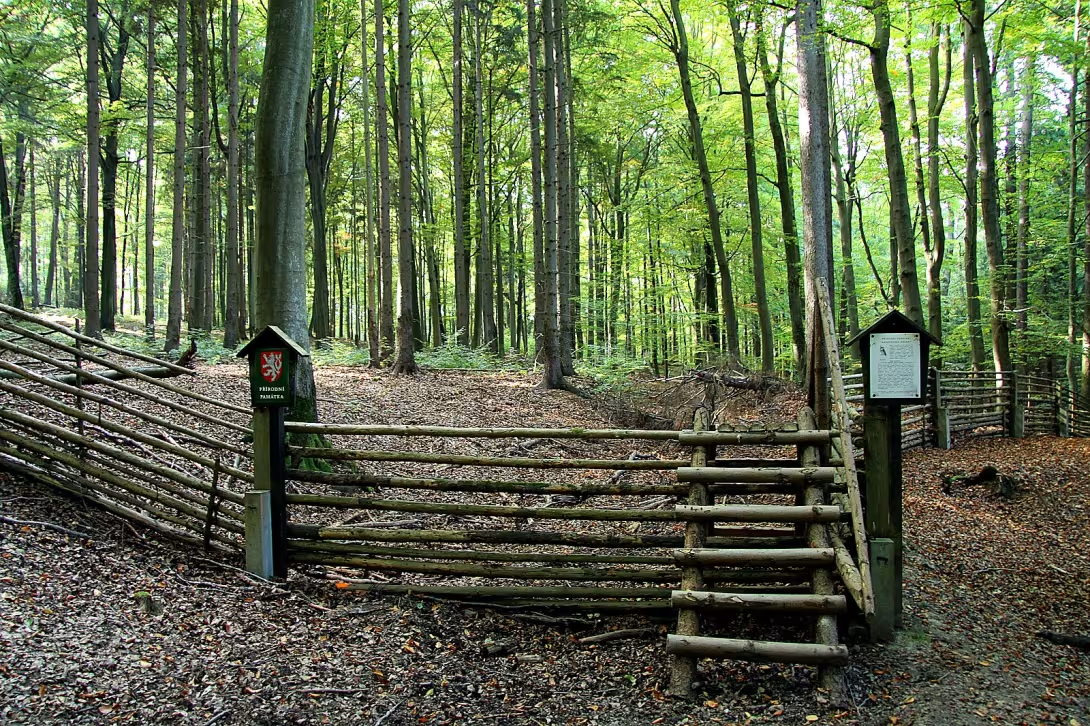
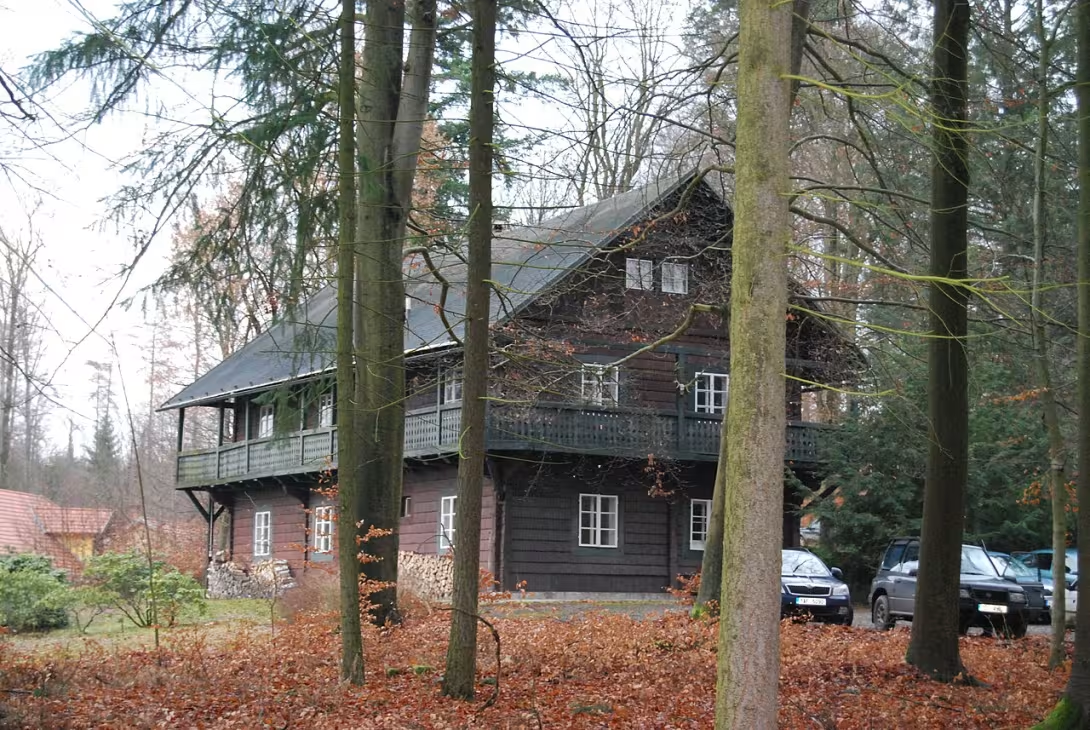
Tyrolský dům is a hunting lodge located in the Rukavec village near Květova in Milevsko, South Bohemia. Built in 1810-1814 for Karl II. Schwarzenberg, this building is a remarkable historical monument with an architecture reflecting Tyrolean style, characterized by carved shields, arches and partridges. Since 1963, it has been protected as a cultural monument.
The creation of the chateau dates back to the period of the Napoleon wars, which was an important political and social period for Europe. In the Czech Republic, the development of industry and modernisation of infrastructure started at that time. Karel II. Schwarzenberg, whose name is the castle, was an influential personality of the time, making this object part of a wider historical landscape.
Architecturally, Tyrolský dům is an Alpine building in Tyrolean style. Its distinctive elements reflect the aesthetics of the time and the personal taste of Schwarzenberg. In 1880, the chateau was built up several spaces, such as kitchens and horsemen, which shows its practical use for animal husbandry and other purposes. In 1903 the chapel of St. Hubert was built nearby as a monument to the golden wedding of Charles III. Schwarzenberg, which adds another historical and cultural dimension to the building.
The ownership of the Tyrol House has not recorded dramatic changes over the years; remained in possession of Schwarzenberg. Karel II. Schwarzenberg, who built it, and its descendants played a key role in its history. In 1963 the castle was declared a cultural monument, which underlines its historical and architectural importance.
Key events include the extension of the kitchen and the horse-house in 1880, which increased the functionality of the castle. Building the chapel of St. Hubert in 1903 is another important event that added to the historical context of the building. An interesting feature is the Art Nouveau burial grounds of hunting dogs located near the castle.
Today, Tyrolský dům is inaccessible to the public, making its visit difficult. The castle is not part of any marked tourist route and the scope is accessible only limited. Cycling routes connecting Květov and Branici, namely Cyclotrasa 31 and Cyclotrasa 1152, lead near the castle, offering the opportunity to explore the surrounding landscape. Tyrolský dům is part of the Rukavec field, which is a protected area.
Tyrolský dům represents an important historical monument not only by its architecture and association with the important Schwarzenberg family, but also its role in animal husbandry. Its protected status underlines the importance of preserving this cultural heritage for future generations. Although the approach is limited, its historical value and location in the beautiful landscape makes Tyrolský dům an interesting place for those interested in history and architecture.
Then and now
Drag the slider to compare how the landmark may have looked when it was built with the view today.
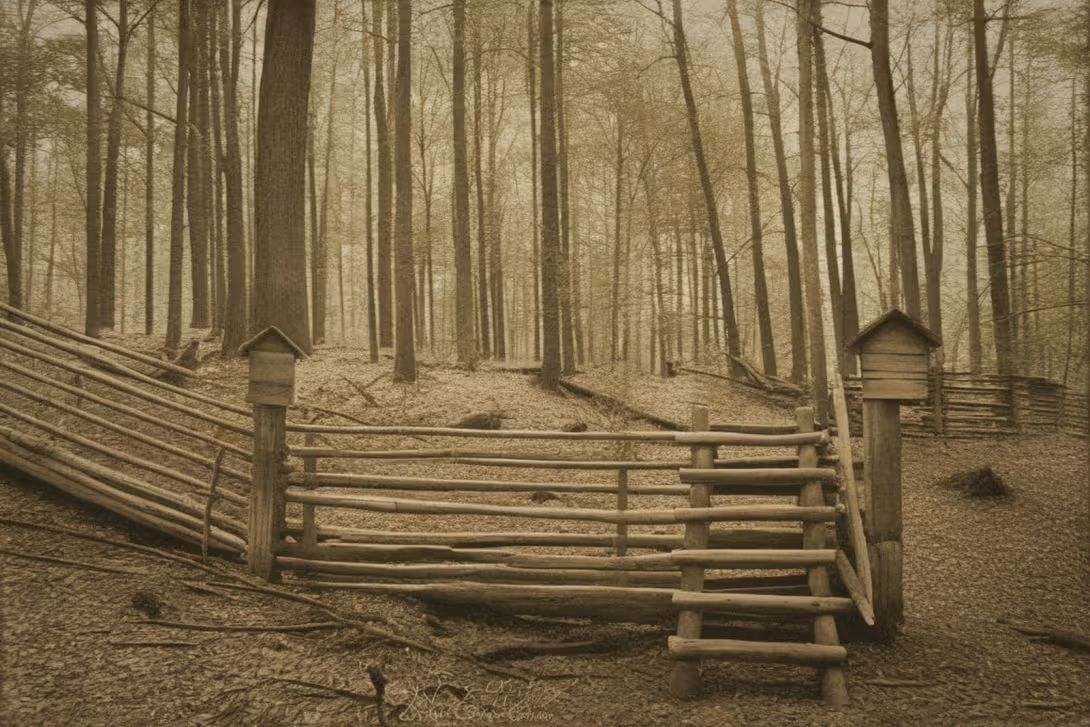
The historical appearance on the left is an AI-generated visualisation and serves as inspiration only.
Historical milestones
- 1810-1814
- Construction of hunting castle for Karl II Schwarzenberg
- 1880
- Construction of kitchen and horticulture
- 1903
- Status of St. Hubert Chapel
- 1963
- Declaration of the object for cultural monument
Architectural development
The castle was built as an Alpine building in Tyrolean style, which is evident in its architectural details. In 1880 there was an extension of space for the needs of game farming and other purposes. The chapel of St. Hubert was built in 1903 as a monument to the golden wedding of Charles III. Schwarzenberg.
Historical events
- 1880
- The extension of kitchen, horse-riding and other premises.
- 1903
- Building the chapel of St. Hubert near the castle.
Owners
Karel II. Schwarzenberg (1810-1814)
Points of interest
- The castle was built in 1810-1814 for Karl II Schwarzenberg. - The architecture reflects the Tyrolean style with carved shields, arches and stacks. - Kitchen and horticulture were added to the building in 1880. - Near the castle there is a Art Nouveau burial ground of hunting dogs. - In 1903, the chapel of St. Hubert was built as a monument to the golden wedding of Charles III. Schwarzenberg.
Guide
Show guide text
This text was created by artificial intelligence and has not been editorially reviewed. It may contain inaccuracies.
Welcome to the heart of the sleeve industry. Right now, you're facing one of the most distinctive and intriguing buildings in this region. In front of your eyes is Tyrolský dům, a hunting lodge that immediately exerts its unique appearance from the surrounding nature. You may be surprised at how different this object is from the common rural architecture you may have seen in this area. His appearance evokes the atmosphere of the Alpine valleys and transmits you to another world, far from normal everyday reality. Please feel this atmosphere, the silence of the surrounding forest and the calm that radiates this place. This house is not just an ordinary house, it is a witness to history that has been standing here for over 200 years telling the story of passion, tradition and aristocratic lifestyle.
Let us now return to the time when the first stones of this mansion were laid in the ground. Imagine the beginning of the nineteenth century, namely 1810 to 1814. At this time Tyrolský dům was created as an intentional building for Karl II Schwarzenberg. For a nobleman of this family, it was not only entertainment, but an integral part of the representation and management of large-scale land. This castle was not only built as a place for rest, but also performed a very specific function. It served as a dwelling and as a strategic centre for the breeding of black animals. This whole area, the Rukavecan branch, was designed to provide ideal conditions for animals and for those who followed it. The construction was therefore created with the clear purpose of combining the comfort of a noble mansion with the practical needs of hunting administration.
Now pay attention to the architecture itself, which is now surrounding you. If you look at the building, you immediately realize that its style is very specific. It's a Tyrolean style that was very popular for these purposes at the time. Notice the details that make up his distinctive face. Look up at the carved shields that decorate the roof. Their precise processing gives the house a sense of playfulness and nobility at the same time. Feel also the presence of arcs, i.e. those rising windows of spaces that bring depth into the facade and allow excellent views into the surrounding nature. Another key element that you can see right in front of you is the stoves. These open corridors and galleries are typical of mountain architecture and here they used not only to move between rooms but also to enjoy fresh air and views on the field. The whole building seems harmonious as if it were a natural part of this forest environment, although its style is so exotic.
The history of this place did not stop in 1814. Over time, the owners' needs changed and the house had to respond to new demands. In 1880 there was a significant reconstruction when the original building was added to the kitchen and horticulture. This tells us that the chateau became increasingly important and required facilities for service and for horses who were absolutely necessary for transport and hunting expeditions at the time. Another important step in the life of this place was the year 1903 when the chapel of St. Hubert was built. Saint Hubert is the patron saint of the hunters, and his presence here is not random. This chapel has given the complex a spiritual dimension and strengthened its identity as a place deeply connected with hunting tradition.
Speaking of this place, we can't ignore the character of Karl II Schwarzenberg. He was the one who materialized this vision. His decision to build Tyrolean style in the heart of the Czech landscape shows wide horizons and a desire for aesthetic diversity. Tyrolský dům was a reflection of its personal taste and need to create a place that will have its own, unmistakable soul. This castle has witnessed many events for decades, from silent early hunting to social meetings of nobles. Its importance was so great that in 1963 it was officially declared a cultural monument, thereby ensuring that its unique architecture and history would be preserved for future generations.
But now I want to invite you to something less common, something that might surprise you a little and make you think. If you go near a castle, you may encounter a place that is very unusual and very touching. There is an Art Nouveau burial ground for hunting dogs. It's a place that shows how deep the respect and bond between the hunter and his faithful companion existed in these times. The fact that these dogs have acquired their own, artistically processed place to rest shows how important they were in life in the Rukavec branch. It's a silent reminder of loyalty and love that goes beyond human and animal boundaries.
When you look at Tyrolský dům, realize that you see not only wood and stone, but you see an effort to create the perfect space for life, tradition and nature. Every detail carved, every stump, and every built-in building is part of a long story that's been going on for over 200 years.
I hope this short journey has enriched you over time and that you have managed to capture the atmosphere of this extraordinary place. But I will no longer hold you back. I suggest you continue your walk on the Rukavec branch, explore its surroundings and let the peace that this space offers consume you. Maybe you'll stop at St. Hubert's Chapel or head for the hunting dog burial site to feel the weight of the history we were just talking about. Thank you for your attention and we will wait you out on your next visit. We wish you a pleasant rest of the day in beautiful nature.
Tips for visitors
The best times for visiting are autumn and spring, when the surrounding nature best complements the atmosphere of hunting grounds and Tyrolean architecture excels in natural light. For comfortable field movement we recommend to take fixed shoes, enough drinking water and possibly a telescope to observe the surroundings. For best pictures we recommend to use soft light shortly after sunrise or before sunset, which will best highlight the details of Tyrolean style. In the surroundings we recommend visiting the Rukavecký branch, Art Nouveau burial grounds of hunting dogs or try cycling routes connecting Květov and Branice, which is ideal for families with children.
Frequently asked questions
Can the monument be visited?
Some buildings of this kind are open for guided tours, others serve another purpose or are privately owned. We have not verified whether and when this monument is open – please ask the operator.
What are the opening hours and admission?
We have not verified the opening hours or admission. Current information is published by the operator.
Where is the monument?
Location: Květov, Jihočeský kraj. The map on this page shows the exact spot.
Why is the monument protected?
It is listed in the Central List of Cultural Monuments of the Czech Republic as a cultural monument (register no. 1000146650).
Businesses nearby
Do you run a restaurant, accommodation, shop, museum, rental, wellness or other visitor service near this monument? Show yourself directly to the people heading to it — this is how they will see you in the app and on the web:
Events nearby
Zdroj akcí: otevřená data měst a obcí ČR (Národní katalog otevřených dat) a kalendář akcí Národního památkového ústavu.
Nearby
Ručávěčská obora, Art Nouveau burial grounds of hunting dogs
Cycling routes connecting Květov and Branice
Accommodation nearby
Themed route
1. Rukavečská obora, Art Nouveau burial grounds of hunting dogs (Type: Historical area). This location offers a view of a unique Art Nouveau monument dedicated to hunting dogs. 2. Cycling routes connecting Květov and Branici (Type: Sports route). This path represents a pleasant way to explore the surroundings. 3. Tyrolský dům (hunting lodge) (Type: Hunting building). The main destination of the trip, which represents the historical architecture of the hunting grounds.
Seasonal recommendations
In spring, the surroundings of the hunting grounds awaken to life, and the gardens begin to bloom with fresh greenery. Light is soft and does not shine in this period, which is ideal for capturing the details of architecture. We recommend wearing layered clothes because the morning cold may be direct, but the afternoon sun is already warm. Visit the place in the morning when there is still peace and nature is the most lively.
The summer months bring to the Tyrol house full of blooms and intense sunlight, which highlights the historical shapes of the building. The atmosphere is vibrant and full of energy, but due to warmth and higher interest it is more busy around. For the best experience come right after opening to avoid the biggest crowds and heat. Don't forget light, breathable substances and sun protection.
The autumn around the monument offers a fascinating color spectrum, when leaves turn color into golden and red shades. The morning mist gives the hunting grounds a mysterious and nostalgic mood that perfectly matches its history. It is advisable to prepare stronger shoes in case of wet terrain and plan the visit for the afternoon when the light is the most beautiful. The number of visitors naturally decreases during this period.
In winter, the landscape around the castle is placed to rest under snow or freeze, creating a quiet and magical atmosphere. The day is short and the light is very low, which highlights the shielded parts of the building. It is necessary to take very warm clothes and solid shoes because the surrounding roads can be slippery. In advent time or cold days, the monument is almost empty, which allows very quiet viewing.
Visualizations and artistic views


The visualisations are generated by artificial intelligence and serve as inspiration.
Photos from the area
Real photos taken near the monument

Zdroj a licence jsou uvedeny u každého snímku.
Tips from visitors
No tips yet. Be the first!
Log in and add your tip.
Sources and literature
Photos: Richenza / CC BY-SA 3.0 — Wikimedia Commons. The author and licence also appear when you hover over the image.
Faktickým podkladem tohoto textu byl článek na Wikipedii, jehož autory jsou přispěvatelé Wikipedie. Článek je dostupný pod licencí CC BY-SA 4.0.
Location on the map

Příběhy a pověsti
Legendy, pověsti a příběhy spjaté s touto památkou
Fotografie návštěvníků
Zatím žádné fotografie. Buďte první, kdo přidá fotografii z návštěvy!
Log in a přidejte svou fotografii nebo hodnoťte.
Za ověřenou návštěvu v aplikaci získáte víc bodů — poznáme podle GPS, že jste na místě.
Reviews and comments