



Ústřední dům Ořechovka Building
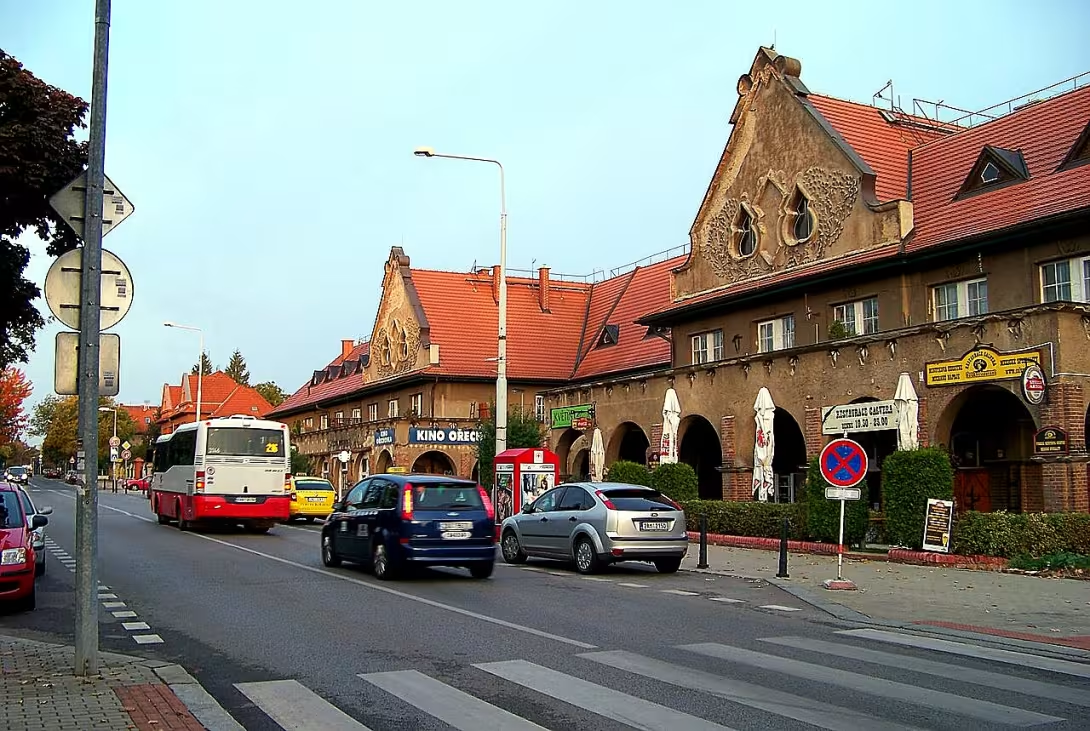
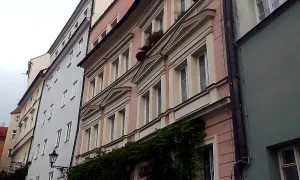
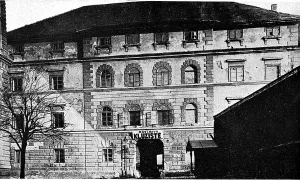
Ústřední dům Ořechovka is a representative building in Prague Rošovice. It was created in 1921 as a commercial and social centre of the same-name villa colony. The building is located in the northern part of Macharov Square and since 2016 is protected as a real cultural monument of the Czech Republic.
The construction was created during the first republic. It related to the development of modern garden towns and residential districts for middle and upper layers. It was built in parallel with the surrounding residential buildings and served as a comprehensive service centre for the newly emerging neighborhood. The author of the design was architect Jaroslav Vondrák.
The building was designed from the beginning as a centre of amenities. It included shops, restaurant, cafe, wine bar, post office, library, medical practice and federal room. In 1927, the building was expanded with a theatre and dance hall. The facade was repaired in 2019.
The cinema was an important part of the house. In 1923, the American mute Kid and Charlie Chaplin were the first to introduce here. The interior of the cinema went through the first reconstruction in the 1970s and further reconstruction in the years 2009-2012, when Sunday programs for children started again. Despite these changes, the space retained the original elements, namely fittings, doors and decorative grates of air conditioning. In 2015 further modernization and digitisation of the cinema were considered.
Ústřední dům Ořechovka is now part of the Town Monument Zone of the Villa Colony of Nuts. It represents a unique historical concept of complex facilities for the residential district.
The monument is a valuable witness to the urban development of Prague from the beginning of the 20th century. The visit to this building offers insight into the social life of the first republic within a unique residential architecture.
Historical milestones
- 1921
- The building of the Central House of Nuts as a social centre of the colony.
- 1923
- The opening of the cinema and the first screening of the Kid with Charlie Chaplin.
- 1927
- Extension of the building to the theatre and dance hall.
- 2016
- The building was declared a cultural monument of the Czech Republic.
Architectural development
The building was built in 1921 according to the design of Jaroslav Vondrak. In 1927 the theatre and dance hall was extended. The cinema was renovated in the 1970s and in the years 2009-2012 and the facade was repaired in 2019.
Historical events
1923: The first film performance at the cinema; 1927: Extension of the building by theatre and dance hall; 2016: Declaration for a real estate cultural monument.
Points of interest
- The building was created in 1921 as a commercial and social centre of the villa colony. - The author of the design was architect Jaroslav Vondrák. - The building included shops, restaurant, cafe, wine bar, post office, library, medical practice and federal room. - In 1927 the house was extended by a theatre and dance hall. - In 1923, the silent Kid and Charlie Chaplin were the first to introduce here.
Guide
Show guide text
This text was created by artificial intelligence and has not been editorially reviewed. It may contain inaccuracies.
Welcome to Prague, the part of Rostovice. You're standing in front of a building called Ústřední dům Ořechovka. If you look at it now, you'll see a representative structure that still radiates the atmosphere of the beginning of the last century with its appearance. It's a place designed to serve as the heart of the whole neighborhood, as a social and business center for people who lived in the surrounding colony of villas. Stop for a moment, take a breath and feel the calm of this neighborhood, which this house unites with its presence. Let us now move back more than a hundred years in time. It's nine hundred twenty-one. At this time Ústřední dům Ořechovka was built. It wasn't just an ordinary house, but it was a gedacht as a resort for people from nearby villas. Imagine how a new neighborhood was formed at the time, and the residents needed a place to meet, shop and do their daily business without having to travel deep into the city centre. This is why this project was to be a practical and social pillar of the entire community. If you now focus on the design of the building itself, please note that the architect Jaroslav Vondrák was the author of this design. Look at the overall layout and facade of the house. Notice how the building looks balanced and dignified. Jaroslav Vondrák has put its experience into the project so that the house fits into the character of a villa colony, but also stands out as a main building with a wide function. Feel the purity of the lines and the way the building washes the space. It's an architecture designed to create a sense of stability and modernity at the time. Now let's imagine what was going on in these walls. Imagine you enter the year nine hundred twenty-one. This house was a real small town in one building. Note that the space was designed to handle almost everything here. There were shops in the building where people bought food and supplies. There was a post office where they exchanged letters with loved ones, and a library that served as a place for education and quiet reading. For those who needed medical assistance, there was a medical practice, and for those who were looking for company, a federal room was prepared. However, when we look at the social life, the house of Orechovka was the real center of entertainment. Introduce yourself in the year nine hundred twenty-three. It was this year that the cinema opened. At the time, the cinema was a miracle and news. The first projection that people saw here was a film called Kid, in which the famous comedian Charlie Chaplin played. You can imagine the excitement and laughter that came out of the dark hall when Chaplin's clumsy movements were alive on the screen. It was a time when cinema brought people a new world, and the house of Orechovka was the window to this world for the inhabitants of Rosovice. The interest is to see how the building evolved in the years to come. Let's move time a few years further, to the year nine hundred twenty-seven. This year, the building was expanded. New premises were added, namely theatre and dance hall. This means that the house was no longer just a place for shopping and mail, but it became a real cultural center. Imagine the festivities, dances and theatrical performances that took place here. There was music in the halls, people dancing and celebrating their holidays together. All of this included a restaurant, cafe and wine bar, where a glass of wine or a cup of coffee was discussed about politics, art and neighborly matters. It's fascinating to think how powerful this house has been linked to people's lives. It wasn't just a building made of stone and bricks, but a place full of emotion, meeting and joy. All of these functions, from the doctor to the post office to the cinema and the dance, made the house of Nuts a unique social core. This rich history and importance for the local community contributed to the fact that in the year two thousand and sixteen, the building was declared a real-estate cultural monument of the Czech Republic. With this recognition, the State has confirmed that the building has irreplaceable value and must be protected for future generations. If you stand before this monument today, perhaps this combination of practicality and elegance will interest you. It is a place that reminds us of how we used to think about urbanism and how important it was to have everything needed in one common space near home. It is a reminder of a time when people met more personally, when visiting a library or a cinema in the neighborhood was a great social event. Look around you again. Feel the atmosphere of this part of Prague. Ústřední dům Ořechovka is now part of the urban heritage and reminds us of the golden era of the flowering of the villa colonies. He is a silent witness to the transformation of the century that has survived many events and still stands as a symbol of the community and neighbourhood. Now that you know the story of this house, whose author was Jaroslav Vondrák and who has been with us since the year nine hundred twenty-one, I suggest you observe the building for a while longer. Try to imagine the excitement that existed here ten years ago, the sound of traffic from that time and the noise of calls at the cafe. This concludes our short stop guide at the Central House of Nuts. I hope you enjoyed this view of the history of Rošovice. I'm going to invite you to explore the area. Walk among the beautiful villas that make up the rest of this colony, and perceive the architecture that surrounds this space. I wish you a pleasant continued walk in Prague and a beautiful day. Goodbye.
Tips for visitors
The best time to visit is spring or autumn, when the colors of the surrounding buildings are the most distinctive and trees do not cover the details of the facade. The building is available by car and public transport; Check the current connection in the search engine.
To visit we recommend taking comfortable shoes for a walk along the surrounding streets. Since there is an establishment in the building, we recommend to keep calm and respect the privacy of people inside.
For the best photos we recommend morning or late afternoon light to highlight the architecture of the house. The most beautiful views are from nearby pavements, from where you can see the entire representative face of the building.
During a short walk in the surroundings visit the Villa Colony of Ořekhovka and Machar Square, which complement the atmosphere of this place.
Families with children can enjoy a common game of searching for architectural details on the facade of the building and walking the quiet streets of the villa district.
Frequently asked questions
Can the monument be visited?
The building is in use (offices, a school, shops and the like). The interior is generally accessible only during operating hours and tours are not usually offered; we have not verified the details. You can see the exterior from the street.
Where is the monument?
Location: Praha. The map on this page shows the exact spot.
Why is the monument protected?
It is listed in the Central List of Cultural Monuments of the Czech Republic as a cultural monument (register no. 1729188891).
Businesses nearby
Do you run a restaurant, accommodation, shop, museum, rental, wellness or other visitor service near this monument? Show yourself directly to the people heading to it — this is how they will see you in the app and on the web:
Events nearby

Zdroj akcí: otevřená data měst a obcí ČR (Národní katalog otevřených dat) a kalendář akcí Národního památkového ústavu.
Nearby
Vilová kolonie Ořechovka, Macharovo náměstí.
Accommodation nearby
Trips and activities nearby
Guided tours, tickets and activities nearby from GetYourGuide
Affiliate link: if you buy from the partner, we may receive a commission. The price for you does not change.
Search tours and activities →Themed route
Here is the design of the thematic route:
1. Machar Square (square): The ideal starting point for walking, where you will feel the atmosphere of the local environment. 2. The Villa Colony of Orechovka (residential district): The road between beautiful houses that shows architecture from the beginning of the last century. 3. Ústřední dům Ořechovka (memorable house): The main destination of the visit where you can admire the interiors and history of this important building.
Seasonal recommendations
In spring, the surrounding area of the building awakens into colours and first trees bloom. The light is soft and pleasant, which looks very fresh from the SLC face of the building. We recommend light spring coats and walks in the morning when the air is the cleanest.
In the summer months, the space is dominated by dense greenery and hot air. The sun illuminates the facade strongly, creating sharp shadows. It is advisable to choose light summer clothes and to visit the site rather early in the morning or late in the evening to avoid the biggest ones.
Autumn brings golden colors and melancholy atmosphere to the garden. Lighting is golden and soft, which underlines the historical character of the construction. It is practical to have waterproof shoes and a warm sweater with you, because in this period often comes a colder wind.
Zimą makes the monument peaceful and steep, often accompanied by freezing fog or snow. The colours are silenced and grey, which creates contrast with the inner lighting visible from the windows. Hot winter clothes, hats and gloves are essential, ideally when visiting in a short time of daylight.
Visualizations and artistic views

The visualisations are generated by artificial intelligence and serve as inspiration.
Photos from the area
Real photos taken near the monument


Zdroj a licence jsou uvedeny u každého snímku.
Tips from visitors
No tips yet. Be the first!
Log in and add your tip.
Sources and literature
Photos: ŠJů (cs:ŠJů) / CC BY-SA 3.0 — Wikimedia Commons. The author and licence also appear when you hover over the image.
Faktickým podkladem tohoto textu byl článek na Wikipedii, jehož autory jsou přispěvatelé Wikipedie. Článek je dostupný pod licencí CC BY-SA 4.0.
Location on the map
Příběhy a pověsti
Legendy, pověsti a příběhy spjaté s touto památkou
Fotografie návštěvníků
Zatím žádné fotografie. Buďte první, kdo přidá fotografii z návštěvy!
Log in a přidejte svou fotografii nebo hodnoťte.
Za ověřenou návštěvu v aplikaci získáte víc bodů — poznáme podle GPS, že jste na místě.
Reviews and comments