



Velké kino Cinema
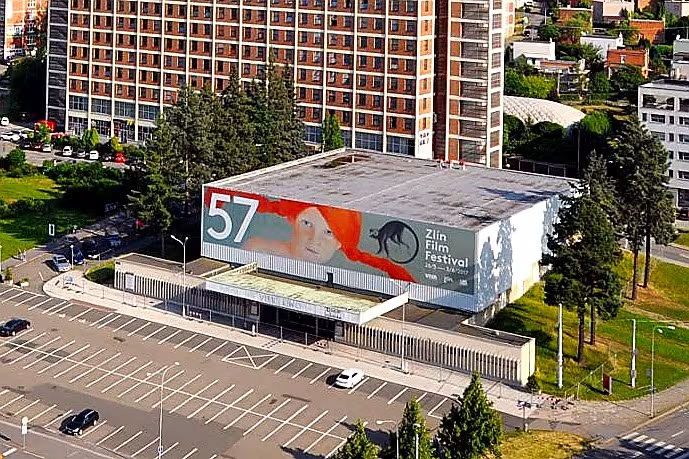
Velké kino in Zlín is a major functionalist building. It was built in 1932 by Bata company according to design by architect František Lydia Gahury. With the original capacity of over 2,500 spectators it became the largest pre-war cinema in Czechoslovakia. This building is located in the heart of Zlína on the Square of Work. Here together with other functionalist buildings such as the market, a department store, hotel Zlín and the 21st building, they form the dominant and characteristic face of the modern city centre. For its exceptional architectural and historical values, the building has since 2001 been protected as a cultural monument, although it has been closed since 1 March 2016 due to emergency conditions.
In the 1930s, Zlín experienced massive development associated with the international success of the Bata shoe group. The growth of the city required the construction of modern amenities and large capacity cultural stands for thousands of employees. This led Bata to the fact that in 1932 the architect František Lydia Gahura had built this cinema originally as a provisional.
The building was created as a temporary functionalist structure with a unique welded steel structure. This was used for the first time in the territory of Czechoslovakia. The cinema had two Meo 5 projectors for 35 mm films and two operational older instruments UM 70 / 35 for 70 mm films. In the early 21st century, the hall was digitized. He got a digital projector and a quality sound system Dolby Digital Surround EX. On the occasion of 80 years of operation of the cinema in 2012, a 70-millimeter projector from the lobby was permanently moved back to the projection booth.
The building originally owned by Bata is currently owned by the statutory city Zlín. From the original capacity of more than 2,500 seats, which made it the first cultural facilities object in Zlín intended for larger visits, the current hall has a number of 1 010 seats. According to the Union of Film Distributors, Velké kino was placed among the first five of 154 cinemas in the Czech Republic before closing.
In 1932 the cinema was open to the public and since 1961 the International Film Festival for Children and Youth has been held every year. In the past, in addition to film projections, there were direct transmissions from the Metropolitan Opera House in New York, concerts, outdoor film festivals or short film shows. The Zlín Walk of Fame has been in front of the building since 2006. Here are the stars of the personalities associated with the film for children and youth. A key turning point in modern history was 2016, when an assessment on disturbed roof, wall and supporting structures was issued on 1 March. This forced the immediate closure of the building and the temporary transfer of events to the Golden Apple Cinema.
Currently, the monument has been closed since March 2016 due to the emergency state of the roof and supporting structures. A complicated reconstruction is needed for further operation. Its preparation began in cooperation with the monuments in 2024 and in December 2025 the building permit was obtained. Although the entrance to the interior itself is closed, the visit to the Square Work offers a view of this iconic functionalist building. Its forthcoming renewal will ensure that it will continue to serve its original purpose once the work has been completed.
Then and now
Drag the slider to compare how the landmark may have looked when it was built with the view today.
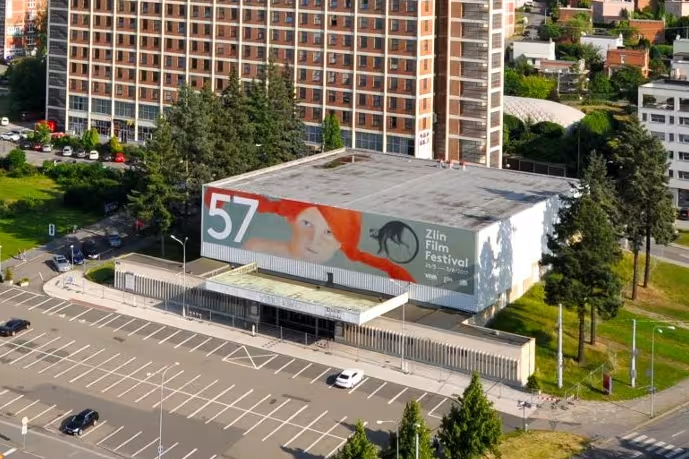

The historical appearance on the left is an AI-generated visualisation and serves as inspiration only.
Historical milestones
- 1932
- Completion and opening of the functionalist cinema by Bata according to the design by F. L. Gahura.
- 1961
- The opening of the tradition of the International Film Festival for Children and Youth.
- 2001
- Declaration of the Great Cinema for a cultural monument.
- 2006
- The creation of the Zlín Walk of Fame outside the cinema building.
- 2016
- Closure of the cinema on 1 March due to the emergency condition of the roof and supporting walls.
Architectural development
The building was built in 1932 as a temporary functionalist building with a unique welded steel structure which was used for the first time in the territory of Czechoslovakia. At the beginning of the 21st century, the hall underwent digitisation and installation of the new sound system Dolby Digital Surround EX. In 2016 the cinema was closed due to poor technical condition and its extensive monument reconstruction has been prepared since 2024.
Historical events
In 1932, the cinema was open to the public. Since 1961 Zlín Film Festival has been held here. As of 1 March 2016, the building is closed due to emergency statics of the roof and supporting structures.
Owners
Originally the company Bata, currently statutory city Zlín
Points of interest
- The building was built in 1932 by Bata company according to the design by architect František Lydia Gahury as the largest pre-war cinema in Czechoslovakia with an original capacity of over two thousand and five hundred spectators. - The building was created as a temporary functionalist building with a unique welded steel structure, which was used for the first time in Czechoslovakia. - Since 2001 the building has been protected as a cultural monument and since the first March 2016 it has been closed due to the emergency state of the roof and supporting structures. - Since 1961, the International Festival of Films for Children and Youth has been held in the cinema every year and the Zlín Walk of Fame has been located in front of the building since 2006. - In December 2025 a building permit was obtained for the planned complicated reconstruction.
Guide
Show guide text
This text was created by artificial intelligence and has not been editorially reviewed. It may contain inaccuracies.
Welcome to Zlín, a city that, like no other in our landscapes, tells the story of courage, visionary and constant search for new paths. Right now, you're standing in the very heart of this city, on Labor Square, and in front of you is a building that is much more than just a house for a movie screen. It's Velké kino. Stop for a moment, take a breath and just feel the space around you. Take a look at this structure, which, with its size and its tight lines, controls the surroundings. It is a dominance that carries echoes of the time when Zlín was transformed into a modern metropolis of footwear and industry.
When you look at this building, you see the result of the ambition of one of the most important men in our history, Thomas Bata. He was a man who didn't just want to build factories, but a whole town that would serve people to live, work and rest. It was from this vision that nine hundred thirty-two came to be Velké kino. Bata knew that modern man needed culture, and therefore he wanted not only a common hall, but a space that would fit with its capacity and equipment at world level. To carry out this task, the architect František Lydia invited Gahura, who was a master in creating space that is practical, clean and impressive.
Now pay attention to the architecture itself. The building is built in the spirit of functionalism. That means that its shape matches exactly its function. Here you will not find useless ornaments, no invented columns or unnecessary ornaments. Everything is direct, clear and economical. Look at the facade and feel its rhythm. It's an architecture that speaks the language of efficiency and modernity. But there's also one big secret inside of him that you can't see at first sight. This building, which looks so massive and permanent, was originally created as a provisional object. It sounds strange that such a large building should only be temporary, but that is what makes it unique. Gahura designed it using a special welded steel structure. This was a very modern approach at the time, which enabled fast construction and at the same time the creation of a huge internal space without the need for many disturbing walls.
Try to imagine what atmosphere this place moved in its greatest glory. The original capacity was incredible, over 2,000 500 spectators. This made the Grand Cinema the largest pre-war cinema in Czechoslovakia. Imagine the crowds of people who came in here in Sunday clothes, waiting in their eyes to dive together into the magical world of black and white movies. It was a meeting place, a shared emotional experience, where thousands of people from all over the region gathered in one hall.
This building is closely associated with names that formed the face of modern Zlín. Tomáš Baťa saw the centre of the cultural life of its employees and residents. František Lydia Gahura then inserted his genius and ability to work with material and light into this space. Together, they created a place that became a symbol of progress.
If you look under your feet now, you might notice something strange. In front of the building there is the Zlín Walk of Fame, which was established here in the year two thousand and six. It is a wonderful recognition of people who have done something important for Zlín cinema and culture. It's like a bridge that connects the past to the present and reminds us that film art is still rooted deep in this city.
Velké kino is not just about architecture and history from the 1930s. Since the year one thousand nine hundred sixty one has become home to one of the most beautiful traditions of the city, and this is the International Film Festival for Children and Youth. Imagine the generations of children from all over the world coming here to discover the joy of the film, learn tolerance and learn different cultures. The cinema became a window into the world for thousands of young people who first felt the magic of the silver screen. It is this connection with childhood and youth that gives the building a strange, warm touch that contrasts with its strict functionalist face.
Unfortunately, the history of the building has even sadder chapters. If you realize that the door is not open and there are no loud projections inside, it is because the cinema had to be closed. On the first March of the year, two thousand and sixteen showed that the state of the roof and supporting walls was catastrophic. A building that served thousands of people for so long began to tire under the weight of years. It's a sad moment when silence has spread in the halls, where there used to be laughter and the flapping of the audience. Yet in the year two thousand, the building remains one declared a cultural monument, which means that its value is irreplaceable for us and its rescue is important.
You are therefore standing in front of the construction, which in many ways is the mirror of Zlína itself. There's ambition, there's courage to try something new, there's practicality, but there's the ability to conjure beauty out of simplicity. It is a place where the industrial genius Bata meets the architectural age of Gahura and where the film dreams of thousands of children have become reality.
Even if we can't enter today and let the dark hall and the projector light consume us, this building is still talking. He speaks through his lines, through his greatness, and through the names on the sidewalk of glory. He is a silent witness to the transformation of time that teaches us that even what was intended as a provisional can become a permanent symbol of the identity of the entire city.
Now, please, go around the building. Feel her view changing from different angles, and think about how many stories have happened in these walls. Velké kino remains the dominant square of Work and reminds us that culture and art are as important as work and productivity.
Thank you for stopping by this fascinating place. Now invited to further explore Zlína. Walk through the streets that follow the trail of Bata's system, admire other functionalist pearls and be inspired by a city that has never stopped believing in the future. I wish you a pleasant continuation in your discovery of this unique city. Goodbye.
Tips for visitors
The best time to visit the Great Cinema in Zlín is during the morning hours, when the sunlight ideally radiates a functionalist facade on the Square of Work and allows to admire the pure architectural lines of construction from the year one thousand nine hundred thirty-two from architect František Lydia Gahura. Take the camera with you, comfortable shoes to explore the surroundings and, if necessary, the raincoat, because the building is in emergency condition and the interior is not normally accessible to the public. The best places for photography are directly from the Square Work where the monumental facade of the cinema stands out in the game of morning shadows and lights. In the immediate vicinity within 30 minutes' walk you can visit other iconic functionalist building, including nearby Market, Business House, Hotel Zlín and famous 21st building known as Zlin skyscraper. Tips for families with children include a walk around the city centre with the discovery of unique Bat architecture and relaxation in one of the adjacent spaces suitable for a short stop.
Frequently asked questions
Can the monument be visited?
We have not verified whether this monument is accessible. Please ask the owner or operator, or the local municipal office. According to the heritage register the structure is in poor condition – do not enter it and take care nearby.
Where is the monument?
Location: Zlín, Zlínský kraj. The map on this page shows the exact spot.
Why is the monument protected?
It is listed in the Central List of Cultural Monuments of the Czech Republic as a cultural monument (register no. 1000444746).
Businesses nearby
Do you run a restaurant, accommodation, shop, museum, rental, wellness or other visitor service near this monument? Show yourself directly to the people heading to it — this is how they will see you in the app and on the web:
Nearby
Kino stojí v centru Zlína na náměstí Práce v sousedství dalších ikonických funkcionalistických stavění, jako je Tržnice, Obchodní dům, Hotel Zlín a 21. budova (Zlínský mrakodrap).
Accommodation nearby
Trips and activities nearby
Guided tours, tickets and activities nearby from GetYourGuide
Affiliate link: if you buy from the partner, we may receive a commission. The price for you does not change.
Search tours and activities →Themed route
I propose a thematic tour of architectural gems in downtown Zlína.
1.Velké kino Type: monument (others) Why is it worth a visit: This famous functionalist building on the Square of Work was once the largest cinema in the Republic and still represents the heart of local film history.
2. Market Type: architectural construction Why is worth a visit: Located close to the main destination on the Square of Work and forming an important part of the famous set of modern interwar construction of the city.
3. Business House Type: architectural construction Why is it worth a visit: This large interwar palace shop is just a short walk from the cinema and still serves its original purpose in the city centre.
4. Hotel Zlín Type: architectural construction Why it is worth a visit: A significant height building in the neighbourhood completes the unique urban character of the Square Work and offers a demonstration of traditional local construction.
5. 21. Building (Zlín skyscraper) Type: architectural construction Why is it worth a visit: The famous height building of the former corporate headquarters stands right next to the other designated objects and represents the peak of its functionalist architecture.
Seasonal recommendations
Spring brings awakening nature in the surrounding park and lengthening days when soft rays of the sun gradually reveal the brushed beauty of the functionalist facade. The atmosphere is full of expectations and freshness, but rainy weather can make it difficult to move around. In this period, people are often empty, which you will appreciate when exploring exteriors without interference. Put on waterproof shoes and a solid jacket, because the terrain around the damaged building is usually wet. The best time to visit is in the morning, when the morning fog slowly retreats and provides unique lighting conditions for photography.
Summer plays a game of sharp shadows and bright midday light that uncompromising shows every crack and trace of time on the concrete walls. The green crown of trees partially shielded the space, but the hot air is held in the concrete gorge all day long. The tourist frequency is increasing slightly during the holidays due to the curiosity passing through the city. Choose light, breathable clothes, sunglasses and don't forget the headgear, because the shadow of the building is scarred. The ideal time for a tour is early in the morning or late in the evening, when the sun doesn't burn so much and the atmosphere loses its daily excitement.
Autumn wraps this place in a melancholy veil, where fog, low cloud cover and falling leaves create a silent, up to movie background. The atmosphere is raw and brooding, amplified by wind weather and subdued colors of surrounding green, which slowly retreats through bare branches. Visitors in these months are shrinking rapidly, so you will enjoy the whole scenery in complete peace. The need is warm, layered clothes and a wind-resistant coat, because the open spaces are unpleasant. The best time for arrival is around noon, when daylight reaches its maximum and penetrates through the grey sky.
Winter turns the surroundings into a minimalist black and white picture, where the snow cover covers imperfections and the sharp light reflected from snow creates sharp contrast with dark windows. The atmosphere is quiet, freezing and stopped in time, with early dimming coming very quickly. Movement in close proximity to the emergency facility requires maximum caution due to freezing surfaces and falling snow. Wear a heavy winter coat, a hat, gloves and tight non-slip shoes. The best time for a short tour is around noon, when there is at least a little daylight outside and temperatures fall at least below freezing.
Visualizations and artistic views


The visualisations are generated by artificial intelligence and serve as inspiration.
Photos from the area
Real photos taken near the monument


Zdroj a licence jsou uvedeny u každého snímku.
Tips from visitors
No tips yet. Be the first!
Log in and add your tip.
Sources and literature
Photos: File:Zlin (38631930781).jpg: Herbert Frank from Wien (Vienna), AT derivative work Bazi / CC BY 2.0 — Wikimedia Commons. The author and licence also appear when you hover over the image.
Faktickým podkladem tohoto textu byl článek na Wikipedii, jehož autory jsou přispěvatelé Wikipedie. Článek je dostupný pod licencí CC BY-SA 4.0.
Location on the map

Příběhy a pověsti
Legendy, pověsti a příběhy spjaté s touto památkou
Fotografie návštěvníků
Zatím žádné fotografie. Buďte první, kdo přidá fotografii z návštěvy!
Log in a přidejte svou fotografii nebo hodnoťte.
Za ověřenou návštěvu v aplikaci získáte víc bodů — poznáme podle GPS, že jste na místě.
Reviews and comments