






Větrný mlýn (Růžová) Hotel building
The Dutch-type windmill on the hill Petřín in the village Růžová (the district of Děčín) is a monument with a rich history. The construction from 1878 was originally used for grinding grain and was an important part of the then rural life. In 1966 the building was entered into the Central List of Cultural Monuments of the Czech Republic, which confirms its high historical and cultural value.
The fate of the mill was accompanied by numerous changes. From its inception in 1878 it was operational until 1945. After the redeployment of the German population in the following year, the construction began to deteriorate. The break occurred in 1964 when the mill was sold to a new owner. He started the reconstruction and built other buildings. Today the building serves as a ten-bed guesthouse, which shows its adaptation to modern needs.
Architectural is a typical example of a wall construction of the Dutch type. The two-story conical body was built from a block sandstone on a circular plan with a brick inner masonry. The construction ends with a metal conical roof with a tip and rudder in the shape of a cock. On the southwest side there is a saddle skyline and on the northeast small extension with a flat roof. In the past, the mill was equipped with an electric motor, which enabled grinding even in the wind.
The ownership and management of the mill went through several stages. After the shutdown in 1945 and the subsequent neglect, the building was sold to a new owner in 1964. This change breathed new life into the building and allowed its current function as a pension.
The key milestones include the construction of the mill in 1878, the closure of the operation in 1945, the sale and reconstruction in 1964 and the entry into the Central List of Cultural Monuments of the Czech Republic in 1966. These events reflect the historical development of the building and its ability to adapt to the times.
The windmill is easily accessible today; lies about 850 metres south of St. Peter and Paul's church on the hill of Petřín. It belongs to three mills in this area, making the visit even more interesting. The building boasts a 5-leaf wind wheel with a diameter of 14 metres and other historical elements that attract tourists.
The windmill is not only an architectural monument but also a witness to regional changes. The conversion from an industrial facility to a modern guest house proves its lasting value and adaptability. The site offers a unique view of the past and present day of the village Růžová, which makes the visit to the mill not only interesting but also educational.
Historical milestones
- 1878
- The position of a walled windmill of the Dutch type.
- 1945
- Ending the mill.
- 1964
- Sale of the building and start of reconstruction.
- 1966
- Registration to the Central List of Cultural Monuments of the Czech Republic.
Architectural development
Originally walled building from sandstone wall with brick inner walls. There was a reconstruction in the years after 1964, during which other buildings were added to the building.
Historical events
The construction was completed in 1878. In 1945 the mill was shut down. In 1966 the mill was entered into the Central List of Cultural Monuments of the Czech Republic.
Owners
In 1964 the building was sold to a new owner who started the reconstruction.
Points of interest
- The Dutch-type windmill was built in 1878 and was used for grinding grain.
- Mlyn was entered into the Central List of Cultural Monuments of the Czech Republic in 1966, which confirms its historical and cultural value.
- After the completion of the operation in 1945, the construction began to collapse. In 1964 the mill was sold to a new owner, who started reconstruction and added other buildings.
- Today the object serves as a ten-bed guest house, which shows its adaptation to modern needs.
- Mlyn is part of the three mills in the area and offers a unique view of the past and present day of the village Růžová.
Guide
Show guide text
This text was created by artificial intelligence and has not been editorially reviewed. It may contain inaccuracies.
Welcome, dear visitors, and allow me to welcome you to one of our most interesting buildings. You are standing in front of a Dutch-type windmill that proudly stretches on the hill Petřín in the village Růžová. Your view captures a massive cone silhouette, stone masonry, and a green canvas of ivy, which slowly tangles into a clash. The surrounding forest landscape gives the place a quiet atmosphere, while the gentle breeze gently moves the leaves and reminds us that this object was once driven by wind power. Notice how the sun reflects from the stone walls and how the shadows extend along a circular plan that gives the building a firm and balanced impression.
Let's move on to the past and see how this mill came to be. It was built in 1878, at a time when agriculture was the foundation of the economy and the need for grinding grain was inevitable. The construction workers, whose names were unfortunately not kept in historical records, chose the Dutch type for this project, which was considered modern and effective at the time. The two-storey construction allowed the milling space to be separated from the storage space, which increased operational efficiency. The stone masonry, built from block sandstone, gave the building not only a fortress but also an aesthetic look that survived for over a hundred years.
Now pay attention to the architecture before your eyes. The whole object is walled and has a conical shape that is typical of Dutch windmills. The walls are made of sandstone, which gives them a fine, light grey colour, which over time softened under the influence of green ivy. The Břetan extends over most of the surface, partly covering stone blocks, creating a contrast between nature and construction. The two-storey height allows you to look into the inner structure, although the entrance to the spaces itself today serves as part of the pension for ten people. When you look around, you will see a circular plan, which is a clear sign of balance and symmetry, and which was at that time considered ideal for the distribution of grinding and storage equipment.
Over the years, stories have been created around this place that reveal its transformation and meaning. After more than 60 years of continuous operation, the mill was forced to cease its operation in 1945. At that time the building began to slowly decay, the stones lost their fortress and the ivy spread as a reminder of abandonment. In 1964 there was a major twist - the object was sold to a new owner who started the reconstruction and transformed it into a guest house. This move saved the mill from total destruction and allowed it to gain a new life. Two years later, in 1966, the mill was entered in the Central List of Cultural Monuments of the Czech Republic, confirming its historical and cultural value. The listing not only protects the construction from further changes, but also underlines the importance it has for the local community and the wider public.
Now let me introduce you to the interesting thing that can attract even the most demanding listeners. The Dutch-type windmill, which today stands as the silent guardian of the hill, was considered a technological miracle at the time of its creation. Its construction allowed wind power to be used to drive grinding stone wheels, which significantly reduced the need for human strength and increased productivity. Although the operation stopped after World War II, the very existence of such construction in our region shows how the people at that time were able to adapt to the natural conditions and use them to their advantage. Moreover, when you look at the ivy that spreads across stone walls, you can see how nature and man together form a unique dialogue between the past and the present.
In conclusion, I invite you to explore this place again. If you feel like it, you can enter a guest house that now occupies ten guests, and soak up an atmosphere that combines historical stones with modern comfort. Walk around, listen to a murmur of leaves and imagine how large grinding wheels were once turned here under the influence of the wind. Let yourself be carried away by a story that takes place in stone walls, and let a picture of a windmill that has survived time be etched into your memory, transformed and today serves as a place of rest and inspiration. Thank you for joining this audio guide, and I wish you a pleasant rest of the visit. Let us say goodbye with respect to the past and with the hope that this mill will continue to be protected and admired.
Tips for visitors
Best time to visit: Ideal is early morning or late afternoon when there is soft light and fewer visitors, allowing a quiet tour of the mill and surroundings. Parking and transport: It is possible to reach the mill by car and park in a reserved place along the road; the location is also available by public transport - check the current connection in the search engine. What to take with you: We recommend comfortable shoes, bottle of water, umbrella or raincoat, map area and camera or mobile phone to capture views. Photography: The best angles are from the east side of the mill, where the sun illuminates the conical roof, and from the south side overlooking the hill Petřín. Western light provides dramatic shadows - use the golden hour. What to visit in the area (within 30 minutes): St. Peter and Paul's Church is just 850 m south and offers a historic atmosphere; a walk along the hill Petr provides panoramic views of the landscape. In the vicinity, forest trails are also suitable for easy climbing. Tips for families with children: Children appreciate a short walk to the mill and the possibility to discover old wooden structures. Bring a snack and use the open space around the mill to play free games, always taking care of the safety on the stairs and around the stone walls.
Businesses nearby
Do you run a restaurant, accommodation, shop, museum, rental, wellness or other visitor service near this monument? Show yourself directly to the people heading to it — this is how they will see you in the app and on the web:
Events nearby

Zdroj akcí: otevřená data měst a obcí ČR (Národní katalog otevřených dat) a kalendář akcí Národního památkového ústavu.
Nearby
The mill is located about 850 metres south of the church of St. Peter and Paul on the hill Petřín.
Accommodation nearby
Trips and activities nearby
Guided tours, tickets and activities nearby from GetYourGuide
Affiliate link: if you buy from the partner, we may receive a commission. The price for you does not change.
Search tours and activities →Themed route
1. Church of St. Peter and Pavla, religious object. This building on top of the hill is the ideal start of the trip. 2. Kop Petrín, natural location. The road leads along this hill towards the mill. 3. Větrný mlýn (Růžová), historical mill. The main destination of the route is approximately 850 meters south of the church.
Seasonal recommendations
Spring: In spring, the Wind Mill offers unique experiences in Pink, when nature wakes up from its winter sleep. The first flowers and trees opening leaves form a living background to visit the sights. The sunny days bring ideal lighting that increases the beauty of the mill and its surrounding region. At this time you can look forward to mild temperatures, but there are sometimes cold winds, so it is advisable to carry a light handkerchief or cape. The opening hours of the monument are usually longer, which allows you to visit it even at the end of the day, while avoiding the midday hardships.
Summer: In summer, the Wind Mill in Pink is the most visited attraction. Sunshine days and bright air attract many people who want to explore historical memory in the full bloom of nature. Flowers are on their most beautiful and forests offer refuge from sunlight. For those who visit the mill in the summer season, it is important to come early in the morning or later in the evening to avoid large crowds. It is advisable to carry protective sun clothes and plenty of drink because temperatures are usually high.
Autumn: Autumn offers the Wind Mill in the Pink Melancholic and Coloring atmosphere. November leaves take turns in their golden, orange and red shades, giving the surroundings a unique look. Sunshine days are warm, but cold nights require warmer clothes. The opening hours may be shorter than at other times, so it is good to know before visiting. This season is ideal for quiet tours without large crowds.
Winter: In winter, the Wind Mill in Rose offers a completely different but still attractive impression. The mill is often covered with snow, which adds magic and peace to the landscape panorama. The sunny days are short, so it is advisable to visit the memory during daylight. Warm clothes are necessary because temperatures can be very low and cool wind increases the feeling of cold weather. Opening hours can be limited, so it is important to inform yourself in advance about the operating times.
Visualizations and artistic views

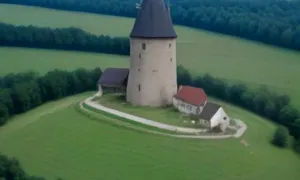
The visualisations are generated by artificial intelligence and serve as inspiration.
Photos from the area
Real photos taken near the monument


Zdroj a licence jsou uvedeny u každého snímku.
Tips from visitors
No tips yet. Be the first!
Log in and add your tip.
Sources and literature
Fotografie: Jitka Erbenová (cheva) / CC BY-SA 3.0 — Wikimedia Commons. The author and licence also appear when you hover over the image.
Faktickým podkladem tohoto textu byl článek na Wikipedii, jehož autory jsou přispěvatelé Wikipedie. Článek je dostupný pod licencí CC BY-SA 4.0.
Location on the map
More monuments – Růžová
Show all in the municipality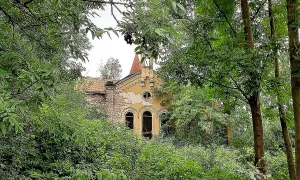
Příběhy a pověsti
Legendy, pověsti a příběhy spjaté s touto památkou
Fotografie návštěvníků
Zatím žádné fotografie. Buďte první, kdo přidá fotografii z návštěvy!
Přihlaste se a přidejte svou fotografii nebo hodnoťte.
Za ověřenou návštěvu v aplikaci získáte víc bodů — poznáme podle GPS, že jste na místě.
Reviews and comments