

vila Hanse Ulricha Villa
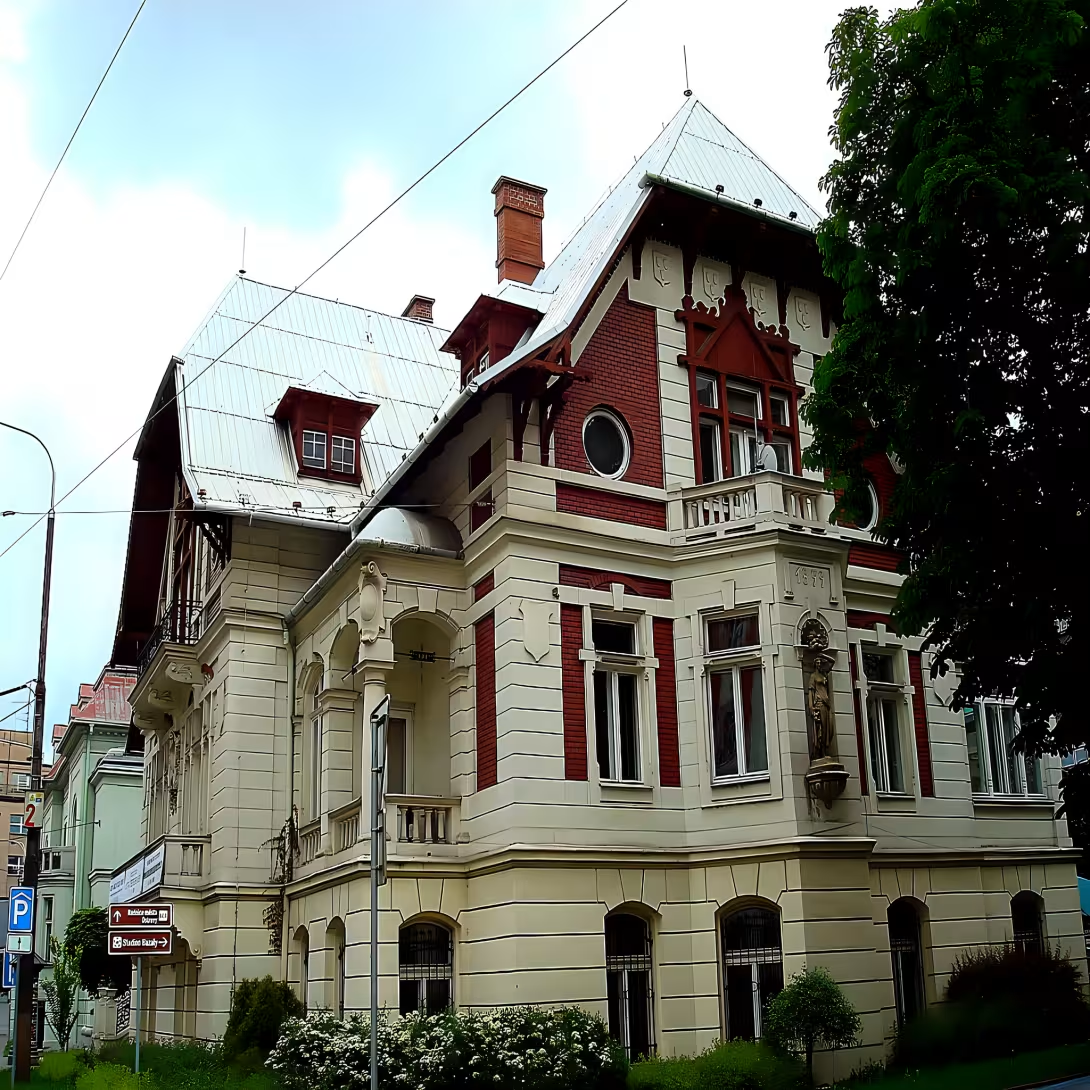
The villa of Hans Ulrich from 1890 stands on Sokolskaya Street in Moravian Ostrava. This local cultural monument is a remarkable eclectic style and by making plans by the first owner himself.
The building was built in 1890 for Johann Ulrich, the last Austrian-Hungarian mayor of Moravian Ostrava. He was very actively involved in the project; He designed plans and was directly involved in the implementation. The creation of the building falls into the period of intense industrial flourishing of Ostrava and the development of infrastructure. At the time, historism and eclectism dominated architecture, symbolizing the status of rich middle class and city managers.
The three-storey building with a separate floor plan connects several architectural directions. The author combined Neo-Renaissance, mannerism and Neo-Baroque with so-called Swiss style and light signs of Art Nouveau. The exterior is characterized by terraces with decorative balustran railing and facade with coats of arms, garlands and wreaths.
After Johann Ulrich's death, his family sold the house. The building was subsequently housed by the offices and later the Ostrava attorney Bohumír Šavrda lived here. Since the 1930s, the construction was held by a mining company and after World War II it became the property of the national enterprise Ostravsko- Karvinské mines.
Since the 1950s, the house has served as a cultural and educational centre. The Directorate of the Centre for Culture and Education Moravská Ostrava currently resides here. Since 1993, there has been an exhibition space in the building called Villa Hans Ulrich since 2024 (formerly Sokolská Exhibition Hall 26). The music club Parník has been in the basement since 1996.
The Villa of Hans Ulrich is a unique example of the architecture of the late 19th century and a reminder of one of the city's major administrators. Her visit allows an insight into the era of the Austrian-Hungarian flowering of Ostrava.
Then and now
Drag the slider to compare how the landmark may have looked when it was built with the view today.
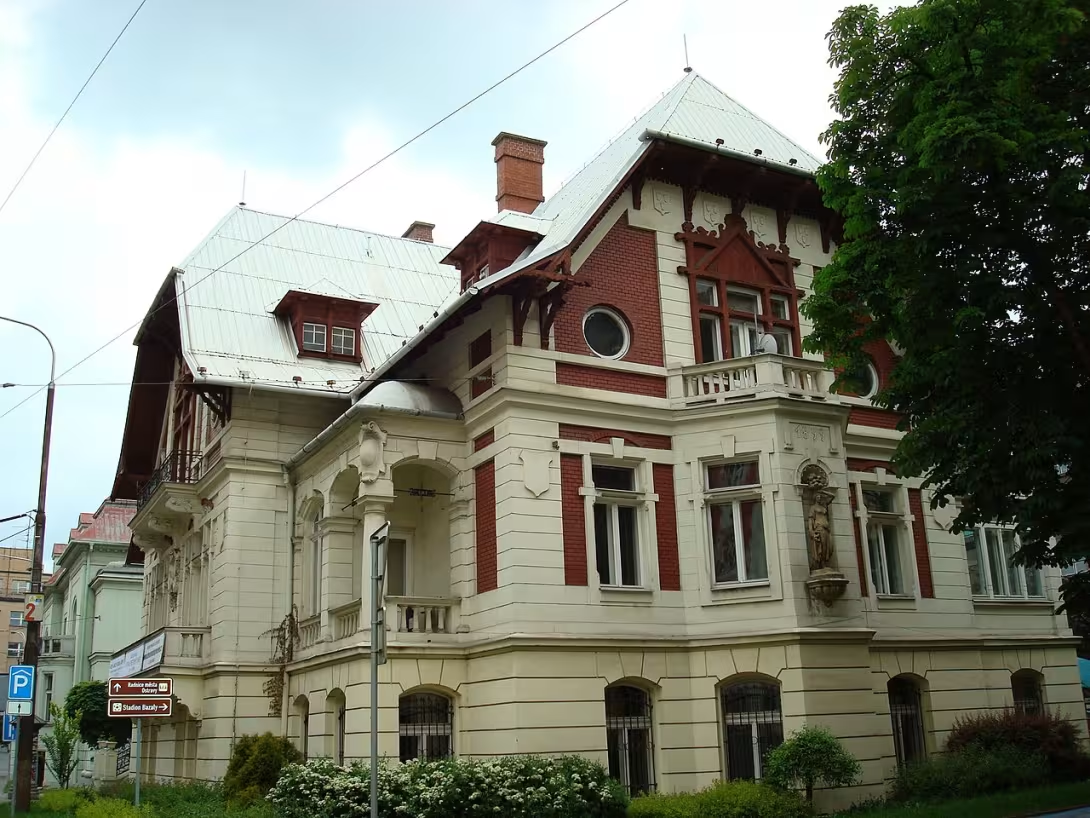
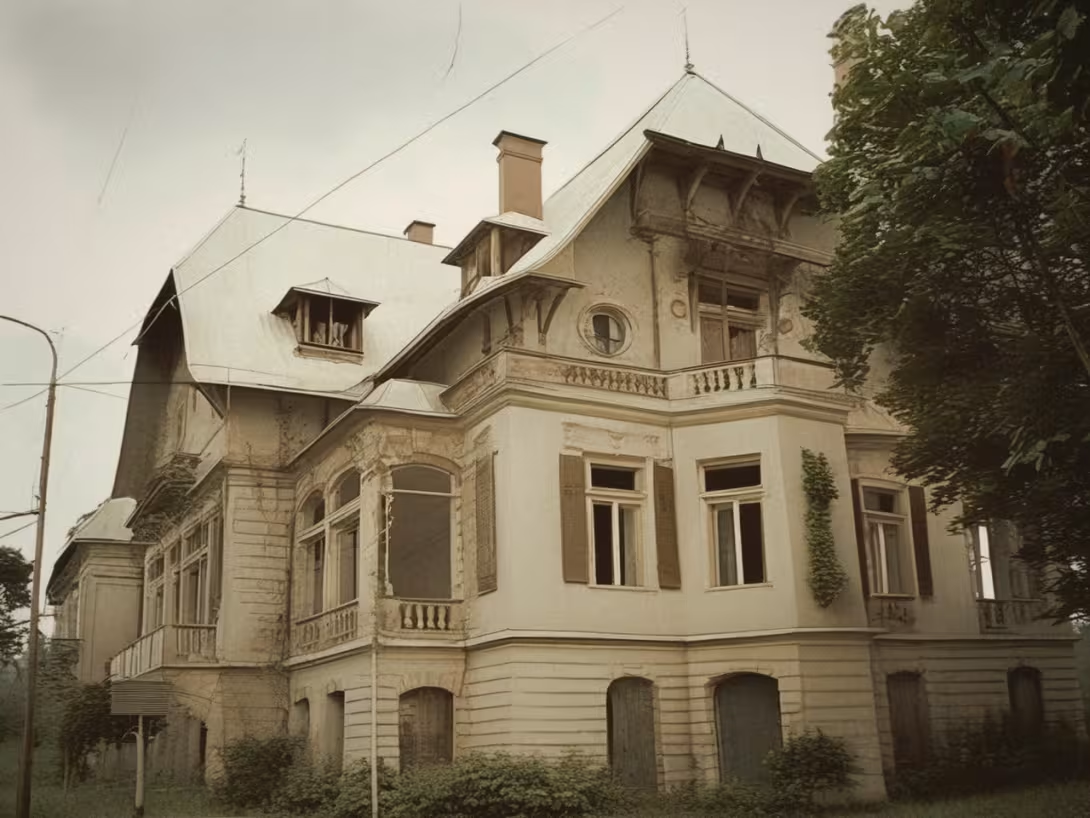
The historical appearance on the left is an AI-generated visualisation and serves as inspiration only.
Historical milestones
- 1890
- the formation of the villa according to the plans of Johann Ulrich
- 1993
- establishment of the Sokolská Exhibition Hall 26
- 1996
- opening of the music club Parník in the basement
- 2024
- renaming the exhibition hall to Vila Hans Ulrich
Architectural development
Three-story building with a separate floor plan. Architecturally it combines neo-Renaissance, mannerism, neo-Baroque and Swiss style with signs of Art Nouveau. The exterior is characterized by terraces with balustran railing and decorated facade.
Historical events
1890: building of the villa, 1950: beginning of the function of cultural and information centre, 1993: establishment of the Sokolská Exhibition Hall 26, 1996: opening of the music club Parník in the basement
Owners
Johann Ulrich, family Ulrich, lawyer Bohumír Šavrda, mining company (since the 1930s), national enterprise Ostrava-Karvin mines (after World War II)
Points of interest
- The 1890 building is a remarkable eclectic style and by the design of the first owner Johann Ulrich himself. - The construction connects directions such as Neo-Renaissance, mannerism, Neo-Baroque, Swiss style and signs of Art Nouveau. - Exterior decorated with terraces with balustran railing and facade with coats of arms, garlands and wreaths. - The building was subsequently occupied by offices, the lawyer Bohumír Šavrda lived here and later there was a mining company. - Since 1996 the music club Parník has been in the basement.
Guide
Show guide text
This text was created by artificial intelligence and has not been editorially reviewed. It may contain inaccuracies.
Welcome, honored visitors, to the heart of Moravian Ostrava. Please stop for a moment and take a deep breath. Right now, you're standing in front of one of the most prominent architectural pearls in Sokolská Street. In front of you is a building that carries echoes of ancient times, tells stories of power, ambition, and love of art. It is an vila Hanse Ulricha, a place that immediately captures you with its form and forces you to stop in a daily rush. Look at the overall appearance of this house. Do you see a special harmony that still seems very diverse? It is precisely because this building is not just an ordinary house, but a real expression of the person who created it.
Let's go back more than a hundred and thirty years together. It's a thousand eight hundred and ninety. At that time Moravská Ostrava was in a period of great expansion and growth. It was this year that this villa was created according to the plans of a man named Johann Ulrich. Johann Ulrich was not just an ordinary builder or owner of the house. He was a man of great influence, the last Austrian-Hungarian mayor of Moravian Ostrava. Imagine the role he had to play in that town. As mayor, he was in charge of the city's development at a time when everything around him changed. This villa was intended not only to be his home, but also to be a representative place that would discourage his status, taste and education. It is fascinating to realize that Johann Ulrich did not only participate in the project as a contracting entity, but it prepared the plans itself. This means that every line, every detail and every decision about the form of a house came directly from his head and vision.
Now I ask you to pay full attention to the architecture itself. Look again at the front of the building. What you see is an example of the so-called eclectic style. You may have heard this word for the first time, but it basically means that the architect didn't want to be confined in just one direction. Instead, he decided to combine elements from several different architectural épochi and styles that inspired him. It's like a music song where different tones are mixed into one whole. If you look closely, you will see here the elements of the Neo-Renaissance that bring order and dignity. At the same time, you will find mannerism with its playfulness and novobaroko, which gives the building a certain sense of luxury and dynamics. Also note the signs of Swiss style, which at that time was very popular for summer villas and brought some lightness and proximity to nature to architecture. And if you look in real detail, you'll see the first subtle hint of Art Nouveau that was beginning to control European fashion and art at that time.
Look up at the facade of the house. Notice how rich it is decorated. You see those fine garlands and wreaths leaning against the walls? These elements add a festive character to the building as if the house was still hosting some big social ball. and then there's the coats of arms. Erby was a symbol of family pride, tradition and legitimacy at the time. The fact that they are located directly on the facade clearly states who lived here and what position they had in the company at the time. Don't forget to look at the terraces too. Notice their balustran railing. These terraces were not only a practical element for relaxing in the fresh air, but they served as a raised platform from which the owner of the house could observe his city while being seen to others. It's an architecture that communicates with an environment that wants to be seen and admired.
When we think about the people who were connected to this place, we go back to Johann Ulrich. His ambition and taste have created a framework in which the building has been moving for decades. In connection with the history of this place, the name of Bohumir Sávrda appears. Personalities like these make up the invisible tissue of history that gives the building a soul. The villa was not just a pile of bricks and stone, it was a living part of the social life of Moravian Ostrava. Imagine the discussions that were held here, the decisions that may have been made here when Mayor Ulrich hosted his colleagues or friends here.
You may now be interested in what happened to the villa in the later years. The history of buildings is often full of twists and turns. But this villa found a way to stay useful even in modern times. In the year one thousand nine hundred ninety-three, the Sokolská Exhibition Hall was established here. The building opened up to the public and became a meeting place for people who love art and culture. And if you're interested in something a little unusual, think about the basement of this noble building. In the year one thousand nine hundred ninety-six, the music club Parnik opened here. It is a fascinating contrast that in the basement of the house, which was built for the Austrian-Hungarian mayor, there was modern music and young people met here. It is this capacity of the building to adapt to new needs and to combine high culture with energy that makes it unique. In the year two thousand twenty-four, the exhibition hall was officially renamed Vila Hans Ulrich, thereby fully returning the building to its founder and his name was again recognised as a symbol of this place.
At present, the whole building serves as a centre of culture and education. It's a place where history meets the present and new generations are educated. When you look at a building, think of it as a bridge. A bridge between the year one thousand eight hundred ninety and today, a bridge between the strict administration of the mayor and the freedom of artistic creation.
Before we say good-bye and you go on, I suggest you go outside the building again. Try to find all the details we talked about. Look for coats of arms, follow the lines of the balustrad and imagine what the world would look like when Johann Ulrich drew the blueprints of this house. You may also see a certain mystery in this - how one person could combine so many different styles in one building and yet create something that is consistent? It may be the secret of his personality, his travel or just his courage to be different.
Now invited to further explore the surroundings or to visit the inner spaces, if they are currently open. Let yourself drift through the atmosphere of this street and discover other hidden corners of Moravian Ostrava. I hope this short trip to history has helped you see Hans Ulrich's villa in a new light and that you will take a piece of her story with you.
Thank you for your attention and I wish you a pleasant rest of a day of new discoveries. Goodbye.
Tips for visitors
The best time to visit is in the morning or late afternoon when the sun hits the facade at an angle that best highlights the details of the construction from 1890. The building is located in the city centre, so it is easily accessible by car and public transport; Check the specific connection in the maps.
We recommend that you wear comfortable shoes for walking around and the camera. As this is a residential house, it is important to maintain calm and respect the privacy of the people.
For the best photos, focus on the architecture details from the perspective of the sidewalk on the Sokol class. The most interesting pictures come in clear weather, where all elements of the historical appearance of the former mayor's villa are visible.
Families with children can use a visit to tell about the history of the city and about how home of prominent personalities in the time of Austria-Hungary. There are no other monuments listed in the area, so we recommend focusing on the architecture of the building itself.
Frequently asked questions
Can the monument be visited?
This is a residential or farm building, not a museum with opening hours. Please view it from public space and respect the owners' privacy. We have no information about access to the interior.
Where is the monument?
Location: Moravská Ostrava. The map on this page shows the exact spot.
Why is the monument protected?
It is listed in the Central List of Cultural Monuments of the Czech Republic as a cultural monument (register no. 1000118890).
Businesses nearby
Do you run a restaurant, accommodation, shop, museum, rental, wellness or other visitor service near this monument? Show yourself directly to the people heading to it — this is how they will see you in the app and on the web:
Nearby
🏰 Historic sites (185)
- Karel Kryl 0.2 km
- Zborovský památník 1. a 2. zahraničního odboje 0.3 km
- Památník válečným veteránům 0.3 km
- Pomník Miloše Sýkory 0.4 km
- Jan Amos Komenský 0.4 km
- sv. Florián 0.4 km
- Pomník osvobození Rudou armádou 0.4 km
- Mariánský sloup 0.5 km
- Petr Bezruč 0.5 km
- sv. Jan Nepomucký 0.5 km
- Masaryk 0.5 km
- Ostravské muzeum 0.5 km web
- Muzeum Keltičkova kovárna 0.5 km web
- Miroslav Tyrš 0.6 km
- Stávka na jámě Trojice 0.7 km
- Galerie výtvarného umění v Ostravě 0.7 km +420 596 112 566 web
- PLATO 0.9 km Porážková 26 +420702206099 web
- Petr Bezruč 1.0 km
- Obětem hornické stávky u Dolu Trojice 1.0 km
- Slezskoostravský hrad 1.1 km web
🍽️ Restaurants and dining (885)
- Klub Parník 0.0 km
- Salaam Namaste 0.1 km Sokolská třída 22 +420 776 295 244 web
- Rapzzz Place 0.1 km Českobratrská 1
- Šnytárna 0.1 km
- Mirror pub 0.1 km web
- Makalu 0.1 km Sokolská třída 644/23 web
- Partay Pub 0.2 km
- Čajovna 0.2 km
- Black Tree Coffee 0.2 km Prokešovo náměstí 1883/2
- Radniční restaurace 0.2 km Prokešovo náměstí 1803/8 +420728532151 web
- Radioklub 0.2 km Dr. Šmerala 1626/2 +420 777 02 02 47 web
- Mama's Bistro 0.2 km +420 737 049 245 web
- Kocouří způsoby 0.3 km Přívozská 34
- Koncepty - Bistro & Bar 0.3 km Na Hradbách 546/8 +420 608 385 834 web
- Smoke Hill 0.3 km
- Burfi 0.3 km
- HogoFogo bistro 0.3 km Sokolská třída 6 +420 774 854 665 web
- Winestone 0.3 km
- Dáma pyková 0.3 km
- Kikafe 0.3 km
🏨 Accommodation (75)
- Hotel Maria 0.3 km
- Hotel Mercure Ostrava Center 0.3 km
- Hotel Imperial 0.6 km Tyršova 211/4 +420 599 099 099 web
- Hotel Brioni 0.7 km web
- Kampus Palace 0.8 km +420 777 101 615 web
- Polský dům 0.8 km Poděbradova 1152/53
- Hotel Slezská 0.9 km Keltičkova 1297/60 web
- Hotel Na Kafkové 1.1 km Kafkova 1380/15
- Nikolas 1.2 km +420 596 134 000 web
- Quality Hotel Ostrava City 1.7 km +420 595 195 000 web
- city-city 1.7 km web
- Hotel Max Šimek 1.9 km Nádražní 839/186 web
- Harmony Club hotel Ostrava 2.5 km +420 596 652 111 web
- Ubytovací středisko Výstavní 2.5 km
- Jan Maria 2.6 km web
- VP1 2.7 km web
- Studentská Residence Slezská, a.s. 2.7 km +420555558231 web
- Levné ubytování Ostrava 2.9 km Přemyslovců 285/35a +420 777 708 447 web
- Ubytovna Laguna 3.0 km +420773601735 web
- Ubytovna Stars 3.0 km +420606723928 web
🚲 Rentals and sport (123)
- Cargo Bike Daddy 0.1 km Sokolská třída 318/39 +420 721 573 679 web
- HUDYsport 0.3 km +420596115176 web
- Joma 0.3 km Na Hradbách 1161/5 web
- D-Sport 0.4 km
- D-Sport Outlet 0.4 km
- Alpsport 0.5 km web
- Bang bang 0.5 km +420 734 876 767 web
- Bicykly.cz 0.5 km Nádražní 385 +420 773 594 957 web
- Bazénové centrum 0.7 km web
- Koupaliště 0.7 km
- Via ferrata Bazaly 0.7 km
- Čapkova sokolovna 0.8 km web
- Husky 0.8 km web
- SC Ostrava 0.9 km web
- A3 SPORT 1.0 km
- Intersport 1.0 km
- Bonver aréna 1.1 km
- D-Sport 1.1 km
- Kilpi 1.1 km
- Trojhalí Karolina - Ústředna 1.3 km
🥾 Hiking and nature (206)
- Nová Radnice 0.2 km
- park Československých letců 0.3 km
- Golíkův sad 0.5 km
- Bezručův sad 0.6 km
- Farská zahrada 0.6 km
- Rovninské balvany 0.7 km
- Výhled na celou Ostravu 0.8 km
- Všehrdův sad 0.8 km
- Park Ernsta Kornera 0.8 km
- Zahrada přítomnosti 0.9 km
- Tylův sad 0.9 km
- Komenského sady 0.9 km
- vodárna Hladnov 0.9 km Nejedlého 1844/14
- Chacharova vyhlídka 1.0 km
- park Válečných veteránů 1.1 km
- Halda Ema 1.6 km
- sad Boženy Němcové 1.7 km
- indiánské městečko 2.0 km
- Plameňáci 2.0 km
- Vila Grossmann 2.0 km web
Accommodation nearby
Themed route
1. Exterior of the Villa Hans Ulrich, architecture. It offers the possibility to admire the unique exterior appearance and details of the building facade. 2. Interiors of the Villa Hans Ulrich, exposition. They allow you to look into historic rooms and see the original equipment. 3. Garden of the Villa Hans Ulrich, park. Ideal place for a quiet walk in the immediate vicinity of the building.
Seasonal recommendations
Spring: In spring nature awakens around the villa and young green leaves begin to create a fine network of shadows on the facade. The atmosphere is fresh and the air smells of blooming plants. The best is to visit the place in the morning when the light is soft and pleasant to observe details. Wear layered clothes because the morning temperatures can still be cold.
Summer: On summer days the building is surrounded by dense and rich green vegetation, which provides a pleasant shade. The sun shines strongly, therefore it is the best time to visit the late afternoon hour when the heat decreases and the light has a golden touch. For comfortable movement in the area choose light clothes and do not forget to protect your eyes from bright sun.
Autumn: The autumn season brings orange and gold colours to the surroundings of the villa, creating a melancholy and beautiful atmosphere. The leaves gradually fall, making available parts of the building that were hidden for the summer. Due to the frequent rains and damp soil, I recommend wearing a waterproof jacket and tight shoes. The morning fog can give the whole place a very strange and quiet look.
Winter: Zimą operates a villa in the landscape very clean and steep, especially if everything is covered with snow. The absence of leaves allows you to see the whole architecture without any obstacles. Since the days are short, it is best to come around noon when the lights are most. For comfort during outdoor observation, prepare warm winter equipment to protect you from freezing.
Visualizations and artistic views


The visualisations are generated by artificial intelligence and serve as inspiration.
Photos from the area
Real photos taken near the monument


Zdroj a licence jsou uvedeny u každého snímku.
Tips from visitors
No tips yet. Be the first!
Log in and add your tip.
Sources and literature
Photos: Petr Dadák / CC BY-SA 2.0, rozlišení zvýšeno umělou inteligencí — Wikimedia Commons. The author and licence also appear when you hover over the image.
Faktickým podkladem tohoto textu byl článek na Wikipedii, jehož autory jsou přispěvatelé Wikipedie. Článek je dostupný pod licencí CC BY-SA 4.0.
Location on the map
More monuments – Moravská Ostrava
Show all in the municipality


Příběhy a pověsti
Legendy, pověsti a příběhy spjaté s touto památkou
Fotografie návštěvníků
Přidat fotografiiZatím žádné fotografie. Buďte první, kdo přidá fotografii z návštěvy!
Máte k místu vzpomínku nebo zajímavý příběh?
Log in a přidejte svou fotografii nebo hodnoťte.
Za ověřenou návštěvu v aplikaci získáte víc bodů — poznáme podle GPS, že jste na místě.
Reviews and comments
⭐ Byli jste tu? Ohodnoťte památku a pomozte dalším. Přihlásit přes Google →