



Vila Ignatze Stefanka Villa
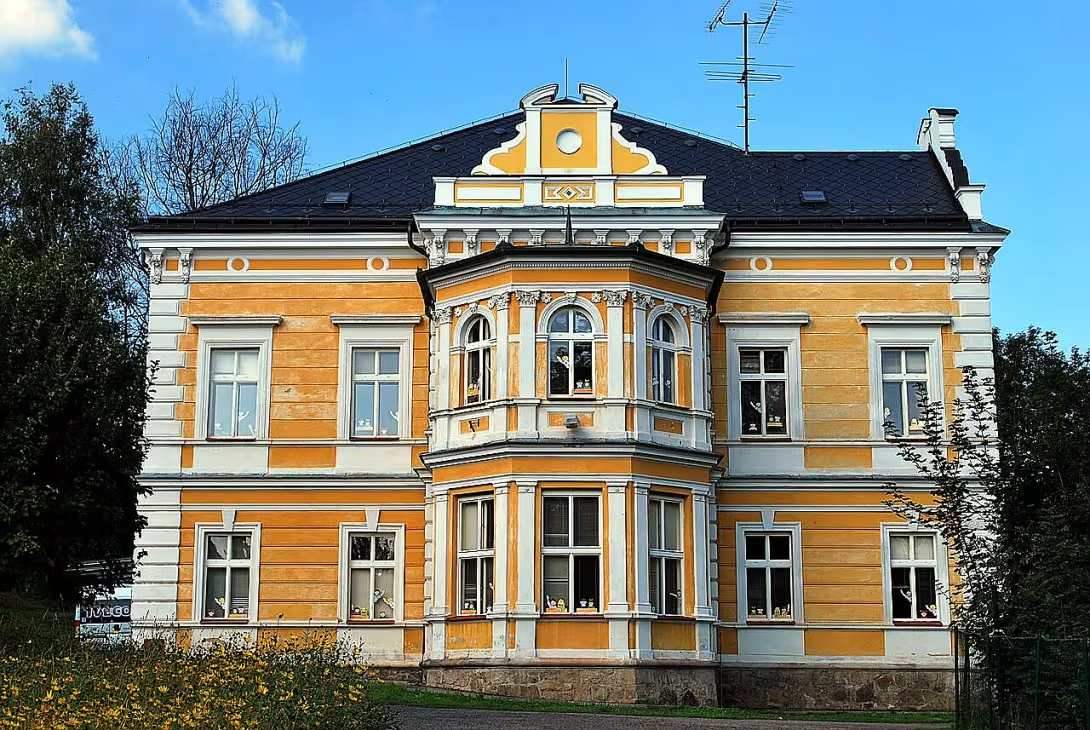
Vila Ignatze Stefanka, located on the street U Trojice in Havlíčkov Broda, is a monument protected house no. 2104 built between 1894 and 1895 for Viennese jeweler Ignatz Stefank. Architect Josef Šupich designed this neonesantic object, which is now located in the city park and serves as a seat of the primary school for pupils with special education. This villa is remarkable with its rich stucco facade with plant motifs and neo-Renaissance elements, making it an important historical monument.
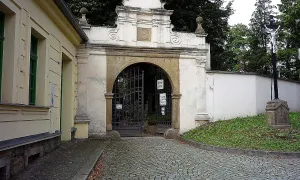
The architecture of the villa is characterized by a neo-Renaissance style. The house has a square plan with slightly exerting risalities and richly decorated stucco facade, which includes plant motifs and belt rustic. The dominant element of the house is a three-axis lodger with balustrade, pilasters with Corinthian heads of triglycerides and festons. In the western part of the building was built the original service entrance in the middle with cartouche and the year of completion of the construction.
After the position, the property of the villa switched to other users who converted it into a school facility for pupils with special needs. Today there is a primary school for pupils with special education and a school satellite for these schools.
Vila Ignatze Stefanka is an important part of Havlickov Brod's cultural heritage. Its history, architecture and current use as a school for pupils with special needs are an interesting example of adapting historical buildings to modern needs. Visiting this monument is a welcome opportunity for understanding the local history and appreciation of the architectural art of Josef Šupich.
Historical milestones
- 1894-1895
- Construction of a Neo-Renaissance villa for the jeweler Ignatz Stefan.
- After 1895
- Rebuilding the building into a school facility for pupils with special needs.
- Present
- The seat of the primary school for pupils with special education and school cooperatives.
Architectural development
The villa was built as a neo-Renaissance building with a square plan and rising risalties. The facade is richly decorated with stucco, including plant motifs and belt rustic. The dominant element of the house is a three-axis ship with a balustrade.
Historical events
- 1894-1895
- The position of Ignatz Stefan's villa by architect Josef Šupich.
- Rebuilding the villa into a school facility for pupils with special needs.
Owners
Ignatz Stefanek (early 19th century), subsequent use as a school
Points of interest
- Vila Ignatze Stefanka is a protected house built between 1894 and 1895 for Viennese jeweler Ignatz Stefan. - Architect Josef Šupich designed this Neo-Renaissance building, which is now located in the city park and serves as a seat of the primary school for pupils with special education. - The house has a square plan with slightly exerting risalities and richly decorated stucco facade, which includes plant motifs and neo-Renaissance elements. - The dominant element of the house is a three-axis lodger with balustrade, pilasters with Corinthians' triglyphs and festons. - After the position, ownership of the villa went to other users who converted it into a school facility for pupils with special needs.
Guide
Show guide text
This text was created by artificial intelligence and has not been editorially reviewed. It may contain inaccuracies.
Welcome to Havlíček Broda, one of his greatest monuments - Villa Ignatz Stefank. You're standing in front of this historic building and now you can discover it with us.
Let us take a look at the first impression this villa brings to you today. Notice her rich stucco facade, decorated with plant motifs. This architectural treasure boasts its location in the middle of the city park and brings you a sense of peace and beauty.
The foundation of this villa is set in concrete history. Between 1894 and 1895 it was built for the Viennese jeweler Ignatz Stefank, who wanted a majestic residence in his new city. The architect Josef Šupich designed this neonesantic object that becomes a symbol of the time and its taste.
Now pay attention to architectural details. Let's look up at the facade where the plant motifs of the stucco facade are best seen. This decoration is an example of Šupich's ability to combine aesthetics and function in one harmonious whole.
The key personalities associated with this monument are of course Ignatz Stefanek, for which the villa was built, architect Josef Šupich and other historical figures such as Josef Zítka and Antonín Wiehl. Each contributed to making this building an important part of the local cultural heritage.
The interesting thing is that after 1895 the villa was converted into a school facility for pupils with special needs. Today, there is a primary school and a school satellite, which shows the adaptability and lasting value of this place.
Let's move on to the next examination of Havlicek's Brod. Vila Ignatze Stefanka is just one of the many stories this site has to offer. Thank you for your attention and we hope that this guide inspired you to further discover the beauty of this city.
Tips for visitors
The best time to visit is in the morning or late afternoon when soft light falls on the neo-Renaissance facade of the house, which will highlight its architectural details.
We recommend you bring comfortable shoes for a walk through the city park and a camera to capture the beauty of the building. For the best pictures, focus on the overall view of the villa from different angles within the park, where the green form a natural frame for the building.
In the immediate surroundings we recommend to take a walk through the city park in Havlíčkov Broda, which surrounds the whole building and offers a quiet environment. Families with children will appreciate the connection of a tour of architecture with free movement in the park, which is an ideal way to link education to relaxation in the historic city.
Frequently asked questions
Can the monument be visited?
This is a residential or farm building, not a museum with opening hours. Please view it from public space and respect the owners' privacy. We have no information about access to the interior.
Where is the monument?
Location: Havlíčkův Brod, Kraj Vysočina. The map on this page shows the exact spot.
Why is the monument protected?
It is listed in the Central List of Cultural Monuments of the Czech Republic as a cultural monument (register no. 1000120977).
Businesses nearby
Do you run a restaurant, accommodation, shop, museum, rental, wellness or other visitor service near this monument? Show yourself directly to the people heading to it — this is how they will see you in the app and on the web:
Nearby
Vila se nachází v městském parku Havlíčkova Broda, což je historické město známé svým kulturním dědictvím.
Accommodation nearby
Themed route
1. Vila Ignatze Stefanka (Building) - The main objective of your tour, which represents an interesting architecture. 2nd city park Havlickova Broda (Park) - Green area right by the villa, which offers a quiet walk. 3. historic city Havlíčkův Brod (City) - The total area, which is known for its rich cultural heritage.
Seasonal recommendations
Spring: In the spring period, Ignatz Stefank's villa is brightly lit by sunlight, which emphasizes the beauty of architecture and natural surroundings. The green leaf cover is intertwined with a historical lock, creating views full of life and renewal. It is advisable to visit the memory early in the morning or later in the evening to avoid the midwinter giving. The good idea is to wear clothes with a disguise because temperatures can be diverse and early spring rains are not rare.
Summer: Summer at Villa Ignatz Stefank offers long sunny days when it is possible to explore the memory in a pleasant thermal environment. The presence of crowds can be significant in the main summer season, therefore it is recommended to visit early afternoon or evening when the level of people is lower. Don't forget the protective sunglasses and enough drinking water to make the visit pleasant even under full sun.
Autumn: In autumn, the monument offers a calm atmosphere with warm colour shades of leaves that revive the surroundings. Sunshine days are still frequent, but wind moments can bring colder air. It is advisable to visit the memory at the beginning or end of the day when the temperature is lighter and the crowds are less. The good idea is to wear clothes with a disguise so you can adapt to the rapid changes in the weather.
Winter: Winter at Villa Ignatz Stefank offers mild temperatures and often bright skies, allowing beautiful views of historical architecture. Hot clothing and moisture protection are key to a comfortable stay, especially if the weather is colder than usual. Visit the memory in the early afternoon to enjoy bright sunlight and fewer people.
Visualizations and artistic views


The visualisations are generated by artificial intelligence and serve as inspiration.
Photos from the area
Real photos taken near the monument


Zdroj a licence jsou uvedeny u každého snímku.
Tips from visitors
No tips yet. Be the first!
Log in and add your tip.
Sources and literature
Photos: Poutník Jiří / CC BY-SA 3.0 — Wikimedia Commons. The author and licence also appear when you hover over the image.
Faktickým podkladem tohoto textu byl článek na Wikipedii, jehož autory jsou přispěvatelé Wikipedie. Článek je dostupný pod licencí CC BY-SA 4.0.
Location on the map


Příběhy a pověsti
Legendy, pověsti a příběhy spjaté s touto památkou
Fotografie návštěvníků
Zatím žádné fotografie. Buďte první, kdo přidá fotografii z návštěvy!
Log in a přidejte svou fotografii nebo hodnoťte.
Za ověřenou návštěvu v aplikaci získáte víc bodů — poznáme podle GPS, že jste na místě.
Reviews and comments