






Vila Karla Richtera Villa
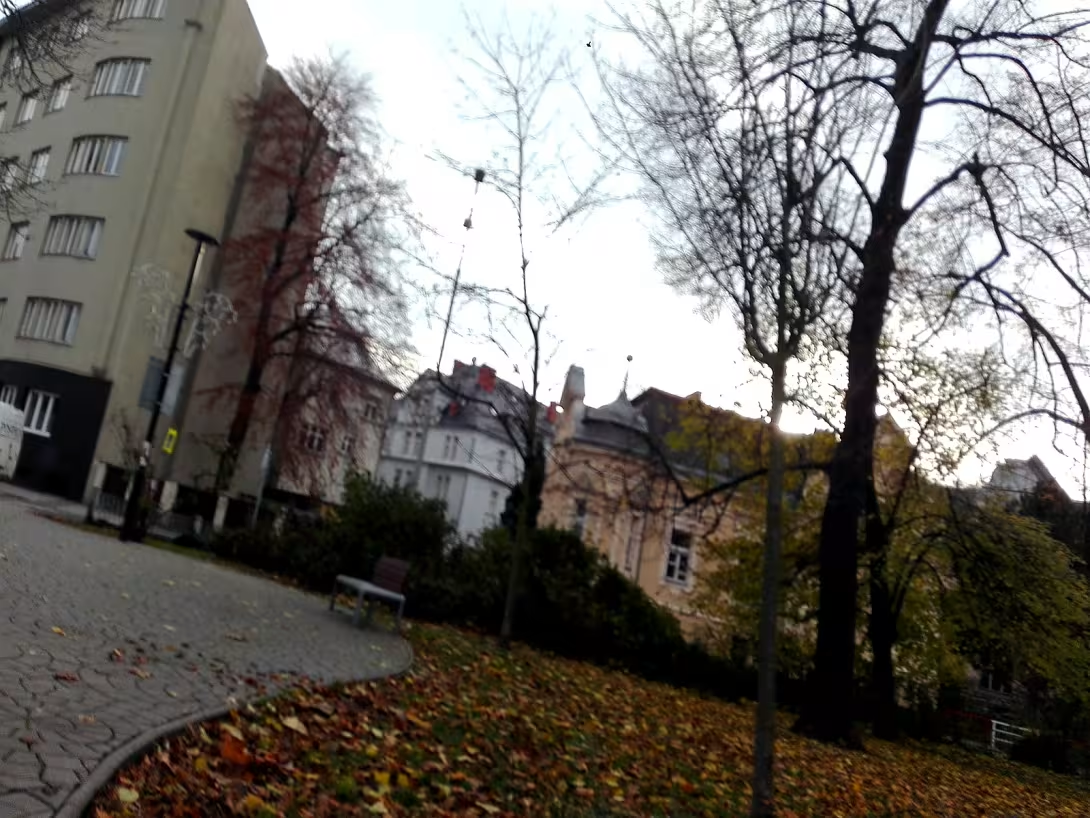
Vila Karla Richtera is a Neo-Baroque building in Dvořák Street in Moravian Ostrava. The building was founded in 1896 as a representative residence and since 1992 it has been protected as a cultural monument.
The villa was built in a period of stormy industrial development of Ostrava, when the rich bourgeois layer formed. The then elite demonstrated their position in the Austrian-Hungarian company by building lavish settlements in historical styles. The investor and the first owner of the house were Ostrava lawyer, councilman and benefactor Karl Richter, who had it built as a family residence.
The author of the design was builder Felix Neumann. The detached villa has a Mansard roof and facades divided by belt boasting and armour. The windows are set in decorative shambles and the main entrance in the western facade is lined with a high decorated portal. The northeast corner tower with the dome is an important element. The facade is complemented by risalts with richly decorated shields. The interior has largely maintained its original availability including stucco decoration, stairway railing and the front door.
After completion in 1896, the building served its original purpose. In 1992 it was declared a cultural monument. After extensive reconstruction, which enabled the preservation of historical elements, the construction was adapted for the operation of the kindergarten, which it still serves today.
Vila Karla Richtera represents a valuable proof of architecture of the late 19th century and lifestyle of the then Ostrava elite. Visiting this building in the wider centre of Moravian Ostrava offers the opportunity to see the historic development, which thanks to its sensitive restoration and new use has been preserved for public purposes.
Then and now
Drag the slider to compare how the landmark may have looked when it was built with the view today.
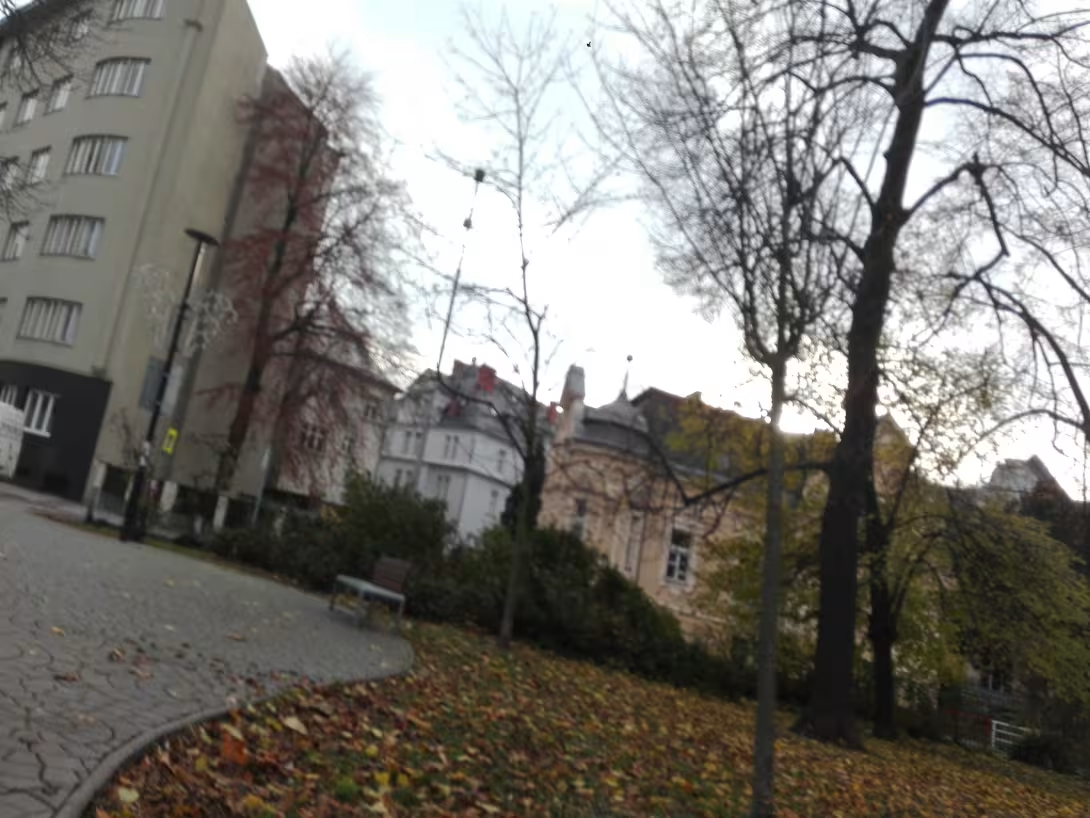
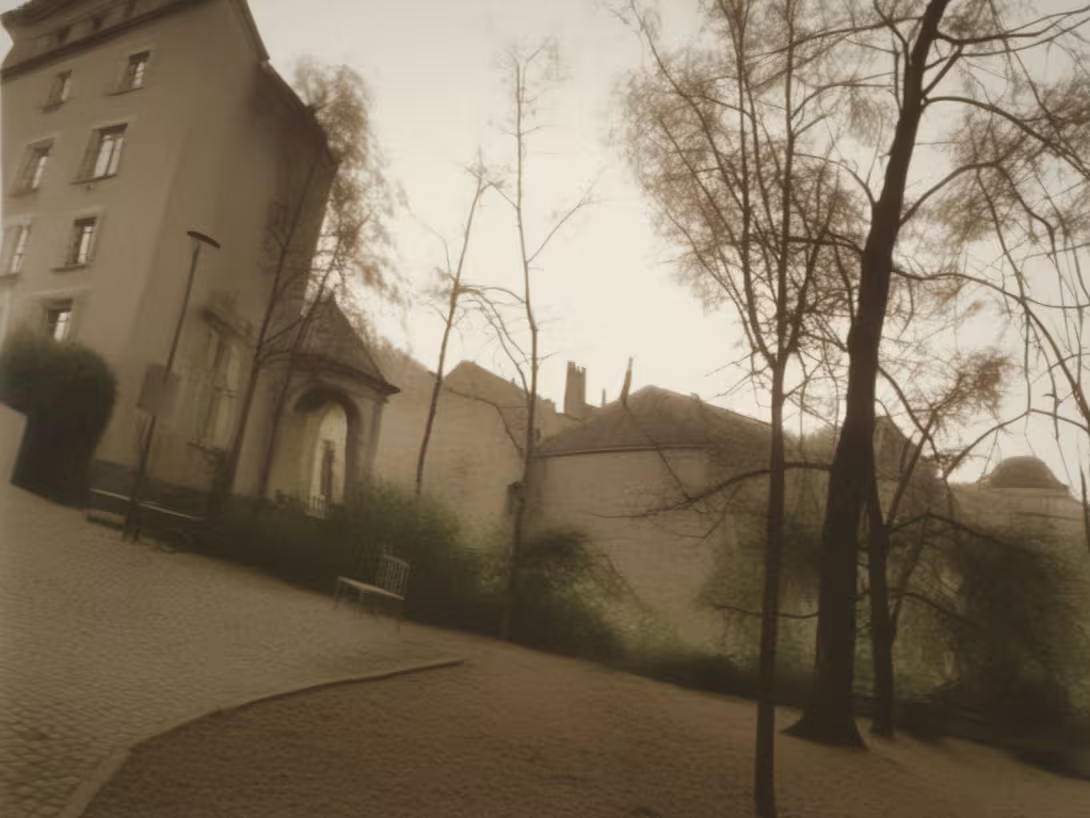
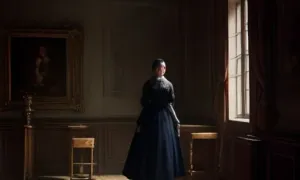
The historical appearance on the left is an AI-generated visualisation and serves as inspiration only.
Historical milestones
- 1896
- They would expose the villas as a representative seat of Karl Richter.
- 1992
- A declaration of an object for a protected cultural monument.
- around 2000
- Reconstruction of the building and establishment of the mater schools.
Architectural development
The villa was built in a neo-Baroque style with an emphasis on the representative look. The facades are broken down by belt barefoot and armour, the main entrance is decorated with a high portal. The interior has largely retained the original available and historical elements such as stucco decorations and staircase railing.
Historical events
1896: Construction of the villa as a representative residence. 1992: Declaration of the building for a cultural monument.
Owners
Karl Richter (since 1896), currently used as a kindergarten.
Points of interest
- The construction was created in 1896 as a representative residence for the Ostrava lawyer, councilman and benefactor Karl Richter. - The building is a Neo-Baroque building with a mansard roof, a corner tower with a dome and facades broken down by belt barefoot. - The interior has largely preserved its original availability, the remains of stucco decoration, stairway railing and the front door. - Since 1992, the building has been protected as a cultural monument. - After extensive reconstruction, the construction was adapted for the operation of the kindergarten, which still serves today.
Guide
Show guide text
This text was created by artificial intelligence and has not been editorially reviewed. It may contain inaccuracies.
Welcome to Moravian Ostrava. You just stopped at Dvořák Street and right now you're standing right in front of one of the most prominent buildings in this part of town. Before you go any further, I suggest you stop for a moment, take a quiet look and let the atmosphere of this place consume you. In front of your eyes is a beautiful villa, which at first glance radiates nobility, peace and a form of historical dignity. It's a building that doesn't hesitate to excel by its elegance and wealth once you look at it. Feel the beauty that binds here to history, and let this view lead you to a deeper understanding of what this building means.
Now let's go back in time together and understand why this building is even standing here. Imagine 1896. Ostrava is undergoing huge changes during this period, a period of growth, ambition and building new, representative settlements. It is this important year that this villa has been completed. Her own creator and owner was Mr. Karl Richter. Richter wasn't just an ordinary citizen of this town. He was an important Ostrava lawyer, a man of the law, but above all he was a man who had a sense of beauty and supported art. He was a benefactor, someone who devoted his means to the development of culture and artistic creation. This villa was not only built as an ordinary house for living, but was intended to serve as its representative residence, as a symbol of its success and its position in society. He wanted a home that would reflect his personality and his influence on the surroundings.
Now pay attention to the architecture itself, which is right in front of you. To make this great dream of a perfect mansion a reality, it had to be developed by someone who understood the art of building. This man was the architect and builder of Felix Neumann. Neumann was a master who could create an object that was a self-standing villa with a very specific character. If you look up to the sky now, notice this magnificent roof. It's a Mansard roof, which is a typical element that gives the building its unmistakable silhouette and a sense of wealth. This roof is not only a practical cover, but it is the peak of the whole architectural work.
Now look at the corner of the building. See that corner tower? It's one of the most impressive details of the entire building. This turret is finished with a dome that is beautifully drawn against the sky and gives the whole object the necessary touch of neo-Baroque elegance. If you look at the facades then notice how they are divided. The facades are decorated with belt brass, which are those horizontal lines and shapes that create an interesting rhythm on the walls and play light and shadow. This work with the wall surface gives the building depth and dynamics. And don't miss the richly decorated shields that are part of this architecture and which complement the overall impression of luxury and precision that Neumann took into account in the design.
This villa is a close link between the vision of one man and the championship of another. Karl Richter, as a benefactor, put its desire for beauty in this place and Felix Neumann as an architect, was able to translate it into permanent stone and mortar. This whole building is basically a celebration of the city's success and cultural flourishing.
You may find it interesting how the fate of this beautiful building evolved over the centuries. It's fascinating to see her role in society change. For decades, it served as a private residence, but time passes and the needs of the city change. Something very important happened in 1992 to preserve it. This entire building has been officially declared a protected cultural monument. This means that its value has been recognised not only by the people at the time, but also by the state, and that it must be protected from any change that could undermine its historical truth. And as it would seem that the historical residence must remain a silent witness to the past, there was another big change around 2000. The building underwent a thorough reconstruction and began to serve a new, very lively purpose. Today, this villa hosts the smallest because a kindergarten was established here. It is an interesting contrast that in premises that used to serve serious legal action and representation, children's laughter is now heard and new generations are formed.
Looking at the building, you can feel that even though its internal use has changed, its soul remains the same. Although the interior has adapted to some extent to new needs, there are still remnants of the original layout that allow us to imagine how these rooms were lived and how people moved there over a hundred years ago.
I hope this brief insight into the history of Karl Richter's villa has helped you better understand the place you're standing on right now. This building is not just a wall and a roof, it's a living story about ambition, about art and how history is constantly being transformed. Continue to walk around Moravia Ostrava and pay attention to other details offered by this city. Thank you for your time and I wish you the rest of the day.
Tips for visitors
For the tour of the villa we recommend to choose the morning hours of the working week, when there is a quieter operation in the surroundings and the light better depicts the details of the neo-Baroque facade. You avoid the rush of the city center.
You can reach the villa comfortably by public transport or by car. Parking is possible in adjacent streets in the wider centre, we recommend using the connection search engine to find the nearest stop.
For photographers, the ideal time is around noon, when the sun illuminates the facade of the building. The best pictures can be taken directly from the pavement opposite the villa, where the overall architecture and decorative elements of the building stand out.
When visiting with children we recommend a walk along the surrounding streets, where you can admire another historical development from the turn of the nineteenth and twentieth centuries. Children can explore the details of houses that resemble fairy tale buildings.
There are other historical buildings and city buildings around the villa, which are worth a tour. We recommend that you join a visit to the villa with a walk on the historical core of Moravian Ostrava, where the atmosphere of the late nineteenth century breathes upon you.
Businesses nearby
Do you run a restaurant, accommodation, shop, museum, rental, wellness or other visitor service near this monument? Show yourself directly to the people heading to it — this is how they will see you in the app and on the web:
Events nearby
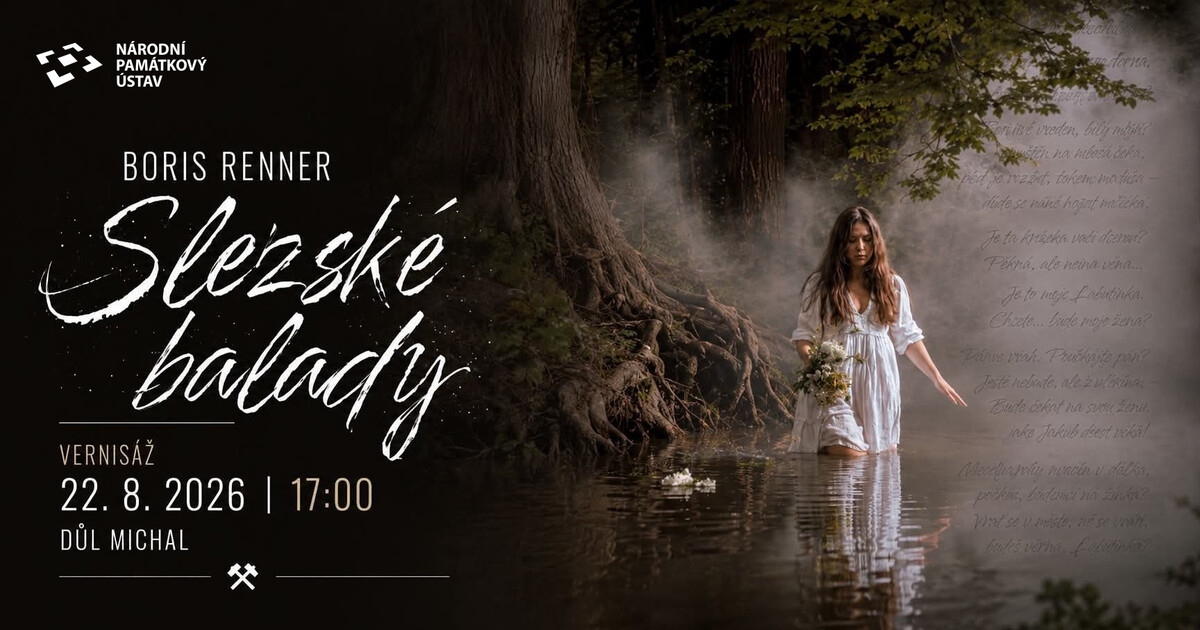
Zdroj akcí: otevřená data měst a obcí ČR (Národní katalog otevřených dat) a kalendář akcí Národního památkového ústavu.
Nearby
Vila se nachází v širším centru Moravské Ostravy, v blízkosti dalších historických budov a městské zástavby z přelomu 19. a 20. století.
Accommodation nearby
Themed route
Thematic cruise route: Vila Karla Richtera and surroundings
1.Vila Karla Richtera (villa) - This villa is the oldest remaining building in Moravská Ostrava, built around 1900. It is an example of the architecture of the turn of the 19th and 20th centuries and served as the seat of the Richters family. It is worth visiting for its historical meanings and unique construction that reflects the lifestyle of the then inhabitants.
2. Urban buildings (historical buildings) - Close to the villa there are several historical houses and buildings from the same period, which represent the characteristics of urban architecture from the beginning of the 20th century. These buildings are interesting for their aesthetic elements and show the development of the city at that time.
3. Historical Business House (Historical Building) - In the centre of Moravian Ostrava there is an ancient department store built in the early 20th century. It's an example of then's business life and architecture. It is worth visiting for its historical meanings and as a monument to local business.
4. Ancient Street (Street) - A walk along the ancient street, which stretches near the villa of Karl Richter, offers a view of the historic urban development. This street is interesting for its character and preserved architecture elements from the turn of the 19th and 20th centuries.
5. Public Park (Park) - There is a small public park near the villa, where it is possible to enjoy a quiet moment for an overview of historical buildings and surrounding surroundings. The park is ideal for relaxing and listening to local sounds after visiting other points of the route.
This route offers a view of the history and architecture of Moravian Ostrava, focused around Karl Richter's villa.
Seasonal recommendations
In spring, the garden around the villa awakens into life. The sun shines gently and the colors of the flowers around them are very fresh, creating an optimistic atmosphere. I recommend arriving early in the morning when the air is the cleanest. Dress well, because the morning cold may be tight, but the afternoon heat will warm you up.
In the summer months the building is in full bloom and shady parts of the garden offer a pleasant shelter from the heat. The daylight is the strongest and highlights the details of the building beautifully. Due to the increased number of visitors in the main summer season, it is better to arrive immediately after opening. Remember light clothes and plenty of fluids to handle the sun.
Autumn brings golden and brown shades of leaves around the villa, which creates a very poetic and nostalgic mood. The morning fog gives the place a mystery. The best time to visit is in the morning when the light lights up beautifully through the trees. Prepare stronger shoes in case of wet surface and warmer coat so that the cooler air doesn't kill you.
Zimą is a monument in silence and calm, especially if everything is covered with snow. Short days mean that the sun is low and creates long shadows, which gives architecture a dramatic look. The opening time is shorter in this period, so check in advance. The need is very warm clothes and the visit is planned around noon to use the most daylight.
Visualizations and artistic views


The visualisations are generated by artificial intelligence and serve as inspiration.
Photos from the area
Real photos taken near the monument


Zdroj a licence jsou uvedeny u každého snímku.
Tips from visitors
No tips yet. Be the first!
Log in and add your tip.
Sources and literature
Faktickým podkladem tohoto textu byl článek na Wikipedii, jehož autory jsou přispěvatelé Wikipedie. Článek je dostupný pod licencí CC BY-SA 4.0.
Location on the map
More monuments – Moravská Ostrava
Show all in the municipality



Příběhy a pověsti
Legendy, pověsti a příběhy spjaté s touto památkou
Fotografie návštěvníků
Zatím žádné fotografie. Buďte první, kdo přidá fotografii z návštěvy!
Log in a přidejte svou fotografii nebo hodnoťte.
Za ověřenou návštěvu v aplikaci získáte víc bodů — poznáme podle GPS, že jste na místě.
Reviews and comments