



vodárna v Obřím dole Waterworks
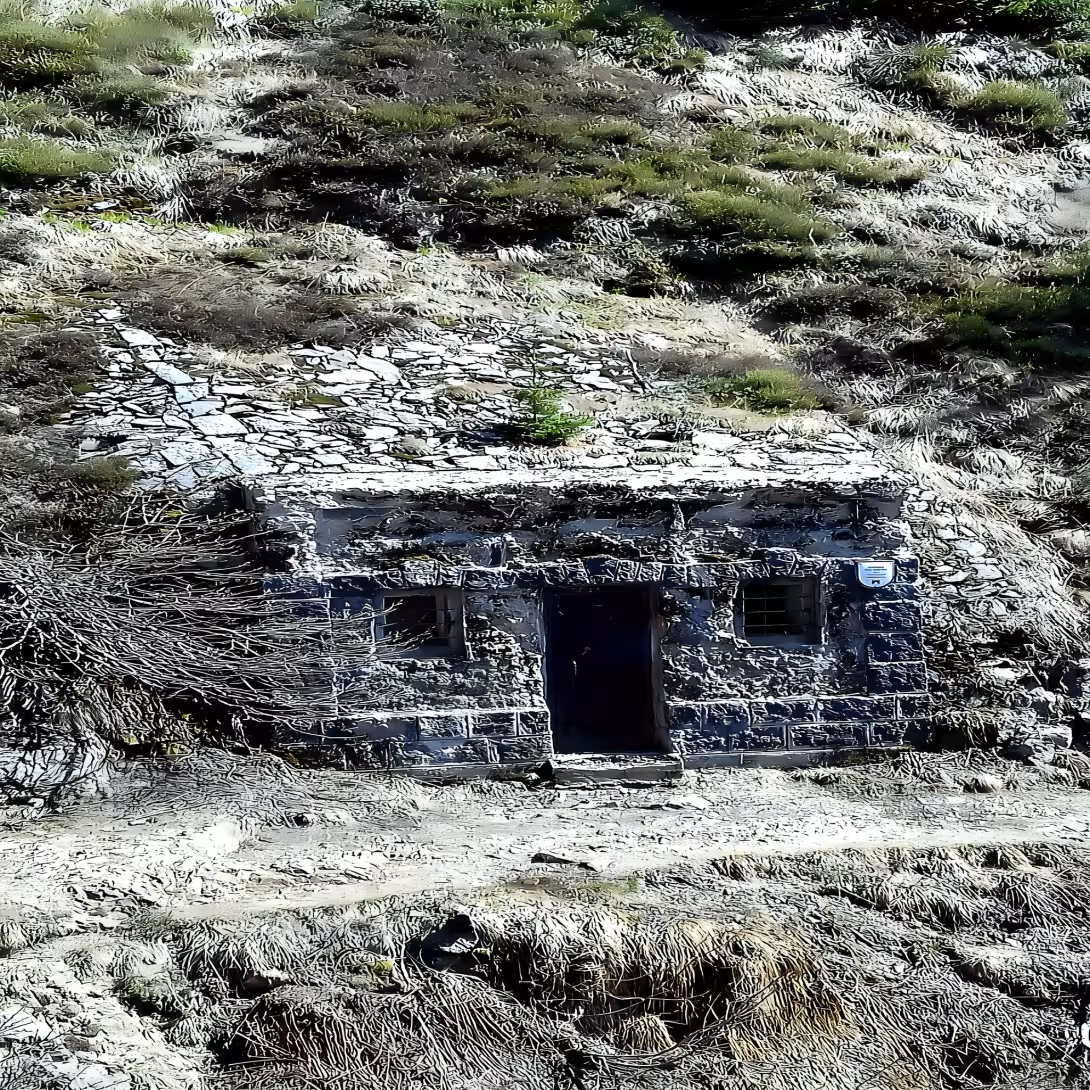
The water plant in Giant Down is a unique technical monument in the historic style. It is located in the central part of the Giant National Park on the cadastral territory of the municipality Pec pod Sněžkou in Trutnov district in Králové Hradec region. This building was built in 1912. Since then, he has served for the supply of water to the Czech hut at the top of the Snowball with a water trench and Pelton turbine. In January 1996 this building was declared a cultural monument of the Czech Republic.
The development of the water plant dates back to 1912. The Czech countries were then in the Austrian-Hungarian monarchy in a period of turbulent industrial development and technical features. In Europe, Belle Époque culminated and the tensions leading to the First World War gradually increased. The object on the Red Stream was built by Count Rudolf Czernin-Morzin. After his mother's death in 1907, he inherited large-scale property in the Giant Mountains, including locks in Vrchlaby and Upper Maršov. Prior to the construction of the water plant, 12 carriers provided water to the top of Snowball. They regularly removed it from the Golden Spring near the Giant Shack, or the snow melted in winter.
It is an architectural stone building. It's made of granite blocks and has a counter roof. The roof is covered with rocks and grass-ridden airfields. A substantial part of the original technical equipment was preserved inside the building. This includes the Pelton turbine, the vertical piston pump, the bars and the entrance door. The water from the Red Creek was collected into three tanks. From there, from a height of 150 meters, it went into the turbine. There was a connected pump that drove the water through a 40 millimeter diameter pipe into the tank in the attic of the Czech hut. The original extruder height was 392 meters. This at the time was the highest displacement height of such a facility in Europe. The device was able to transport 2,000 to 4,000 litres of water to the top of Snowy daily.
After Count Rudolf Czernin-Morzin took over the administration and ownership of the Krkonose National Park Administration at a later time. The water works were in operation until the 1950s. Due to insufficient maintenance and poor water supply, she ceased to function at that time. In the absence of water in the stream used to draw back-up diese aggregate. The Czech kennel itself has served tourists since 1868. It was closed in 1990 on a proposal from health care professionals. After that, the city of Pec pod Sněžkou left it for a symbolic crown of the National Park of Krkonose. It ensured the liquidation of this building in autumn 2004.
A key milestone in the history of the building was the year 1912 associated with construction. Another was January 1996, when the building was declared a cultural monument of the Czech Republic. The third year was 2022, when the Krkonose National Park Administration had the cost of roughly a quarter of a million crowns from the funds of the Operational Programme Environment to repair the various parts of the historical waterworks. During this renewal, the stone roof, outside facade and internal plaster were repaired. The new paint was given to the turbine, the bars, and the front door.
Today, the abandoned forest land water plant is freely available at an altitude of approximately 1230 metres from the outside. Next to it leads a blue marked hiking trail from the Pec pod Snežka Giant mine around the former Kovárny up to the Giant saddle. The route from the kiln to where the giant shed used to stand is named as kevin's path. It bears the memory of the professor of botany Karl Kavina, who co-participated in the establishment of the Giant National Park. The total pedestrian route from the centre of the kilometer to the waterworks is five kilometres. In winter, however, the trip by the Giant Mine is closed due to an avalanche danger. In the immediate vicinity is the ore stream spring at an altitude of 1300 metres. It consists of crystalline limestone. About three dozen metres northeast of the former waterworks begins with a system of waterfalls and cascades, the highest of which is 16 metres.
This monument represents an important evidence of technical maturity and industrial development in the early twentieth century in mountain areas. Visiting the Giant Mine offers a unique opportunity to get to know historical water works in the authentic natural environment of the Giant National Park.
Then and now
Drag the slider to compare how the landmark may have looked when it was built with the view today.
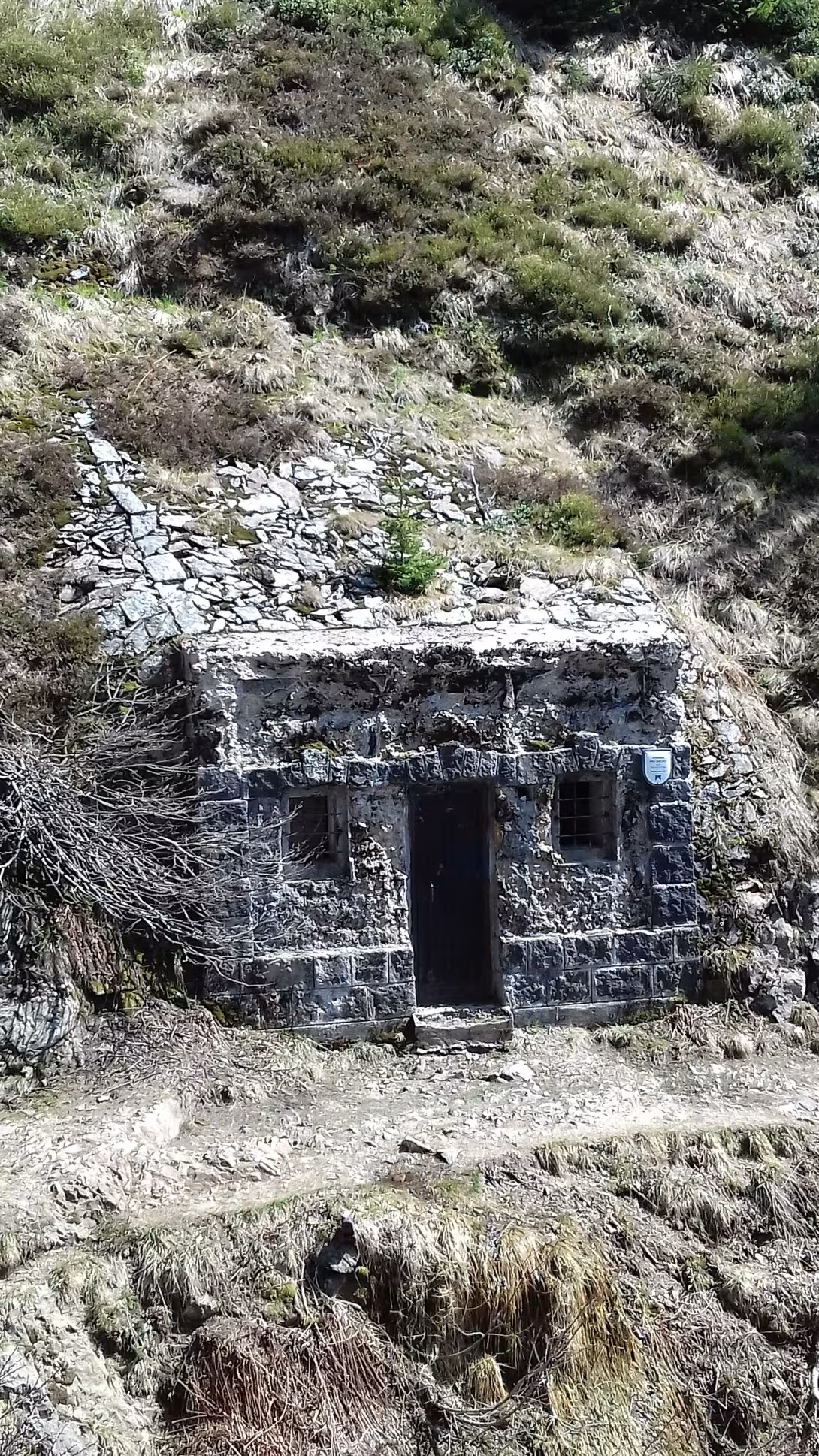

The historical appearance on the left is an AI-generated visualisation and serves as inspiration only.
Historical milestones
- 1912
- Construction of a water plant on the Red River.
- 1996
- Declaration of the building cultural monument of the Czech Republic.
- 2022
- Repair of the roof, facade and interior plaster by the Krkonose National Park Administration.
Architectural development
The building is a stone ground building built from granite blocks with a counter roof. The roof is covered with rocks and grass-ridden airfields. A substantial part of the original technical equipment, including turbine and pump, has been maintained inside.
Historical events
In 1912, a waterworks on the Red Brooks was built. In January 1996 the building was declared a cultural monument of the Czech Republic. In 2022, a costly repair of the various parts of the historical water plant took place.
Owners
Count Rudolf Czernin-Morzin, later Administration of the Giant National Park.
Points of interest
- The building was built in 1912 and served to supply water to the Czech hut on top of the Snow. - Prior to the construction of the water plant, twelve carriers provided the water to the top of Snow, or the snow was dissolved in winter. - The original extruder height was 392 metres, which at that time represented the highest extruder height of such equipment in Europe. - In January 1996 this building was declared a cultural monument of the Czech Republic. - In 2022 the various parts of the historical water plant were repaired with a cost of approximately a quarter of a million crowns.
Guide
Show guide text
This text was created by artificial intelligence and has not been editorially reviewed. It may contain inaccuracies.
Welcome to the Giant Mountains, in the picturesque Giant Down, on the cadastral territory of Pec pod Sněžkou. You are faced with a unique historical technical monument, which at first glance captures its mountain simplicity and efficiency set in harsh nature. Look before you at this modest but important house, which holds a huge piece of human wit and determination. Notice his recently repaired roof and facade, which was managed by the administration of our largest mountain reservation, so today the building shines clean and commemorates its passing glory.
Let's move forward in time and see how this monument came to be. The year is nineteen hundred and twelve, and a building is growing on the banks of the Red Creek, the purpose of which was absolutely essential for the time being. It was used for a very difficult task, to supply drinking water to the very top of our highest mountain, directly to the Czech hut. This great effort was made by important personalities of the time, among whom there was not a nobleman Rudolf Czernin-Morzin and also Karel Kavina. They were all at the birth of a project that was supposed to solve the endless water shortage on the ridges.
Now pay attention to the exterior of the building itself. Unknown builders and architects have printed this building in a form that perfectly matches the surrounding mountain nature. Look at the repaired internal plaster and solid walls that had to withstand the harsh mountain influences. Although you will not find any exaggerated ornaments here, the strength of this structure lies in what was inside and how it worked. The water flowed here and was powered by a device which at that time represented the absolute peak of human engineering.
Imagine how hard life was on the mountains before this water plant started to work. Before it was built, twelve brave carriers had to bring water in their scissor to the top of Snowy by their own power, or there was nothing left but to melt snow in winter. That is why this technical facility was such a huge relief. The water was pushed from this place by an incredible seven hundred meters long water supply and had to climb a colossal elevation that was approaching four hundred meters, more precisely three hundred ninety-two meters.
This figure holds an incredible interest. The original extruding height of the special water trench and Pelton turbine was almost four hundred metres, which at a given historical time represented the world primate and the highest achieved value of its kind. The water traveled from the Giant Mine to the very roof of our country. The whole work worked as a reliable machine, which for decades fulfilled its purpose until the time came when this monument deserved greater respect. In January nineteen hundred ninety-six it was therefore officially declared a cultural monument of the Czech Republic, which underlined its incredible importance for the whole of the Austrian heritage.
Recently, in the year two thousand twenty-two, the waterworks have undergone a large and sensitive recovery. The administration of the Krkonose National Park ensured that the roof, facade and interior plaster were given new care so that this monument could continue to tell its story to other generations of visitors.
Finally, I want to invite you to explore this beautiful corner of the Giant Mountains. When you walk further through the valley or climb on the ridges, remember the wit of our ancestors and how they could tame the power of the mountain streams. Thank you for your attention, I bid you farewell and wish you a wonderful experience on your next nature wandering.
Tips for visitors
The best time to visit this place is in the morning, when the sunlight ideally illuminates the valley and creates great conditions for admiring historical technical construction. To travel, choose fixed hiking shoes and clothes to the mountains because the weather in the Giant Mountains can change quickly. Don't forget to bring enough drinking water and snacks, as you will not find shops at the premises. Photography offers the best footage from wooden catwalks across the stream, where you can catch a waterworks planted in mountain nature. In the surrounding area you can take a trip to Kavina's road leading to the Giant saddle, explore the ore stream with a system of waterfalls and cascades or visit the former Kovárna, which takes about 30 minutes walking. Families with children will appreciate a light walk through the beautiful nature of the Giant National Park, which is both educational and fun for small explorers.
Frequently asked questions
Can the monument be visited?
The building is in use (offices, a school, shops and the like). The interior is generally accessible only during operating hours and tours are not usually offered; we have not verified the details. You can see the exterior from the street.
Where is the monument?
Location: Pec pod Sněžkou, Královéhradecký kraj. The map on this page shows the exact spot.
Why is the monument protected?
It is listed in the Central List of Cultural Monuments of the Czech Republic as a cultural monument (register no. 1000120926).
Businesses nearby
Do you run a restaurant, accommodation, shop, museum, rental, wellness or other visitor service near this monument? Show yourself directly to the people heading to it — this is how they will see you in the app and on the web:
Nearby
V okolí se nachází Krkonošský národní park, Rudný potok se soustavou vodopádů a kaskád, bývalá Kovárna a Kavinova cesta vedoucí do Obřího sedla.
Accommodation nearby
Themed route
I propose a thematic cruise route in the village Pec pod Sněžkou and its surroundings.
1. vodárna v Obřím dole (Water Works) The main goal of our journey is a historical technical work located in a picturesque valley. This building resembles the art of our ancestors in a harsh mountain environment.
2. Red stream with a system of waterfalls and cascades (natural interest) This stream offers a magnificent spectacle of flowing water forming waterfalls and cascades. The place is surrounded by pristine nature protected by the Giant National Park.
3. former Kovárna (historic place) This monument resembles the ancient mining past of the entire region. Visiting this place brings the hard work of people underground.
4. The Kavin Road (tourist route) This road leads tourists up to the giant saddle. It offers unique views of the surrounding mountains in the heart of the area managed by the Krkonose National Park.
Seasonal recommendations
Spring brings about an awakening nature, when snow slowly melts on the slopes of the Giant Mountains and surrounding streams and river Upa grows stronger from the melting water, which adds a very lively sound background to the historic water plant in Giant Mine. The sun is already warmer, but the wounds are cold and shady places in the valley can hide the remains of ice crusts. There are few tourists in this period, so the atmosphere is very calm and ideal for quiet contemplation. We recommend to wear waterproof fixed shoes for mud on hiking routes and layered clothes to protect you from mountain wind. The best time to visit is in the morning hours, when the sun's rays first lean into the walls of the old building.
Summer opens the main visiting season when the valley is full of green and surrounding meadows bloom with mountain flowers. The lighting is sharp and sunny, while daylight lasts for the longest time of the year, allowing you to enjoy detailed views of the technical construction of the water works up close. The atmosphere is lively and busy because there are crowds of tourists headed for the highest Czech mountain Snow. Since interest in this area is the greatest, it is necessary to set off on a journey from the furnace under Snow very early in the morning to avoid the greatest human rush. Put on breathtaking sports clothes, don't forget the sun cap and enough drinking water in your backpack.
Autumn transforms A giant mine in a colorful palette of shades of yellow, red and brown, while the morning fog rolls over the river bed and gives the old waterworks a melancholy and mysterious touch. Light is soft and scattered, creating wonderful conditions for photography of historical architecture embedded in the wild. After the summer rush, the tourist crowds will become noticeably thinner, which guarantees a calm and quiet atmosphere when exploring technical attractions. Due to the frequent rains and cold wind, bring a warm windbreaker, a hat and quality waterproof shoes. The best time for inspection is around noon, when temperatures reach their daily maximum and the fog usually dissipates.
Winter covers the Pec pod Sněžkou and the entire valley into a deep snow blanket, while the path to the water plant in Giant Down is difficult to pass and depends on the current avalanche danger and state of snow. The lighting is short, the sun soon boils behind the ridge of the mountains and the snow beautifully reflects daylight, creating a clean Arctic atmosphere. Visitors are here at this time, you will find only a skilled runner or mountaineer. It is imperative to wear high-quality winter clothes, thermo-linens, gloves and tight shoes with snow covers. Due to early dimming and cold weather, plan your arrival to the memory for the morning hours and watch the weather forecast.
Visualizations and artistic views


The visualisations are generated by artificial intelligence and serve as inspiration.
Photos from the area
Real photos taken near the monument


Zdroj a licence jsou uvedeny u každého snímku.
Tips from visitors
No tips yet. Be the first!
Log in and add your tip.
Sources and literature
Photos: Vojtěch_Dostál / CC BY-SA 4.0, rozlišení zvýšeno umělou inteligencí — Wikimedia Commons. The author and licence also appear when you hover over the image.
Faktickým podkladem tohoto textu byl článek na Wikipedii, jehož autory jsou přispěvatelé Wikipedie. Článek je dostupný pod licencí CC BY-SA 4.0.
Location on the map
More monuments – Pec pod Sněžkou
Show all in the municipality
Příběhy a pověsti
Legendy, pověsti a příběhy spjaté s touto památkou

Fotografie návštěvníků
Zatím žádné fotografie. Buďte první, kdo přidá fotografii z návštěvy!
Log in a přidejte svou fotografii nebo hodnoťte.
Za ověřenou návštěvu v aplikaci získáte víc bodů — poznáme podle GPS, že jste na místě.
Reviews and comments