



vodní mlýn čp. 11 (Trhová Kamenice) Water mill
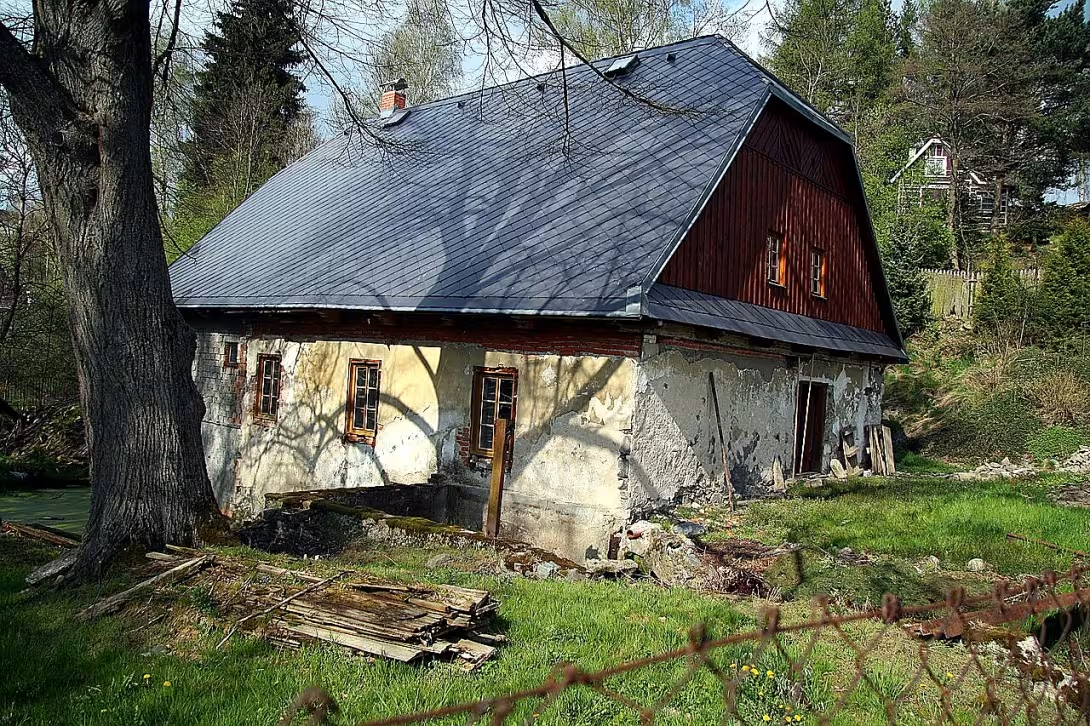
The Water Mill No. 11 in Trhová Kamenice in the district of Chrudim is a historic building on the Chobotov stream near the Mlyn pond. The building, mentioned for the first time in 1460, is protected as a real-estate cultural monument of the Czech Republic and is important mainly thanks to the preserved mill equipment.
The oldest history of the mill is evidenced by the historical sources which first mention it in connection with the privilege granted by the Market Kamenice in 1460. The construction is located on the edge of the town under the Mill pond, in the surroundings also known as Loch.
The building has a rectangular plan and a semi-embedded basement; standing in the narrow terrain between the road and the drive. The roof is halibut with boxed shields and a fracture. The construction around the drive was originally stone, and later mixed masonry was used with smooth limestone white plaster. The building is divided into front living area and rear mill. As part of the subsequent modifications, the grafting took place after 2000.
In 1913 Vilemína Černohorská, the owner of the electrical plant in Ústí nad Orlicí, established a power plant here. It illuminated part of the Market Kamenice until 1929, then served only for the needs of the mill itself. The technical equipment was developed from two water wheels to the top water, which was part of the operation in 1876, to the Francis turbine. In 1930, the mill had a turbine with 15 horsepower and 0,5 m ³ / s. Although the wheels had died and the Mlýnský pond was taken away in 1948, Francis' horizontal turbine with wet mammal was preserved in the mill.
Today the mill is protected as a cultural monument and in the back of the building the valuable mill equipment is preserved. The construction serves as historical evidence of the technical development of the region and is an interesting destination for visitors interested in the history of water management.
Then and now
Drag the slider to compare how the landmark may have looked when it was built with the view today.
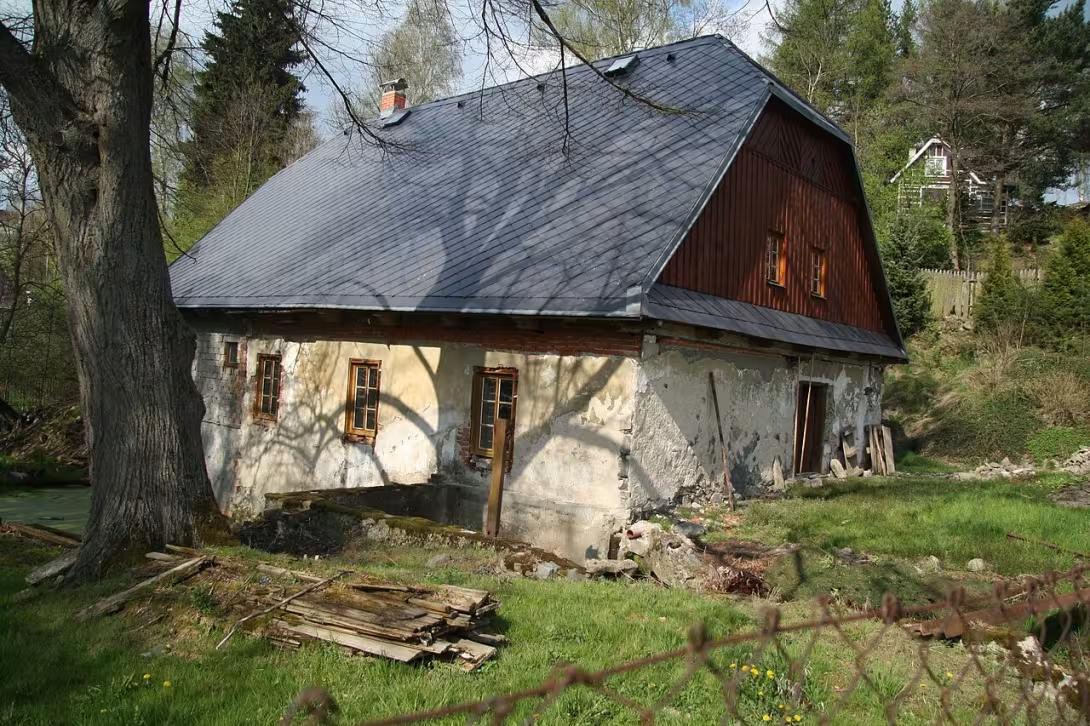
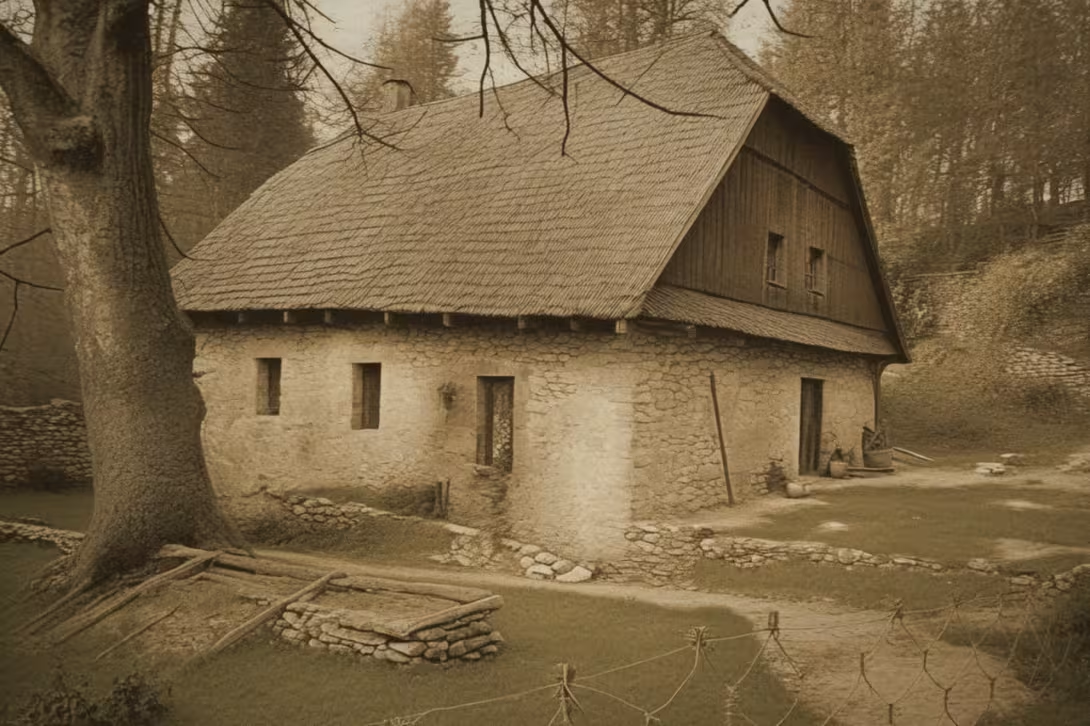
The historical appearance on the left is an AI-generated visualisation and serves as inspiration only.
Historical milestones
- 1460
- First mention in connection with the privileges of Jiří z Poděbrada
- 1913
- Establishment of the Vilemín Černohorská Power Plant
- 1929
- End of lighting part of the village by power plant
- 1948
- Delivery of the mill pond with waste
Architectural development
The building has a halibut roof with boxed shields and a fracture. The masonry around the drive was originally stone, later mixed with lime plaster. After 2000, there was an abrasion.
Historical events
In 1460 the mill is first mentioned in connection with the privilege of Jiří z Poděbrada. In 1913 there was a plant called Vilemín Černohorská. In 1948, the mill pond was taken by waste.
Owners
Vilemína Černohorská (1913)
Points of interest
- The object was first mentioned in 1460 in connection with the privilege granted by Jiří z Poděbrad. - In 1913 Vilemína Černohorská set up a power plant which illuminated part of Market Kamenice until 1929. - Technical equipment has evolved from two water wheels from 1876 to Francis's turbine. Francis' horizontal turbine with wet mammal was preserved in the mill. - The building is protected as a real cultural monument of the Czech Republic.
Guide
Show guide text
This text was created by artificial intelligence and has not been editorially reviewed. It may contain inaccuracies.
Welcome to the water mill in Market Kamenice. Right now, you are standing in a place where the power of flowing water meets a long history of human work and technical progress. Before you go any further, stop for a moment and feel the atmosphere. Do you hear the noise of the Chobot creek? Feel the proximity of the Mill pond, which is an essential part of this object. In front of you is a building with a rectangular plan that dominates this quiet place with its presence. It has a sense of calm, but also of constant movement, which has lasted here for centuries. This building is not just an ordinary house, it is a witness to the changes that have been passed through this entire area.
Let's go back deep into the past together to understand how everything started. The history of this place dates back to 1460. That's when the mill is first written in historical records. And that's not a coincidence. It was then that the mill appeared in connection with an important privilege granted by King Jiří z Poděbrada himself. Imagine the era when such rights were essential to the existence and prosperity of whole settlements. The mill was not just a building, it was a symbol of legal status and economic stability. Since then, after more than half a lover, this place has served people, changing in its form, but its basic function remains a fixed point in time.
Now pay attention to the architecture of the object you are currently observing. Look at its overall structure. The building has a clear, rectangular plan, which gives the whole area a sense of stability and order. Notice how the construction is integrated into the field. It has a semi-embedded basement, which is a typical element that helps the building withstand moisture and use water energy directly from the subsoil. If you look at the division of the building, you can in your mind imagine its inner life. The front part of the building was intended for residential purposes - the everyday life of the family took place here, it was cooked, slept and rested. However, the rear part had a completely different character. It was a mill, the heart of the whole enterprise, a space full of machinery noise, crop dust and constant work rhythm. This duality between home and work space is very typical of historical mills and creates a special, fascinating atmosphere.
Now, if we focus on the people who left a trail here, we'll find really inspiring stories. The mill is not just about stones and wood, it's about the personalities that changed the world around them. As we have already mentioned, the king Jiří z Poděbrad stands in the foundations, but in the New Testament there is a story that was absolutely revolutionary for Market Kamenice. In 1913 a character named Vilemína Černohorská came here. Imagine the courage and vision. Vilemina set up a power plant here. At a time when electricity was something completely unprecedented and luxurious, she created a source of energy here thanks to the power of the water, which began to illuminate parts of the village. It was an era of light that lasted until 1929. Imagine those first hours of the night in a town where the first street lamps lit up thanks to this mill. Vilemína Černohorská was not just the owner, it was the pioneer that brought the modern world into the traditional environment.
If you're interested in technology, then you should focus on how the way the water was used to work changed. This mill has undergone a fascinating development. In 1876 there were still two water wheels, which slowly and rhythmically rotated below the current. It was mechanical, noisy and very understandable. Over time, however, technology has moved on. A very valuable mill plant is still preserved in the building, which represents the peak of the then technical level - for example, the Francis turbine. This transition from wheels to turbine symbolizes the entire era of industrial revolution, when efficiency and strength became key parameters. It's a fascinating example of how human ingenuity has tried to make the most of nature.
But there is also a shadow side of history that makes us wonder how fragile the balance between man and nature can be. You may be interested in the fate of the Mill Pond. This water unit, which is so close to this mill, went through a very unusual and sad event in 1948. The pond was transported by waste, which fundamentally changed its appearance and function. It is a reminder of a time when the long-term sustainability of natural resources was often not addressed in the course of the processes at that time, but the immediate benefits or the need to relieve the burden were addressed. This event has left a permanent mark in the history of the site and changed the dynamics of the entire area.
Now that you know the stories that took place in these walls, and you know what you're looking at, I suggest you continue your search of the area. Feel the light changing on the facade of the building and the sound of the water changing depending on where you're standing right now. This mill is protected as a cultural monument of the Czech Republic, which means that every detail of it, every trace of the time you see here, is precious. Let yourself be carried away by the atmosphere of this place and remember that you are standing at a monument that has survived for centuries, from the time of kings to the era of electricity. Thank you for spending time with this history. We wish you a nice walk and other interesting discoveries around Market Kamenice.
Tips for visitors
For the best experience we recommend a visit in spring or summer months, when the surrounding nature is the most lively and the level of the Mill pond (Loch) sufficient for beautiful reflections. The ideal time to observe calm at the water is early morning or shortly before sunset.
You can reach the mill by car or use public transport.
When visiting, it is recommended to bring comfortable shoes suitable for nature walks near the Chobotovsky creek and plenty of drinking water. If you plan to stay out longer, don't forget to protect against sun or insects.
Photographers should focus the lens towards the mill with the background of the Mill pond (Loch), especially during the golden watch period, when light creates wonderful effects on the water surface. The views along the Chobotov creek offer a quiet composition.
Families with children will appreciate the possibility of free walks in nature around the mill. Watching the water at the pond and the course of the creek can be an interesting adventure activity for the smallest members of the family in the natural environment.
Frequently asked questions
Can the monument be visited?
This is a technical monument. Some are open as exhibitions, others are out of use or on private land. We have not verified whether this one is accessible.
What are the opening hours and admission?
We have not verified the opening hours or admission. Current information is published by the operator.
Where is the monument?
Location: Trhová Kamenice, Pardubický kraj. The map on this page shows the exact spot.
Why is the monument protected?
It is listed in the Central List of Cultural Monuments of the Czech Republic as a cultural monument (register no. 1000136298).
Businesses nearby
Do you run a restaurant, accommodation, shop, museum, rental, wellness or other visitor service near this monument? Show yourself directly to the people heading to it — this is how they will see you in the app and on the web:
Nearby
Chobovský potok and Mlýn pond (Loch).
Accommodation nearby
Themed route
Water Mill No. 11 Type: Cultural monument / Historical construction This is the main destination of your trip. The historical water mill in Market Kamenice presents a rare example of the traditional agricultural and industrial heritage of the region. Visitors can see the preserved architecture and learn about the operation of the mill mechanism, which has been the heart of the local economy for centuries.
Chobotovský porok Type: Natural formations / Water flow This stream is a key element that historically powered the water wheel mill. A walk along its shores allows you to understand the hydrological links between nature and human activity. The peaceful environment of the flow offers ideal space for relaxing and observing local fauna and flora in the immediate vicinity of the historical building.
Mill pond (Loch) Type: Water area / Vacation area This pond is part of the mill area and used to regulate the water flow for the mill drive. Today it represents a quiet rest zone where the surrounding greenery and sky will be reflected. Its presence demonstrates the ingenious use of water resources in the past and gives the whole area a specific character.
Ambient water mill no. 11 Type: immediate complex / Historical installation A tour of the immediate surroundings of the main monument includes the remnants of the historical buildings and land that were part of the mill's economy. Here you can find traces of earlier economic buildings and gardens that complement the picture of life in the mill estate. This space allows you to look into the daily life of the inhabitants associated with the operation of the mill.
The route is designed to allow a smooth connection of the historical core with the natural elements surrounding it. It starts at the mill itself, continues along the water stream that gave it life, and ends at a quiet water area that closes the circle of historical water use. The whole circuit is short and accessible for all types of visitors, making it an ideal destination for a short relaxing trip.
Seasonal recommendations
Spring brings to the water mill in the Market Kamenice a ferocious energy, for the melting of snow in the Iron Mountains fills the riverbed and the water in the drive flows with unprecedented force. The fresh light green tones of awakening vegetation and flowering trees on the shores create an impressive contrast to historical construction. The morning sun's rays of softness light the timed grass and the air smells of moist soil. In this period you will meet only a minimum of other visitors, so you will enjoy the tour in undisturbed peace. The terrain of the water is very wet and muddy after winter; therefore, it is necessary to have solid and waterproof footwear. The best time for arrival is an early afternoon when the spring sun offers the most pleasant temperatures.
In the summer months the area of the mill comes to life with a typical holiday mood full of sun and bugs. The tall trees provide a beneficial shade and cool water pleasantly cooling the immediate surroundings of the monument. The sharp noon sun creates glitter reflections on the surface, which are mirrored on both wooden and walled elements of the object. In the main summer season you have to count on a higher number of hikers and cyclists, so it is ideal to plan a visit for early morning or late evening, when the light will soften and the mill will be more quiet. Light summer tops are enough for clothes, but due to the moist environment near the flow, do not forget the effective insect repellent.
Autumn covers the valley with mill in nostalgic grove and rich colors. The surrounding leafy trees are coloured in golden and copper shades, which in combination with the darkened water surface form an extremely photogenic corner. It is typical that the morning fog rises above the river, which alternates with a sleek, warm afternoon light. The crowds from the summer months disappear and the atmosphere is deep and quiet. Due to the noticeable cold radiating from the water, it is advisable to choose warm laminated clothing including a non-inflatable jacket. Watch out for wet fallen leaves and wooden footboards that are usually slippery. The best lighting conditions for visiting are around 2:00 p.m.
Winter turns the mill into a quiet corner cut from the postcard, especially when the landscape is covered by snow sheets and frost creates ice crystals and icicles on the walls and water mechanism. The entire valley will be quiet and the only sound will remain the dampened determination of the unfrozen stream of water. In Advent Time, the place has a strange, secluded spell. Visiting is very minimal during this period. Due to the freezing microclimate at the river, it is necessary to dress in very warm winter clothes, hats and gloves. The key is winter shoes with a strong sample against slipping on icy banks. Due to early dimming, it is best to arrive around noon when enough daylight is provided.
Visualizations and artistic views


The visualisations are generated by artificial intelligence and serve as inspiration.
Photos from the area
Real photos taken near the monument


Zdroj a licence jsou uvedeny u každého snímku.
Tips from visitors
No tips yet. Be the first!
Log in and add your tip.
Sources and literature
Photos: Jiří Sedláček / CC BY-SA 4.0 — Wikimedia Commons. The author and licence also appear when you hover over the image.
Faktickým podkladem tohoto textu byl článek na Wikipedii, jehož autory jsou přispěvatelé Wikipedie. Článek je dostupný pod licencí CC BY-SA 4.0.
Location on the map
More monuments – Trhová Kamenice
Show all in the municipality

Příběhy a pověsti
Legendy, pověsti a příběhy spjaté s touto památkou

Fotografie návštěvníků
Zatím žádné fotografie. Buďte první, kdo přidá fotografii z návštěvy!
Log in a přidejte svou fotografii nebo hodnoťte.
Za ověřenou návštěvu v aplikaci získáte víc bodů — poznáme podle GPS, že jste na místě.
Reviews and comments