



Vodní mlýn (Psinice) Water mill
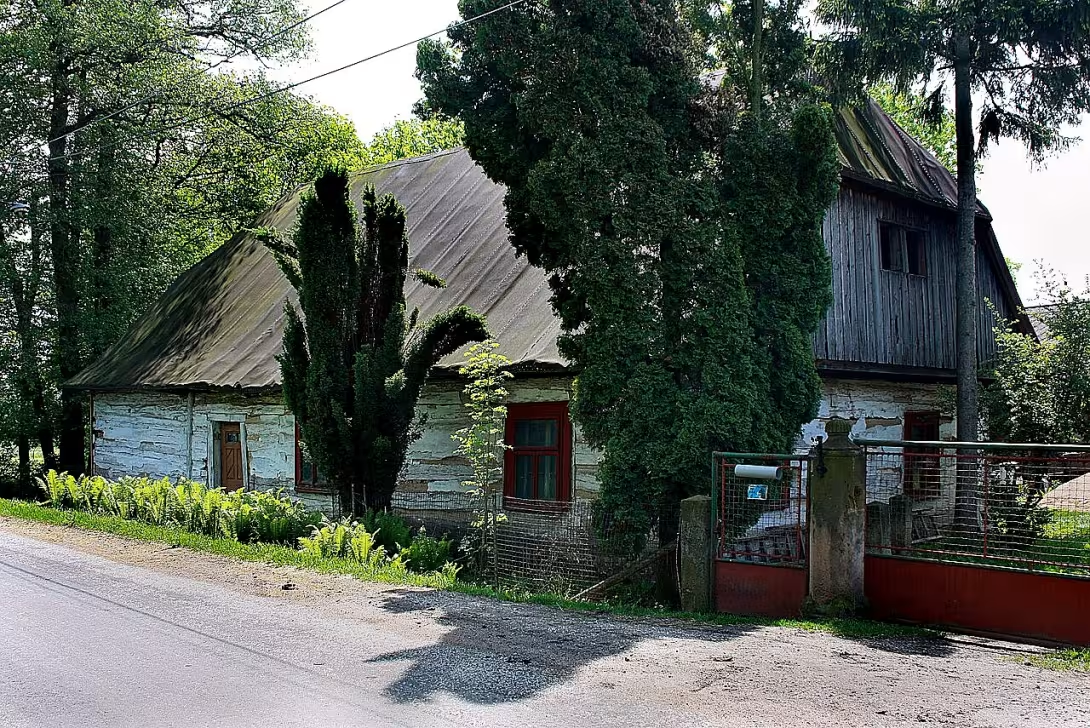
The water mill in Psinice, located near Lebanon in the district of Jičín and Králové Hradec Region, is an authentic monument to the technical progress of the Czech countryside in the early 19th century. This building boasts a grafted building with original technological equipment and is part of a cultural monument that includes a torso of a waterjet and former sachets. Since 2005 it has been protected as a cultural monument under the number 101627.
The history of the mill dates back to 1804, when the oldest written mention appeared in the form of a purchase contract. This documentation suggests that the mill was already an important element of local rural life. In the 1930s, however, the mill stopped being used for its original purpose, which was typical of many similar objects of the time, which became obsolete due to technological progress. The current owner tries to make repairs using the original technologies and plans to return the mill to its original functions while they also want to make it available to tourists.
The architectural characteristic of this building is the grafted building of the mill number descriptive 48. This type of construction was common in the period when the mill was built and represents an important part of rural construction at that time. In addition to the building itself, the complex is supplemented by a torsion of water-jet and remnants of former bags, providing a comprehensive view of the technology used for its operation.
The mill in Psinice has been managed for centuries by various owners who have tried to maintain its functionality. Despite the obsolescence and later abandonment of the mill he preserved his technological equipment, which is now unique and valuable for understanding the history of milling industry in Czech countries. The current owner seeks not only to restore it physically, but also to preserve the original technology.
The key event in the history of the mill was his declaration for the cultural monument in 2005. This recognition underlines its importance as evidence of technical progress and culture of the Czech countryside. The mill thus represents not only historical value, but also potential for tourism and educational projects.
Today the mill in Psinice is open to the public as a cultural monument. Its authentic preserved elements offer a unique opportunity to explore the technology and lifestyle of the Czech countryside from the beginning of the 19th century. For tourists, historians and locals, it is a place full of importance that offers a view of the past and an inspiration for the future.
The Water Mill in Psinice is an important part of the cultural heritage of the Czech Republic. Its conservation and accessibility not only keep the memory alive, but also support an understanding of the historical processes that shaped the Czech countryside. Visiting this place is a reminder of the importance of protecting cultural heritage and offers valuable insight into the technical maturity of past generations.
Historical milestones
- 1804
- The oldest written proof of the mill in the form of a purchase contract.
- 2005
- The mill was declared a cultural monument under the number 101627.
Architectural development
The main building of the mill is a grafted building from the beginning of the 19th century. The area also includes a torso of a waterjet and former bags.
Historical events
1804: The oldest written proof of the mill in the form of a purchase contract. 1930s: The mill stopped being used for its original purpose. 2005: The building was declared a cultural monument.
Points of interest
- The water mill in Psinice is an authentic monument to technical progress of the Czech countryside from the beginning of the 19th century. - The oldest written mention of the mill dates back to 1804 in the form of a purchase contract. - The mill was declared a cultural monument in 2005, highlighting its historical and technological value. - The architectural characteristic is the grafted building of the mill number descriptive 48, typical of the period of its origin. - The mill is an important part of the cultural heritage of the Czech Republic and offers a view into the technical maturity of past generations.
Guide
Show guide text
This text was created by artificial intelligence and has not been editorially reviewed. It may contain inaccuracies.
Welcome to Psinice. Stop for a moment, take a breath and feel the calm of this place. Right now, you're standing in front of the Water Mill, which is much more than just an old building. It is a living witness to a time when the rhythm of human life was determined by the natural power of water and the rotation of wooden wheels. Look at this beautiful building in front of you. The dominance that you see is the grafted mill building with a description of 48. Its appearance with wooden beams and traditional design will immediately transfer you to a time when the Czech countryside was full of similar craft pieces and when everything was made of materials provided by nature itself.
Let us now look together at how this place was created and what its historical context is. To understand the importance of this mill, we need to go back deep into the past, namely the beginning of the nineteenth century. The oldest written document that tells us about this place dates back to eighteen zero four. It's a contract of sale, a document confirming the transfer of ownership. Imagine the moment this treaty was signed. At that time the mill was the key point of every village. It was not just a place for grinding grain, but a place for meeting people, where news was exchanged, and where the crop abundance and survival of the entire village were decided. It was during this period, in the early years of the nineteenth century, that the mill in Psinice began to perform its role and become the heart of the local economy.
Now pay attention to the architecture itself and what you're seeing right now. Note the carefully processed grafting of the main building. The grafted buildings are typical of our countries and represent the wisdom of our ancestors who knew how to use the properties of wood to create warm and durable space. Look at the details of the connections and the structure of the walls. It's fascinating to realize that the original technological equipment has been preserved in the building, which is currently a total rarity. This means that the machines and mechanisms that once ground the grain on flour are still in place and tell the story of the technical maturity of the time.
In addition to the building itself, look around it. Notice the torso of the waterjet. The drive was basically an artificially driven trough through which the water flowed from the river or stream directly to the mill wheel. It was this flowing water that was the engine of the entire operation. Without the drive, the mill would only be a quiet building, but with it it became a machine that never slept. Next to the drive, you'll find the remains of the former booths. The tiles were small ponds or enclosed parts of the water stream that were used for fish farming. This shows us that the mill was not just about grinding grain, but was part of a wider economic system, where trade with fishing and agriculture was combined. Everything has been thought out so that the maximum benefit is printed from available water sources.
When we think about the people who worked here, we have to acknowledge that the specific names of architects or owners have been deleted in time and remain unknown. But that doesn't mean the story's incomplete. On the contrary, it allows us to imagine a typical windmill at that time. The miller was a respected community and sometimes a little mysterious. He had to be not only a skilled craftsman who understood machines, but also an observer of nature. He had to know when the water was rising, when it was falling, and how to properly set up the mechanisms to make the flour soft and good. Imagine the morning fog above Psinicemi, the sound of cracking wood and the constant, soothing noise of water that accompanied the work of the mill from dawn to deep evening.
Now I want to impress you with one interesting thing that gives this place a new dimension. The water mill in Psinice is not only an old building, but is officially recognised as a cultural monument. This important step took place in the year of two thousand and five, when the mill was registered under the number one hundred and six hundred twenty-seven. Why is it important? Because this statement confirms that the mill is an authentic document of technical progress of the Czech countryside. At a time when everything is modernising and old things are disappearing, this mill has remained a bridge between us and our ancestors. It is a rare specimen that shows us how technology was approached in the early nineteenth century and how it was integrated into the landscape. It's basically an open-air technical museum that reminds us that progress isn't just about computers and electricity, but it's already started with a simple water-powered track.
Now try to close your eyes for a moment and imagine how the mill worked two styles ago. Can you hear the rhythmic sound of the millstones? Do you smell the smell of fresh ground grain? Feel how the water in the drive flows rapidly and energizes the entire area. It's a fascinating feeling when we realize that we're standing in a place that has served people for generations and survived wars, regime changes and technological revolutions. This mill in Psinice is a symbol of perseverance and craftsmanship.
Now that you know the story of this place, I suggest you go around with a new look. Take another look at the details of the grafted walls, think about the way the water has been drifting in the drive, and feel the atmosphere of this quiet corner. Let yourself be inspired by the simplicity and functionality that still persists in this area. It's the perfect place to think about how much our lives have changed and what we may have lost along the way, but also what we've learned.
Thank you for accompanying me on this short journey in time. I hope you are interested in the Water Mill in Psinice and that you are leaving with a sense of admiration for human work and technical skill of our ancestors. I wish you a pleasant continuation in discovering the beauty of our countryside and enjoy the rest of your day in peace and quiet. Goodbye.
Tips for visitors
The best time to visit is during bright days when the sun best illuminates the grafted structure and highlights its details. Due to the ongoing renewal, we recommend monitoring the current state of work to make the visit as beneficial as possible.
You can get to the place with your own vehicle or use public transport. Please check the current timetable and connection options in the search engine.
For comfortable movement in the surroundings we recommend to wear quality shoes suitable for rural terrain. For families with children, the view of historical technology is interesting, but it should be remembered that the object undergoes renewal.
For the best photos, use soft light during morning or afternoon hours, which will underline the texture of the wood. Focus on the details of historical architecture.
According to the information available, there are no other specific inspection sites in the immediate vicinity.
Frequently asked questions
Can the monument be visited?
This is a technical monument. Some are open as exhibitions, others are out of use or on private land. We have not verified whether this one is accessible. According to the heritage register restoration is under way, so access may be restricted.
What are the opening hours and admission?
We have not verified the opening hours or admission. Current information is published by the operator.
Where is the monument?
Location: Psinice, Královéhradecký kraj. The map on this page shows the exact spot.
Why is the monument protected?
It is listed in the Central List of Cultural Monuments of the Czech Republic as a cultural monument (register no. 1636668058).
Businesses nearby
Do you run a restaurant, accommodation, shop, museum, rental, wellness or other visitor service near this monument? Show yourself directly to the people heading to it — this is how they will see you in the app and on the web:
Nearby
🏰 Historic sites (93)
- Mistr Jan Hus 3.2 km
- Karel Havlíček Borovský 3.2 km
- Ecce Homo 3.3 km
- zámek Dětěnice 3.5 km
- sv. Václav 3.6 km
- Pomník obětem světových válek 3.7 km
- 1914-1918 4.4 km
- zámek Staré Hrady 4.5 km
- pomník padlých I. sv. války 4.8 km
- zámek Rožďalovice 5.0 km
- Muzeum knihařství 5.3 km
- Galerie Melantrich 5.4 km
- Panna Maria 5.5 km
- Základní kámen 6.3 km
- sv. Jan Nepomucký 7.7 km
- Kalvárie 7.9 km
- Motomuzeum Jawa 8.5 km
- Socha pany marie 8.5 km
- Pomník padlým rodákům 8.6 km
- Občané Chotěšic - 2. světová válka 8.8 km
🍽️ Restaurants and dining (86)
- Mlíkárna 0.7 km Křešice 19 web
- Na Knížecí 3.2 km
- Cukrárna Karolína 3.2 km
- Radnice 3.3 km
- Šenk u dvou čarodějnic 3.6 km
- Cukrárna, kavárna 3.7 km
- Středověká krčma 3.7 km +420 493 599 142 web
- Farma Košík 5.3 km Tuchom 1 +420 325 514 850 web
- Vosma 5.4 km Boleslavská 449 web
- Cukrárna Epiro 5.5 km Náměstí 94 +420 325 593 257 web
- U Bači 5.7 km
- Pivnice U Bači 5.7 km
- Košík 6.1 km
- Restaurace Anna Kráva 6.3 km +420 777 270 783 web
- Hospoda U Havlů 6.5 km
- Country Klub Samotář 7.3 km
- Seletická Hospoda 8.6 km +420739190027 web
- Na Blahu 8.9 km
- U Markvarta 9.5 km
- Kulinářská restaurace Kovárna 9.6 km +420 776 766 628 web
🏨 Accommodation (22)
- Řáholec 3.0 km
- Rustikal 3.7 km +420 493 599 161 web
- Středověký hotel Dětenice 3.7 km +420 493 599 161 web
- Farma Košík 5.3 km +420325514850 web
- Homole 11.3 km
- Ubytování Drštěkryje 13.0 km web
- Hotel Pošta 13.7 km +420 732 445 151 web
- Chata Svinčice 13.9 km +420602173073
- Hotel TAMMEL **** 14.1 km
- Kemp Rumcajs 14.2 km
- Hotel U Krále *** 14.2 km Nerudova 45
- Hotel Pod Šikmou věží 14.3 km Horní Lochov 32 +420 739 747 374 web
- Penzion u České Koruny 14.3 km +420493531241
- Hotel Paříž 14.4 km
- Věž Jičín - Romantika pro 2 14.4 km
- Penzion Lucie 14.4 km
- Buškovský mlýn 14.4 km
- Hotel Bohemia 14.5 km
- Hotel U Valdické Brány 14.5 km
- Koupaliště Kemp Sobotka 14.5 km +420776133341 web
🚲 Rentals and sport (11)
- Sportovní hala 4.3 km
- Cyklomont 10.2 km
- Sokolovna 10.6 km
- sportovní střelnice 11.0 km
- SK Tenis 12.9 km web
- Horolezecká stěna Sobotka 14.0 km
- Sportisimo 14.2 km Riegrova 1263 +420724484985
- Cyklocentrum Souček 14.4 km Kollárova 43 +420493534061
- Koupaliště Kníže 14.7 km
- Koupaliště Semčice 14.9 km
- Sokolovna 14.9 km
🥾 Hiking and nature (168)
- 221 3.4 km
- Cikán 3.8 km
- 216 4.0 km
- Hrádek 4.3 km
- Libáň 4.7 km
- 222,5 4.8 km
- Panská zahrada 5.2 km
- Rybník Kojetín 5.7 km
- U Isidora 5.8 km
- Homolka 7.1 km
- Rybník Mordýř 8.7 km
- Kamenný vrch 9.0 km
- Kuncberk 9.2 km
- Mílova hůra 9.2 km
- Holý vrch 9.4 km
- Na Vysoké 9.6 km
- Holý 9.9 km
- Zámecký park 10.0 km
- Češovské valy 10.1 km
- Čakan 10.2 km
Accommodation nearby
Themed route
1. Vodní mlýn (Psinice), machine space. Here you will see the old parts and machines used for grinding. 2. Cave mill, outdoor area. This space allows you to view the construction closely. 3. Exhibition in the mill, cultural part. You will learn about the history and functioning of the whole place. 4. Park by the mill, green area. It's a quiet place in the immediate vicinity for a rest after a tour.
Seasonal recommendations
Spring: In the spring life wakes up around the mill and nature begins to green. Water in the stream is flowing due to melting snow and light is very soft in this period. Due to the ongoing reconstruction, the road around the building can be a little difficult due to mud, so we recommend practical shoes. The best time to visit is in the morning when the air is fresh.
Summer: The summer season offers bright sun and dense green vegetation that guards the historic place. The atmosphere is alive and warm. In the main summer season there are more people at the monument, so it is advisable to arrive early in the morning to enjoy peace. Dress lightly and prepare for warmer weather.
Autumn: Autumn brings golden colours of leaves and often mysterious morning fog over water. The atmosphere is calm and melancholy. It is the perfect time for photography thanks to color contrasts. For colder days, we recommend wearing a waterproof jacket and shoes to keep you dry.
Winter: Zimą operates the mill in quiet and cold quiet, especially if the landscape is covered with snow. The light is gray and dry at this time. Due to lower temperatures and shorter daily times we recommend to come in the morning and choose very warm clothes. During this period there are the least visitors near the monument.
Visualizations and artistic views


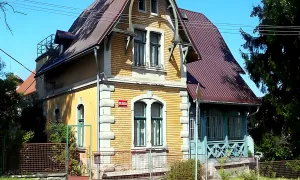
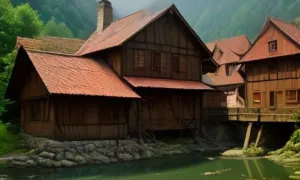
The visualisations are generated by artificial intelligence and serve as inspiration.
Photos from the area
Real photos taken near the monument

Zdroj a licence jsou uvedeny u každého snímku.
Tips from visitors
No tips yet. Be the first!
Log in and add your tip.
Sources and literature
Photos: Czech Wikipedia user Packa / CC BY-SA 3.0 — Wikimedia Commons. The author and licence also appear when you hover over the image.
Faktickým podkladem tohoto textu byl článek na Wikipedii, jehož autory jsou přispěvatelé Wikipedie. Článek je dostupný pod licencí CC BY-SA 4.0.
Location on the map


Příběhy a pověsti
Legendy, pověsti a příběhy spjaté s touto památkou
Fotografie návštěvníků
Zatím žádné fotografie. Buďte první, kdo přidá fotografii z návštěvy!
Log in a přidejte svou fotografii nebo hodnoťte.
Za ověřenou návštěvu v aplikaci získáte víc bodů — poznáme podle GPS, že jste na místě.
Reviews and comments