






vodní náhon s akvaduktem v Chřibské Drive
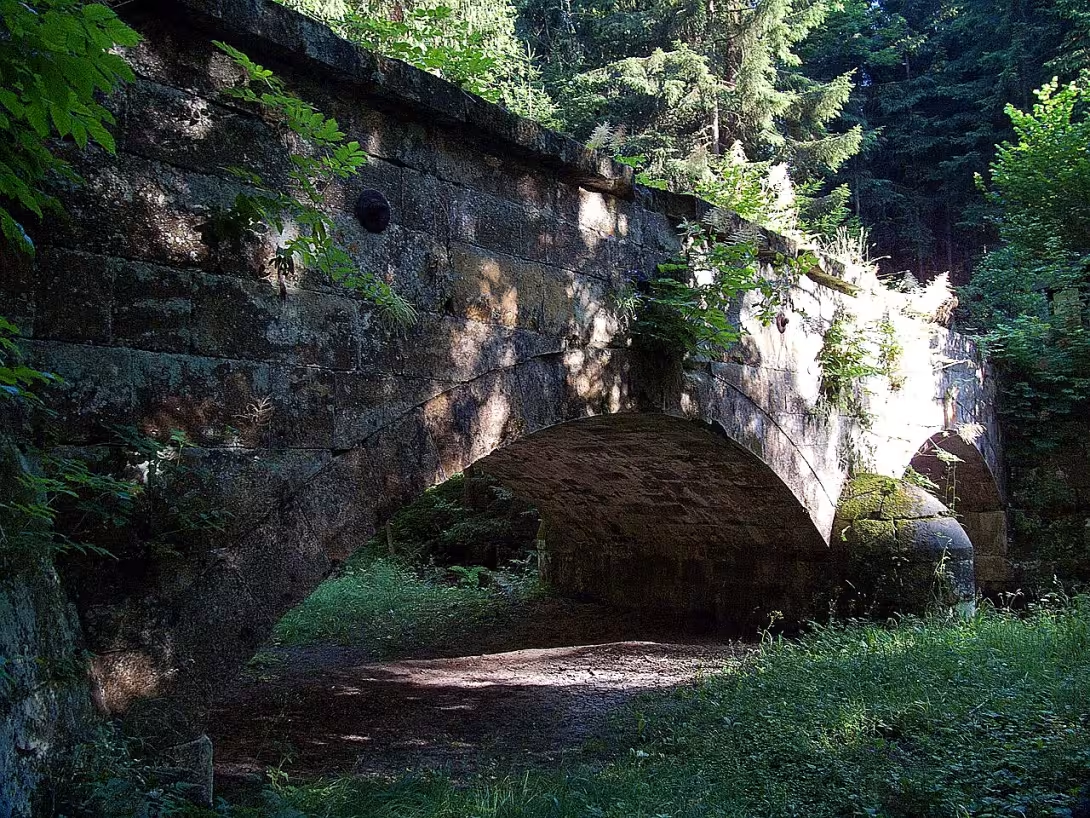
Waterjet with aqueduct in Dolní Chřibska is a historic water work from the end of the 19th century, which was built for the supply of water to the weaving plant. It is located in the location Na Potoce in the district of Děčín in the Ústí region and is protected as a cultural monument of the Czech Republic. This technical construction is an important part of the industrial infrastructure in the Jetřichovice walls area.
The building was built between 1884 and 1894 by the manufacturer Florian Hüble as part of the new weaving plant. The water feeder was finished in 1888 during the period of intensive industrial development in Bohemia and Europe.
The drive is approximately 750 metres long, built from the barrel of bricks and wood. The water was taken from Chřibská Kamenice along the left bank of the river to the first rock tunnel of 35 metres. The walled-up drive followed, which led to a two-arc aqueduct with a length of 25 metres and a width of the trough about 2 metres, crossing the old forest path and the river. The drive to the second tunnel with a length of 140 metres and a height of 2 metres, followed by surface shafts. The system ended at the former factory and returning to Chřiba Kamenice.
After the completion of the operation of the weaving plant as a result of the economic crisis at the turn of the 20th and 30th years of the 20th century, after World War II there was a recreation centre, later a depository of collections of the National Museum in Prague. After cleaning out the buildings after 1980, they began to disintegrate and the weaving plant was destroyed after the fire in 1996. While the buildings were removed from the list of protected monuments, the drive remained protected since 8 November 1991. Today the land in the administration of the National Park is Czech Switzerland.
In the vicinity of the top tunnel there is a large cross carved into a rock wall, reminiscent of a tragic event from 1841, when the lumberjack died here from a fall from a rock.
The monument is located at an altitude of 301 to 311 metres, close to the border of the Czech Switzerland National Park. The path to the aqueduct is not marked; there is only one orientation arrow in the locality on the Potoce. Access from the bus stop Chřibská, at Potoce, is restricted by private property. From the ruins of the weaving plant, the forest path leads to the drive and aqueduct. The upper part of the trough leading to the edge of the village is now overgrown and tiny.
The waterjet with aqueduct is a unique testament to the region's technical thinking and industrial history. Visiting this work offers insight into the forgotten world of the weaving plant in the occasion of Jetřichovice walls.
Historical milestones
- 1888
- Finishing the waterjet with aqueduct.
- 1841
- A lumberjack falling off a rock next to the top tunnel.
Architectural development
The construction includes a narrow trough along the river bank, rock tunnels and a two-arch aqueduct. The materials used for the construction are mainly wood and brick.
Historical events
- 1888
- Completion of the drive with aqueduct.
- 1841
- A lumberjack falling off a rock next to the top tunnel.
Owners
Florian Hübel (1884-1894), then different owners are owned by the Czech Republic, managed by the Czech Switzerland National Park.
Points of interest
- The waterjet with aqueduct was built between 1884 and 1894 by the factory Florian Hüble as part of the new weaving plant.
- The drive is approximately 750 metres long, built from the barrel of bricks and wood. The water was taken from Chřibská Kamenice along the left bank of the river to the first rock tunnel of 35 metres.
- After the operation of the weaving plant there was a recreation centre after World War II, later depository of collections of the National Museum in Prague.
Guide
Show guide text
This text was created by artificial intelligence and has not been editorially reviewed. It may contain inaccuracies.
Welcome to Lower Chřibska. You've just stopped by one of the most interesting technical uniqués in the area. You are standing right in front of a waterjet with an aqueduct that is a silent but fascinating witness to an ancient industrial era. If you look around now, you'll probably feel a strange connection between the wild nature and the human struggle to control its powers. In front of your eyes is this technical building that tries to integrate into the sloping landscape while using it for its purposes. Feel the atmosphere of calm that is being ruled here today, and try to imagine how powerful the sound and constant movement of water was here over a century ago.
Let us now return to the depths of the past and understand why this work was created. In order to understand the meaning of this structure, we need to look at the period of the late nineteenth century when the world around us began to change rapidly through the industrial revolution. There was an important chapter of local history in this place, in the former settlement at the Potoce. The main mover of everything was the factory Florian Hübel. This man wasn't just the owner, he was a visionary who built a large weaving mill here. But in order for his machines to work in the weaving plant, he needed something essential - a constant and reliable water supply. This is why this drive was realized between 1884 and 1894. The aim was to bring water from the Chřibské Kamenice directly to industrial flooding, so that it could drive the mechanical processes that formed the basis of the wealth of this place. The whole process was complex and required not only huge funds, but also precise planning, so that water could flow through the sloping terrain.
Now pay attention to the very form of this work that you have right in front of you. If you approach these structures now, you will see the work of the craftsmen and engineers at the time. Notice what this building is made of. The dominant material here are bricks and wood, which is typical of the then technical structures, which had to be functional and relatively easy to repair. The entire drive is incredibly long, approximately seven hundred and fifty meters. Imagine the work that human hands had to do to create a line this long along the left bank of the river. The water was taken from the Chřibské Kamenice and had to be led by a very precise inclination to make its current sufficient but also controlled. If you look towards the top of the drive, you can see how this technical road is trying to bypass the obstacles in the field. One of the most important elements that this building includes is the first rock tunnel. It has a length of 35 meters and represents a fascinating example of how the builders had to work with the natural stone to ensure the uninterrupted flow of water. Feel the combination of rock hardness, wood fragility and brick strength, which together form this functional whole.
Looking at this structure, it is impossible to realize how much a personality like Florian Hübel played a role in the life of that man. He himself was the architect of the economic expansion of this region. His decision to invest in such a complex water work shows his ambition and how much then industrialists believed in technological progress. Without this drive, a weaving plant that was the heart of local production could not exist. Hübel created an entire ecosystem where nature and human work were in constant motion. This monument is today protected as a cultural heritage of the Czech Republic precisely because it is such a perfect example of how the industrial use of the landscape with its natural geometry has been interconnected in the past.
Although this building seems to be a peaceful witness to history today, its surroundings also hide shady and sad aspects that remind us that building such works has not always been a matter of planning and success. Before completing this drive, already in 1841, there was a tragic incident that became part of the local memory. He didn't give away the top tunnel, there was an unfortunate accident when the lumberjack fell off a rock. This event reminds us of how dangerous life was in this part of the terrain and how much courage the people who worked here had to have worked in close proximity to rocks and water before this technical construction was completed. This tragedy gives some weight to the place and reminds us that every metre of this drive has been redeemed by hard and often dangerous work.
Now that you know the story of origin, the importance of materials and fatalities associated with this place, you can move on with your new perception. Focus on the details of bricks that have resisted time, and see how water is still trying to find its way, just like it did over a century ago. You may be interested in how this structure has been involved in surrounding vegetation over the years and how it has become part of the landscape we admire today.
I hope this brief insight into the past has helped you better understand the importance of this place. Waterjet with aqueduct in Chřibska is not only a technical object, it is a monumental expression of human will and striving for progress. Please continue your walk and pay attention to the surrounding natural bodies surrounding this drive. Every step can lead you to another surprise in this beautiful part of Lower Chřibska. Thank you for your visit and we will read you a pleasant continuation in exploring this historic heritage.
Tips for visitors
The best time to visit a waterjet with aqueduct in Chřibska is the early spring or late autumn season. During these months vegetation is still beautiful and the site is not crowded with tourists, which allows a peaceful tour of this historical work. In addition, light can be ideal for photography at these times.
Parking can be found near the Dolní Chřibská settlement, where there is a monument. For those who prefer public transport, the place is also available by bus or by road nearby. It is recommended to check the current connection before visiting.
When planning a visit, you can bring shoes suitable for walking on uneven terrain, protective eyeglasses and sun umbrellas. If you intend to take pictures, also bring a high-quality camera or smartphone with a good lens.
The best place for photographers to capture the aqueduct is in the area where the drive opens up to light. This is best done in the morning or in the evening when light is softer and shading contributes to dramatic effects in the images.
In the vicinity of the monument you can visit the Jetřichovická walls which are ideal for short walks and nature observation. For families with children, this place is particularly interesting because of the opportunity to explore various shelters and surfaces. In addition, the border of the Czech Switzerland National Park offers many opportunities to observe wild fauna and flora.
Businesses nearby
Do you run a restaurant, accommodation, shop, museum, rental, wellness or other visitor service near this monument? Show yourself directly to the people heading to it — this is how they will see you in the app and on the web:
Nearby
The waterjet is located near the Jetřichovice walls and the border of the Czech Switzerland National Park. There are also remains of the former weaving plant in the vicinity.
Accommodation nearby
Themed route
Thematic cruise route from Chřibská
1. Water drive with aqueduct (water work) The main objective of our route is a waterjet with aqueduct, located near the village Dolní Chřibská. This historical water work was a key part of the system that brings water to former industrial facilities and is considered a technological monument. His visit will offer an interesting insight into the past, when water was a necessary source for industrial processes.
2. Jetřichovice walls (natural unit) After visiting the aqueduct, we will take a short walk to the Jetřichovice walls, which are part of the border of the National Park Czech Switzerland. These impressive rock formations offer beautiful views and an opportunity for mild sightseeing trips. They are an ideal place for relaxing and using the natural environment.
3. Remains of former weaving plant (historical site) We will then look at the remains of the former weaving plant, which is an important historical witness to the industrial era in the region. These remains allow us to imagine the life and work of people who used to work here. It's a fascinating place for those who like the history of industry.
This route offers a combination of technical monuments and natural beauties, making it ideal for the whole family or groups in love with history and nature.
Seasonal recommendations
Spring: In the spring, Chřibská awakens into life when the surrounding vegetation takes a fresh green colour and the first flowers appear around the water works. The light is softer and more pleasant in this period to capture details of the stone structure. We recommend wearing layered clothes because the morning cold can quickly rotate with afternoon heat. The road will probably be wet, so prepare for softer terrain.
Summer: Summer months bring intense sunlight and thick leaf canopy, which provides a refreshing shade under the aqueduct. The atmosphere is alive, but due to a higher number of visitors it is best to arrive immediately after opening or in the early morning. Dress lightly, don't forget to protect yourself from the sun and have enough fluids to handle the summer heat.
Autumn: Autumn visit offers a fascinating view of orange and golden shades of leaves that contradict the grey stone of the drive. The morning fog rising from the water creates a mysterious and calm mood, ideal for observing a monument in solitude. It is necessary to wear waterproof shoes and a warmer layer because the damp and cooler air can be present throughout the day.
Winter: In winter, the water works raw and majestic, especially when the surrounding landscape is covered with snow or there is impact ice on the stone. The atmosphere is quiet and lonely, which allows peaceful observation without distractions from crowds. Due to lower temperatures and shorter daily times, it is necessary to choose very warm clothes and solid shoes with good grip to ensure safety in slippery places.
Visualizations and artistic views

The visualisations are generated by artificial intelligence and serve as inspiration.
Photos from the area
Real photos taken near the monument

Zdroj a licence jsou uvedeny u každého snímku.
Tips from visitors
No tips yet. Be the first!
Log in and add your tip.
Sources and literature
Fotografie: Czeva / CC BY-SA 3.0 — Wikimedia Commons. The author and licence also appear when you hover over the image.
Faktickým podkladem tohoto textu byl článek na Wikipedii, jehož autory jsou přispěvatelé Wikipedie. Článek je dostupný pod licencí CC BY-SA 4.0.
Location on the map
Příběhy a pověsti
Legendy, pověsti a příběhy spjaté s touto památkou

Fotografie návštěvníků
Zatím žádné fotografie. Buďte první, kdo přidá fotografii z návštěvy!
Přihlaste se a přidejte svou fotografii nebo hodnoťte.
Za ověřenou návštěvu v aplikaci získáte víc bodů — poznáme podle GPS, že jste na místě.
Reviews and comments