






Hornův mlýn na koření Water mill
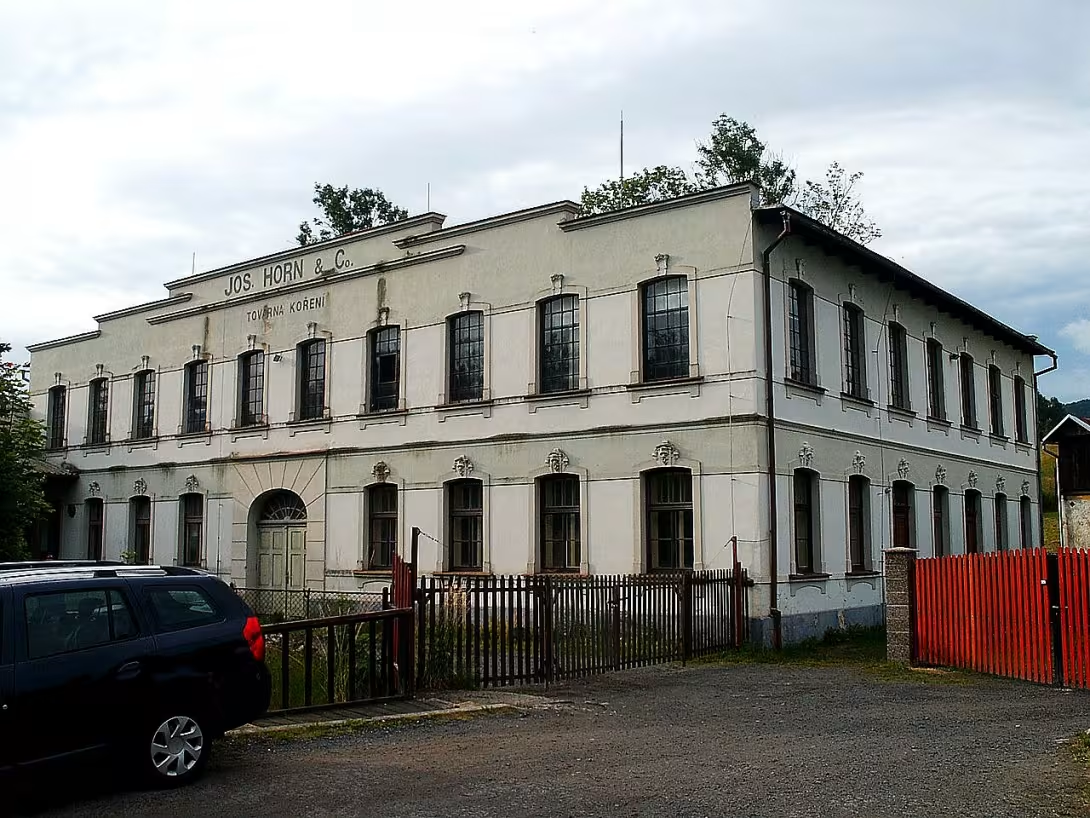
The stone water mill in the village Dolní Chřibská is an important technical monument registered in the central list of cultural monuments of the Czech Republic. The current building was built in 1884 by the entrepreneur Josef Horn and is remarkable mainly thanks to preserved indoor equipment.
The first mention of the mill on the site of today's building with a descriptive number 35 dates back to 1713. The Terezian cadastral in this location indicated a mill with two saws and in 1787 a storey building with a cellar and a barn was mentioned. In 1884 Josef Horn and his partner built a water mill specialized in spice processing. At the time of its creation, it responded to the expansion of the industrial revolution in Austria-Hungary and a growing interest in exotic goods.
The mill processed various spices, especially pepper and vanilla, but also cumin, fennel, cinnamon or ginger. The products were exported from Chřibska to the whole territory of Austria-Hungary. In 1907 a new storey building was built, which served as warehouses, apartment and office. The company Josef Horn & Co., which operated both the spice mill and the grain mill and imported tea, in 1942 bought a nearby Hübel factory in the location of the Potoce, where it set up other warehouses.
The monument protected area consists of three buildings. The central building is a rectangular one-storey building with a newer annex on one side. The inner spaces are divided into workshops and machinery spaces. The industrial plant that was preserved in the building is constructed mainly from wood with metal accessories. Rare items of equipment include wooden funnel and loading cabinets. The original water drive was replaced by electric motors in 1961.
After the end of World War II, the mill owner was moved to Germany. The operation was subsequently included in the business of the Business Packing Company, which ceased to exist in the early 1990s. The spice was ground in Chřibska until 1980, then the area served only as a packing room.
Currently, the site of the former mill is privately owned and accessible to the public. In 2018 and 2019, the building was offered for sale as an industrial building in the district of Děčín in the Ústí Region, suitable for conversion to alternative loft housing or for cultural use, while the seller did not mention in the offer the fact that the construction and its interior equipment are the subject of monument protection.
The Horn Mill is a unique witness to regional industrial development and specialized production. It is a valuable example of the technical heritage, which is also worth paying attention from the outside.
Then and now
Drag the slider to compare how the landmark may have looked when it was built with the view today.
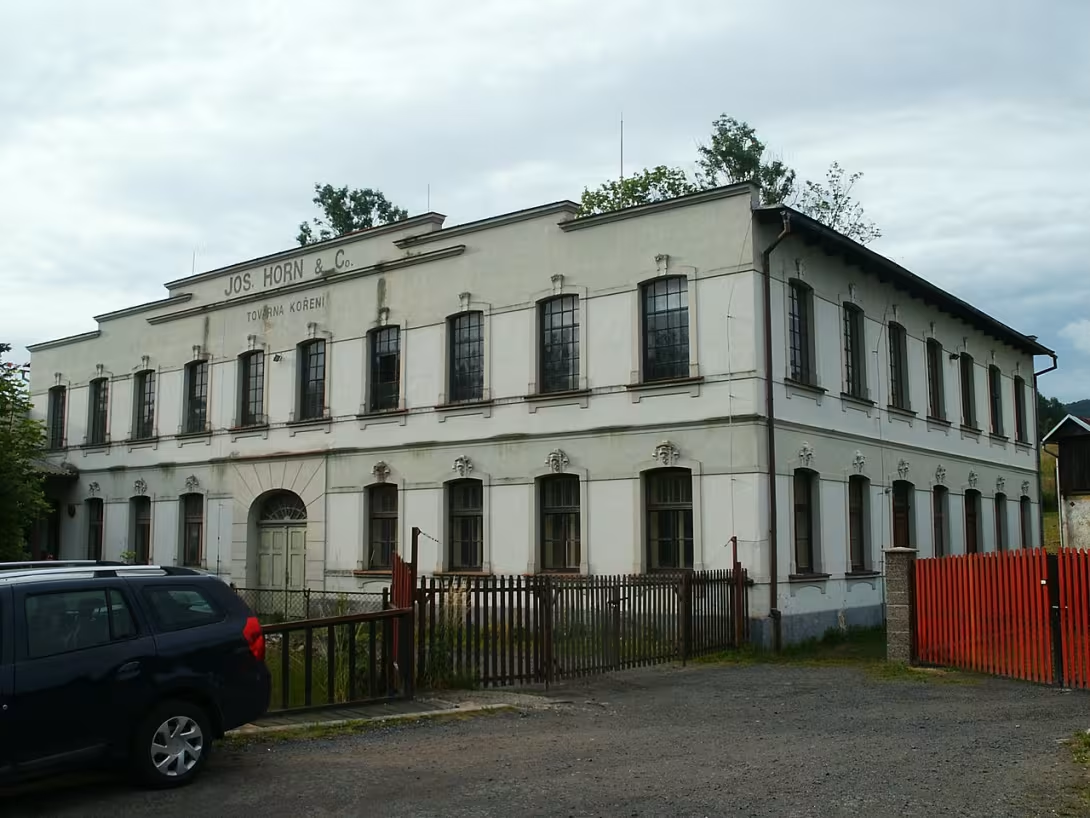
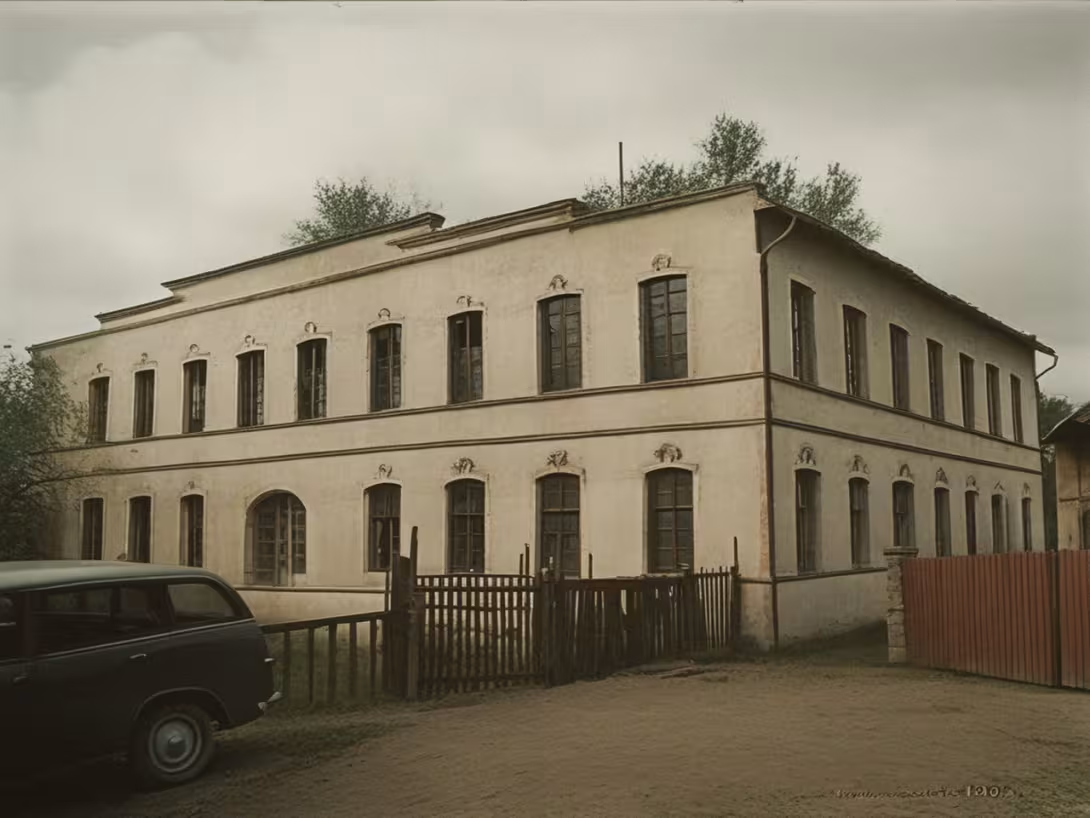
The historical appearance on the left is an AI-generated visualisation and serves as inspiration only.
Historical milestones
- 1713
- First mention of the mill at the site of today's building.
- 1884
- Building a spice mill by the entrepreneur Josef Horne.
- 1907
- Construction of a new storehouse building with warehouses, apartments and offices.
- 1961
- Rebuilding the drive of the mill equipment from water to electric.
Architectural development
Originally a storey building with a cellar and a barn from 1787. In 1884 a water mill was built, in 1907 a new storey building was added. The central building is oblong single storey with newer annex, the interior equipment is mainly wooden with metal accessories.
Historical events
1884: Construction of a spice mill by Josef Horne. 1907: Construction of a new storehouse and office building. 1961: Rebuilding the drive of the mill equipment from water to electric. 1980: End of spice grinding in Chřibska.
Owners
Josef Horn (since 1884), company Josef Horn & Co. (until 1945), business packaging (until the early 1990s), private owner (currently).
Points of interest
- The mill was specialized in the processing of spices, especially pepper and vanilla, and the products exported to the whole of Austria-Hungary. - The building is remarkable with preserved indoor equipment, which include rare wood funnel and loading cabinets. - The first mention of the mill at the site of today's building dates back to 1713. - Josef Horn & Co. apart from the spice mill, the grain mill operated and imported tea. - Spices were grinding in the area until 1980.
Guide
Show guide text
This text was created by artificial intelligence and has not been editorially reviewed. It may contain inaccuracies.
Welcome to Lower Chřibska. You're standing right in front of a place that carries the incredible power of history and the smell of distant, exotic landscapes. In front of your eyes is Hornův mlýn na koření, a unique technical monument that belongs to the most important in the Czech Republic. Feel the atmosphere of this place, where the power of flowing water, human ingenuity and precious ingredients once filled these spaces. Look at this complex of buildings and try to imagine what life in this place looked like decades ago, when there was constant excitement and the air was carrying an unusual scent that you will not see and feel anywhere else in this region.
To understand the importance of this place, we need to go back deep into the past. Although the present appearance of the object may seem to you as a fixed point in time, its roots extend far beyond what might appear at first sight. The first mention of the mill in this particular place dates back to 1713. Imagine the world back then when traffic was difficult and every journey was an adventure. Although time was changing, this place kept its function. However, a real breakthrough occurred in 1884. At that time the entrepreneur Josef Horn built the current spice mill. It was not just an ordinary machine, it was part of an ambitious project to link this corner of the country to the vast markets of the world back then.
Now pay attention to the very structure of the complex. If you look around you, you'll notice it's not one building, it's a set of three objects that form a harmonious and functional whole together. Pay attention to how these buildings complement each other and how they are located in space. Another important element was added to the original site in 1907 - a new storey building. This building was designed with great weight and served many purposes at once. It contained premises for the storage of rare raw materials, offices for administration and also an apartment for people who worked here. It is a fascinating example of how work was connected to home at the time, creating a closed and functional environment. Even though the technology was changing over time, this area remained unwavering. You may only realize this through historical records, but in 1961, one of the biggest changes in traffic occurred when the mill drive was converted from water to electric. Nevertheless, the basic nature and spirit of this place have remained.
Now let's focus on what made this mill really special and why it was so important. Imagine the smell that was once ubiquitous here. It was not a common crop or fodder that was normally processed in the surrounding mills. The spices were processed in these areas, which was intended to bring colour, taste and smell to meals all over Austria-Hungary. Pepper, vanilla or cinnamon. These exotic treasures were exported to all corners of the empire back then. Imagine the logistics, the work and the value these tiny substances had. Josef Horn, the man who born this mill in its present form, was not just an entrepreneur, he was a visionary. He was able to use local resources and technical possibilities to create a center of trade with the rarest products of his time. His name is inextricably linked to this place, and it is his determination and diligence that has made the Horn Mill such an important technical unit.
If you go further now and explore the inner spaces, prepare to meet the real artifacts of the past. The mill has kept its inner furnishings in incredible condition, which is rare nowadays. Pay attention to the wooden elements you can see here. Among the most rare and interesting are wooden fungi and special loading cabinets. These articles are not just ordinary furniture or tools; These are silent witnesses to precise work and technical standards at the time. In these details lies the true soul of the mill. How did they manipulate small grains of pepper? How did they move a soft vanilla? Each of these elements has been designed to serve a specific purpose within a complex spice processing process.
Something that may really interest you in your search is the constant change between what you see and what you sense in your imagination. The mill was specialized in very specific products, making it a technological unique one. While other mills worked with materials that were common and available, here they worked with substances that had luxury status in the then world. This specialization was key to the success of Josef Horn and to the fact that the products from this mill reached the farthest end of Austria-Hungary. It is a fascinating idea that it was here, in Lower Chřibska, that values were created that changed the taste of food throughout Central Europe.
Now that you know the basics of the story of the Horn Mill, I suggest you continue your search and experience every part of this area. Go through the space, see the structure of the buildings, and let yourself be carried away by the idea of people who worked here centuries and two years ago. Every corner of this place, every building and every preserved wooden element has its own history, which you can now explore with your own eyes. I wish you a pleasant encounter with this unique monument and I hope that the story of Horne's spice mill will fascinate you for a long time. Thank you for your visit and we will wait you out again.
Tips for visitors
The best time to visit the Spice Mill is in the spring or autumn season when nature is full of blood and light is ideal for photography. This time of year offers a quiet atmosphere without excessive tourists.
Parking is possible to find near the village Dolní Chřibská, where you can safely park your vehicle. For arrival by public transport it is recommended to use buses or trains with a short walk into the monument, check the current connection in previous planning.
When visiting, it is recommended to take with you protective clothes and shoes suitable for walking on mountain terrain, as the journey to the monument can be difficult in certain parts. Don't forget the sunglasses and protective tie too.
Photography is the best of retreat where you can capture the waterfall of the Chřibské Kamenice under favourable light conditions. In the morning and evening they offer the sweetest colors and shading for photos.
You can visit Chřibská Kamenice in the vicinity of the monument, where you can enjoy a beautiful waterfall and a gentle walk. It is also suitable for families with children to visit the surrounding forest trails, which offer the possibility of circling nature.
Businesses nearby
Do you run a restaurant, accommodation, shop, museum, rental, wellness or other visitor service near this monument? Show yourself directly to the people heading to it — this is how they will see you in the app and on the web:
Nearby
The monument lies on the left bank of the Chřibské Kamenice in the village Dolní Chřibská.
Accommodation nearby
Themed route
Hornův mlýn na koření Type: Historical technical monument, exposition Why is it worth a visit: A unique example of a functional water mill for the grinding of spices that brings visitors to the history of industrial production. The mill is located on the left bank of the Chřibská Kamenice and offers insight into the mechanisms that were once the basis of the spice trade.
Left bank Chřibské Kamenice Type: Natural environment, water flow Why is it worth a visit: The immediate surroundings of the mill form a quiet bank of the river where one can admire the relationship between technical construction and the natural environment. A walk along the shore allows you to understand why this place was chosen for the location of a water work.
Municipality of Dolní Chřibská Type: Village environment, residence Why is it worth a visit: The monument lies directly in the village, which allows you to combine a visit to the technical monument with the atmosphere of the traditional Czech village. The local environment gives context to the whole experience and shows how industrial history intertwined with the daily life of the population.
The surroundings of the Horn Mill Type: The immediate area and access routes Why is it worth a visit: Due to the limited number of listed places in the area, the route focuses on the mill itself and its nearest surroundings on the river bank. Here you can spend your time studying the details of the construction and enjoying the silence and peace that this place offers.
This route is designed to respect the available information and focus on the main objective and its immediate surroundings without deviating from other unnamed locations. The visitor gets a comprehensive view of the history of spice grinding in the context of Chřibské Kamenice and the village Dolní Chřibská.
Seasonal recommendations
In spring, the mill is surrounded by awakening nature and fresh greenery, creating an optimistic atmosphere. The soft spring light highlights the details of the historical facade and the surrounding landscape is grafted in colours. We recommend moisture resistant shoes for wet journeys and a visit in the morning when the air is the cleanest.
The summer season brings dense shielding of trees and rich colors around. There are more visitors to the sights in the main season, so it is advisable to come first thing in the morning to avoid the biggest sound and heat. Dress light, breathable clothes and don't forget enough fluids to bring.
Autumn is a time of golden leaves and mornings that deliver the mill with a mysterious and melancholy touch. The lighting is finer in this period, which is ideal for capturing the atmosphere of the old mill. Due to the variable weather, reach for layered clothes and plan to arrive in the second half of the day.
In the winter, the construction in the snowy landscape is peaceful and cosy, which underlines its historical character. Days are short, so we recommend a visit in the morning to give you enough daylight. Do not forget the very warm layers and check the current opening hours that are being shortened during this period.
Visualizations and artistic views


The visualisations are generated by artificial intelligence and serve as inspiration.
Photos from the area
Real photos taken near the monument


Zdroj a licence jsou uvedeny u každého snímku.
Tips from visitors
No tips yet. Be the first!
Log in and add your tip.
Sources and literature
Fotografie: JiriMatejicek / CC BY-SA 4.0 — Wikimedia Commons. The author and licence also appear when you hover over the image.
Faktickým podkladem tohoto textu byl článek na Wikipedii, jehož autory jsou přispěvatelé Wikipedie. Článek je dostupný pod licencí CC BY-SA 4.0.
Location on the map
More monuments – Dolní Chřibská
Show all in the municipality
Příběhy a pověsti
Legendy, pověsti a příběhy spjaté s touto památkou

Fotografie návštěvníků
Zatím žádné fotografie. Buďte první, kdo přidá fotografii z návštěvy!
Přihlaste se a přidejte svou fotografii nebo hodnoťte.
Za ověřenou návštěvu v aplikaci získáte víc bodů — poznáme podle GPS, že jste na místě.
Reviews and comments