






Vrbnovský palác Palace
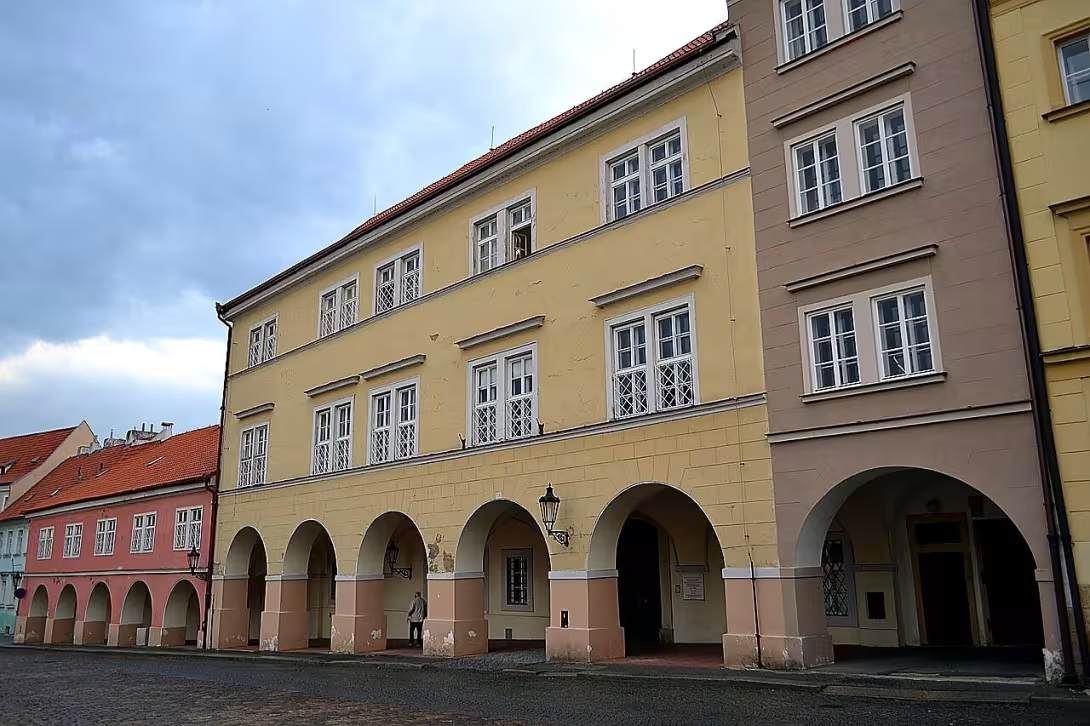
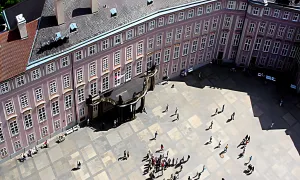
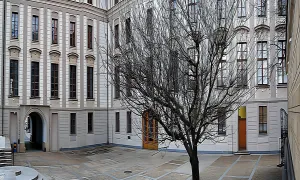
The Vrbnovský Palace, also known as the Chotkovsky House, is a historic Baroque palace in Lorethanske Street on Hradčany in Praha 1. This cultural monument of the Czech Republic has a multi-wing structure and two inner courtyard with irregular layout. Originally built in Renaissance style during the third quarter of the 16th century, it was converted into Baroque Jan František Bruntálský z Vrbna at the end of the 17th century. The Palace is remarkable for its architectural development and historical importance as a place once based in the first European institution for the blind.
The origin of the Vrbnovsky Palace dates back to the Renaissance period, when after 1661 modifications mark its transformation into a Baroque style under Jan František Bruntálský z Vrbna. This period was characterized by cultural flourishing in Bohemia as part of the Habsburg monarchy, where Praha emerged as a central centre for architectural innovation influenced by Austrian artistic styles.
Architecturally, the palace is equipped with multi-wing construction with irregular arrangement, including two inner yards between the streets of Lorethanski and Úvoz. The building has two floors on the north side towards the Loretan Street and three floors towards the Úvoz Street to suit the steep slope of the terrain. In particular, the cellars correspond to the height of the second floor due to this inclination. Over time, it has undergone several modifications and reconstructions between 1949-1963 and again since 1993- 1998, while maintaining its historical nature and adapting to current needs.
The property of the Vrbnovsky Palace has experienced a number of remarkable transitions. Initially he bought Jan František Bruntálský z Vrbna in 1661, the property was later divided between his four sons in 1719. By 1789 it was inherited by Rudolf st. hrabě z Vrbna and in 1814 it was acquired by Antonín Weisso before he sold it to Antonín John Graff. Due to financial difficulties, Graff auctioned the palace in 1824, where Jan Harasín bought it. In 1837 there was a significant change when the building was purchased by a blind institute and marked its transformation into an educational institution for the visually impaired.
The history of the palace is characterized by key events that highlight its cultural and social impact. The introduction of the first European school for the blind in 1807 underlines its role in pioneering education for the visually impaired. This initiative continued until it evolved into a complex educational facility, now known as Jaroslav Ježek State School - schools offering specialized programmes for children with visual disabilities.
Today, the Vrbnovsky Palace stands as a testament to its rich history and architectural evolution. It is accessible to visitors who are interested in discovering its representative hall decorated stucco and painted decoration. The historical importance of the palace and its unique past make it a valuable destination for those who want to immerse themselves in Prague's cultural heritage.
Vrbnov The Palace offers more than a glimpse of architectural styles of Renaissance and Baroque periods; embodies the legacy of educational innovation and social progress. Visitors are invited to explore this remarkable site where history and architecture converge to tell stories about transformation and resilience.
Then and now
Drag the slider to compare how the landmark may have looked when it was built with the view today.
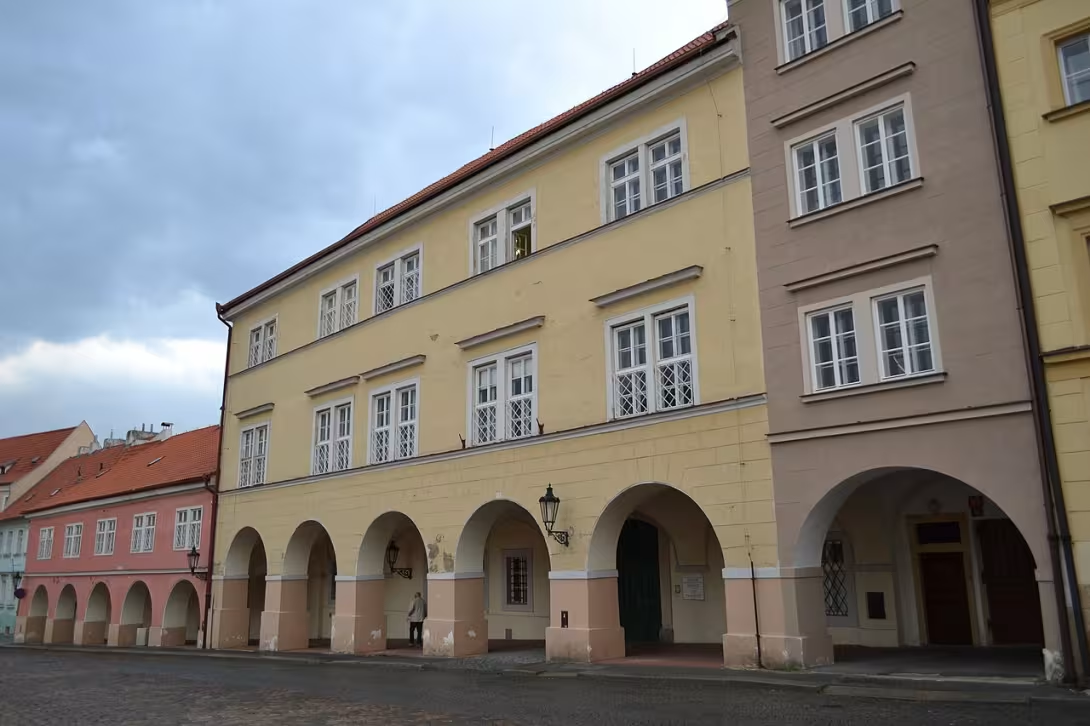

The historical appearance on the left is an AI-generated visualisation and serves as inspiration only.
Historical milestones
- 1661
- Jan František Bruntálský z Vrbna bought and transformed the palace into a Baroque style
- 1789
- Rudolf st. hrabě z Vrbna inherited the building
- 1837
- Established as a school for the blind
Architectural development
The palace began as a Renaissance building, later transformed into a Baroque style under Jan František Bruntálský z Vrbna. It underwent several modifications and reconstructions in 1949-1963 and again in 1998-1998. The building is equipped with two floors on the side of the Loretan and three floors towards the Úvoz, with cellars on the same level as the second floor thanks to steep slope.
Historical events
1661: Obtained and baroque transformed Jan František Bruntálský z Vrbna
1837: Transferred to School for the Blind
Owners
1661: Purchased Jan František Bruntálský z Vrbna
1719: He inherited and divided between his four sons
1789: Obtained Rudolf st. hrabě z Vrbna
1814: Sold to Antonín Weiss, then to Antonín John Graff
1824: Auction due to Graff's financial difficulties purchased by Jan Harasín
1837: Purchased by a blind institute
Points of interest
- Vrbnovský palác once lived in the first European institution for blind, pioneering educational initiatives, which began in 1807 and contributed significantly to social progress for visually impaired persons.
- Despite the baroque transformation within Jan František Bruntálský z Vrbna, the palace originally performed Renaissance architecture from the end of the 16th century which reflects the dynamic architectural evolution of Prague in this period.
- The irregular modification of the palace with two inner courtiers and different height of the floor due to the steep terrain between the streets of Loretánska and Úvoz, represents a unique adaptive architecture that has been preserved over several centuries.
- In 1824, after the auction of Antonín Graff due to financial difficulties, Jan Harasín bought the palace and marked a significant shift in ownership which eventually led to his transformation into an educational institution for the blind.
- Vrbnovský Palace has undergone several modifications and reconstructions between 1949-1963 and again since 1993- 1998, underlining efforts to maintain its historical integrity while meeting needs.
Guide
This guide is narrated by a synthetic voice generated by artificial intelligence.
Show guide text
This text was created by artificial intelligence and has not been editorially reviewed. It may contain inaccuracies.
Welcome to the Vrbnovsky Palace, or the Chotkovsky House, as it is also known - a remarkable historical palace in Lorethanske Street on Hradčany in Praha 1. As you stand before this architectural jewel, take a moment to absorb its size. The palatial structure stretches over several wings with two inner courtiers and boasts an interesting irregular arrangement that immediately captures your attention.
The story of Vrbnovsky Palace begins in 1661, when Jan František Bruntálský z Vrbna acquired a Renaissance building. Under his vision he has undergone a significant transformation into a baroque style, which is obvious even today when you admire his elegant facade and complex details. This era of change meant the beginning of a glorious history that would see the palace evolve in time.
As you explore further, notice how multi-wing design creates an attractive atmosphere, with each courtyard offering a view to the past. The baroque influence is unmistakable in decorative decorations and harmonious proportions that define this historic place. These architectural elements reflect the magnitude of its transformation under the direction of Bruntalski of Vrbna.
The Palace is home to many important characters, including Rudolf st. hrabě z Vrbna, who inherited it in 1789. However, one of the most remarkable chapters of its history began in 1807 when it became Europe's first blind institution. This pioneering school meant deep social progress, providing education and hope for visually impaired individuals at a time when these opportunities were rare.
This commitment to social progress is an interesting aspect of the legacy of the Vrbnov Palace - the one that continues to inspire visitors today. As you stand here, imagine countless stories and lives intersecting within these walls for centuries.
As we conclude our journey through this historic place, I urge you to continue to explore many layers and discover other secrets hidden in its corners. Vrbnovský palác is not just a building; It's proof of human creativity, resilience and compassion. Thank you for joining me and let your curiosity lead you to discover even more wonders of Prague.
Tips for visitors
The best time to visit Vrbnovský palác is at the end of spring or early autumn months, especially from May to September. At these times Praha enjoys mild weather, so it is ideal for exploring outdoor places like this historic palace. In addition, a visit in the morning can offer a calmer experience than larger crowds gather later in the day. The soft light of the early morning also increases architectural details and provides excellent conditions for photography.
Transport to Vrbnovský palác is comfortable both by car and public transport. Trams or buses headed for Prague Castle will usually pass near Loretanská Street. Always verify the latest routes and plans using the traffic app or website for the most up-to-date information.
When visiting Vrbnovský palác, it is wise to bring comfortable walking shoes as you will probably explore more than just the palace itself. Due to the variable weather conditions in Prague, a light jacket is also recommended. Remember the camera; capturing the complex details of the palace architecture and its picturesque surroundings can be beneficial. If you plan to stay longer or explore the area, consider bringing water and refreshments.
For photographic enthusiasts, some of the best places around Vrbnovský palác include the area facing the Loretan Street where you can capture the grandeur of the palace facade in natural light. Two inner courtyard offers unique perspectives with their detailed quarry and landscaping. Early morning or late afternoon is ideal for finer lighting, which increases texture and shadows. Near Prague Castle is a panoramic view, which is ideal for capturing the city area.
In addition to Vrbnovský palác, there are several remarkable places within a 30 minute walk in Hradčany. The church of Our Lady in front of Tyn offers impressive Gothic architecture and historical significance. For people interested in art, the nearby National Gallery Palace Fair hosts an extensive collection. Families with children could look forward to exploring the picturesque streets of Hradčany or visiting adjacent gardens for a peaceful walk.
Frequently asked questions
Can the monument be visited?
Some buildings of this kind are open for guided tours, others serve another purpose or are privately owned. We have not verified whether and when this monument is open – please ask the operator.
What are the opening hours and admission?
We have not verified the opening hours or admission. Current information is published by the operator.
Where is the monument?
Location: Loretánská 104/19, Hradčany, Praha, Hlavní město Praha. The map on this page shows the exact spot.
Why is the monument protected?
It is listed in the Central List of Cultural Monuments of the Czech Republic as a cultural monument (register no. 39684/1-965).
For kids
The Secret of the Vrbnovsky Palace
It was like opening for another adventure when Jan František Bruntálský z Vrbna bought this Renaissance house in Prague. And so began to build a sanctuary for blind children and young children. That was 1807.
How did it look here? Who lived here? What happened here? There were people in the palace who had special power - the ability to hear and feel. It was the blind who came to this refuge and tried to learn new things. The palace was full of sounds that helped people hear, and the smell that helped them feel.
Businesses nearby
Do you run a restaurant, accommodation, shop, museum, rental, wellness or other visitor service near this monument? Show yourself directly to the people heading to it — this is how they will see you in the app and on the web:
Events nearby

Zdroj akcí: otevřená data měst a obcí ČR (Národní katalog otevřených dat) a kalendář akcí Národního památkového ústavu.
Nearby
Vrbnovský palác is located near Prague Castle and other historical monuments. In the area there is a mixture of cultural monuments and picturesque views, while the Loretánská street leads to important religious and historical structures.
Accommodation nearby
Trips and activities nearby
Guided tours, tickets and activities nearby from GetYourGuide
Affiliate link: if you buy from the partner, we may receive a commission. The price for you does not change.
Search tours and activities →Themed route
Thematic walking tour: Vrbnovský palác and surroundings
1.Vrbnovský palác (Palace) * Type: * Historical building * Why Visit: * Start your journey in the beautiful Vrbnov Palace, an amazing example of Baroque architecture in Hradčany. This pallet structure offers a view of the rich history and architectural elegance that characterizes this historic area.
2. Loreto Street * Type: * Historical street * Why Visit: * As you walk down the Loretan Street, take in its lively atmosphere and historical significance. This street is a cultural artery leading to several important religious and historical monuments that offer a view of Prague's past.
3. Church of the Virgin Mary Victorious * Type: * Religious landmark * Why Visit: * This church is located at the end of the Loretan street as proof of baroque art and spiritual heritage. Its impressive architecture and quiet environment make it a must-visit for those interested in religious history.
4. Loreto * Type: * Chapel * Why Visit: * A short walk from the Church of the Virgin Mary Victorious, Loreta is famous for its unique design resembling a small-scale basilica. This sacred place is located a revered relic and offers an intimate spiritual experience inside its decorated interior.
5. Carmelite Square * Type: * Historical Square * Why Visit: * Close your tour at Carmelite Square, where the Church of the Virgin Mary Victorious meets Loretta. This charming square provides a quiet environment to reflect on architectural and historical treasures you have explored during your visit.
This thematic route offers a deep dive into cultural and historical richness around the Vrbnovsky Palace in Hradčany, which provides an enrich experience for enthusiasts of history and fans of architecture.
Seasonal recommendations
Spring: Vrbnovský palác offers in the spring business relationship to individual ratios, which should be entered and the surrounding parks celebrate entry. Sunshine light sources architectural decal of the palace, with a fixed one-man device for own resources. During spring, more tourists may appear who have exceeded the allowances, so it is advisable to make a joke of the early morning pancake or according to the instructions of the evening when the crowds are peaceful. Imported costs may be successful and may be used in the light of any undertaking. Dress in suits suitable for a warm day with the possibility of handing over years or a jacket because the weather can be beneficial.
Summer: In the main summer period Vrbnovský palác is a popular destination for emergency services. Sunshine days pass until they can be intense in the centre of Prague; It is therefore appropriate to provide that it will have no influence to avoid heat and crowd. During the summer months there are also those mentioned in the notice of initiation, which was made by the opening decision. It is necessary to deal with light, light siege with protective sun cover and water to ensure security of supply.
Autumn: In autumn cities, Vrbnovský palác offers a quiet atmosphere when trees are in a deceptive discovery in selected industrial colors. This both is ideal for those who are affected by the same goals with smaller crowds and beautiful positions for photography. The sunny days are still the same, but in fact they are rapidly cooling down, so it is right to have them in more areas. Inject your thumb at noon to enjoy the sunny city and at the same time the evening cold.
Winter: In some cases, Vrbnovský palác offers a unique atmosphere where the surrounding landscape is covered with snow and sanctioned reevaluation into architectural services. This should be stated that no information which could be used for those necessary to meet the conditions can be obtained from that date. It is necessary to deal with the fact that in the warm siege, in all jackets and blankets, because it can be achieved that it will be cool with short opening times. Take your thumb in the early afternoon to enjoy the remaining sunny light and pass through the coldest evening.
Visualizations and artistic views


The visualisations are generated by artificial intelligence and serve as inspiration.
Photos from the area
Real photos taken near the monument

Zdroj a licence jsou uvedeny u každého snímku.
Tips from visitors
No tips yet. Be the first!
Log in and add your tip.
Sources and literature
Photos: Sefjo / CC BY-SA 3.0 — Wikimedia Commons. The author and licence also appear when you hover over the image.
Faktickým podkladem tohoto textu byl článek na Wikipedii, jehož autory jsou přispěvatelé Wikipedie. Článek je dostupný pod licencí CC BY-SA 4.0.
Location on the map

Příběhy a pověsti
Legendy, pověsti a příběhy spjaté s touto památkou
Fotografie návštěvníků
Zatím žádné fotografie. Buďte první, kdo přidá fotografii z návštěvy!
Log in a přidejte svou fotografii nebo hodnoťte.
Za ověřenou návštěvu v aplikaci získáte víc bodů — poznáme podle GPS, že jste na místě.
Reviews and comments