






Výstaviště Praha Site of events
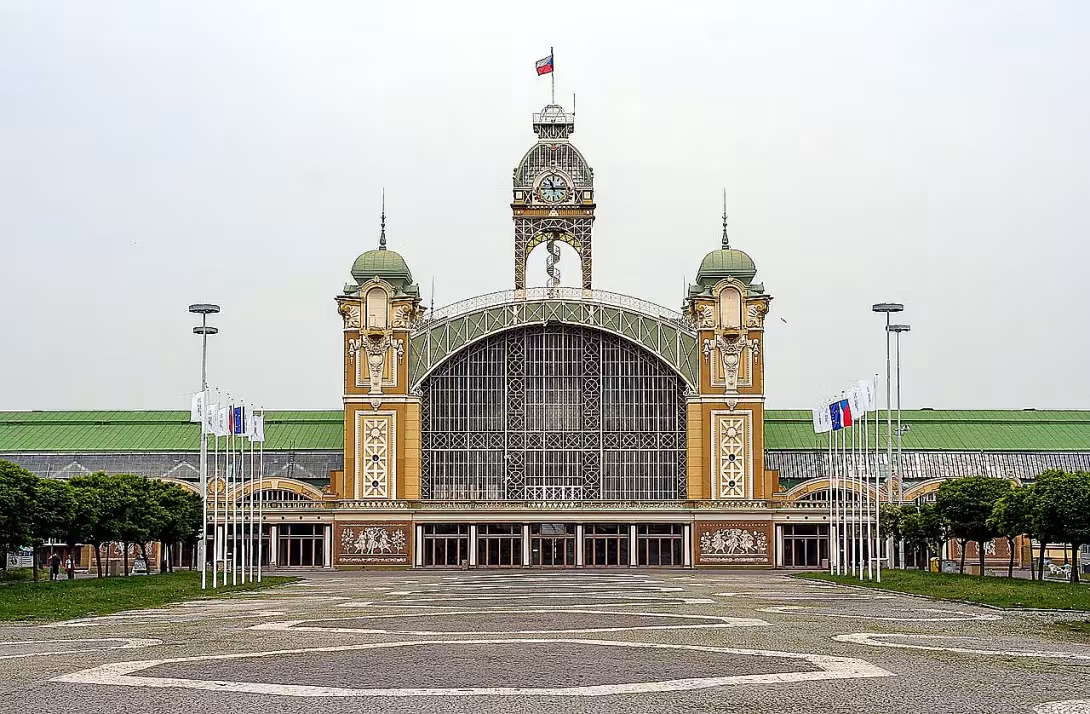
Výstaviště Praha, also known as the Holešovice Exhibition Centre, is the oldest Czech trade fair area located in the village Bubeneč. It was opened in 1891 and is historically significant thanks to its dominant Industrial Palace. It was created on the occasion of the Jubilee Earth Exhibition, which celebrated the century's memory of the first industrial exhibition from 1791, which underlines its key role in drawing up the cultural and economic maturity of the Czech nation. After the first exhibition, the complex became a place for many other events which contributed to its historical importance.
The creation of Výstaviště Praha was inspired by the need to celebrate the century since the first industrial exhibition while showing progress of the Czech nation. The area became a centre of cultural, economic and social activities, reflecting intense industrial and cultural development in the Czech Republic at the end of the 19th century. The industrial palace, built according to the design of the architects Bedřich Münzberger and Antonín Wiehl, became a symbol of the Exhibition Centre. Its construction in record time of one year highlights the technological advancement of that time.
Architecturally, the complex is characterized by the Industrial Palace, which represents Art Nouveau style. In addition to this dominant building, the Exhibition Centre includes other monuments such as the Lapidarium of the National Museum, the Modern Gallery of the Academy of Fine Arts and the Křižík Light Fountain. These elements contribute to the rich historical and cultural atmosphere of the complex.
Since 1953, the complex has been transformed into a Park of Culture and rest of Julius Fuchík, which meant its transformation for cultural-political events. This period lasted until 1990, when the Exhibition Centre returned to its original name. Since 2015 the area has been under the administration of the City of Prague, which reflects its importance for urban development and culture.
Among the key events at the Výstaviště are the Jubilee Earth Exhibition in 1891, which presented the cultural and economic maturity of the Czech nation. Another important event was the National Exhibition of Czech Slavic in 1895, which was to show the folk culture of the Czech nation. In 1908 there was a Jubilee exhibition of the Chamber of Commerce and Trade which celebrated the economic progress in the district of the Prague Chamber of Commerce and Trade.
Today Výstaviště Praha is a multifunctional area with a wide range of leisure activities. The premises are used for various events, exhibitions and concerts. The current reconstruction, which has been taking place since 2018, aims to repair the Exhibition Centre to a modern area with a wide range of cultural and social events.
Výstaviště Praha is not only a historic place, but also a living centre of culture and leisure time. Its rich history and current use make it an ideal place to visit. Exploring its premises is a journey to the past, which offers a view of the cultural and economic development of the Czechs. We call on all curious tourists to go through his streets and discover so many interesting historical and modern attractions.
Then and now
Drag the slider to compare how the landmark may have looked when it was built with the view today.
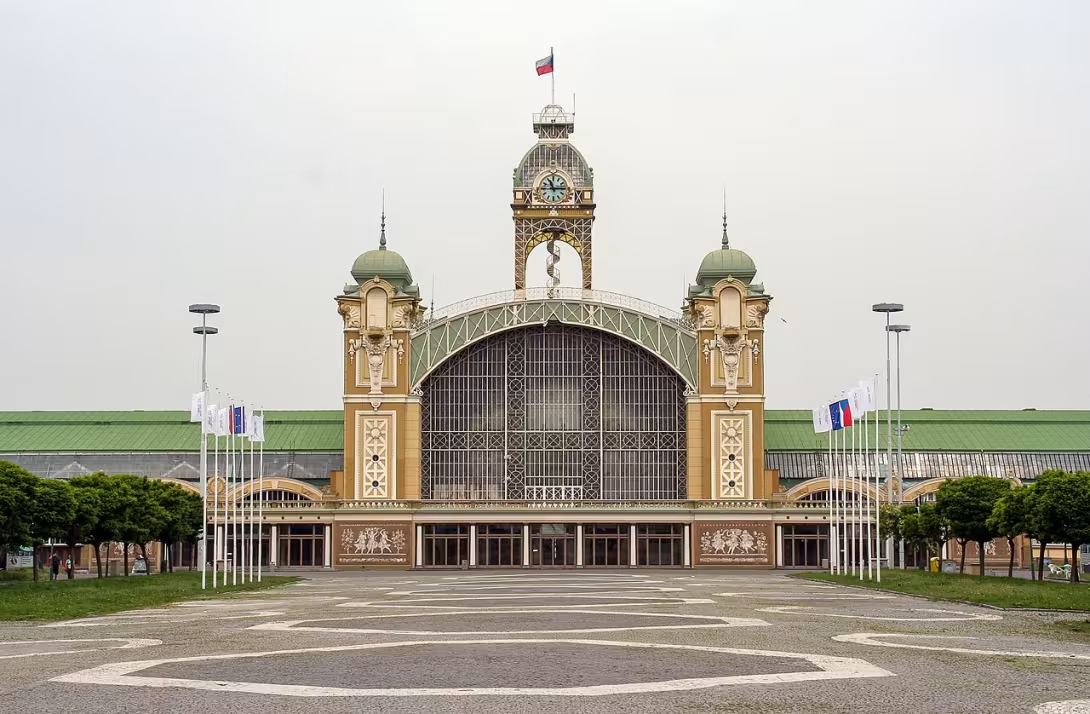
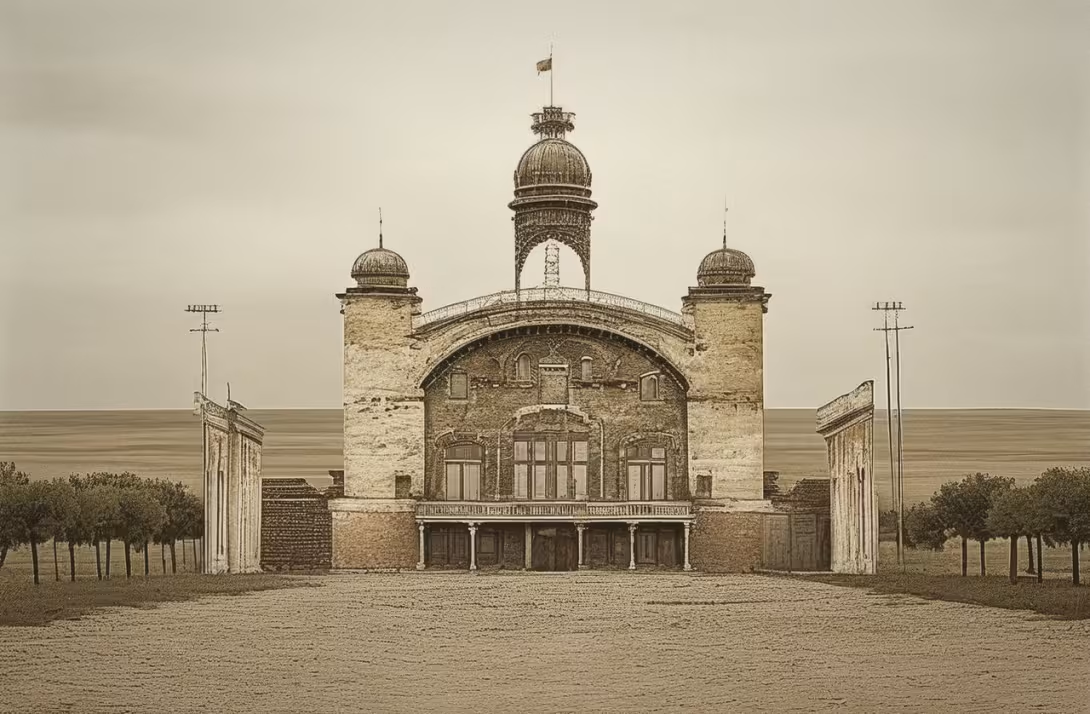
The historical appearance on the left is an AI-generated visualisation and serves as inspiration only.
Historical milestones
- 1891
- Opening of the premises and Jubilee Earth Exhibition
- 1895
- National exhibition Czech Slavic
- 1908
- Jubilee exhibition of the Chamber of Commerce and Trade
- 1953
- Transformation to the Park of Culture and Relaxation Julius Fuchík
- 1990
- Return to original name Výstaviště
- 2018
- Opening of extensive reconstruction of the complex
Architectural development
The industrial palace was built in record time of one year according to the design of architects Bedřich Münzberger and Antonín Wiehl. The complex contains other monuments such as the Lapidarium of the National Museum, the Modern Gallery of the Academy of Fine Arts and the Křižík Light Fountain.
Historical events
- 1891
- Jubilee Earth Exhibition
- 1953
- Transformation to the Park of Culture and Relaxation Julius Fuchík
- 1990
- Return to your original name Výstaviště
Owners
Since 2015, the Exhibition Centre has been under the administration of the Prague City Council.
Points of interest
- Výstaviště Praha is the oldest Czech trade fair area located in the village Bubeneč. - It was opened in 1891 and is historically significant thanks to its dominant Industrial Palace. - It was created on the occasion of the Jubilee Earth Exhibition, which celebrated the centuries of the first industrial exhibition from 1791. - Industrial palace, built according to design by architects Bedřich Münzberger and Antonín Wiehl, represents Art Nouveau style. - Since 1953, the complex has been transformed into a park of culture and relaxation of Julius Fuchík.
Guide
Show guide text
This text was created by artificial intelligence and has not been editorially reviewed. It may contain inaccuracies.
Welcome to Prague Exhibition Centre, a unique place with rich history and architectural beauty. You are standing in front of a dominant Industrial Palace whose impressive construction will also tell you the importance of this place. Look up and you'll see the elegant lines of the building that are testifying to the artistic efforts of its creators.
Výstaviště Praha was opened in 1891 as part of the Jubilee Earth Exhibition, ceremonially celebrating the 100th anniversary of the first industrial exhibition from 1791. This complex was designed by architects Bedřich Münzberger and Antonín Wiehl, who tried to create a space that would pass on the spirit of industrial progress and nation-economic ambitions.
Let's move closer to the Industrial Palace, whose architecture is full of details. Note the elegant lines and symmetry that carry the impression of stability and endurance. This building was designed to serve as a centre of the fair and at the same time become an iconic element of the city's face.
Although the specific historical figures associated with this place are not known, it is clear that Výstaviště Praha witnessed many important events. From the Jubilee Earth Exhibition to the National Exhibition of Czech Slavic to the Transformation to the Park of Culture and Relaxation of Julius Fuchík, this complex was the meeting place of ideas and cultures.
The interesting thing is that Výstaviště Praha remains the oldest Czech trade fair area. After 1990 it returned to its original name and in 2018 a major reconstruction started to ensure its preservation for future generations.
I recommend you explore other parts of the complex where you can discover more about its history and architecture. Notice the atmosphere of the place and take time to dive into it. I hope this guide inspired you to explore again. God!
Tips for visitors
The best time to visit is in the morning during the working week when you avoid crowds and enjoy the quiet atmosphere of the park and architecture. Due to ongoing repairs, the site is in a variable state, so we recommend monitoring the official communication on accessibility of individual parts.
Transport to the place is possible by public transport and by private car. It is recommended to check the exact connection and parking possibilities near the premises in the current connection search engine or on map background before the trip.
For photography we recommend using the morning or evening light, which beautifully depicts the details of historical buildings. The best shots can be taken around the main entrance and in adjacent park areas, where the contrast between architecture and greenery stands out.
For families with children, the complex offers a large park that is ideal for walking and relaxing. Due to the reconstruction, it is advisable to carry comfortable shoes and plenty of fluids as the background can change over time.
Within 30 minutes of the premises, you can visit the Lapidarium of the National Museum, which stores important sculptures monuments, or walk through the adjacent Holešovice building, which offers an interesting view of the urban architecture.
Businesses nearby
Do you run a restaurant, accommodation, shop, museum, rental, wellness or other visitor service near this monument? Show yourself directly to the people heading to it — this is how they will see you in the app and on the web:
Natáčelo se zde
- Úkryt v zoo (2017) film
Zdroj: Wikidata (vlastnost „místo natáčení“) · Všechna filmová místa
Events nearby

Zdroj akcí: otevřená data měst a obcí ČR (Národní katalog otevřených dat) a kalendář akcí Národního památkového ústavu.
Nearby
V okolí se nachází zástavba Holešovic a další historické památky jako Lapidárium Národního muzea.
Areál je obklopen rozsáhlým parkem s různorodou nabídkou volnočasových aktivit.
Accommodation nearby
Trips and activities nearby
Guided tours, tickets and activities nearby from GetYourGuide
Affiliate link: if you buy from the partner, we may receive a commission. The price for you does not change.
Search tours and activities →Themed route
1. Lapidarium National Museum - Museum. A place where historical stone monuments can be admired. 2. Construction of Holešovice - Urban architecture. Walk through buildings that form the character of the surroundings. 3. Výstaviště Praha - Exhibition area. The main destination of the trip and the scene of major events. 4. Park - Vacation Zone. Extensive space with a variety of leisure activities.
Seasonal recommendations
Spring In spring, Bubeneč wakes up with nature. The trees start to green and the light is fine, which gives the places freshness. It's an ideal time for walking between blooming flowers. Since the weather may be uncertain, I suggest you prepare several layers of clothing, such as a light jacket. Visit the place early in the morning when the air is the cleanest and people are not everywhere yet.
Summer Summer months bring strong sun and thick green greenery to the fair. The mood is alive and warm, which can be tiring when walking between construction sites. Due to large crowds and high temperatures, it is best to arrive immediately after opening so you can catch the colder part of the day. Don't forget the headgear and plenty of fluids because the shadows at the time of repair can be limited.
Autumn Autumn season offers wonderful colours of leaves and often a foggy, quiet wound. Lighting is golden at this time and very suitable for taking beautiful pictures. It's a much quieter time to avoid the biggest crowd of visitors. However, prepare waterproof shoes and a laminated jacket, because moisture and cold can quickly increase in this area.
Winter It's very quiet in winter time and the air is sharp. Days are short and the sky is often gray, which creates a calm mood. Due to ongoing repairs, access to certain parts may be more limited in winter. It is necessary to wear very warm clothes, including hat and gloves. The best time to visit is in the morning before the freezing evening begins.
Visualizations and artistic views


The visualisations are generated by artificial intelligence and serve as inspiration.
Photos from the area
Real photos taken near the monument


Zdroj a licence jsou uvedeny u každého snímku.
Tips from visitors
No tips yet. Be the first!
Log in and add your tip.
Sources and literature
Photos: Tony Hisgett from Birmingham, UK / CC BY 2.0 — Wikimedia Commons. The author and licence also appear when you hover over the image.
Faktickým podkladem tohoto textu byl článek na Wikipedii, jehož autory jsou přispěvatelé Wikipedie. Článek je dostupný pod licencí CC BY-SA 4.0.
Location on the map


Příběhy a pověsti
Legendy, pověsti a příběhy spjaté s touto památkou
Fotografie návštěvníků
Zatím žádné fotografie. Buďte první, kdo přidá fotografii z návštěvy!
Log in a přidejte svou fotografii nebo hodnoťte.
Za ověřenou návštěvu v aplikaci získáte víc bodů — poznáme podle GPS, že jste na místě.
Reviews and comments