



Zámeček Krukanice Castle
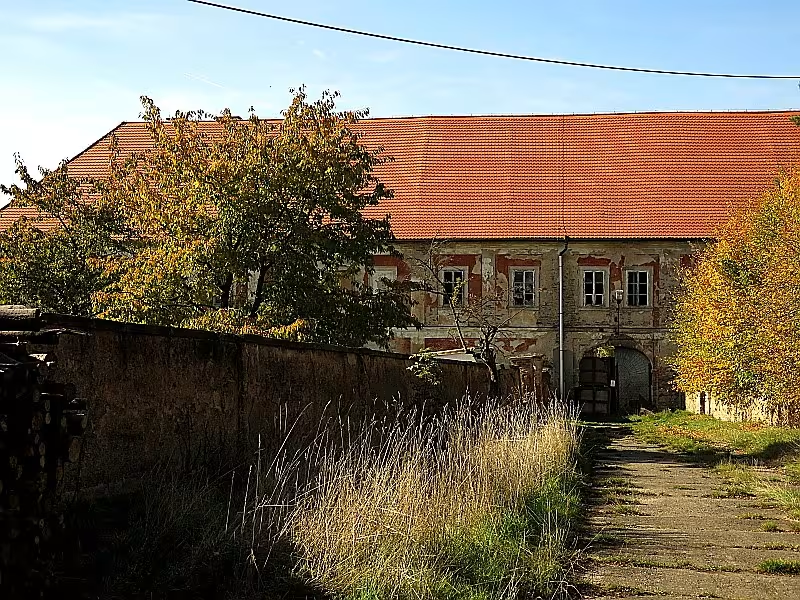
Zámeček Krukanice is a cultural monument located in the village of Krukanice near Pernarec in Plzeňský kraj. This Baroque-style castle, likely constructed before 1788, stands as a testament to the architectural and historical significance of the region. Originally serving as the center of an estate owned by the Tepelský monastery since the late 12th century, it features various structures such as a brewery and farm buildings, all protected as cultural heritage. The site has seen diverse uses over time, including serving as a nobleman's station post-1945.
The origins of Zámeček Krukanice trace back to its role as the center of an estate under the Tepelský monastery since the late 12th century. Historical sources suggest that architect Kryštof Dientzenhofer likely built it before 1788 for the monastery, marking a significant period in Bohemia's Baroque architectural development during the Habsburg Monarchy. The estate underwent notable changes in the 20th century when Sebastián Klička acquired it, leading to a land reform in 1927 that slightly reduced its size.
Architecturally, Zámeček Krukanice is characterized by its Baroque style. The original structure was an oblong single-story building with later additions, including a side wing. The garden façade features pilasters, and two tower-like annexes were added to the rear. A central passage leads into a courtyard that includes a hall with a staircase and a vaulted room, which once housed a chapel dedicated to Saint John of Nepomuk. The estate also boasts a garden with an orangery and a perimeter wall adorned with sculptures of Blessed Hroznata and Saint Norbert.
Ownership of the estate has seen significant changes over time. Initially under the Tepelský monastery for most of its history, it was later acquired by Sebastián Klička in the 20th century. Following World War II, the site served as a nobleman's station, reflecting shifts in its administrative and functional roles.
Key events at Zámeček Krukanice include its construction under the guidance of architect Kryštof Dientzenhofer around 1698, as noted in the Monument Catalogue. The land reform of 1927 reduced the estate's size from 502 to 501 hectares during Sebastián Klička's ownership. These events highlight the castle's evolving significance and its adaptation to changing historical contexts.
Today, Zámeček Krukanice stands as a protected cultural monument, offering visitors a glimpse into its rich history and architectural beauty. Although parts of the site have experienced periods of neglect, efforts to preserve its heritage ensure that it remains an accessible and intriguing destination for those interested in exploring Bohemia's past.
Zámeček Krukanice is not only a remarkable example of Baroque architecture but also a reflection of the historical narratives that shaped the region. Its preservation as a cultural monument underscores its value, inviting visitors to delve into its storied past and appreciate its enduring legacy.
Then and now
Drag the slider to compare how the landmark may have looked when it was built with the view today.
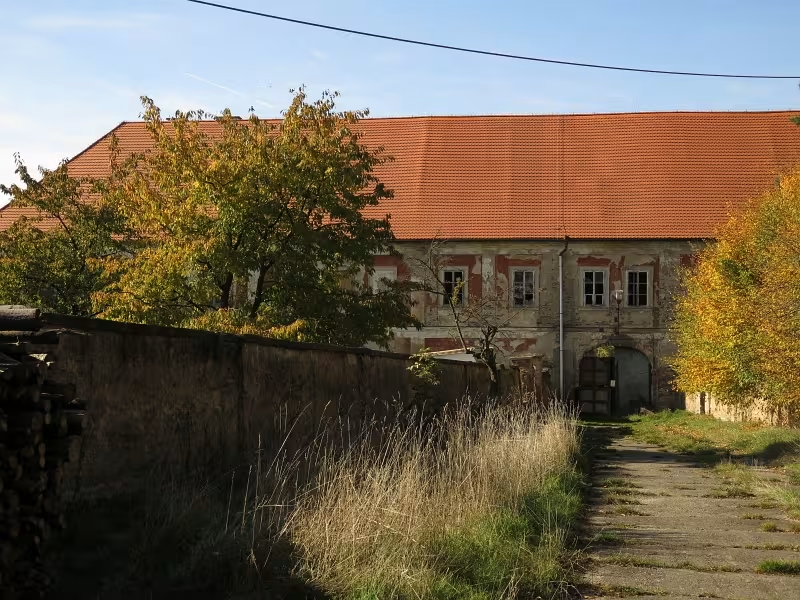

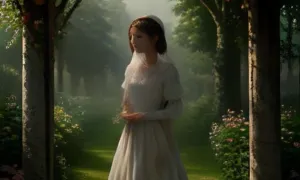
The historical appearance on the left is an AI-generated visualisation and serves as inspiration only.
Historical milestones
- end of the 12th century
- The castle became the center of the Tepelský Monastery estate.
- 1698
- The architect Kryštof Dientzenhofer likely built the castle before 1788.
- 1927
- The land reform reduced the size of the estate to 501 hectares.
- 1945
- The castle served as a nobleman's station after World War II.
Architectural development
The original structure of Zámeček Krukanice was an oblong single-story building with later additions including a side wing. The garden façade is adorned with pilasters, and two tower-like annexes were added to the rear. A central passage leads into a courtyard featuring a hall with a staircase and a vaulted room that once housed a chapel dedicated to Saint John of Nepomuk.
Historical events
The castle was likely built before 1788 by architect Kryštof Dientzenhofer for the Tepelský monastery.
In 1927, a land reform reduced the estate from 502 to 501 hectares under Sebastián Klička's ownership.
Owners
The estate was initially under the ownership of the Tepelský monastery for most of its history. In the 20th century, Sebastián Klička acquired it, leading to a land reform in 1927 that reduced the estate's size slightly. After World War II, the site served as a nobleman's station.
Points of interest
- Despite its Baroque elegance, Zámeček Krukanice once housed a chapel dedicated to Saint John of Nepomuk, whose remains were famously thrown into the Vltava River by order of King Wenceslas IV in 1393.
- The estate's garden features an orangery and sculptures of Blessed Hroznata and Saint Norbert, reflecting its historical ties to monastic life and religious patronage under the Tepelský monastery.
- Architect Kryštof Dientzenhofer, who likely designed Zámeček Krukanice before 1788, was also responsible for other significant Baroque structures in Bohemia, including parts of Prague Castle, showcasing his influence on regional architecture.
- Following World War II, the castle's transformation into a nobleman's station highlights its adaptability and shifting roles through turbulent historical periods, from religious to secular uses.
- The minor land reform in 1927 reduced the estate by just one hectare during Sebastián Klička’s ownership, illustrating how even small changes can reflect broader socio-political shifts within Czech history.
Guide
This guide is narrated by a synthetic voice generated by artificial intelligence.
Show guide text
This text was created by artificial intelligence and has not been editorially reviewed. It may contain inaccuracies.
Krukanice Castle stands in the village of the same name near Pernartice in the Pilzen region. It grew up on the edge of a farmyard that belonged to the Tepl monastery. The entire complex, including farm buildings, is protected as a cultural monument.
From the end of the twelfth century, Krukanice was the center of an estate, and throughout most of its history it belonged precisely to the Tepl monastery. A demesne farm stood in the village, and beside it a Baroque castle emerged. The sources disagree about when it was built. According to one account, it was constructed before 1788, probably in the eighteenth century. However, the heritage registry states that the castle was built as early as 1698 by architect Kryštof Dientzenhofer, and only the farm buildings date from the second half of the eighteenth century.
In the twentieth century, Sebastian Klička acquired the castle together with the farm, brewery, and land. Under his ownership, a land reform took place in 1927, which reduced the estate from 502 to 501 hectares. After 1945, the complex was used by a breeding station. As late as 1970, there were apartments, a works canteen, and offices in the castle. However, in the nineteen eighties, people left the building and the castle began to deteriorate.
The protected complex consists of the castle, brewery, farm buildings, and a garden with a gazebo. It also includes a perimeter wall with a statue of the Blessed Hrozata, and near the approach road a plinth on which stood a statue of Saint Norbert.
The single-story castle building lies on the eastern edge of the complex. Originally it had a rectangular floor plan, and later a side wing was added to it. The garden façade is articulated by pilasters, which are vertical flat strips in the masonry. On the courtyard side stand two later annexes, which resemble towers. The central part of the main wing has a passage leading to the farm courtyard. From it you enter a hall with a staircase to the first floor and into a room with a barrel vault. There used to be a chapel of Saint John of Nepomuk.
Frequently asked questions
Can the monument be visited?
Some buildings of this kind are open for guided tours, others serve another purpose or are privately owned. We have not verified whether and when this monument is open – please ask the operator.
What are the opening hours and admission?
We have not verified the opening hours or admission. Current information is published by the operator.
Where is the monument?
Location: Krukanice č.p. 28, Pernarec, Plzeňský kraj. The map on this page shows the exact spot.
Why is the monument protected?
It is listed in the Central List of Cultural Monuments of the Czech Republic as a cultural monument (register no. 41534/4-1499).
Businesses nearby
Do you run a restaurant, accommodation, shop, museum, rental, wellness or other visitor service near this monument? Show yourself directly to the people heading to it — this is how they will see you in the app and on the web:
Nearby
Zámeček Krukanice is situated near Pernarec, surrounded by a landscape that includes agricultural land and natural features. The area hosts other cultural monuments and offers scenic views typical of the Plzeňský region.
Accommodation nearby
Trips and activities nearby
Guided tours, tickets and activities nearby from GetYourGuide
Affiliate link: if you buy from the partner, we may receive a commission. The price for you does not change.
Search tours and activities →Themed route
Tematická výletní trasa kolem Zámku Krukanice
1. Zámeček Krukanice (zámek)
Typ: Historický zámeček
Proč stojí za návštěvu: Zámeček Krukanice je krásnou reprezentací historie a architektury regionu Plzeňského kraje. Jeho elegantní stavba a bohatá historie nabízejí cestovatelům pohled do minulosti, kdy zde vládli významní šlechtické rody.
2. Krukanice (obec)
Typ: Místní obec
Proč stojí za návštěvu: Prozkoumejte Krukanice, kde si můžete užít klidného procházky po ulicích a objevit místní kulturní památky. Obec nabízí autentický pohled na život v české venkovské oblasti, což je ideální příležitost k tomu, abyste se dozvěděli více o místním dědictví a způsobu života.
3. Pernarec (okolní oblast)
Typ: Okolní vesnice
Proč stojí za návštěvu: Pernarec, ležící nedaleko Krukanic, je známý svou přitažlivostí pro milovníky přírody a historie. Prozkoumejte toto místo pro jeho kulturní památky a užijte si klidné chvíle v malebném venkovském prostředí, které charakterizuje Plzeňský kraj.
Tato trasa nabízí cestovatelům směs historických objevů a přírodních krás, což je ideální způsob, jak prozkoumat bohaté dědictví a krajinu kolem Zámku Krukanice.
Seasonal recommendations
Spring: Spring at Chateau Krukanice offers a rejuvenating atmosphere as nature awakens around the castle grounds. The blooming gardens and fresh greenery provide a picturesque backdrop, making it an ideal time for photography enthusiasts. As daylight hours lengthen, visitors can enjoy extended tours in comfortable temperatures. It's advisable to wear layers that can be adjusted with changing weather conditions, and early mornings are best to avoid larger crowds as the season progresses.
Summer: Summer at Chateau Krukanice is vibrant, marked by lush landscapes and warm sunshine that enhance the castle’s historic charm. This is the peak tourist season, so arriving early in the day helps beat the heat and crowds. Lightweight, breathable clothing is recommended for comfort during outdoor exploration. The extended daylight hours allow for longer visits, making it a perfect time to explore the surrounding countryside as well.
Autumn: Autumn at Chateau Krukanice brings a serene atmosphere with its rich tapestry of fall colors. The cooler temperatures and softer light create an ideal setting for photography and leisurely strolls through the castle’s historic halls. Visitors should dress in layers to accommodate fluctuating weather, and consider bringing a jacket as evenings can be brisk. Late afternoon visits often offer the most stunning views of the surrounding foliage.
Winter: Winter at Chateau Krukanice transforms the landscape into a tranquil, snow-covered wonderland, offering a unique perspective on its historic architecture. The shorter days mean that tours might operate on reduced hours, so checking in advance is advisable. Warm clothing and sturdy footwear are essential for comfort during your visit. The quiet atmosphere of winter can provide a more intimate experience with fewer visitors around to enjoy the castle’s festive charm.
Visualizations and artistic views


The visualisations are generated by artificial intelligence and serve as inspiration.
Photos from the area
Real photos taken near the monument

Zdroj a licence jsou uvedeny u každého snímku.
Tips from visitors
No tips yet. Be the first!
Log in and add your tip.
Sources and literature
Photos: Sovicka169 / CC BY-SA 4.0 — Wikimedia Commons. The author and licence also appear when you hover over the image.
Faktickým podkladem tohoto textu byl článek na Wikipedii, jehož autory jsou přispěvatelé Wikipedie. Článek je dostupný pod licencí CC BY-SA 4.0.
Location on the map




Příběhy a pověsti
Legendy, pověsti a příběhy spjaté s touto památkou
Fotografie návštěvníků
Zatím žádné fotografie. Buďte první, kdo přidá fotografii z návštěvy!
Log in a přidejte svou fotografii nebo hodnoťte.
Za ověřenou návštěvu v aplikaci získáte víc bodů — poznáme podle GPS, že jste na místě.
Reviews and comments