






Zámecký vodní mlýn Water mill
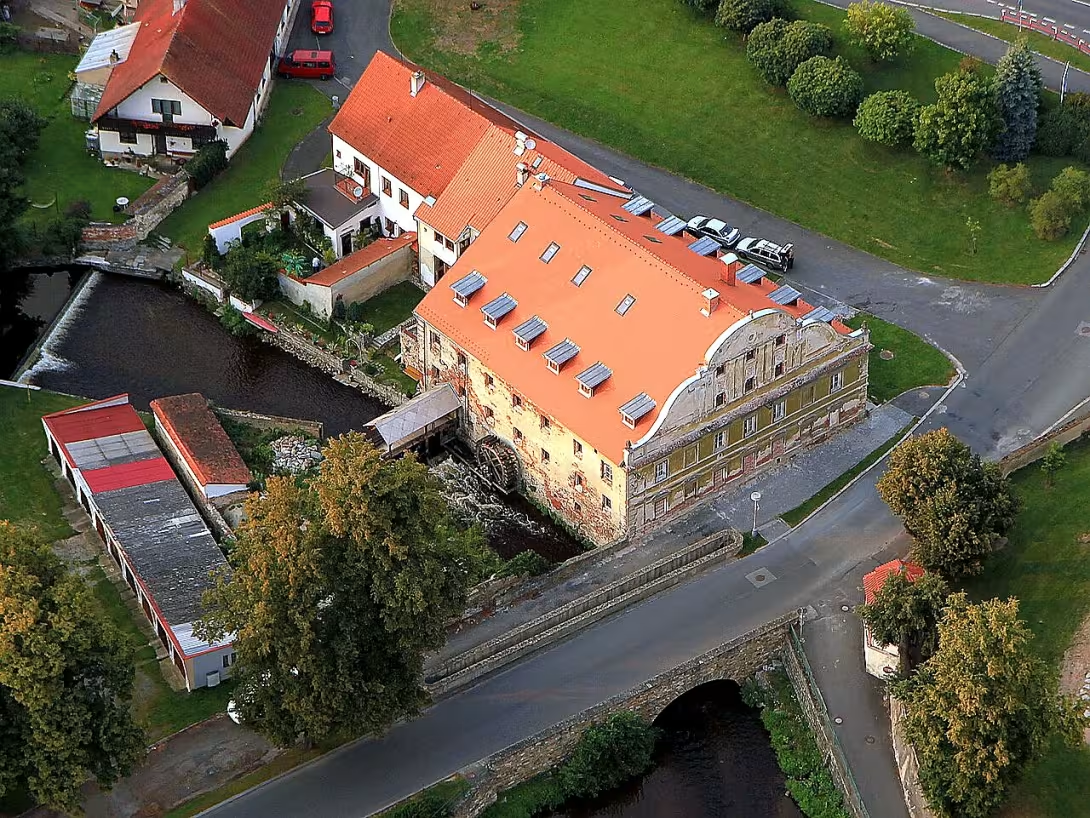
The Undercastle Mill in Horadějovice in Klatovsk is a Renaissance water mill situated on the Mill River, which is powered by the Otava River. This technical monument is protected as a real-estate cultural monument of the Czech Republic and stands out for a preserved historical water wheel.
Little direct news about the oldest history of the mill has been preserved, but its existence is evidenced by the depiction of Horadějovice from 1606. The Czech countries were then in the late Renaissance, shortly before the outbreak of the State uprising. Moreover, the whole of Europe was going through an era of religious and political tension, which predates a 30-year war.
The building takes the form of a large storey building on a square ground plan. It shows the original Renaissance disposition supplemented by later eclectic modifications of the facade. The roof is saddled and covered with bobbies. The south and west facades are seven-axis flat, with corners and central risalites decorated with barefoot. Individual floors separate the cordon ledge. The entrance portals have segmental enchantments and enchantments. By the ground there are conical raiders that once protected masonry.
In the past, the mill was driven by the water supplied by the Otava drive. Although internal technological equipment was not preserved, the original water wheel was preserved on site. It is an important proof of the historical method of propulsion and technical maturity of the then buildings.
Today the Podzámecký mill is an important technical object, which completes the historical character of Horadějovice. Thanks to the preserved bicycle, the visitors can see the history of the mill trade. Visiting this place is an opportunity to learn the technical heritage of the region and to understand the importance of water structures in the historical context of Czech cities.
Then and now
Drag the slider to compare how the landmark may have looked when it was built with the view today.
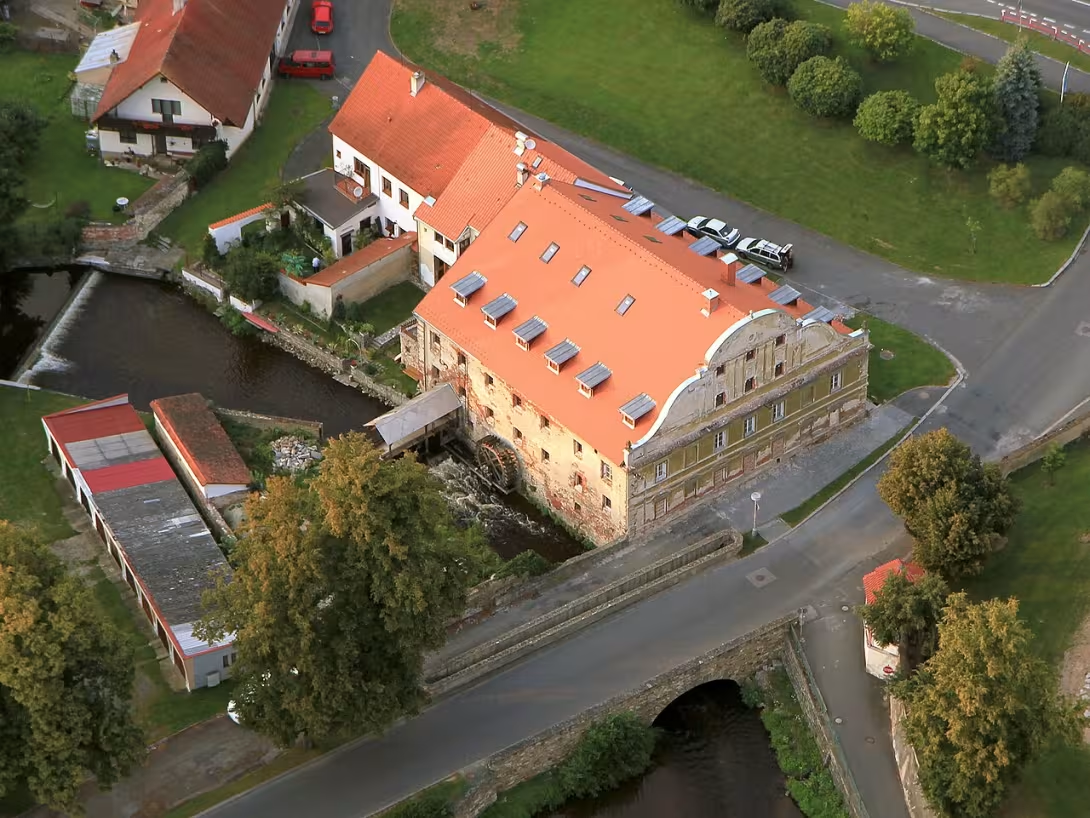
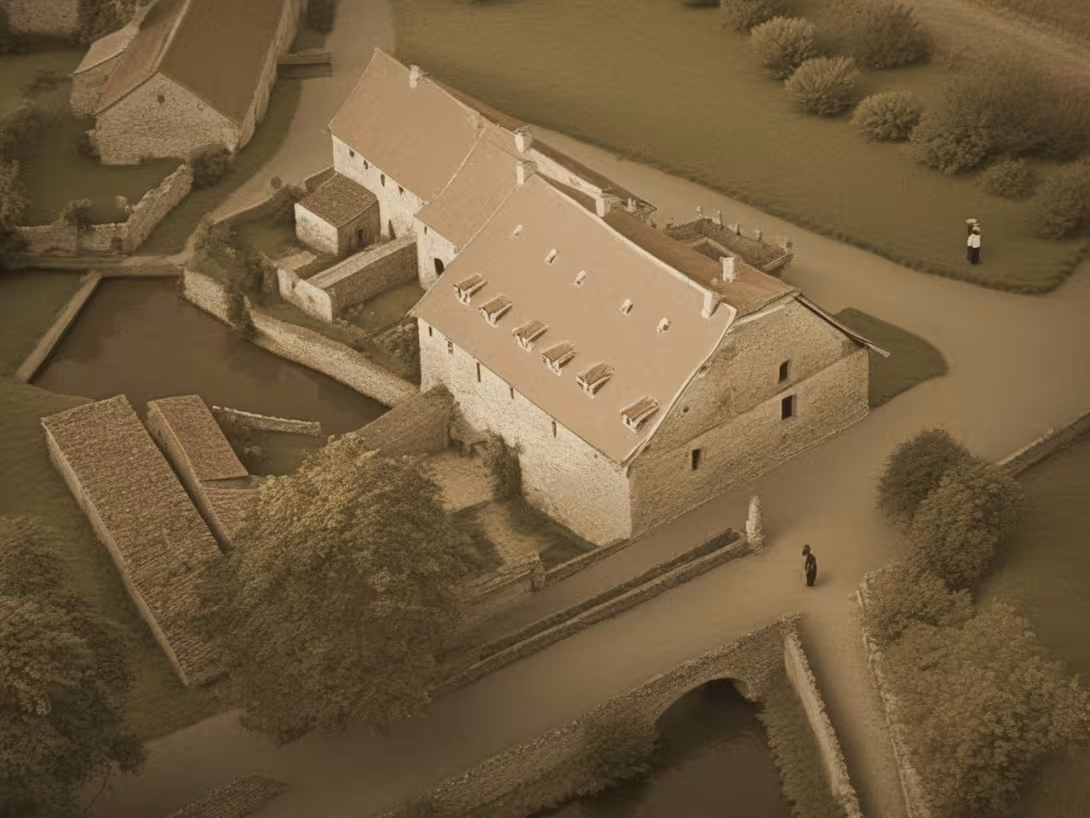
The historical appearance on the left is an AI-generated visualisation and serves as inspiration only.
Historical milestones
- Around 1550
- Planned construction of the mill during the Renaissance period.
- 1606
- The first documented existence of the mill to depict the city of Horažďovice.
- Around 1850
- Implementation of eclectic modifications of the facade of the object.
- 1995
- Declaration of the building for a real cultural monument of the Czech Republic.
Architectural development
The original Renaissance building was later modified in eclectic style. The building has a saddle roof covered with booms and a smooth facade with distinctive architectural elements such as raiders at the entrance.
Historical events
The mill is first documented on the historical picture of the city of Horažďovice from 1606.
Points of interest
- The castle mill is a Renaissance water mill situated on the Mill stream, which is powered by the river Otava. - This technical monument is protected as a real-estate cultural monument of the Czech Republic and stands out for a preserved historical water wheel. - The existence of the mill is evidenced by the depiction of Horadějovice from 1606. - The building takes the form of a large storey building on a square plan with original Renaissance layout and later eclectic modifications of the facade. - There are conical raiders by the ground that used to protect masonry.
Guide
Show guide text
This text was created by artificial intelligence and has not been editorially reviewed. It may contain inaccuracies.
Welcome to the Underground Mill. You are standing in a place where history meets the constant movement of water and where in every noise of the Mlyn stream there is a reflection of the past. In front of you, there is an impressive, large building that will immediately attract attention with its size and stability. It is an object that carries the peace of the old walls and at the same time the dynamics of the elements that drove it for centuries. Before we take a deeper tour, please observe the atmosphere of this place. Hear the quiet, rhythmic sound of water flowing through the power from the Otava River. It is this stream that is the soul of the mill and without it this building would lose its main meaning.
Now let's move forward in time together and understand why this object is standing right here. To understand its meaning, we need to go back deep into the 16th century. It is assumed that the construction of the mill itself began during the Renaissance, around 1550. At that time, the mill was a key element of the local economy and technical development. We can demonstrate its existence not only by historical estimates, but also by concrete evidence. Already in 1606 the mill is captured to depict the city of Horažďovice, which confirms to us that it was already fully operating and was a solid part of the landscape. So this object is not just a new building, but a real witness to centuries, which has survived many changes in the surroundings and in the very way people live.
Now pay attention to the architecture of the building that is standing right in front of you. Look at its overall structure. See how balanced and solid the building is? It has a square floor plan and it is a large storey building that is very dignified. Although its foundations are Renaissance, its present face is the result of later, very interesting adjustments. Around 1850, the facade of the building underwent a significant transformation within the eclectic style. This style is trying to combine various architectural elements into a harmonious whole, which you can see here basically in every detail.
Take a closer look at the facade itself. Notice how the facade is divided so that it does not appear flat and monotonic. Look at the corner of the building, its corners. See those highlighted edges? They are barefoot corners that supply the object at visual depth and feeling of strength. Above them is a cordon ledge that horizontally divides the facade and creates a rhythm that guides your view along the entire length of the building. And now if you look at the access portals, you'll notice their elegant processing. They are decorated with segmental enchantments, which are these fine, arched shapes that supply entrance to the mill nobility and playfulness. This whole architecture is a fascinating example of how the old Renaissance core has been transformed over time and supplemented by new aesthetic visions.
Even though in the history of this particular mill we do not have the names of famous architects or specific personalities that would move in its walls, his story is the story of the technique itself and the human effort. This building is not just a beautiful building for the eyes, it is a major technical monument. Its history is closely linked to the use of water power. Imagine those times when the mill was the main technology center where heavy work was done through the movement of water. It is this ability to use the natural forces of Otava and the Mlyn creek that has made it a unique place throughout the region.
If you're looking for something that really interests you and what makes this place a real gem, focus your view on what's hidden in the context of water. The Podlamecký mill excels mainly by keeping one of the most important elements of its history - a preserved historical water bike. It's a fascinating view of the technical art of the past. Imagine the mechanical force, the precision with which the front generations had to build and maintain these mechanisms so that water could effectively transfer energy. This water bike is a living ally of history that allows us to better understand how the world worked before the era of modern machines. Thanks to this technical value and historical continuity, the building was declared a cultural monument of the Czech Republic in 1995. This is the highest recognition such an object can obtain in our geographical area.
You stand before a place that is not just a dead stone, but a living witness to the evolution of human work and technological progress. From the Renaissance beginnings to baroque and eclectic modifications to today's conservation status, this mill still lasts. Feel the connection between the flowing water, the rock and the human imagination that brought these things together.
I hope this short journey over time has helped you to see the Underground Mill in a new light. But I will no longer hold you. I suggest you continue your tour of the area, stop by the water and look again at the details of the facade, the barefoot corners and the segment enchantments you've just observed. Feel the atmosphere of this place and enjoy the beauty of Horahovice. Thank you for your attention and I wish you a pleasant rest of your walk.
Tips for visitors
The best time to visit is during the morning hours of the working week when you avoid crowds and enjoy the quiet atmosphere of the technical monument near the Mlyn creek. The light at this time beautifully depicts the Renaissance elements of the facade.
You can easily reach the mill by car, parking is possible in the adjacent streets of Horažďovice. If you travel by public transport, use the train or bus connections to the city and then walk through the historical centre to the building; Check the exact connections in the traffic search engine.
For photography we recommend using the morning light, which falls on the water surface of the Mlyn stream and creates impressive reflections of the historical building. Remember to wear comfortable shoes to move around the Otava River.
In the vicinity of the mill you can take a walk along the Otava River or explore the historical core of the city Horažďovice. The whole area offers a pleasant environment for light hiking near watercourses.
We recommend families with children to join a tour of the mill with a walk around the Mlyn creek where children can observe the water level. There is enough space in the vicinity to relax in nature.
Businesses nearby
Do you run a restaurant, accommodation, shop, museum, rental, wellness or other visitor service near this monument? Show yourself directly to the people heading to it — this is how they will see you in the app and on the web:
Events nearby
Zdroj akcí: otevřená data měst a obcí ČR (Národní katalog otevřených dat) a kalendář akcí Národního památkového ústavu.
Nearby
City of Horažďovice, River Otava, Mlyn stream.
Accommodation nearby
Themed route
1. The city of Horažďovice, the urban area, serves as a starting point for your journey. 2. Mill stream, water stream, leads the way directly to the main monument. 3. Zámecký vodní mlýn, a historical object, is the main destination of a trip that will impress you with its form. 4. Otava River, Water Flow, offers a quiet environment for final rest.
Seasonal recommendations
Spring brings around the mill awakening nature and fresh green color of trees. The light is soft and pleasant in this period, which highlights the details of the historical building. It's the perfect time for those who are looking for peace because the traffic is still low. We recommend wearing layered clothes because spring weather at the water can be variable and colder.
In the summer months, the atmosphere is the most lively and the sun's rays create beautiful reflections on the surface. The dense vegetation around the mill provides a pleasant shade, but at the same time gives the place fullness. In the main summer season we recommend you come early in the morning to avoid the biggest crowds. Clothes should be light and suitable for outdoor movements on warmer days.
Autumn turns the surroundings into a colorful mosaic of colors, which is beautifully mirrored in calm water. The morning mist gives the mill a mysterious and melancholy atmosphere that attracts a slow walk. It is advisable to prepare waterproof shoes and warmer clothing as moisture and cooling air can be known at the water stream.
Zimą makes the mill a very quiet and fairy-tale impression, especially if an ice crust forms on the surface. Due to short days and less lighting, it is best to schedule a visit during the bright morning. It is necessary to wear very warm clothes and quality shoes to protect you from freezing and moisture.
Visualizations and artistic views


The visualisations are generated by artificial intelligence and serve as inspiration.
Photos from the area
Real photos taken near the monument

Zdroj a licence jsou uvedeny u každého snímku.
Tips from visitors
No tips yet. Be the first!
Log in and add your tip.
Sources and literature
Fotografie: Zdeněk Fiedler / CC BY-SA 3.0 — Wikimedia Commons. The author and licence also appear when you hover over the image.
Faktickým podkladem tohoto textu byl článek na Wikipedii, jehož autory jsou přispěvatelé Wikipedie. Článek je dostupný pod licencí CC BY-SA 4.0.
Location on the map
More monuments – Horažďovice
Show all in the municipality

Příběhy a pověsti
Legendy, pověsti a příběhy spjaté s touto památkou
Fotografie návštěvníků
Zatím žádné fotografie. Buďte první, kdo přidá fotografii z návštěvy!
Přihlaste se a přidejte svou fotografii nebo hodnoťte.
Za ověřenou návštěvu v aplikaci získáte víc bodů — poznáme podle GPS, že jste na místě.
Reviews and comments