






zámek Březina (zámek, okres Pelhřimov) Fortress
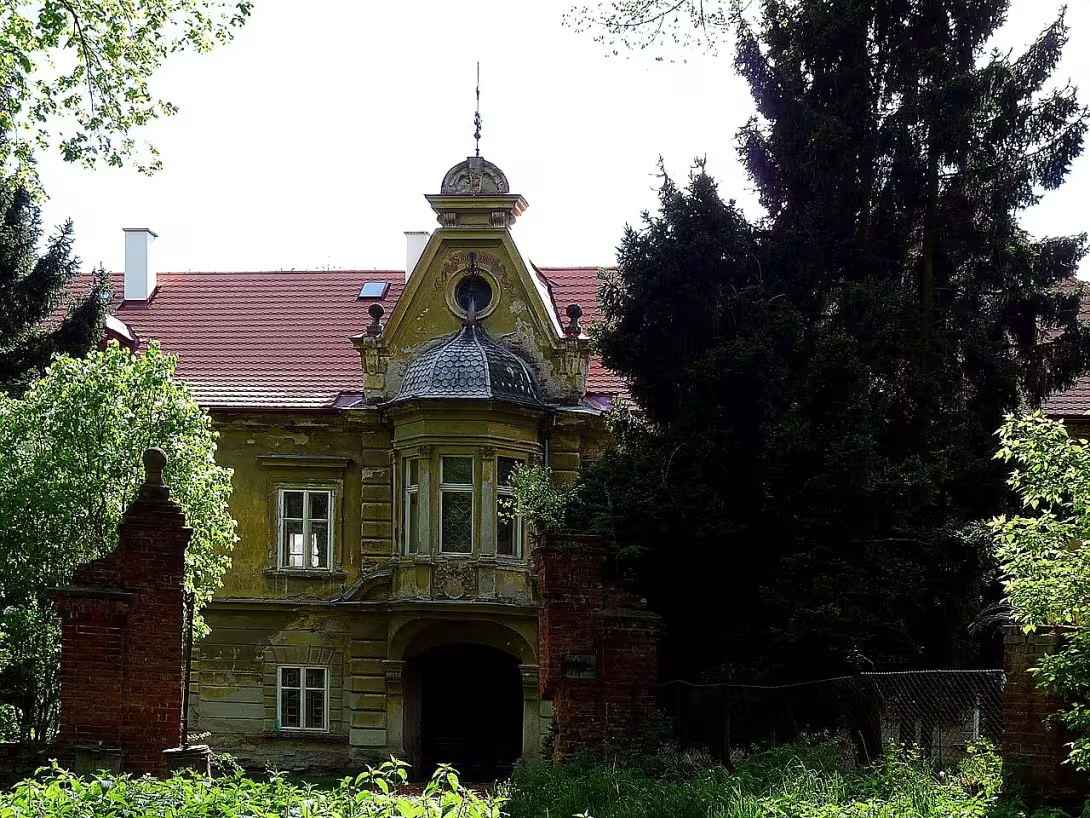
The chateau Březina is a baroque monument protected building in the village Hořepník in Pelhřimovsk. Originally a medieval fortress has undergone many reconstructions. They printed her today's form of a two-wing storey building with a characteristic cylindrical chapel in the northwest corner.
The first written mention of Březina dates back to 1299, when the location was owned by the Zeman Dětocha. At the beginning of the 16th century there was a fortress serving as a mansion. Its history falls into the period of the Yagellonian government and the Habsburgs' accession to the Czech throne. In 1574, the owner of Stanislav Houska had the fort rebuilt and extended to the economic background including the brewery.
The architectural development of the building culminated in 1765 when the fortress was rebuilt into a Baroque chateau. This year is documented directly in the chateau chapel. After 1839, the construction took its present form thanks to pseudorenesance adjustments made for the property of the Eisenstein family. The building is two-wing and the west wing excels with a richly divided front. A statue of St. Florian is placed above the main ledge of this wing. The entrance to the chateau is located in the eastern facade and decorated with coat of arms from Eisenstein. The ground floor interiors kept the original arched ceilings.
The history of ownership of the chateau is varied and reflects the frequent rotation of noble families. After Kid's farm in 1522 he bought Burian Trčka z Lípy. For example Jan Houska ze Zahrádky, Anna z Kounic and Jan Albrecht Křinecký z Ronova have been replaced here for decades. In the 18th century they owned the headquarters including Anna Terezie Umwertová, Jan Vít Malovec and since 1743 Bedřich Jeník Zásadský z Gamsenberka. In the 19th century, Josef Čapek and the Eisenstein family are listed as owners. Since 1908, the memory has been held by the Homolková family.
The chateau Březina, situated on road II / 129 between Pacov and Hořepník, represents valuable proof of the transformation of noble architecture from medieval fortress to Baroque and pseudorenesance mansions. It is particularly interesting for visitors thanks to an unconventional cylindrical chapel and preserved historical elements that document building development over centuries. The tour of the building offers the opportunity to become acquainted with the history of the region through architecture, which bears the fingerprints of many generations of its owners.
Then and now
Drag the slider to compare how the landmark may have looked when it was built with the view today.
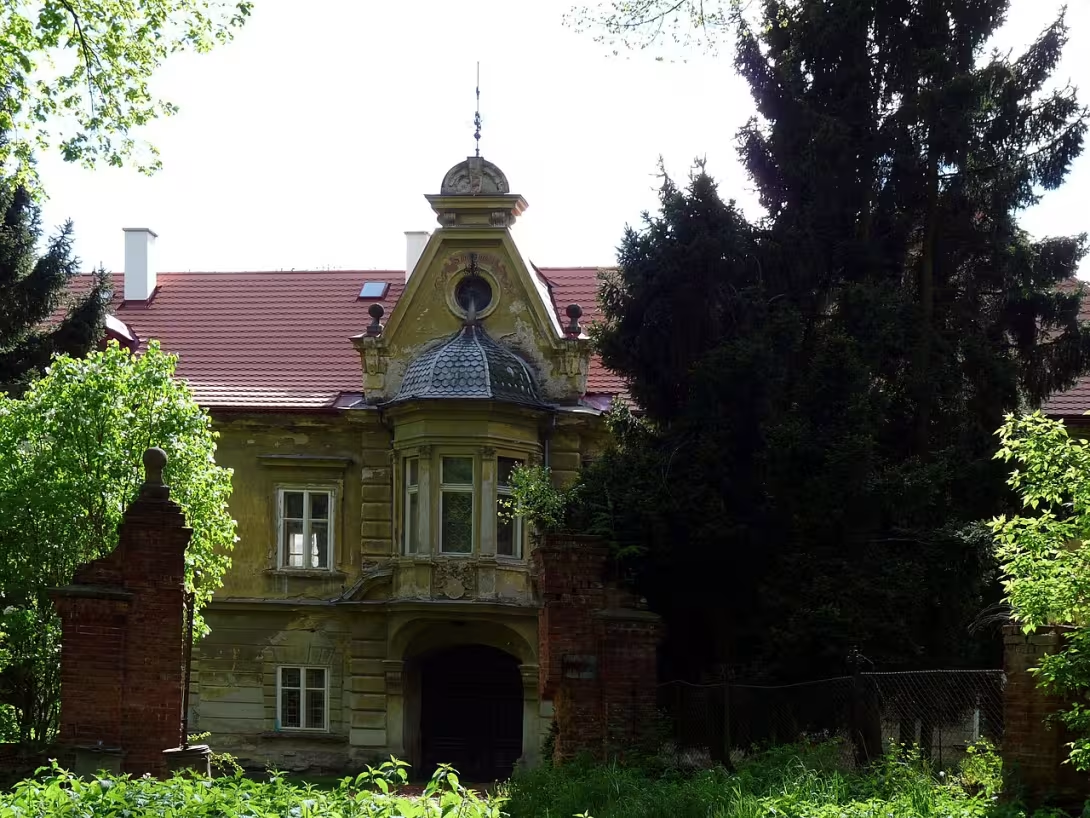
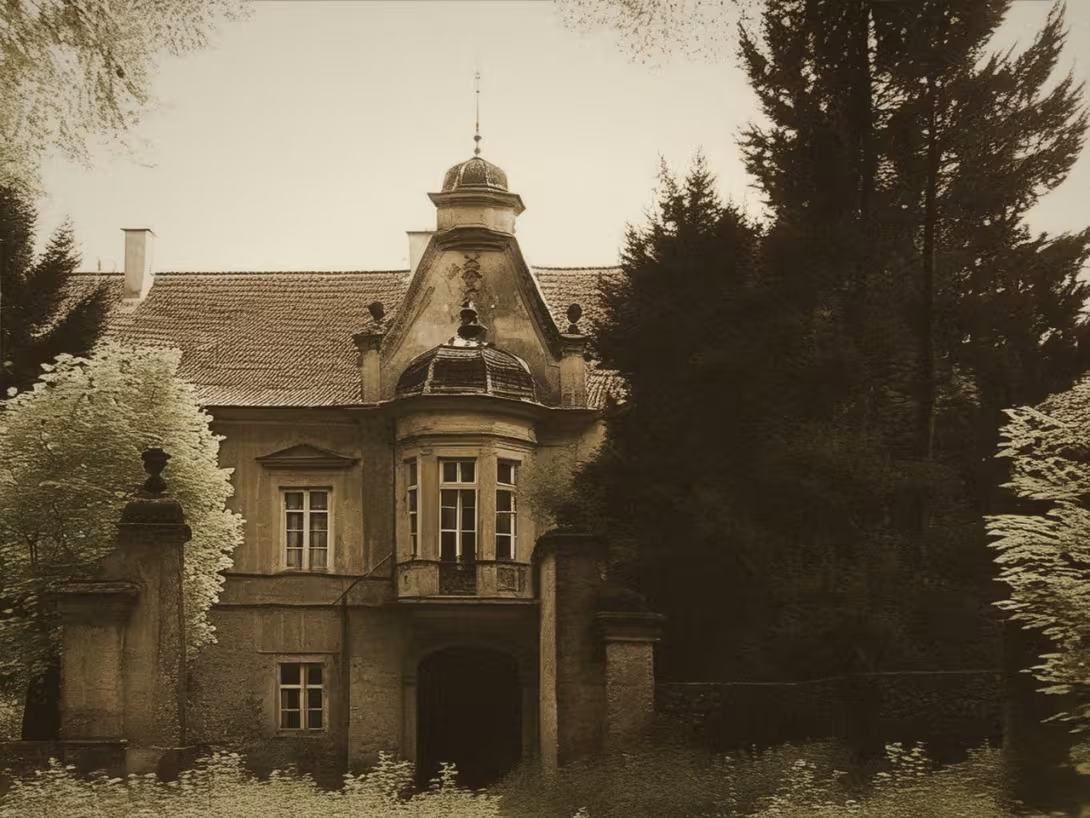
The historical appearance on the left is an AI-generated visualisation and serves as inspiration only.
Historical milestones
- 1299
- First written mention of Březina.
- 1574
- Stanislav Houska had the fort rebuilt and added a brewery.
- 1765
- Rebuilding the fort to the Baroque chateau.
- 1839
- Rebuilding the chateau in the spirit of pseudorenesance by the family of Eisenstein.
Architectural development
The original medieval fortress was extended in the early 16th century by economic facilities including a brewery. In 1765 a major Baroque reconstruction took place, the year of which is documented in the chateau chapel. In the 19th century the chateau acquired its present form thanks to pseudorenesance modifications.
Historical events
1299: First written mention of Březina. 1574: Reconstruction of the fortress and establishment of the brewery Stanislav Houskou. 1765: Rebuilding the fort to the Baroque chateau. 1839: Pseudorenesance arrangements for the genus Eisenstein.
Owners
Dětocha (1299-1304), Burian Trčka z Lípy (from 1522), Jan Houska ze Zahrádky (from 1572), Stanislav Houska (from 1574), Anna z Kounic (to 1589), Jan Albrecht Křinecký z Ronov, Anna Terezie Umwertová, Jan Vít Malovec (from 1730-1743), Bedřich Jeník Zásadský z Gamsenberka (from 1743), Josef Čapek (to 1521), family from Eisenstein (from 1839), rodina Homolkova (from 1908).
Points of interest
The chateau has a characteristic cylindrical chapel located in the northwest corner. - The year 1765, when the fort was rebuilt into a Baroque chateau, is documented directly in the chateau chapel. - There's a statue of St. Florian in the niche above the main ledge of the west wing. - The entrance to the chateau in the eastern facade is decorated with a coat of arms from Eisenstein. The ground floor interiors kept the original vaulted ceilings.
Guide
Show guide text
This text was created by artificial intelligence and has not been editorially reviewed. It may contain inaccuracies.
Welcome to the village Hořepník. Right now, you're standing in front of a monument that carries a layer of centuries and tells a story about changing one place. The Březina Chateau stands before you, a two-wing storey building, which, by its present form, is peaceful and dignified. It is a place that today is protected as a cultural monument, and even though it may now seem like a harmonious whole, its path to this form has been long and full of changes. Stop for a moment, take a breath and feel the atmosphere of this space. Imagine that every wall you see right now remembers different epochs, different people, and completely different needs of the time in which it originated.
Let's go back in time together far beyond where your memory goes. The first written mention of Brezina dates back to 1299. At that time, however, there was no such chateau as you see today. There was originally a fortress at this place, which was a fortified mansion, which served primarily for the defence and for the asserted power of local masters. At that time, the claims were the foundation of the landscape, symbols of security and control over the surrounding territory. After centuries, however, the time has come for modernization. In 1574 he came to the series Stanislav Houska, who decided that the old fort was no longer enough. He had it rebuilt and added a brewery to make the farm and its surroundings prosperous. This was a very important step at the time, because brewing was one of the main engines of economic rural development. So imagine that the smell of malt and hops once spread around this place, and life here was much louder and busier than you see today.
Now that you know the beginnings, pay attention to the architecture of the building you are facing. The chateau has undergone several major changes that have given it its present character. The most important of them occurred in 1765 when the original fortress was rebuilt in a Baroque style in depth. The Baroque has brought representativeness and elegance to architecture. If you look at the total available, you'll see the two-wing storey structure. One of the most significant elements you can perceive is the northwest corner of the building. Look there and notice the characteristic cylindrical chapel. This chapel is a real unique chateau and gives it a very specific silhouette. It is a place of silence and contemplation that is organically linked to the body of the chateau.
Please remain on the outside and look at the west wing. Look for the view of the main ledge, the rising horizontal strip that separates parts of the facade. Just above it, in a small niche, you'll find a statue of St. Florian. Saint Florian is the patron saint of protectors against fire, and its location here was not random. The fires in the past were the greatest enemy of wooden and stone buildings, and the statue of St. Florian had a chateau and its inhabitants protected from devastating heat. He's a silent witness to the faith and hope of the people who lived here centuries ago.
But the chateau did not remain baroque. History continued and another significant adjustment took place in 1839. At that time the chateau was rebuilt in the spirit of pseudorenesance, which was a style that returned to the elements of the Renaissance, but interpreted them in a new, romantic way. This change was brought by the family from Eisenstein, who left a trail. If you can see the interior, notice the arched ceilings that have been preserved in the building and remind us of the craftsmanship of builders from different periods.
When we think about this place, we can't forget the people who left their lives and jobs behind. The history of Březina Chateau is linked to many noble families and personalities whose names now sound like echoes from the past. Among them was Dětocha or significant Burian Trčka z Lípy. Later there was Jan Houska ze Zahrádky and mentioned already Stanislav Houska. The chateau was also home to Anna from Kounice or Jan Albrecht Kronecký from Ron. Each of them brought something of their own into this house, whether it was political influences, cultural changes, or simply everyday life within the nobility. In later times there were Anna Terezie Umwertová, Jan Vít Malovec, Bedřich Jeník Zásadský z Gamsenberka or Josef Čapek. And finally, rodina Homolkova worked here. Imagine all the conversations, plans and disputes that took place in these walls. Each of these names represents a different chapter in the history book of this house.
And now I'm going to lead you to one interesting thing that may be escaping at first sight, but it's very fascinating. If you entered the above-mentioned cylindrical chapel in the northwest corner, you would find a documented 1765. It's basically the signature of the builders who completed the Baroque rebuilding of the chateau this year. It's a rare moment when the building itself tells us when it was born in its present form. It's a little time anchor that connects today to the moment when the last details of plaster and decoration were finished here more than two styles ago.
Březina Chateau is not just a set of stones and mortar, it is a living organism that adapted to the times. From the defensive fort to the brewery area, the Baroque residence to the pseudorenesance residence. You see it all in one building. The entrance to the chateau in the eastern facade welcomes you to the space where history meets the present.
Now that you know the story of this place, I suggest you take a slow walk around the entire building. Feel the contrast between the robustness of the original building and the subtlety of baroque and pseudorenesance elements. Take another look at Saint Florian and imagine how many times over the years he perceived the surrounding landscape of Hořepník. Let the silence that is now in the place where the brewery was once boiling and the nobles gathered in the halls.
Thank you for accompanying me on this short journey through time. I hope this view of Březina Chateau has helped you see more than just an old building, but a real monument to human efforts and transformations. I wish you a pleasant rest of the tour and enjoy the peace and beauty of this historic corner. Goodbye.
Tips for visitors
{'cas _ vstevy': 'The best time to visit is late spring or early autumn, when the surrounding landscape of the Highlands is the most photogenic and the weather wishes to walk around the chateau.', 'Transportation _ a _ parks': 'The chateau is located directly on the second-class road between Pacov and Hořepník. Parking is possible near the building, but we recommend that you follow the traffic signs. Use the search engine to connect to the village Hořepník.', 'equipped _ and _ photo': 'Take comfortable shoes to move around the monument. For shooting is ideal soft light during the morning or shortly before sunset, which will highlight the baroque elements of the facade.', 'o _ and _ family': 'In the immediate vicinity of the chateau you can go for a walk towards Paco or Hořepník. For families with children, the location is suitable thanks to a quiet environment, but we recommend keeping children under constant supervision due to the proximity of road traffic.'}
Businesses nearby
Do you run a restaurant, accommodation, shop, museum, rental, wellness or other visitor service near this monument? Show yourself directly to the people heading to it — this is how they will see you in the app and on the web:
Nearby
The chateau is located on the road II / 129 connecting Pacov and Hořepník in Pelhřimov district.
Accommodation nearby
Themed route
Travel route: Březina chateau and surroundings
This short and undemanding route focuses on the main destination, the Březina Chateau, and its immediate surroundings, as defined by the available information. Since only road connections and the municipality Hořepník are listed in the "Environs' line, the route respects these restrictions and does not complete any other fictional monuments.
1. BřežinaxZ0ZX Type: Castle Why is it worth a visit: This is the main destination of a trip that offers a view of historical architecture in a quiet environment. Visitors can enjoy the atmosphere of this mansion and its surroundings.
2. Road II / 129 Type: Road connection Why is worth visiting: This road serves as the main access road to the chateau and connects the municipalities of Pacov and Hořepník. For cyclists or pedestrians it can be interesting as a route for a ride or walk in a quiet rural environment.
3. Type: Village Why is it worth a visit: It lies near the chateau and forms part of the location where the monument is located. It offers the possibility of stopping for rest or refreshments in local facilities if available.
4. Circle of the castle BrezinaxZ0ZX Type: Natural and cultural environment Why is worth a visit: The immediate surrounding of the chateau offers a peaceful atmosphere suitable for relaxing and observing the landscape. It is an ideal place for a short walk without the need to visit other distant sights.
5. Access path to chateau Type: Path Why is worth a visit: The path leading to the chateau is part of road connection II / 129 and allows easy access to the main destination. It is suitable for pedestrians and cyclists who want to explore the area without motor vehicles.
This route is designed to respect the limits given by the input and to focus exclusively on the positions listed in the "Surround 'line. It contains no other walls, museums, ponds or natural formations that are not mentioned in the documents.
Seasonal recommendations
Spring: In the spring period, the chateau Březina offers visitors a reviving atmosphere where nature wakes up from its winter sleep in the surrounding forests and fields. The colours of flowering shrubs and trees provide the landscape with life and freshness, an ideal time to know the historical corners of the chateau in a quiet environment. This season, it is recommended to visit the chateau early in the morning or later in the evening to avoid a possible increase in the crowd of tourists. It is advisable to wear clothes according to temperature because spring weather can be very variable.
Summer: Summer is the time when the chateau Březina offers the most light and service life. The bright day allows visitors to enjoy the fully architectural beauty of the chateau, which is even more emphasized in the dazzling sunlight. In the main summer season it is recommended to visit the chateau earlier afternoon or later in the evening to avoid overcrowding and enjoy peace. Remember to protect against the sun - hat, goggles and plenty of water are necessary.
Autumn: In the autumn period, Březina Chateau offers visitors a peaceful atmosphere where the surrounding nature is covered with coloured leaves. The sun becomes warmer and shines longer on the landscape, allowing long walks around the chateau in a quiet environment. This season it is advisable to visit the chateau in the afternoon or later in the evening when the crowd is decreasing and enjoy the view of the November landscape in a quiet environment. It is important to wear warmer clothes because autumn weather is variable and can cool quickly.
Winter: In winter, Březina Chateau offers a unique atmosphere where snow is covered by the surrounding countryside. The chateau in these conditions represents a place full of peace and fatigue, which is ideal for visiting in a quiet environment. This season it is recommended to visit the chateau early in the morning or later in the evening to avoid possible restrictions on opening times due to winter conditions. It is important to wear warm clothes and suitable shoes to walk on snow to ensure comfort during the visit.
Visualizations and artistic views


The visualisations are generated by artificial intelligence and serve as inspiration.
Photos from the area
Real photos taken near the monument

Zdroj a licence jsou uvedeny u každého snímku.
Tips from visitors
No tips yet. Be the first!
Log in and add your tip.
Sources and literature
Fotografie: Czeva / CC BY-SA 3.0 — Wikimedia Commons. The author and licence also appear when you hover over the image.
Faktickým podkladem tohoto textu byl článek na Wikipedii, jehož autory jsou přispěvatelé Wikipedie. Článek je dostupný pod licencí CC BY-SA 4.0.
Location on the map
More monuments – Hořepník
Show all in the municipality
Příběhy a pověsti
Legendy, pověsti a příběhy spjaté s touto památkou
Fotografie návštěvníků
Zatím žádné fotografie. Buďte první, kdo přidá fotografii z návštěvy!
Přihlaste se a přidejte svou fotografii nebo hodnoťte.
Za ověřenou návštěvu v aplikaci získáte víc bodů — poznáme podle GPS, že jste na místě.
Reviews and comments