



zámek Čečovice Chateau
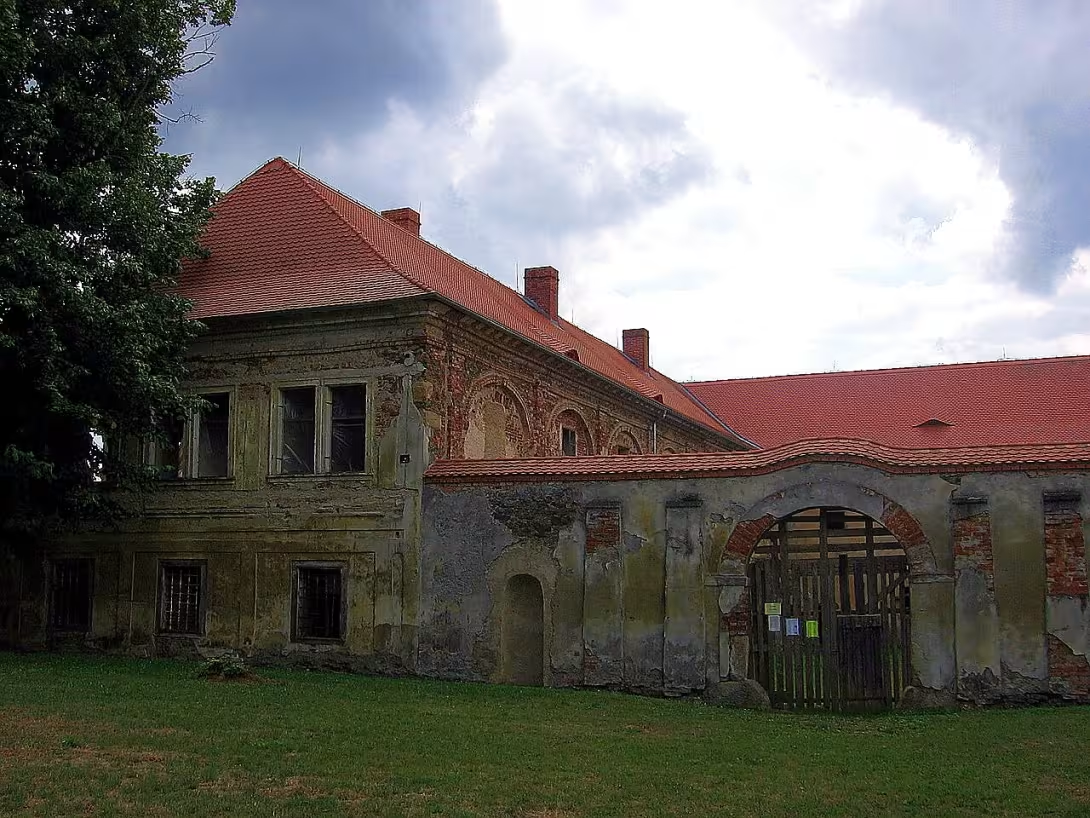
The chateau Čečovice is located in the village of the same name in the district Plzeň-jih. Since 1964 it has been one of the protected cultural monuments. The construction, however, goes much deeper until there was a mere fortress.
The predecessor of the chateau was a fortress, which was probably already built in the first half of the 14th century by some of Jaroslav's unknown descendants from Bukovce. The first historical mention of the fortress dates back to 1355 to 1358, when Jaroslav from Čečovice is mentioned as the owner. Nine years later, Jan Bushek and Václav of Velhartic gave it to her. In 1395, Anna from Velhartic, who had her in the company of her second husband Václav from Vartemberk, acquired her. In 1409, Anna, already married to Hynek the Elder of Náchoda, transferred her to Henry III of Rožmberk, who kept her as manager through the purkrays.
In 1390, there was a dramatic episode. Jindřej III had Halik of Genovice executed, who rebelled against his will. This execution incited armed clashes with the Riesmburgs of Janovice, which lasted until Jindřich's death in 1412. In the middle of the 15th century the farm was bought by Dobš Snopouvovský from Chečovice and followed by a quick rotation of owners. A major breakthrough came in 1546 when Jan Jr. Poppel of Lobkovice bought it and joined it to the mountain house. From now on, the fort lost its housing function and gradually decayed.
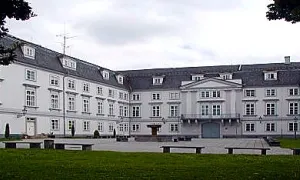
In 1587 a description of the property was preserved, which in addition to the fort contained a malting house, brewery, yard with sheep, hop, grafting and pond. Sometime before 1623, still behind the Cinderella of Lobkovic, the complex went through a change of mannerist lock. It was purchased by Count Maximilian Trauttmansdorff after the confiscation of the mountain estates in 1623. The Baroque East Wing and other modifications to the building were built in his family around 1715. The Gothic palace of the original fortress was converted into a granary that became the west wing of today's building. Since then, the chateau has served as a shelter for the prince and his guests during their stays and hunting in the area.
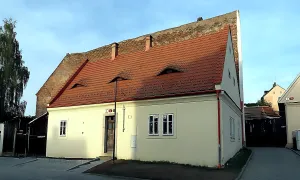
Without more serious changes, the chateau was preserved until the beginning of the 20th century. After the land reform, they sold it as a residual farm, its ground floor turned into an economic facility. In 1955, the state farm adjusted it to a hostel for agricultural temporary workers. But interest in him soon fell. The locals had converted the ground floor into a garage, the building was in a state of emergency. The subsequent ownership of the JZD Puclice did not improve the situation - the building burned down in 1990.
The rescue was opened in 1998 by the Czech Union of Monuments Protectors, which took over the chateau into its property. He's been going through a general reconstruction ever since. The building statics were gradually secured and a complete new roof coat was completed in 2005. The chateau can also be visited by cyclists - there is a 2223 cycling route in the vicinity, which leads from Staňkov to Černovice and further to Kladrub.
Then and now
Drag the slider to compare how the landmark may have looked when it was built with the view today.
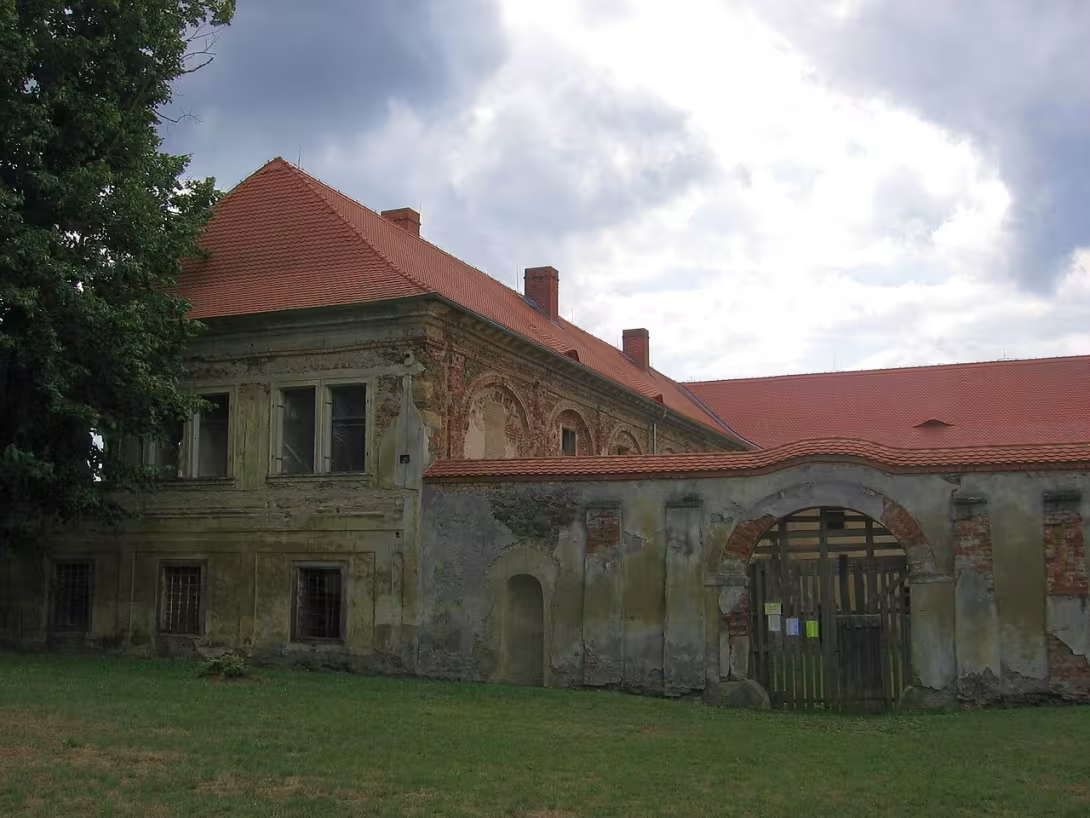

The historical appearance on the left is an AI-generated visualisation and serves as inspiration only.
Historical milestones
- 1355
- Jaroslav z Čečovice is listed as owner of Čečovice, Bukovce and fortress
- 1395
- Anna from Velhartic got Čečovice
- 1623
- The ashes of Lobkovic have been confiscated by the Highlands and purchased by Count Maximilian Trauttmansdorff
- 1715
- Baroque east wing and other modifications
Architectural development
The fortress was built in the first half of the 14th century, later it was rebuilt into a mannerist chateau and then into a Baroque chateau. In the 20th century, it was decayed and repaired after the fire in 1990.
Historical events
1355-1358: Jaroslav z Čečovice is listed as owner of Čečovice, Bukovce and fortress
1395: Anna from Velhartic acquired Čečovice
1623: The ashes of Lobkovic have been confiscated and purchased by Count Maximilian Trauttmansdorff
Owners
Jaroslav from Bukovce
Jan Bushek
Václav of Velhartic
Anna of Velhartic
Václav from Vartemberk
Hynk Elder of Náděa
Henry III of Rožberg
Dobíš Snopuvovský z Chečovice
Jan Jr
Maximilian Trauttmansdorff
Points of interest
Since 1964, the chateau has been one of the protected cultural monuments. - In 1390 Henry III of Rožmberk was executed by Bínek from Janovice, which triggered armed clashes until 1412. - After 1546, when the building was connected to the mountain estate, the fort lost its residential function and began to disintegrate. The Gothic palace of the original fortress was converted into a granary that became the west wing of today's building. - The building burned down in 1990, after which in 1998 it started its rescue and general reconstruction of the Czech Union of Protectors of Monuments.
Guide
This guide is narrated by a synthetic voice generated by artificial intelligence.
Show guide text
This text was created by artificial intelligence and has not been editorially reviewed. It may contain inaccuracies.
Čečovice Castle is located in the Plzeň-south district and has been protected as a cultural monument since 1964. Its origins date back to a Gothic fortress.
This fortress was presumably built in the first half of the 14th century by one of the descendants of Jaroslav z Bukovce, whose name is unknown. The first mention of the fortress dates from 1355 to 1358, when Jaroslav z Čečovic is listed as its owner. In 1364, brothers Jan Bušek and Václav z Velhartic purchased the fortress from him. Later, only Jan Bušek is mentioned as the owner, who managed the estate from Velhartice castle. In 1395, Anna z Velhartic acquired Čečovice, and in 1409 she transferred it to Jindřích the Third z Rožmberka. The name Rožmberka is also associated with a cruel event. In 1390, he had Přibík z Janovic executed here, who had rebelled against him. This was followed by battles with the Rýzmbursks z Janovic, which only ended with Jindřích's death in 1412.
In the mid-15th century, Dobeš Snopoušovský z Čečovic purchased the estate, and the owners changed rapidly. In 1546, Jan the Younger Popel z Lobkovic acquired it and attached it to the Horšovský Týn domain. The fortress thereby ceased to serve as a residence and quickly fell into ruin. A description from 1587 mentions, besides the fortress, a malt house, a brewery, a farmyard with a sheep pen, a hop garden, a nursery, and a fishpond beneath the fortress. Before 1623, the fortress was rebuilt into a Mannerist château.
In 1623, the estate was confiscated from the Popels and purchased by Count Maxmilián Trauttmansdorff. Under the Trauttmansdorffs, probably around 1715, a Baroque eastern wing was created. The Gothic palace of the original fortress was rebuilt into a granary, from which today's western wing originated. The château then served the prince and his guests during visits to the local hunting grounds.
It remained virtually unchanged until the early 20th century. After the land reform, it was sold as a residual estate and agricultural facilities were created on the ground floor. From 1955, a state farm used it to house agricultural brigades. However, the farm soon lost interest in the building, and local residents set up garages on the ground floor. The château deteriorated, and under the management of the Puclice collective farm in 1990, it caught fire.
In 1998, it was taken over by the Czech Association of Monument Conservationists, which has been comprehensively renovating the château since then. The buildings were structurally secured and in 2005 the structure received a completely new roof.
Tips for visitors
The best time to visit is during sunny days from spring to autumn when you can enjoy the atmosphere of the chateau park and observe the ongoing rescue work on the historical object. Due to ongoing reconstruction, we recommend monitoring of official pages for up-to-date information on interior accessibility.
You can easily get to the chateau with your own car. Parking is possible near the premises. If you prefer public transport, the location is available by bus; Please check specific connections and follow-up in the current timetable search engine.
For a visit, take fixed shoes suitable for movement around the monument and possibly in the park. Don't forget the charged camera because the mannerist and baroque elements of the exterior offer unique views of historical architecture, which gradually returns to its original beauty.
The surrounding area of the chateau is ideal for lovers of active relaxation, as it is surrounded by a park and a cycling route is passing through this way towards neighbouring villages. It's a great opportunity for families with children who want to enjoy a simple nature trip associated with learning history.
When shooting, use soft light during the morning or late afternoon, when the facade details and the layout of the building stand out. The chateau is a grateful object for capturing the contrast between the historical link and the current effort to restore it.
Frequently asked questions
Is zámek Čečovice open to the public?
Yes, zámek Čečovice is open to the public. The tour is possible throughout the year, except for February's adjustment.
How do I get to the place by car / public transport?
The employees of the village Čečovice recommend parking in the parking lot in front of the village and continue on foot to the chateau. Public transport is available from Pilsen or Šumava.
How much is the entrance fee and is it paid on the spot?
Payment is made directly at the chateau.
Is the tour suitable for children and seniors?
Yes, the Čečovice Chateau tour is suitable for all ages. Interactive activities are prepared for children and special tours are available for seniors.
How long does the tour take?
The tour of the chateau Čečovice takes about 1 hour. If you want more information, you can extend your tour up to 2 hours.
What are the opening times and booking is required?
The Čečovice Chateau is open to the public from 9:00 to 17:00. Reservation is not necessary, but we recommend making it in advance for groups over 10 people.
What's interesting in the immediate vicinity?
In the immediate vicinity of the chateau Čečovice you will find a nature reservation with forests and the river Úhlum. Recommended is also a visit to the nearby chateau of Sternberk.
For kids
Imagine going back to when zámek Čečovice was still young and full of life. It's like you're in an amazing story that started over 500 years ago.
It was like a game where a small kingdom began to build its first chateau. And right here in the village of Čečovice, this chateau was built around 1400. Who lived here? They were people trying to survive and prosper in this beautiful territory.
Businesses nearby
Do you run a restaurant, accommodation, shop, museum, rental, wellness or other visitor service near this monument? Show yourself directly to the people heading to it — this is how they will see you in the app and on the web:
Events nearby
Zdroj akcí: otevřená data měst a obcí ČR (Národní katalog otevřených dat) a kalendář akcí Národního památkového ústavu.
Nearby
The surrounding area of the chateau consists of a park and a cycling route that leads to nearby villages.
Accommodation nearby
Themed route
1. Chateau Čečovice (lock) - The main destination of the trip, which offers a tour of historical spaces. 2. Park (park) - Great place for a quiet walk in the green surroundings of the monument. 3. Cyclotrase (cyclotrase) - It offers a pleasant ride towards nearby villages.
Seasonal recommendations
Spring brings the chateau Čečovice freshness and fine colors of awakening nature. The lighting is soft during this period, which complements beautifully the ongoing restoration of the building and fresh green leaves of trees. For the best experiences we recommend a visit in the morning when the air is the cleanest. Due to the variable weather, it is ideal to choose layered clothes to protect you from morning cold and afternoon heat.
In the summer season the atmosphere of the chateau is the most lively thanks to intense sun and dense vegetation in the area. Long days offer a rich opportunity to observe the details of the reconstructed parts in bright light. Due to the greater interest of visitors, it is advisable to arrive in the early morning to avoid the biggest crowds and heat. Remember the protective headgear and plenty of water for a comfortable walk.
Autumn around the monument creates a magical, melancholic mood with a dominant golden and brown shades. Foggy mornings provide a mystery to the building and the colours of decaying leaves create perfect sets for photography. In this period, the number of visitors is lower, which allows for a more peaceful perception of space. It is necessary to have fixed shoes due to wet terrain and wear a windbreaker to protect you from the colder wind.
Winter turns the chateau into a quiet and peaceful point in the landscape, often accompanied by frost or snow. The lighting is weaker in these months and the days are significantly shorter, which creates a very specific, distant atmosphere. In advent time it is necessary to count on shorter opening times and the need to have very warm clothes including hats and gloves. The best time to visit is around noon to avoid early twilight.
Visualizations and artistic views


The visualisations are generated by artificial intelligence and serve as inspiration.
Photos from the area
Real photos taken near the monument


Zdroj a licence jsou uvedeny u každého snímku.
Tips from visitors
No tips yet. Be the first!
Log in and add your tip.
Sources and literature
Photos: Jik jik / CC BY-SA 3.0 — Wikimedia Commons. The author and licence also appear when you hover over the image.
Faktickým podkladem tohoto textu byl článek na Wikipedii, jehož autory jsou přispěvatelé Wikipedie. Článek je dostupný pod licencí CC BY-SA 4.0.
Location on the map
More monuments – Čečovice
Show all in the municipality



Příběhy a pověsti
Legendy, pověsti a příběhy spjaté s touto památkou
Fotografie návštěvníků
Zatím žádné fotografie. Buďte první, kdo přidá fotografii z návštěvy!
Log in a přidejte svou fotografii nebo hodnoťte.
Za ověřenou návštěvu v aplikaci získáte víc bodů — poznáme podle GPS, že jste na místě.
Reviews and comments