



zámek Dolní Počernice Chateau
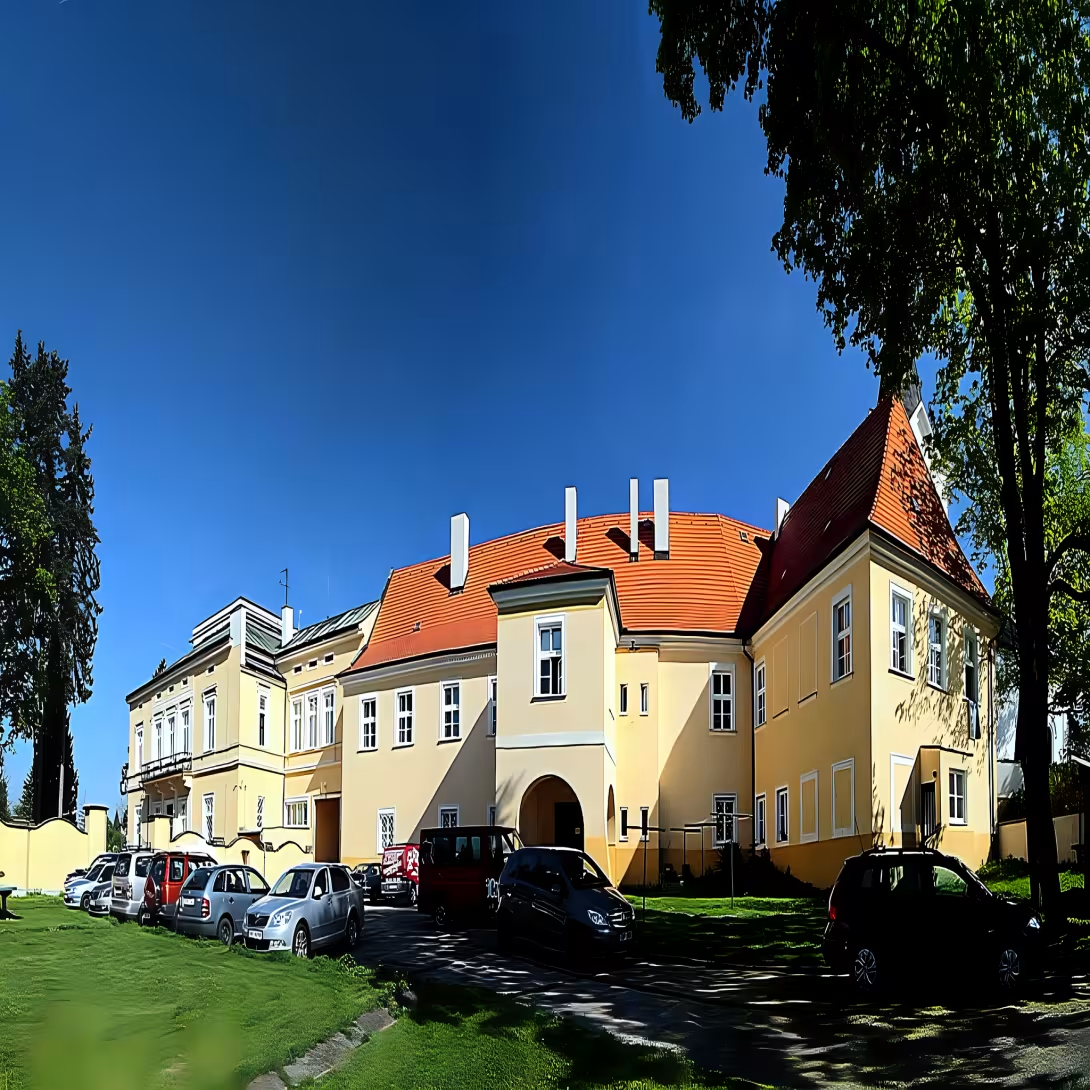
Dolní Počernice Castle is an architectural monument located in Dolní Počernice, near Prague, at 1 Národních hrdinů Street. This site stands out as a cultural heritage of the Czech Republic due to its rich history and transformation from a medieval fortress into a baroque castle. Currently, it serves as an orphanage, adding contemporary significance to this historical landmark.
The origins of Dolní Počernice Castle trace back to a medieval fortress first mentioned in 1401. This initial structure was part of the property succession involving Jan z Cách, owner of nearby Čelákovice. Although its exact origin remains unknown, it is believed that remnants of this early fortification have been preserved as parts of what later became a Gothic tower fortress. Over time, the castle underwent significant architectural changes, evolving from a defensive stronghold into a residential building with distinct late Gothic and Renaissance influences.
Architecturally, Dolní Počernice Castle reflects various styles due to its extensive history of modifications. The initial medieval fortress was expanded in the late Gothic style by 1527, emphasizing its residential character. This period also saw the construction of a massive church tower that assumed defensive duties. In the Renaissance era, further reconstruction took place, including the addition of western wings and decorative sgraffiti on facades. By the Baroque period, the castle had acquired much of its present appearance under the ownership of the Counts of Colloredo-Wallsee from 1664 to 1769.
Ownership of Dolní Počernice Castle changed hands several times throughout history. After being part of the royal estate in 1562, it was sold by the Royal Chamber to Matěj Hůlka, a burgher ennobled by Ferdinand I. In 1622, following confiscation after the Battle of the White Mountain, Jan Kapr acquired the castle at a reduced price. The Colloredo-Wallsee family later owned it until 1769, followed by the Hungarian noble Dercznyi family until 1923 when the City of Prague took over.
The castle's history is marked by significant events and transformations. Its architectural evolution from medieval to Baroque styles reflects broader historical shifts in Bohemia, which was part of the Holy Roman Empire during its initial construction. The religious conflicts and power dynamics within Europe influenced its development, particularly during the Renaissance and Baroque periods when substantial renovations were undertaken.
Today, Dolní Počernice Castle is a blend of old and new architectural elements. It includes an 18th-century mansion adjacent to a 12th-century Romanesque church, showcasing the site's historical depth. The surrounding park has been transformed into an English-style garden, preserving some original Baroque features like arbors and vases on pedestals. This combination of history and landscape makes Dolní Počernice Castle a compelling destination for visitors interested in exploring its architectural evolution and cultural significance.
Dolní Počernice Castle offers a unique glimpse into the past while serving contemporary needs as an orphanage. Its rich history, diverse architectural styles, and picturesque setting make it a worthwhile visit for anyone interested in Czech heritage and architecture. The castle's transformation over centuries reflects broader historical narratives, inviting visitors to explore its storied walls and serene gardens.
Then and now
Drag the slider to compare how the landmark may have looked when it was built with the view today.
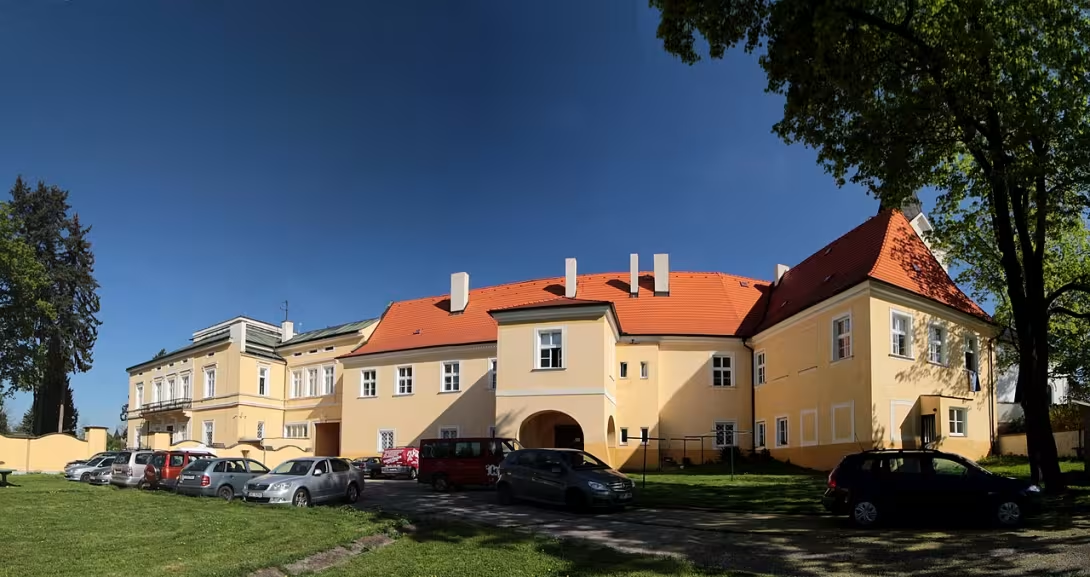
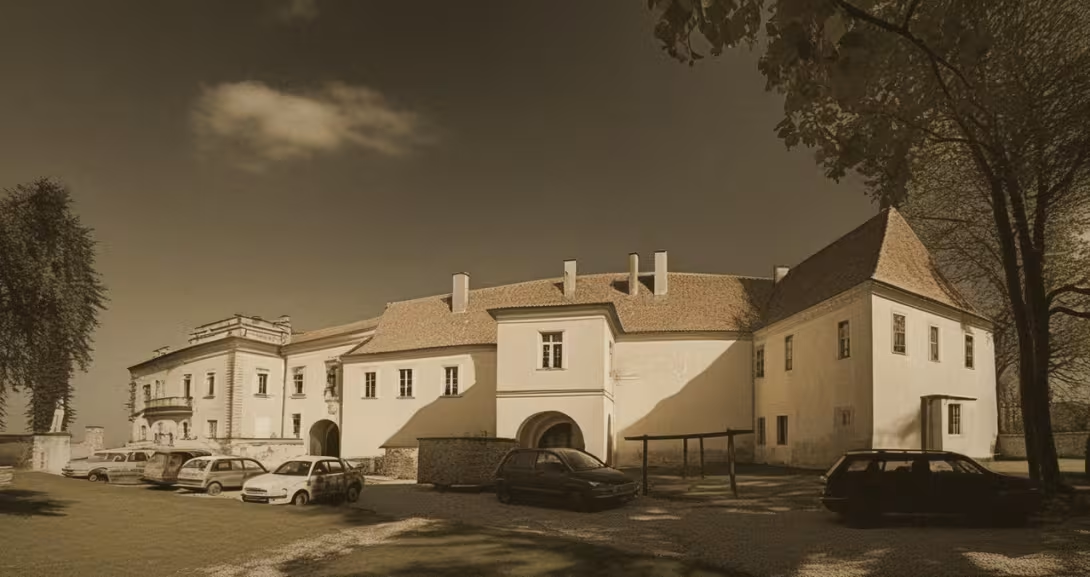
The historical appearance on the left is an AI-generated visualisation and serves as inspiration only.
Historical milestones
- 1401
- First mention of the medieval fortress.
- 1562
- Property sold to Matěj Hůlka.
- 1664
- Confiscation and sale to Jan Kapr.
Architectural development
The castle evolved from a medieval fortress into a residential building with Gothic and Renaissance influences. The Baroque period saw significant changes, including the construction of new wings and decorative elements like sgrafitti on facades. In the 19th century, further expansions were made, resulting in its current architectural composition.
Historical events
1401: First mention of the medieval fortress that would become Zámek Dolní Počernice.
1562: The property was sold to Matěj Hůlka, marking a significant change in ownership.
1664-1769: Ownership by the Colloredo-Wallsee family, who contributed to its current form.
Owners
The property changed hands several times until 1527, when it became part of the royal estate. In 1562, it was sold by the Royal Chamber to Matěj Hůlka, a New Town citizen ennobled by Ferdinand I. By 1664, Jan Kapr owned it after confiscation and sale at a reduced price. The Colloredo-Wallsee family held it until 1769, followed by ownership under the Hungarian noble Dercsenyi family until 1923.
Points of interest
- The castle's transformation from a medieval fortress to a baroque castle reflects the broader historical shifts in Bohemia during its time as part of the Holy Roman Empire. This evolution underscores how architectural styles were influenced by political and cultural changes across Europe.
- Dolní Počernice Castle has served multiple roles throughout history, including being used as an orphanage today. This contemporary function adds a layer of modern significance to this historical site, highlighting its adaptability over centuries.
- The castle's ownership changed hands several times, notably after the Battle of the White Mountain in 1622 when Jan Kapr acquired it at a reduced price following confiscation. This reflects the turbulent political and religious landscape of the time, impacting property rights and ownership.
- Architectural remnants from its early days as a medieval fortress are believed to be preserved within what later became a Gothic tower fortress. These elements offer insights into the castle's original defensive purpose before its evolution into a more residential structure.
- The surrounding park has been transformed into an English-style garden, preserving some original Baroque features like arbors and vases on pedestals. This blend of historical architecture with landscaped gardens creates a unique aesthetic that enhances the visitor experience at Dolní Počernice Castle.
Guide
This guide is narrated by a synthetic voice generated by artificial intelligence.
Show guide text
This text was created by artificial intelligence and has not been editorially reviewed. It may contain inaccuracies.
The Dolní Počernice Castle is located in the same-named district of Prague, near the Počernický Pond Dam and an English park. It is protected as a cultural monument and today houses a children's home. Right next to it stands the Church of the Assumption of the Virgin Mary, originally a Romanesque building from the twelfth century.
The castle grew out of a reconstruction of a medieval fortress. The first mention of it comes from the year 1401, from a land register entry about the inheritance after Jan z Čách, the owner of the nearby Čelákovice. How the fortress originated is not entirely clear. Until the seventies of the twentieth century, it was believed that nothing of it had survived. Later, however, finds emerged that correspond to a Gothic tower fortress. They form the foundation of the southern part of the eastern wing of the castle, which is why further research is very limited.
Until the year 1527, the fortress changed hands several times and underwent significant changes. A late Gothic extension expanded it towards the north and strengthened its residential character. The defensive role was apparently then taken over by a newly built massive church tower. Later, a Renaissance reconstruction followed.
In the year 1562, the entire estate fell to the ruler as a reversion. The Royal Chamber immediately sold it to a New Town burgher named Matěj Hůlka, whom Ferdinand the First elevated to the nobility with the title of Hůlka z Počernic. Hůlka had the western wing built. The comb-patterned vaults in the ground floor and fine-line sgrafitti, which are visible on the facade in places to this day, date from his time.
After the Battle of White Mountain, the castle was confiscated and sold at a deeply reduced price to Jan Kapr z Kaprštejna. From 1664 to 1769, Dolní Počernice belonged to the Colloredo-Wallsee counts, who gave the castle its present appearance. In 1856, the Hungarian noble family Dercsenyiů settled here. Počernice remained their property until 1923, when Baron Vojtěch Dercsenyi donated the castle to the City of Prague for a symbolic crown.
The castle retains its predominantly Baroque character to this day. It consists of the old castle, a two-wing single-storey building from around 1780, which stands closer to the church, and the new castle. The latter was built together with a connecting neck in the nineteenth century. The garden changed more noticeably. It was transformed into a freely accessible English park with the Počernický Pond. From the original Baroque design, an arbour, vases on pedestals, and a staircase with a terrace have been preserved in it.
Tips for visitors
The best time to visit Zámek Dolní Počernice is during the spring or early autumn months when the weather is pleasant, allowing visitors to fully enjoy both the castle grounds and the surrounding park with its picturesque Počernický pond. These seasons offer mild temperatures that are ideal for walking around the expansive park area and exploring nearby attractions without the discomfort of summer heat or winter cold.
For those preferring public transport, several routes connect the area with central Prague, making it easy to reach without a personal vehicle.
When planning your visit, consider bringing comfortable walking shoes as you'll likely want to explore both the castle and its extensive park grounds. A camera is also recommended to capture the stunning views of the Počernický pond and the serene beauty of the English-style garden. Additionally, since the area includes a Romanesque church from the 12th century, bringing a light jacket might be wise in case you decide to explore this historical site.
Photography enthusiasts will find several spots around Zámek Dolní Počernice ideal for capturing its beauty. The best lighting is typically found during the golden hours of early morning or late afternoon when the sunlight softly illuminates the castle and pond, creating a magical atmosphere. The park's varied landscapes offer numerous vantage points for both wide-angle shots of the castle and detailed close-ups of the garden.
For families with children visiting Zámek Dolní Počernice, the large park area surrounding the castle provides plenty of space for kids to run around and explore nature. Nearby attractions within a 30-minute distance include the Romanesque church from the 12th century, offering a glimpse into historical architecture that can be both educational and fascinating for children. The English-style garden also presents an opportunity for families to enjoy a leisurely walk together.
Frequently asked questions
Can the monument be visited?
Some buildings of this kind are open for guided tours, others serve another purpose or are privately owned. We have not verified whether and when this monument is open – please ask the operator.
What are the opening hours and admission?
We have not verified the opening hours or admission. Current information is published by the operator. Official website: http://www.praha-dolnipocernice.cz/
Where is the monument?
Location: Národních hrdinů 1, Dolní Počernice, Praha, Hlavní město Praha. The map on this page shows the exact spot.
Why is the monument protected?
It is listed in the Central List of Cultural Monuments of the Czech Republic as a cultural monument (register no. 41235/1-1974).
Businesses nearby
Do you run a restaurant, accommodation, shop, museum, rental, wellness or other visitor service near this monument? Show yourself directly to the people heading to it — this is how they will see you in the app and on the web:
Events nearby
Zdroj akcí: otevřená data měst a obcí ČR (Národní katalog otevřených dat) a kalendář akcí Národního památkového ústavu.
Nearby
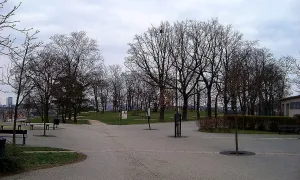
Zámek Dolní Počernice is surrounded by a large park featuring the Počernický pond. The area includes a Romanesque church from the 12th century, adding historical depth to its surroundings.
Accommodation nearby
Trips and activities nearby
Guided tours, tickets and activities nearby from GetYourGuide
Affiliate link: if you buy from the partner, we may receive a commission. The price for you does not change.
Search tours and activities →Themed route
Tematická výletní trasa zámek Dolní Počernice
1. Zámek Dolní Počernice (Castle) - Typ: Historický zámek - Proč stojí za návštěvu: Zámek Dolní Počernice je krásným příkladem historické architektury s bohatou minulostí. Jeho výhledy a elegantní design nabízejí nezapomenutelné pohledy na okolní krajinu, činící z něj ideální začátek vaší trasy.
2. Počernický rybník (Lake) - Typ: Rybník - Proč stojí za návštěvu: Počernický rybník je centrálním prvkem parku kolem zámku, nabízející klidnou atmosféru a krásné vodní pohledy. Je to ideální místo pro relaxaci nebo kouření si chvíle na jeho březích.
3. Romanesque Church (Church) - Typ: Kostel - Proč stojí za návštěvu: Tento kostel z 12. století přidává historický rozměr vaší trase, nabízející pohled na starobylou architekturu a duchovní atmosféru. Jeho umístění v parku dodává cestě další hloubku a kontext.
4. Park kolem zámku (Park) - Typ: Park - Proč stojí za návštěvu: Rozlehlý park nabízí krásné procházky mezi stromy, což je ideální příležitost prozkoumat přírodní krásu okolí zámku. Jeho klidná a pitoreskní prostředí umožňuje uvolnit se a ocenit krajinu.
Tato trasa vás provede skrze historické i přírodní atrakce, nabízející komplexní zážitek z Dolní Počernice.
Seasonal recommendations
Spring: Visiting Dolní Počernice Castle during spring offers a delightful experience as the surrounding landscape bursts into life with blooming flowers and lush greenery, creating an enchanting atmosphere. The gentle warmth of the season encourages longer daylight hours, making it ideal for exploring both the castle grounds and nearby natural trails. Visitors should be prepared for occasional showers, so carrying a light raincoat or umbrella is advisable. As spring attracts many nature enthusiasts, arriving early in the morning can help avoid larger crowds, allowing you to enjoy the serene beauty of the area without interruption.
Summer: Summer at Dolní Počernice Castle provides an idyllic setting with long days and warm weather, perfect for leisurely strolls through its historic grounds. The lush summer foliage enhances the picturesque views, while outdoor events often take place during this vibrant season. Due to the peak tourist season, it is recommended to visit early in the day or later in the afternoon to avoid crowds. Wearing comfortable clothing and bringing a hat and sunscreen are essential for staying cool under the sun, ensuring an enjoyable experience exploring the castle's rich history.
Autumn: Autumn brings a spectacular display of colors as the leaves around Dolní Počernice Castle turn vibrant shades of red, orange, and gold, creating a magical atmosphere. The cooler temperatures make it comfortable to explore both indoors and outdoors without the summer heat. This season is ideal for photography enthusiasts looking to capture stunning autumnal landscapes. As visitor numbers tend to decrease compared to summer, you can enjoy a more relaxed visit. Dressing in layers will keep you warm as the days become shorter and slightly chillier.
Winter: Winter transforms Dolní Počernice Castle into a serene winter wonderland, with snow often blanketing the landscape and adding a touch of magic to its historic architecture. The cooler temperatures mean that visiting hours may be reduced, so checking in advance is wise. Wearing warm clothing, including coats, hats, gloves, and boots, is essential for comfort during your visit. While the castle grounds are quieter with fewer visitors, this season offers a unique opportunity to appreciate the castle's beauty in a peaceful setting, making it perfect for those seeking tranquility amidst historical splendor.
Visualizations and artistic views


The visualisations are generated by artificial intelligence and serve as inspiration.
Photos from the area
Real photos taken near the monument


Zdroj a licence jsou uvedeny u každého snímku.
Tips from visitors
No tips yet. Be the first!
Log in and add your tip.
Sources and literature
Photos: VitVit / CC BY-SA 4.0, rozlišení zvýšeno umělou inteligencí — Wikimedia Commons. The author and licence also appear when you hover over the image.
Faktickým podkladem tohoto textu byl článek na Wikipedii, jehož autory jsou přispěvatelé Wikipedie. Článek je dostupný pod licencí CC BY-SA 4.0.
Location on the map
Příběhy a pověsti
Legendy, pověsti a příběhy spjaté s touto památkou
Fotografie návštěvníků
Zatím žádné fotografie. Buďte první, kdo přidá fotografii z návštěvy!
Log in a přidejte svou fotografii nebo hodnoťte.
Za ověřenou návštěvu v aplikaci získáte víc bodů — poznáme podle GPS, že jste na místě.
Reviews and comments