



zámek Horní Branná Chateau
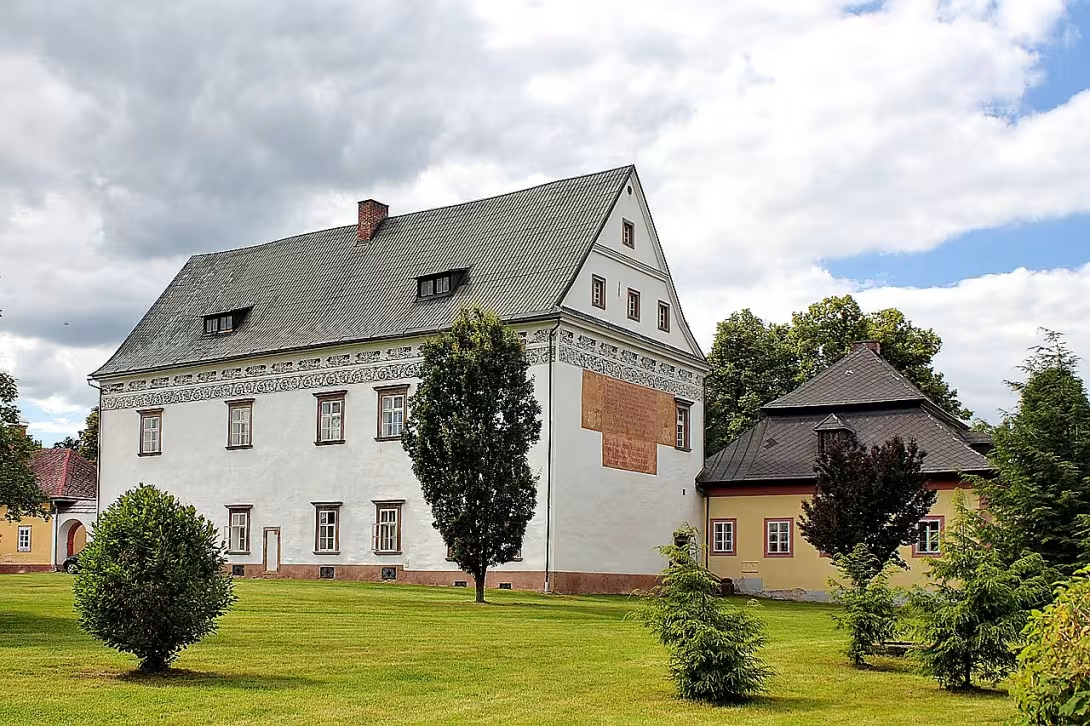
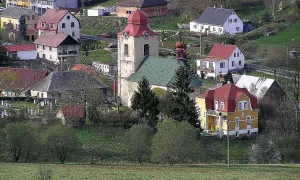
Zámek Horní Branná stands as a testament to Renaissance architecture in the village of Horní Branná, within the Liberecký kraj region. Built initially by Zdeněk z Valdštejna and completed by his wife Marie z Martinic in 1582, this castle is recognized for its architectural significance and historical importance as a cultural monument of the Czech Republic. It serves not only as an emblem of stonemasonry art from that era but also houses the Jan Amos Komenský Memorial, making it a site of both historical and educational interest.
The origins of Zámek Horní Branná date back to the late 16th century when Bohemia was part of the Habsburg Monarchy. This period saw cultural flourishing under Renaissance influence, reflected in the castle's construction. While Zdeněk z Valdštejna commissioned its initial design and building, Marie z Martinic completed it in 1582. Her involvement underscores the structure's significance as a pinnacle of stonemasonry art from that time.
Architecturally, Zámek Horní Branná is a Renaissance castle that has undergone various modifications over the centuries. Originally built with typical Renaissance grandeur, it suffered significant damage during the Thirty Years' War. Subsequent reconstruction focused on restoring only the first floor, reflecting both its historical significance and adaptive reuse under different owners.
Ownership of Zámek Horní Branná has seen notable transitions. After Marie z Martinic completed construction in 1582, ownership passed through several hands, including Vilém z Valdštejna and Adam, Vok, and Heník z Valdštejna. In 1606, Václav Záruba z Hustířan acquired the estate, during which Jan Amos Komenský resided there before his exile in 1621. The Thirty Years' War brought extensive damage to both the castle and surrounding area. Post-war, Albrecht z Valdštejna took ownership and later donated it to Otto Bedřich z Harrachu in 1632. The Harrach family maintained control until 1945 when the estate was confiscated following Beneš's decrees and transferred to the Ředitelství státních lesů a statku v Praze. In 1954, it came under MNV administration, which conducted significant reconstruction in 1960. Since 1989, the castle has been owned by the local municipality of Horní Branná.
Throughout its history, Zámek Horní Branná has witnessed several key events and curiosities. The completion of its construction by Marie z Martinic in 1582 marked a significant architectural achievement. Jan Amos Komenský's residency before his exile in 1621 adds to the castle's historical narrative as a place of intellectual significance. The extensive damage during the Thirty Years' War highlights the turbulent times it endured, yet its survival and subsequent restoration underscore its resilience.
Today, Zámek Horní Branná stands not only as a protected cultural monument but also as an accessible site for visitors interested in exploring Czech history and Renaissance architecture. Its proximity to natural attractions like the Krkonoše Mountains and the red-marked tourist trail leading towards Martinice enhances its appeal. The presence of the Jan Amos Komenský Memorial within the castle adds educational value, making it a worthwhile destination for those keen on understanding both architectural heritage and historical narratives.
Zámek Horní Branná offers visitors an opportunity to delve into a rich tapestry of history, architecture, and culture. Its journey through various ownerships and resilience against wartime destruction highlight its enduring significance. As a site that has adapted over centuries while preserving its core identity, it invites exploration and appreciation from those who visit, providing insights into the past and inspiration for the future.
Then and now
Drag the slider to compare how the landmark may have looked when it was built with the view today.
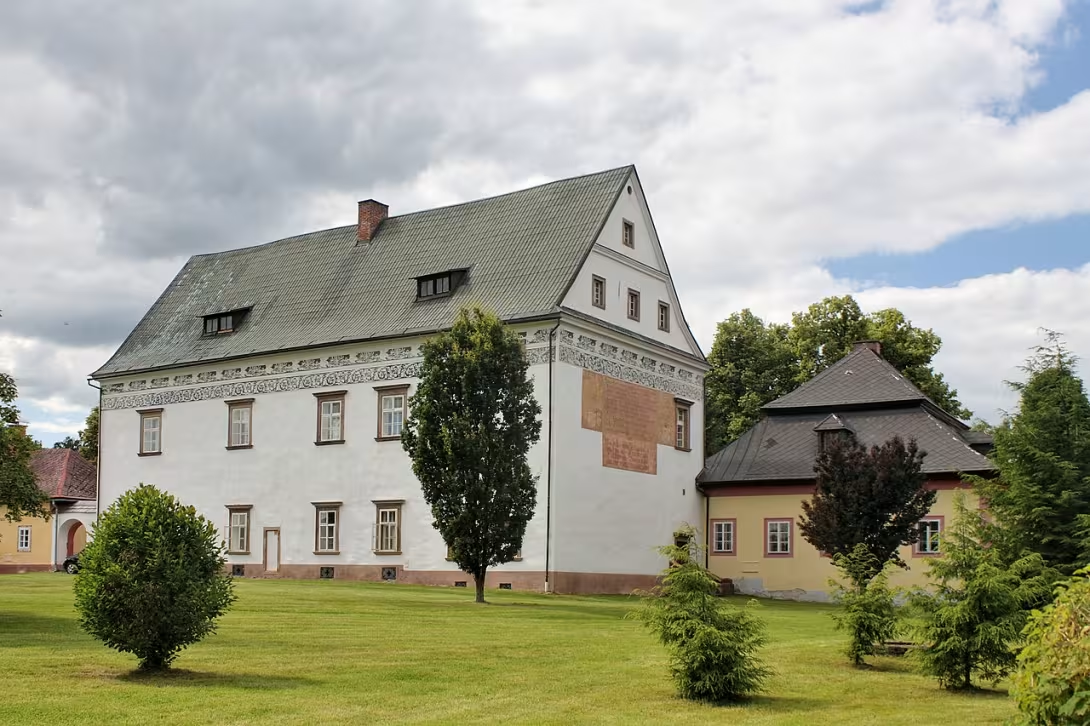
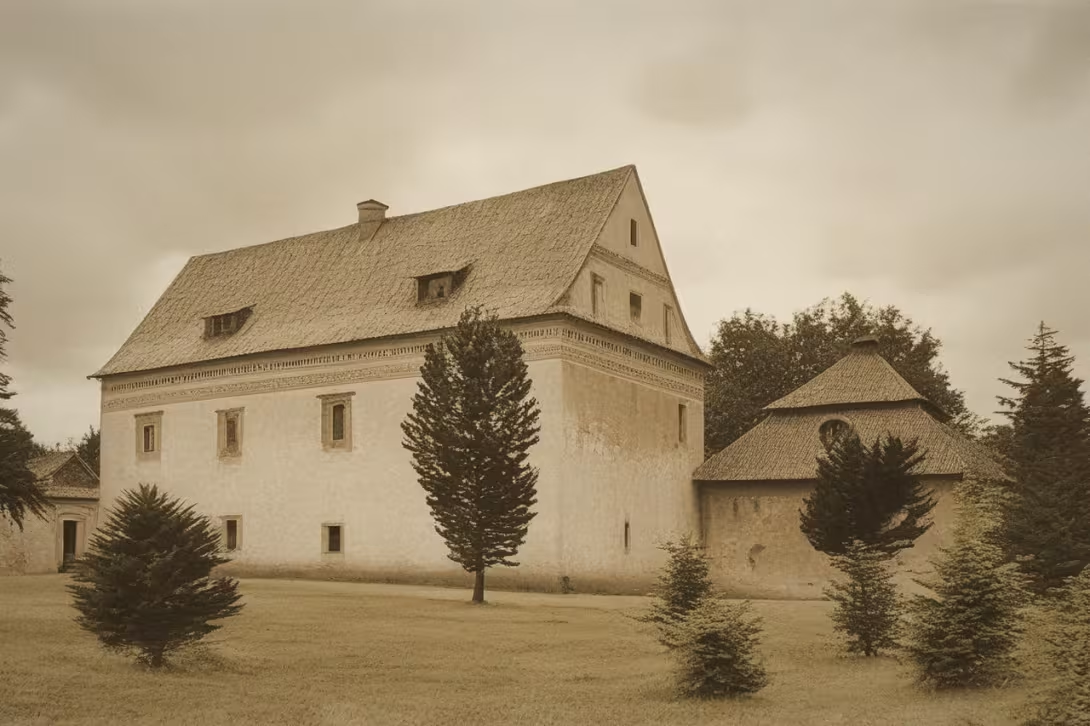
The historical appearance on the left is an AI-generated visualisation and serves as inspiration only.
Historical milestones
- 1582
- Completion of construction by Marie z Martinic.
- 1606
- Václav Záruba z Hustířan acquired the estate.
- 1621
- Jan Amos Komenský resided here before his exile.
- 1632
- Albrecht z Valdštejna donated it to Otto Bedřich z Harrachu.
Architectural development
Originally built as a Renaissance structure, Zámek Horní Branná underwent significant changes over centuries. After suffering damage during the Thirty Years' War, it was reconstructed with only the first floor restored. The castle has seen various architectural modifications under different owners, reflecting both its historical significance and adaptive reuse.
Historical events
Construction completed in 1582 by Marie z Martinic.
Jan Amos Komenský resided here before his exile in 1621.
The castle suffered extensive damage during the Thirty Years' War.
Owners
Zdeněk z Valdštejna (1582)
Marie z Martinic
Vilém z Valdštejna
Adam, Vok a Heník z Valdštejna
Václav Záruba z Hustířan (1606-1621)
Jan Amos Komenský (resided before exiling)
Albrecht z Valdštejna (post-1621)
Otto Bedřich z Harrachu (1632 onwards)
Harrach family (until 1945)
Ředitelství státních lesů a statku v Praze (post-1945)
MNV (1954-1960)
Obec Horní Branná (since 1989)
Points of interest
- One lesser-known fact about Zámek Horní Branná is that it was completed by Marie z Martinic in 1582 after being initially commissioned by her husband, Zdeněk z Valdštejna. This highlights the significant role women played in Renaissance architecture and estate management.
- A surprising element of the castle's history is its connection to Jan Amos Komenský, who resided there before his exile in 1621. Known as the "Father of Modern Education," his time at Zámek Horní Branná adds an intellectual layer to its historical significance.
- Despite suffering extensive damage during the Thirty Years' War, only the first floor of the castle was restored. This selective reconstruction reflects both the practical limitations of post-war restoration and a strategic choice to preserve certain architectural elements over others.
- The ownership history of Zámek Horní Branná is marked by its transfer from Albrecht z Valdštejna to Otto Bedřich z Harrachu in 1632, illustrating the shifting power dynamics within noble families during that era. This transition also underscores how estates were often used as political and social tools.
- After World War II, Zámek Horní Branná was confiscated following Beneš's decrees and became part of the Ředitelství státních lesů a statku v Praze in 1945. This change reflects broader post-war nationalization trends across Europe, where properties were seized from former owners to redistribute wealth and resources.
Guide
This guide is narrated by a synthetic voice generated by artificial intelligence.
Show guide text
This text was created by artificial intelligence and has not been editorially reviewed. It may contain inaccuracies.
The castle in Horní Branná, sometimes also referred to as a fortified manor, stands in the centre of the town on Jilemnicku in the Liberec Region. Not far away, a red marked hiking trail leads towards Martinice in Krkonoší. The castle is protected as a cultural monument of the Czech Republic.
The Renaissance building was built in 1582 by Zdeněk z Valdštejna. However, it had to be completed by his wife Marie z Martinic. At that time, the castle represented the pinnacle of building art of its era. The estate was then taken over by Vilém z Valdštejna and in 1594 by three brothers, Adam, Vok and Heník z Valdštejna. Adam gradually bought out the shares of the others and became the sole owner.
In 1606, the estate was purchased by Václav Záruba z Hustířan. During his time as owner, Jan Amos Komenský stayed here, still before his departure into exile. The estate was confiscated from the Zárubas in 1621 and was acquired by Albrecht z Valdštejna. He gave it in 1632 to Count Otto Frederick z Harrachu.
The Thirty Years' War caused extensive damage to the castle and the town. After the peace was concluded, the castle underwent reconstruction, during which, however, only the first floor was renewed. The then owner Ferdinand Bonaventura was still a minor, and so the estate was administered for him by Cardinal Ernest Vojtěch z Harrachu.
The Harrachs held the castle until 1945. At that time, it was confiscated from Jan Nepomuk Antonín z Harrachu on the basis of Beneš decrees and went to the directorate of state forests and estate in Prague. In 1954 it was transferred to the administration of the local national committee, which in 1960 carried out its extensive reconstruction. Since 1989 the castle has been owned by the municipality.
The Memorial to Jan Amos Komenský, which is housed in the castle, commemorates his stay there today.
Tips for visitors
The best time to visit Zámek Horní Branná is during late spring or early autumn when the weather is mild, making it ideal for exploring both the castle grounds and the surrounding natural beauty of the Krkonoše Mountains. During these seasons, you can enjoy pleasant temperatures without the crowds that often accompany peak summer months. Additionally, the foliage in autumn provides a stunning backdrop to the Renaissance architecture of the castle.
When visiting Zámek Horní Branná, it's advisable to bring comfortable walking shoes and weather-appropriate clothing, especially if you plan to explore the nearby trails or spend time outdoors. A camera is recommended to capture the picturesque landscapes and architectural details of the castle. Don't forget your water bottle and perhaps a snack for longer excursions.
For photography enthusiasts, some of the best spots around Zámek Horní Branná include the castle's main entrance and its surrounding gardens, which offer excellent lighting during early morning or late afternoon hours. The natural light at these times can highlight the intricate details of the Renaissance architecture beautifully. Additionally, capturing images from the red-marked tourist trail provides a scenic view of both the castle and the Krkonoše Mountains.
Nearby attractions within 30 minutes include Martinice, which is accessible via a red-marked tourist trail starting near the castle. This area offers picturesque landscapes and opportunities for hiking or simply enjoying nature. It's perfect for families with children who are interested in outdoor activities and exploring natural environments.
Frequently asked questions
Can the monument be visited?
Some buildings of this kind are open for guided tours, others serve another purpose or are privately owned. We have not verified whether and when this monument is open – please ask the operator.
What are the opening hours and admission?
We have not verified the opening hours or admission. Current information is published by the operator.
Where is the monument?
Location: č.p. 1, Horní Branná, Liberecký kraj. The map on this page shows the exact spot.
Why is the monument protected?
It is listed in the Central List of Cultural Monuments of the Czech Republic as a cultural monument (register no. 28358/6-2535).
Businesses nearby
Do you run a restaurant, accommodation, shop, museum, rental, wellness or other visitor service near this monument? Show yourself directly to the people heading to it — this is how they will see you in the app and on the web:
Nearby
Zámek Horní Branná is situated near a red-marked tourist trail leading towards Martinice in the Krkonoše Mountains. The area offers picturesque landscapes and proximity to natural attractions.
Accommodation nearby
Themed route
Thematic Tour Itinerary: Zámek Horní Branná and Surroundings
1. Zámek Horní Branná (Castle) Begin your journey at the heart of this itinerary, Zámek Horní Branná, a stunning example of Renaissance architecture nestled in the picturesque landscapes of the Krkonoše Mountains. This castle is renowned for its well-preserved interiors and beautiful gardens, offering visitors a glimpse into historical grandeur. The castle's strategic location provides panoramic views that make it an ideal starting point for exploring the surrounding natural beauty.
2. Red-Marked Tourist Trail From Zámek Horní Branná, embark on the red-marked tourist trail leading towards Martinice in the Krkonoše Mountains. This scenic route is perfect for hiking enthusiasts, offering breathtaking views of lush forests and rolling hills. The trail not only connects you to nature but also serves as a pathway to discover more about the region's natural attractions.
3. Martinice (Natural Attraction) Continue along the red-marked tourist trail until you reach Martinice. This area is celebrated for its stunning landscapes, characterized by dense woodlands and serene mountain vistas. It’s an ideal spot for nature lovers seeking tranquility and a chance to immerse themselves in the natural splendor of the Krkonoše Mountains.
4. Return via Red-Marked Tourist Trail After exploring Martinice, retrace your steps back along the red-marked tourist trail towards Zámek Horní Branná. This return journey offers a different perspective on the landscapes you've just experienced and provides an opportunity to reflect on the natural beauty encountered during your excursion.
5. Castle Gardens Conclude your visit by exploring the gardens of Zámek Horní Branná. These meticulously maintained gardens are a testament to historical landscaping artistry, featuring a variety of flora that enhances the castle's charm. The gardens provide a peaceful setting for relaxation and appreciation of nature’s beauty, making it a perfect end to your thematic tour.
This itinerary offers a balanced mix of cultural heritage and natural exploration, ensuring an enriching experience in the enchanting surroundings of Zámek Horní Branná.
Seasonal recommendations
Spring: Spring at Chateau Horni Branna is a time of renewal and blooming beauty, with the surrounding landscape coming to life as wildflowers dot the meadows and trees begin to bud. The soft morning light creates a gentle glow across the castle grounds, perfect for photography enthusiasts. Visitors can enjoy peaceful strolls through nature trails that are less crowded than in peak summer months. It's advisable to wear layers, as spring weather can be unpredictable with occasional rain showers. Early mornings or late afternoons are ideal for visiting when temperatures are milder and fewer tourists are around.
Summer: Summer at Chateau Horni Branna offers vibrant colors and lush greenery, making it an excellent time for exploring the castle's gardens in full bloom. The long daylight hours allow ample time to explore both indoor exhibits and outdoor spaces. However, this is also the peak tourist season, so arriving early can help avoid larger crowds. Comfortable walking shoes and light clothing are recommended due to warmer temperatures, along with sunscreen and a hat for protection from the sun.
Autumn: Autumn transforms Chateau Horni Branna into a picturesque landscape of warm hues, with leaves turning shades of gold and red. This season provides a serene atmosphere as the number of visitors decreases compared to summer. The cooler weather makes it comfortable to wander through the castle grounds and enjoy outdoor activities like photography or picnicking amidst the fall foliage. Layered clothing is recommended to adapt to fluctuating temperatures, and carrying an umbrella might be wise due to potential rain showers.
Winter: Winter at Chateau Horni Branna offers a magical experience with its snow-covered scenery and quiet ambiance. The castle takes on a serene beauty under blankets of white, making it ideal for winter photography or simply enjoying the peaceful surroundings. However, some areas may have limited access due to weather conditions, so checking ahead is advisable. Early visits are recommended to fully enjoy the site before any potential closures due to snowfall.
Visualizations and artistic views


The visualisations are generated by artificial intelligence and serve as inspiration.
Photos from the area
Real photos taken near the monument


Zdroj a licence jsou uvedeny u každého snímku.
Tips from visitors
No tips yet. Be the first!
Log in and add your tip.
Sources and literature
Photos: Miloslav Rejha / CC BY-SA 3.0 — Wikimedia Commons. The author and licence also appear when you hover over the image.
Faktickým podkladem tohoto textu byl článek na Wikipedii, jehož autory jsou přispěvatelé Wikipedie. Článek je dostupný pod licencí CC BY-SA 4.0.
Location on the map
Příběhy a pověsti
Legendy, pověsti a příběhy spjaté s touto památkou
Fotografie návštěvníků
Zatím žádné fotografie. Buďte první, kdo přidá fotografii z návštěvy!
Log in a přidejte svou fotografii nebo hodnoťte.
Za ověřenou návštěvu v aplikaci získáte víc bodů — poznáme podle GPS, že jste na místě.
Reviews and comments