



Špitál - Kaple svatého Aloise Almshouse
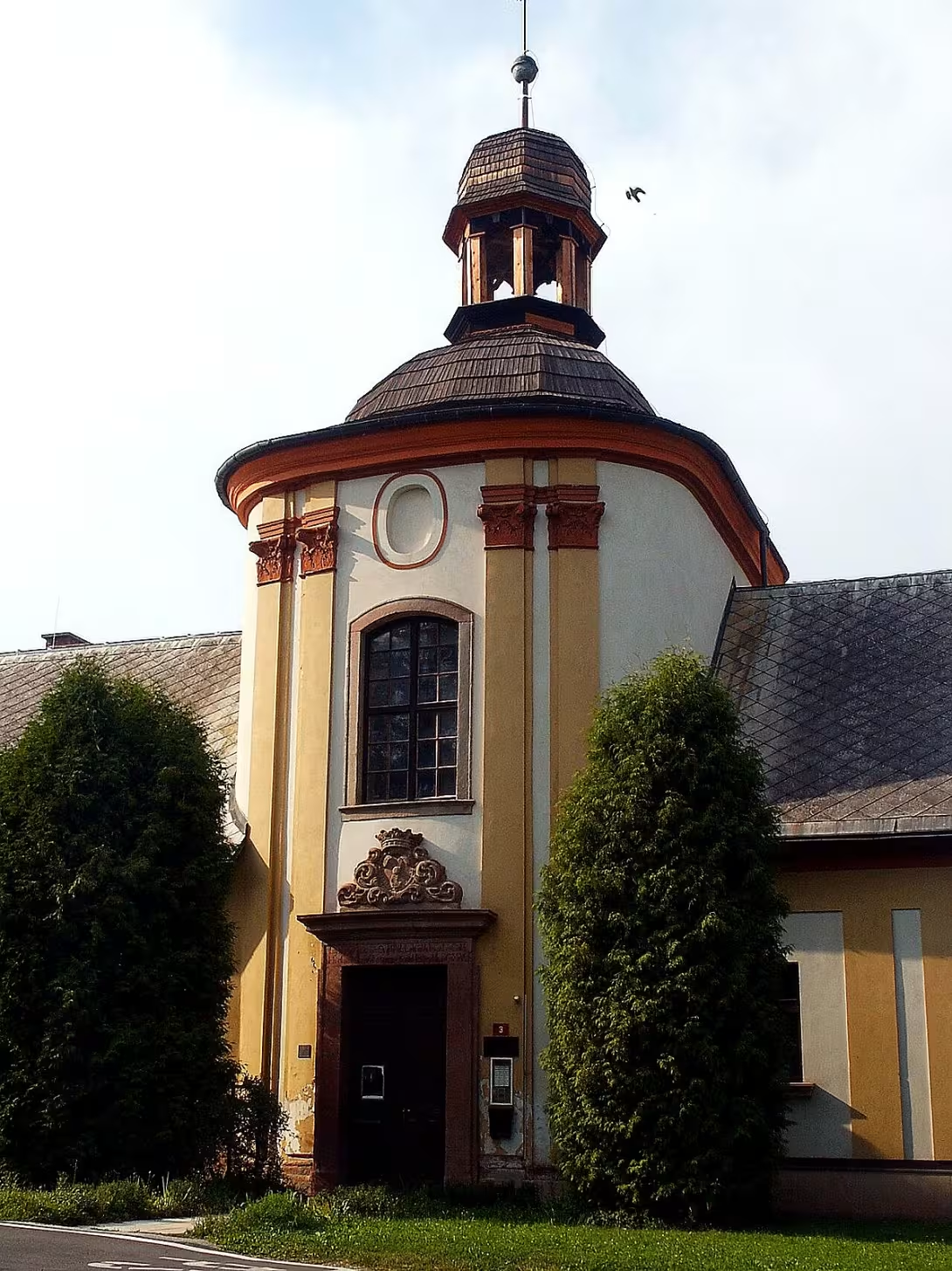
The chapel of Saint Alois, also known as Harrachov Hospital, is a Baroque complex in the village Horní Branná. The object is remarkable for its original social purpose. This chapel was preserved from the premises of the beginning of the 18th century.
The construction was built in 1710 by Alois Tomáš Raimund Harrach. The spy served as a social facility for elderly servants from the count's house. The establishment of this care was important for its time. For the rest of their lives, residents were fully provided with accommodation, food and clothing. In addition to basic security, each of them received a financial payout of 58 gold and 42 tailors each year.
From the point of view of architecture, it was a baroque complex. In 1878 it underwent an adjustment in which arched corridors were torn apart and the space was adapted to living as apartments of the lowest category. The original hospital was demolished in 1987 because of bad engineering. There was a copy of the building with modernized interior, which consists of small-scale apartments with electric heating. The only authentic element of the original Baroque complex remained the chapel.
The chapel has undergone several changes over the years. On her tower was originally a statue of St. Alois, which was replaced by a metal cross in 1879. The interior equipment formed a wooden altar. It was repaired for moisture in 1883, but removed in 1987 when the hospital was rebuilt. During the First World War the bell was restored from the chapel. The altar painting was damaged during reconstruction, but thanks to the intervention of the Giant Museum Jilemnice restored and saved. The chapel is now empty.
The official recognition came on May 3, 1958, when the chapel was declared a cultural monument. The whole area is now a nursing home. In a sense, it follows the original function of the object as a place of care for older people.
The monument in Horní Branné reminds of the early expansion of charitable institutions founded by nobility in Czech countries. It is a concrete testimony to social welfare in the early 18th century. Visiting this place offers a view of the preserved Baroque architecture in the context of modern people care.
Historical milestones
- 1710
- Building a hospital called Alois Tomáš Raimund Harrach.
- 1878
- Analysis of arched corridors and modification of space for apartments.
- 1958
- Declaration of the chapel for a cultural monument.
- 1987
- The demolishing of the original hospital due to a bad condition and the construction of a new copy.
Architectural development
The original Baroque complex was modified in 1878 by removing arched corridors. In 1987, the original hospital building was demolished and replaced with a modern copy with apartments. Only a baroque chapel was preserved, whose interior equipment, namely a wooden altar, was repaired and later removed over the years.
Historical events
In 1958, the chapel was declared a cultural monument. In 1987, the original hospital was demolished and a copy was subsequently built.
Owners
Family of Harrachs (founder of Alois Tomáš Raimund Harrach)
Points of interest
- In 1710 he built Alois Tomáš Raimund Harrach as a social facility for elderly servants. - Residents were fully provided with accommodation, food, clothing and received annual financial fees. - The chapel is the only authentic element left of the original Baroque unit. - On the tower of the chapel was originally a statue of St. Alois, which in 1879 was replaced by a metal cross. - A bell was taken from the chapel during World War I.
Guide
Show guide text
This text was created by artificial intelligence and has not been editorially reviewed. It may contain inaccuracies.
Welcome to Upper Branne. Right now, you're standing in front of a place that carries a deep human story about care, gratitude and helping a neighbor. In front of you is the chapel of St. Alois, who is now a silent witness to the history of this place. If you look at it, you might only see a small sacral structure in it, but it's actually the only real piece of a much larger entity that once surrounded this area. Feel the atmosphere of this place and try to imagine what the surroundings looked like over 300 years ago.
Let us now move in time deep into the past, namely to the year of these seven hundred and ten. It was this year that he had the hospital built and the adjacent chapel of the nobleman Alois Tomáš Raimund Harrach. At that time, it was not a hospital in today's sense, but a social facility that was supposed to serve as a safe haven for people who spent their lives serving the count's family. Imagine old servants who could no longer do their job, but deserved a dignified age without fear of poverty and hunger. It was for them that this complex was created.
Now pay attention to the chapel itself that stands before you. Look at her facade and see her baroque character. It is important to note that while other parts of the original hospital have long since disappeared, this chapel has been preserved. It's the only authentic element from the original Baroque unit you can actually see today. It's fascinating to think that this wall survived all the changes that took place in Upper Branné. In the year one thousand eight hundred seventy-eight there were adjustments when the arched corridors were broken down and space turned into flats, which shows how people's needs changed over time.
The key character of this place was Alois Tomáš Raimund Harrach. His decision to build this hospital is indicative of his efforts at the time to ensure social security for those who were vulnerable in life. For the people who lived here, it wasn't just a roof over their heads. The hospital gave them complete care. The residents had provided accommodation, enough food and suitable clothes. What is particularly remarkable, however, was that these people were given a financial payday each year. This allowed them to live in relative peace and dignity, which was very rare at the time. The chapel served as a spiritual centre where people could find comfort and peace in the last years of their lives.
Here we come to the part that may be surprising to you. If you look around, you'll see newer buildings. You may be wondering why the chapel stands alone. The original hospital was demolished in the year one thousand nine hundred eighty-seven. The construction was in such a bad condition that it was no longer possible to save her. A new copy was subsequently built in its place to maintain the appearance of the area. However, the chapel was saved much earlier, already in the year one thousand nine hundred fifty-eight was declared a cultural monument. It is thanks to this recognition that today we can admire the real construction from the year of tyre seven hundred ten, and not just modern reconstruction. It's a little island of authenticity in a sea of change.
If you look at the chapel again, try to realize the contrast. On the one hand, there is the fragility of human life, represented by the old servants who sought refuge here, and on the other hand, there is the durability of the stone and the faith that this building embodies. It's a place that teaches us empathy and reminds us that caring for others is a value that persists for centuries.
Now I leave you to look at the details of the chapel in peace and perhaps in silence imagine what conversations have been made here in the past and what prayers people have been whispering here. I hope this short trip to history has helped you better understand the importance of this small but significant corner of Upper Branne. I wish you a pleasant further journey and I recommend exploring the other beauty of this region. Goodbye.
Tips for visitors
The best time to visit is late spring or autumn, when Baroque architecture excels in natural light and the surrounding landscape of Upper Branné works best. For transport to this place, use your own car or public connections, whose current timetables are checked by an internet search engine.
During the photo shoot we recommend to focus on the details of the Baroque facade and the light game on the walls of the chapel, ideally during the golden hour before sunset. Since it is a complex of former hospitals, we recommend to observe the overall layout of the buildings from the outside.
Pack comfortable shoes in your pocket for walking around the sights and plenty of water. If you are planning a visit with children, focus their attention on the story of the old servants for whom this building was built in 1710, which will help children to better understand the history of caring for the elderly.
Since there are no other specific monuments in the immediate vicinity, we recommend to focus fully on the architecture of this unique complex in Horní Branné.
Frequently asked questions
Can the monument be visited?
Some buildings of this kind are open for guided tours, others serve another purpose or are privately owned. We have not verified whether and when this monument is open – please ask the operator.
What are the opening hours and admission?
We have not verified the opening hours or admission. Current information is published by the operator.
Where is the monument?
Location: Horní Branná. The map on this page shows the exact spot.
Why is the monument protected?
It is listed in the Central List of Cultural Monuments of the Czech Republic as a cultural monument (register no. 1000148275).
Businesses nearby
Do you run a restaurant, accommodation, shop, museum, rental, wellness or other visitor service near this monument? Show yourself directly to the people heading to it — this is how they will see you in the app and on the web:
Nearby
🏰 Historic sites (87)
- svatý Josef 0.1 km
- zámek Horní Branná 0.2 km
- svatý Jan Nepomucký 0.2 km
- svatý Bohdan 1.3 km
- Jan Amos Komenský 1.9 km
- Muzeum lyžování Dolní Branná 2.7 km +420 739 452 760 web
- Krkonošské muzeum 3.4 km web
- Vrchlabský zámek 3.5 km web
- Krkonošské muzeum Vrchlabí - čtyři historické domky 3.5 km +420 499 456 725 web
- svatá Anna Samotřetí 3.6 km
- Zámeček 3.7 km
- Galerie Morzin 3.7 km
- Dolní Štěpanice 3.8 km
- Štěpanický hrad 3.9 km
- Geolog František Pošepný 4.4 km
- Krkonošské muzeum Jilemnice 4.5 km web
- zámek Jana Harracha 4.5 km Kostelní 75
- Karel Veliký 4.5 km
- pomník obětem válek 4.5 km
- Setkání antifašistů 5.4 km
🍽️ Restaurants and dining (275)
- Pod Mezí 0.1 km
- Chapeau Bas 0.2 km
- Zámecká restaurace Horní Branná 0.2 km web
- Hospoda U Kubátu 0.3 km +420 736 660 913
- Motorest Petra 1.4 km
- Bistro U Slavíků 1.4 km
- Sv. Kryštof 2.4 km Valteřická 1428
- Občerstvení Lážo Plážo 2.4 km
- Občerstvení Kačák 2.7 km
- Restaurace Pizzerie Jana 3.0 km
- Na Špeku 3.1 km Pražská 1544 web
- Restaurace u Učíků 3.2 km Větrná 1520
- Steak Restaurant Gurmán 3.4 km web
- Halka design & cafe 3.4 km V. Hálka 176 +420 733 302 965 web
- Victory Club 3.5 km V. Hálka 1154
- Školní jídelna Slovanská 3.5 km web
- Pizzeria Via Appia 3.5 km
- Sportclub 3.5 km Tyršova 783
- Café U Zvonu 3.5 km Krkonošská 27
- Botta Caffe 3.6 km
🏨 Accommodation (334)
- Holiday Park Vrchlabí - Liščí farma 2.4 km +420 733 636 797 web
- Holiday Park Vrchlabí - Liščí farma 2.4 km Dolní Branná 350 web
- motorhome stopover 2.4 km web
- Autocamping Vejsplachy 2.5 km
- Pension Věra 2.8 km Luční 361
- Pension Marathon 3.3 km Pražská 56
- Privat Kobr 3.6 km Rolnická 245
- Hotel Labuť 3.6 km Krkonošská 188 web
- Hotel Gendorf 3.6 km +420 499 429 629 web
- Hotel TTC 3.7 km Tkalcovská 357 web
- Privat Kobr 3.9 km K. J. Erbena 245
- Ubytovani Rico 3.9 km +420734150322
- Privat Kobr 3.9 km Pod parkem 1245
- Pension Neuman 4.0 km
- Pension Eva 4.0 km
- Pension Dita 4.0 km
- Hotel Na Staré poště 4.3 km Masarykovo náměstí 9 +420 604 34 14 94 web
- Hotel Sumó 4.5 km Jungmannova 147 +481 544 939
- Sokolovna 4.5 km
- Pension Trautenberk 4.8 km +420 602 161 613 web
🚲 Rentals and sport (50)
- můstek 1.8 km
- Koupaliště Valteřice 1.9 km
- Tenisová hala 2.5 km
- Akvapark Vrchlabí 2.7 km web
- Zimní stadion Vrchlabí 3.4 km Fügnerova 1288
- Tyršův dům 3.5 km
- TJ Sokol 3.6 km
- Namche 3.6 km Krkonošská 15 +420 603 510 121
- HUDYsport 3.6 km Sv. Čecha 166 web
- Cyklo Sport Mikšík 3.7 km web
- Střelnice střeleckého klubu Vrchlabí 3.8 km
- Fitness Centrum 3.8 km 5. května 377
- Intersport Jilemnice 4.2 km Dolení 54
- Hannah 4.3 km Masarykovo náměstí 173
- Kolo-park.cz 4.3 km Masarykovo náměstí 172
- Cyklo-Ski R. Špicar 4.3 km Kostelní 79
- Sportovní centrum Jilemnice 4.4 km Jungmannova 146
- SKI Areál Hraběnka 4.8 km
- Sportovní hala 4.8 km Studentská 102
- Penzion Trautenberg - bazén 4.8 km
🥾 Hiking and nature (240)
- Na Vrších 0.6 km
- Malý Kozinec 0.9 km
- Malý Principálek 0.9 km
- Principálek 1.1 km
- Kozinec 1.6 km
- Horka 1.6 km
- Franzpaurak 1.7 km
- Jiránkova studánka 2.0 km
- Bohdanka 2.1 km
- Žlábek 2.3 km
- Zuzanek 2.4 km
- Mezy Klokočí 2.4 km
- Pilousek 2.7 km
- Veselý vrch 2.7 km
- Branský kopec 2.9 km
- Skalka 3.0 km
- Liščí kopec 3.1 km
- Fejfarův vrch 3.2 km
- Kněžický vrch 3.3 km
- Zámecký park 3.4 km
Accommodation nearby
Themed route
Špitál - Kaple svatého Aloise (chapel) Walk in the area of the monument: 1. St. Alois Chapel - a main building where architecture and spiritual atmosphere can be admired. 2. Tanks - space around the chapel, which serves for relaxation and contemplation. 3. The immediate area - surrounding area of the hospital, which shows the history of care for the sick in this area.
Seasonal recommendations
In spring, the surroundings of the chapel are awakened to live colours and fresh green, creating a fresh contrast to historical walls. We recommend visiting the place in the morning when the light is fine and the air is clean. Due to the variable weather, it is advisable to choose layered clothes and moisture resistant shoes.
The summer season brings bright sun and rich color landscapes that highlight the details of the construction. The best is to come early in the morning or at dusk to avoid the greatest heat. Light shoes and baseball caps are ideal for comfortable field movement.
In autumn nature is painted in golden and brown shades around the hospital, which gives the place a melancholy and peaceful atmosphere. Low sun creates long shadows and dramatic lighting that is suitable for the observation of architecture. We recommend a warm sweater and a waterproof jacket in case of sudden rain.
In winter the monument can be covered with snow, which gives it a quiet and dreamy smell. The lighting is colder in this period and the days are short, so it is advisable to plan a visit in the morning. Hot winter clothes, thermo-pads and high-quality warm footwear with anti-slip soles are essential.
Visualizations and artistic views

The visualisations are generated by artificial intelligence and serve as inspiration.
Photos from the area
Real photos taken near the monument


Zdroj a licence jsou uvedeny u každého snímku.
Tips from visitors
No tips yet. Be the first!
Log in and add your tip.
Sources and literature
Photos: JiriMatejicek / CC BY-SA 3.0 — Wikimedia Commons. The author and licence also appear when you hover over the image.
Faktickým podkladem tohoto textu byl článek na Wikipedii, jehož autory jsou přispěvatelé Wikipedie. Článek je dostupný pod licencí CC BY-SA 4.0.
Location on the map
More monuments – Horní Branná
Show all in the municipality
Příběhy a pověsti
Legendy, pověsti a příběhy spjaté s touto památkou

Fotografie návštěvníků
Zatím žádné fotografie. Buďte první, kdo přidá fotografii z návštěvy!
Log in a přidejte svou fotografii nebo hodnoťte.
Za ověřenou návštěvu v aplikaci získáte víc bodů — poznáme podle GPS, že jste na místě.
Reviews and comments