



zámek Krásný Les Chateau
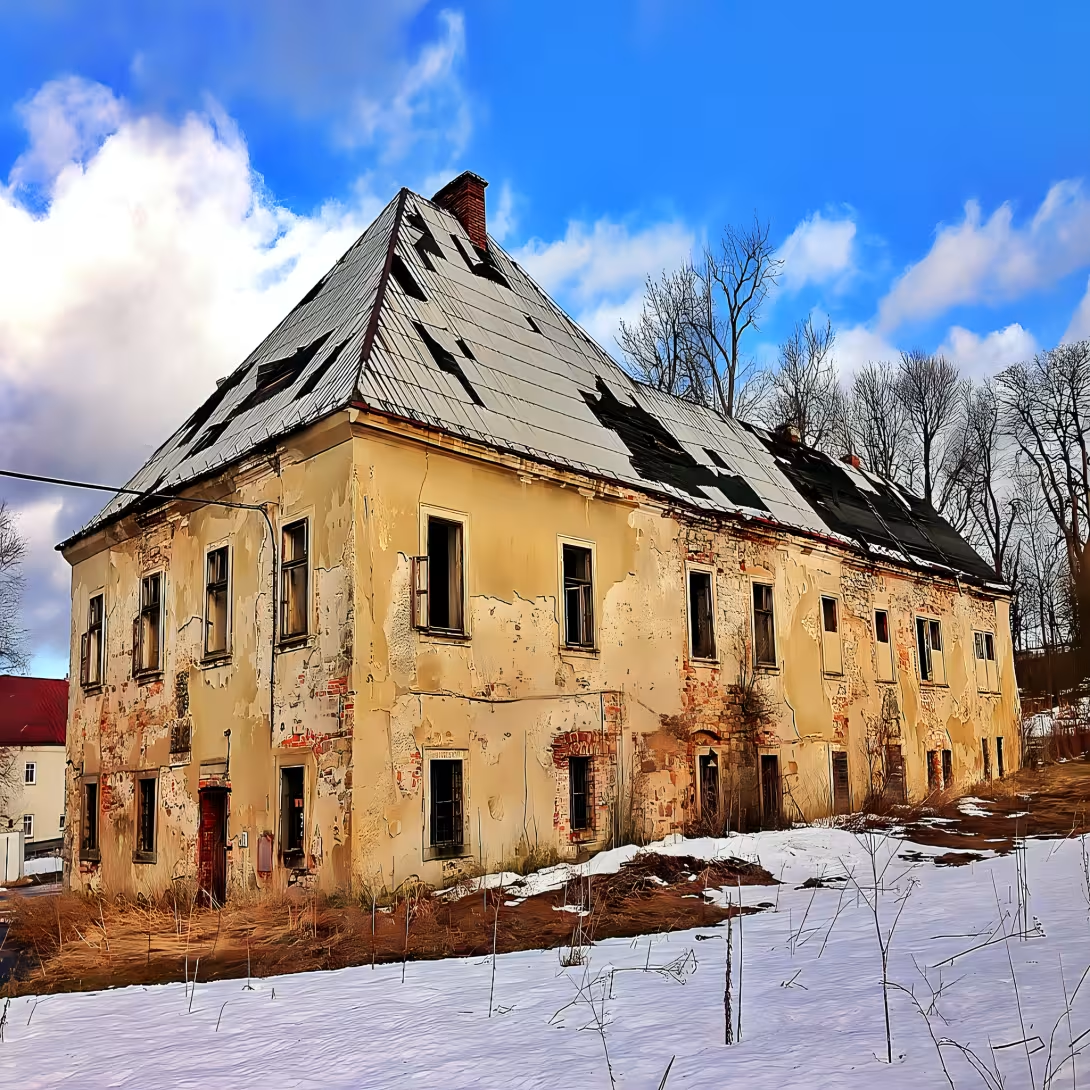
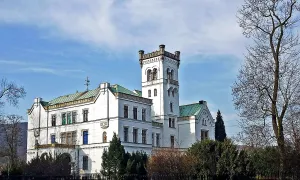
The chateau Krásný Les, in German Schloss Schönwald, is located in the local part of Petrovic in the Ústí Region. It is a simple one-storey L-shaped building, which was created in 1708 according to the will of František Ignác Vratislav of Mitrovice, who had it built. The construction represents a simple cutting example of the late Baroque architecture of the village estate, without pretentions for glitter or pomp.
The Mitrovica family held the chateau until 1791. After that, the property changed: since 1802 it was the owner of Josef z Hackelbergu-Landau. In 1892 it was acquired by Friedrich, the Earl of Westphalia. Subsequently, it was owned by the textile trader Antonín Balle ze Cvikova, which was its last private owner. 1931 brought a major change - the chateau bought the city of Ústí nad Labem.
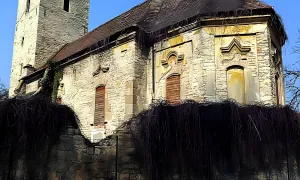
The building has maintained its baroque character over the centuries. The facade is smooth and undivided, decorated with a Baroque portal and three coat of arms. There's a German quote on the shield from the Book of Psalms. On the longest side wall is placed an alliance sign František Ignác Vratislav from Mitrovice along with the coat of arms of his wife Victoria and German text dedicated to construction. The roof is steep, the windows are rectangular. The chateau was rebuilt in 1745.
World War II meant a break in his destiny. The Gestapo set up a work camp in it - first French prisoners of war were imprisoned in the chateau between 1940 and 1941. From November 1941 to March 1945, the chateau served as a camp for older workable Jewish residents from Ústeck. Marked as Sammelager Schönwald, 103 people went through it. The scheme was allegedly more relaxed than in other camps - the interns could move freely around the village and shop in local shops. But their fate is largely unknown. 55 interns died while running the camp, the rest were deported to the family camp of Auschwitz-Birkenau extermination camp.
After the war the chateau became an economic building of the state farm and gradually fell apart. Maintenance was neglected in the long term, especially after 1990, so the building was decayed, looted and desolate. In 2018 it was purchased by Jan Kilián in order to repair the building and set up an exhibition dedicated to the history of the chateau and the important native of the Beautiful Forest.
Today, the chateau is still a decrepit building that shows the beauty of the past, but also the traumas that have taken place here. The visit can be an opportunity to reflect on the complicated Czech history of the 20th century and on efforts to save cultural heritage.
Then and now
Drag the slider to compare how the landmark may have looked when it was built with the view today.
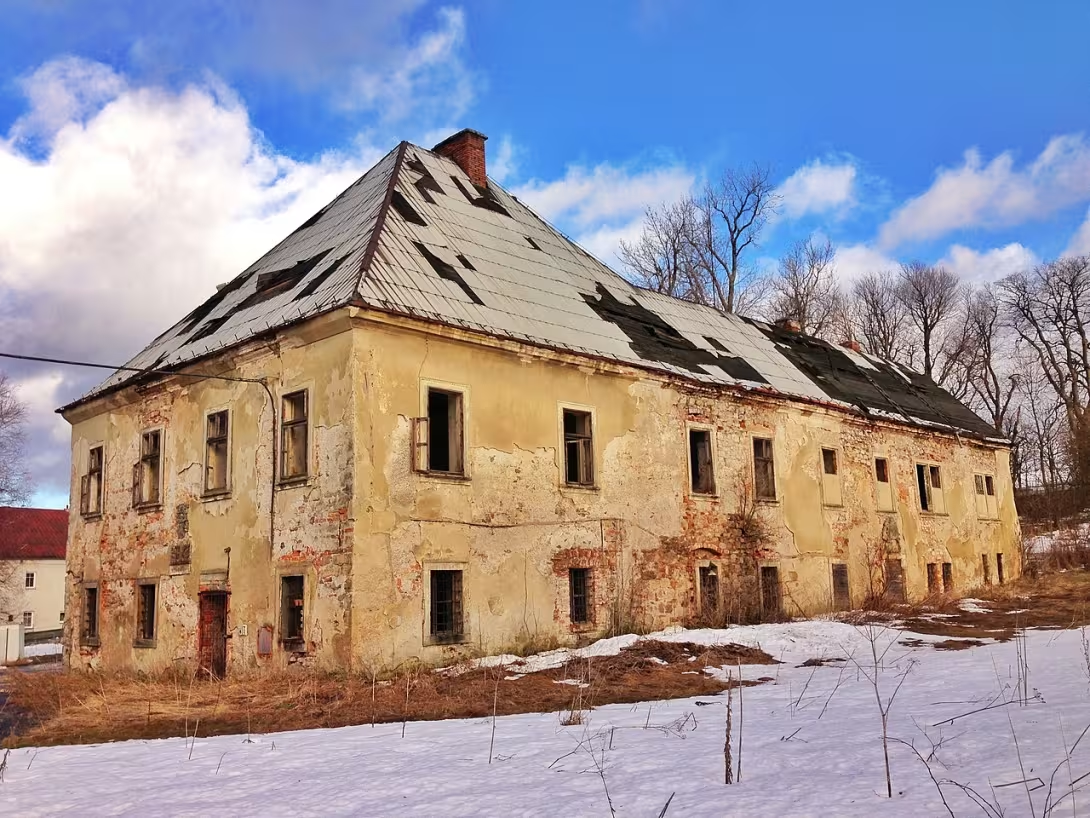
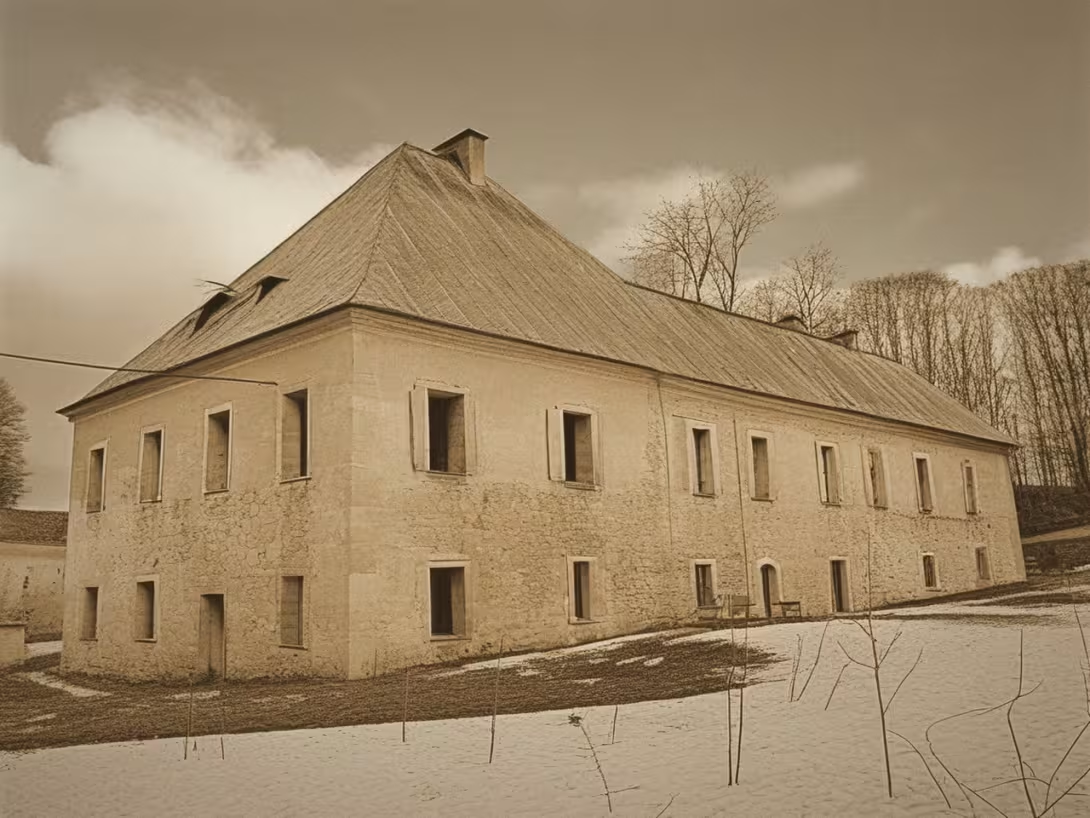
The historical appearance on the left is an AI-generated visualisation and serves as inspiration only.
Historical milestones
- 1708
- Construction of the chateau by František Ignác Vratislav from Mitrovice.
- 1745
- Rebuilding the chateau.
- 1931
- The chateau was purchased by the city of Ústí nad Labem.
- 1940-1945
- Operation of the Gestapo labour camp for prisoners and Jews.
- 2018
- The purchase of the chateau by Jan Kilián to repair and establish the exhibition.
Architectural development
The chateau building has a smooth, undivided facade and a Baroque portal and three coat of arms and a German quote from the Book of Psalms placed on its shield.
Historical events
- 1708
- The chateau was built by František Ignác Vratislav from Mitrovice
- 1791
- Until 1791, the chateau was owned by the Mitrovice family
- 1940
- Between 1940 and 1941, French prisoners of war
- 1945
- From November 1941 to March 1945 older working Jews from Ústecko
Owners
František Ignác Vratislav z Mitrovic
Josef z Hackelbergu-Landau
Fridrich hrabě z Vestfálska
Antonín Balle ze Cvikova
City of Ústí nad Labem
Points of interest
- The chateau Krásný Les was built according to the will of František Ignác Vratislav from Mitrovice in 1708. The Mitrovica family held the chateau until 1791. The chateau was rebuilt in 1745. - World War II was a turning point in his fate when he became a labor camp for French prisoners of war and later for the elderly Jewish residents of Ústeck. - After the war, the chateau was defused until the Jan Kilián bought it in 2018 in order to repair the building.
Guide
This guide is narrated by a synthetic voice generated by artificial intelligence.
Show guide text
This text was created by artificial intelligence and has not been editorially reviewed. It may contain inaccuracies.
The castle in Krásný Les, in German Schönwald, is a late Baroque building from the early eighteenth century. Krásný Les today belongs to the municipality of Petrovice in the Ústí region. The castle was built in seventeen hundred and eight by František Ignác Vratislav of Mitrovic. It is a simple single-story building in the shape of an inverted letter L and underwent reconstruction in seventeen hundred and forty-five.
The Mitrovic family held the castle until seventeen hundred and ninety-one. From eighteen hundred and two it belonged to Josef of Hackelbergu-Landau and in eighteen hundred and ninety-two Friedrich Count of Vestfálska acquired the estate together with the castle. The last private owner was textile merchant Antonín Balle from Cvikov. In nineteen thirty-one the castle was purchased by the city of Ústí nad Labem.
The darkest chapter came with the Second World War. In nineteen forty and nineteen forty-one French prisoners of war were imprisoned here. In the summer of nineteen forty-one the Gestapo began to consider using the castle differently. Twelve Jews from Ústí nad Labem partially repaired the building and in November the first Jews were forcibly resettled here. These were older people from the Ústí region who were still able to work. The collection camp, in German Sammellager Schönwald, operated until March nineteen forty-five and one hundred and three persons passed through it. The regime was more relaxed than elsewhere. The interned people could move freely about the village and shop in local stores. However, the fate of most of them remains unknown. A total of fifty-five people died in the camp and others were deported to the family camp in Osvětimi-Březince.
After the war the castle served as an outbuilding of a state farm and gradually fell into disrepair. Even after nineteen ninety no one cared for it. The building was ransacked and empty and its ceilings collapsed. In twenty eighteen it was purchased by Jan Kilián. He wants to restore it and establish an exhibition about the history of the castle and about notable natives of Krásný Les.
The castle's façade is smooth and undecorated. On the gable is a Baroque portal, three coats of arms and a German quotation from the Book of Psalms. On the longest side wall is in the lintel an alliance coat of arms of the builder František Ignác Vratislav of Mitrovic, the coat of arms of his wife Viktorie and a German text about the construction of the castle. The building is covered by a steep hipped roof. Rectangular windows correspond to the style of country residences.
Tips for visitors
The best time to visit the chateau Krásný Les is from April to October when the weather is mild and the sun shines in memory.
Frequently asked questions
Can the monument be visited?
Some buildings of this kind are open for guided tours, others serve another purpose or are privately owned. We have not verified whether and when this monument is open – please ask the operator. According to the heritage register the structure is in poor condition – do not enter it and take care nearby.
What are the opening hours and admission?
We have not verified the opening hours or admission. Current information is published by the operator. Official website: https://zamekkrasnyles.cz/
Where is the monument?
Location: Krásný Les č.p. 1, Petrovice, Ústecký kraj. The map on this page shows the exact spot.
Why is the monument protected?
It is listed in the Central List of Cultural Monuments of the Czech Republic as a cultural monument (register no. 106114).
For kids
Imagine coming back 318 years and finding yourself in the beautiful forest town of Petrovice. There is Krásný Les Chateau on the top, which is like a magic seal on a map of Czech history.
How did it look here? Who lived here? What happened here? The chateau was the seat of a noble family who ruled over this part of the country. It was people with an amazing past who had secrets and legends with them. The chateau was like a fortress where various entertainment took place - tournaments, balls, and even witch rituals.
Businesses nearby
Do you run a restaurant, accommodation, shop, museum, rental, wellness or other visitor service near this monument? Show yourself directly to the people heading to it — this is how they will see you in the app and on the web:
Nearby
Ambient landscape, other sights
Accommodation nearby
Trips and activities nearby
Guided tours, tickets and activities nearby from GetYourGuide
Affiliate link: if you buy from the partner, we may receive a commission. The price for you does not change.
Search tours and activities →Themed route
Chateau Krásný Les and its surroundings
The route starts in the centre of the village Krásný Les, where the chateau of the same name is located. This Baroque chateau is famous for its beautiful architecture and rich history.
1. Chateau Krásný Les - Baroque chateau with rich history, worth visiting for its amazing architecture and views of the surroundings. 2. Monastic park - A peaceful place to walk and relax, located near the chateau. The park is famous for its beautiful nature and historical buildings. 3. Fish tank - Small water areas that are ideal places for resting and watching birds. The route ends at this tank where you can sit and admire the surroundings.
The total length of the route is approximately 3 km.
Seasonal recommendations
The Krásný Les Chateau is a historic monument that is in decline. Because it's a bad place, it's important to visit him in a good season. It is further described specific for each annual period.
Spring In the spring season there is special lighting, which irradiates the lock with soft light. Nature around him is full of flowers and greenery. The atmosphere is mildly attractive. The doses are smaller, so we recommend arriving in the morning or late afternoon. Good clothes should be light and airy.
Summer In the summer season, the special atmosphere is full of life. Nature around the chateau is in full bloom, therefore we recommend arriving earlier hours for crowds. Good clothes should be light and airy.
Autumn In autumn there is special lighting, which irradiates the lock with soft light. Nature around him is full of yellow and brown shades. The atmosphere is mildly attractive. The doses are smaller, so we recommend arriving in the morning or late afternoon. Good clothes should be light and airy.
Winter In winter, there is a special atmosphere full of snow and frost. Nature around the chateau is white and calm. The atmosphere is mildly attractive. The doses are smaller, so we recommend arriving in the morning or late afternoon. Good clothes should be warm and tight.
Visualizations and artistic views


The visualisations are generated by artificial intelligence and serve as inspiration.
Photos from the area
Real photos taken near the monument


Zdroj a licence jsou uvedeny u každého snímku.
Atmosphere of the place
This atmospheric visualisation of the place and period was generated by artificial intelligence. It is not real footage of the location.
Tips from visitors
No tips yet. Be the first!
Log in and add your tip.
Sources and literature
Photos: Ladislav Faigl / CC BY-SA 3.0, rozlišení zvýšeno umělou inteligencí — Wikimedia Commons. The author and licence also appear when you hover over the image.
Faktickým podkladem tohoto textu byl článek na Wikipedii, jehož autory jsou přispěvatelé Wikipedie. Článek je dostupný pod licencí CC BY-SA 4.0.
Location on the map
Příběhy a pověsti
Legendy, pověsti a příběhy spjaté s touto památkou
Fotografie návštěvníků
Zatím žádné fotografie. Buďte první, kdo přidá fotografii z návštěvy!
Log in a přidejte svou fotografii nebo hodnoťte.
Za ověřenou návštěvu v aplikaci získáte víc bodů — poznáme podle GPS, že jste na místě.
Reviews and comments